


In brief: California trustees must keep beneficiaries reasonably informed and account at least yearly to beneficiaries entitled to current distributions. When a trustee will not explain what happened to the money, a beneficiary can petition to compel an account and ask the court to surcharge the trustee for losses. Hackard Law handles these cases on contingency: no fee and no costs if there is no recovery, unless your written agreement provides otherwise.
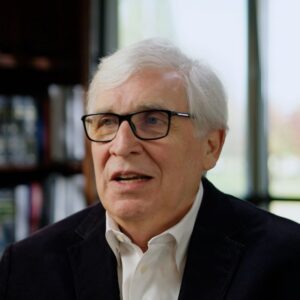
By Michael Hackard, California trust and estate litigation attorney. Last reviewed October 26, 2026. Updated November 3, 2026.
Los Altos Hills estates are often layered: a home on a large lot, trusts for children and grandchildren, and investment accounts managed by professionals. The dispute is often about a trustee who will not explain what happened to the money.
Los Altos Hills incorporated in 1956 to preserve the rural atmosphere of the foothills, and it keeps one-acre minimum lots. Foothill College is within the town.
A trustee must keep beneficiaries reasonably informed and answer reasonable requests for information (Probate Code §§ 16060, 16061). Beneficiaries entitled to current distributions must receive an account at least once a year, at the end of the trust, and when the trustee changes (Probate Code § 16062).
If the trustee does not provide a requested account within 60 days of a written request, and no account was made in the six months before the request, a beneficiary can petition the court to compel one (Probate Code § 17200(b)(7)(C)). When the numbers do not reconcile, the court can order the trustee to repay the loss (Probate Code §§ 16420, 16440) and can remove the trustee (§ 15642).
Source: U.S. Census Bureau, 2020 Census, 2025 population estimates, and American Community Survey 2020–2024.
Trust and probate cases for Los Altos Hills are heard in the Probate Division of Santa Clara County Superior Court, Downtown Superior Court, 191 North First Street, San José, California 95113, approximately 18 driving miles from Los Altos Hills. Actual distance varies by starting point and route. Hackard Law’s office is in Sacramento County. The firm handles matters in Santa Clara County Superior Court and throughout California.
Hackard Law represents families on a contingency basis. The fee is a percentage of the recovery, stated in a written agreement before work begins. The firm advances the costs of the case, which are repaid from the recovery. If there is no recovery, you owe no fee and no costs, unless your written agreement provides otherwise.
Make a written request first. If the trustee does not provide the account within 60 days, and none was provided in the six months before your request, you can petition the probate court to compel it (Probate Code § 17200(b)(7)(C)). Trustees must also account at least annually to beneficiaries entitled to current distributions (§ 16062).
Under Probate Code § 16063, an account must show the receipts and disbursements of principal and income, the trust’s assets and liabilities at the end of the period, the trustee’s compensation, the agents the trustee hired, their relationship to the trustee, and what they were paid. It must also state that the beneficiary may petition the court to review the account, and that claims for breach of trust may be barred three years after the beneficiary receives an account disclosing the facts.
Surcharge is a court order requiring a trustee to pay back losses caused by a breach of trust (Probate Code § 16420(a)(3)). The trustee can be liable for the loss to the trust, any profit the trustee made through the breach, and profit the trust would have earned without it (Probate Code § 16440).
The first conversation is about what happened and when.
Call the Sage: (916) 313-3030
Hackard Law’s office is in Sacramento County.
Hackard Law represents families throughout California. hackardlaw.com
Please do not send documents until we ask for them.
 (916) 313-3030