


 (916) 313-3030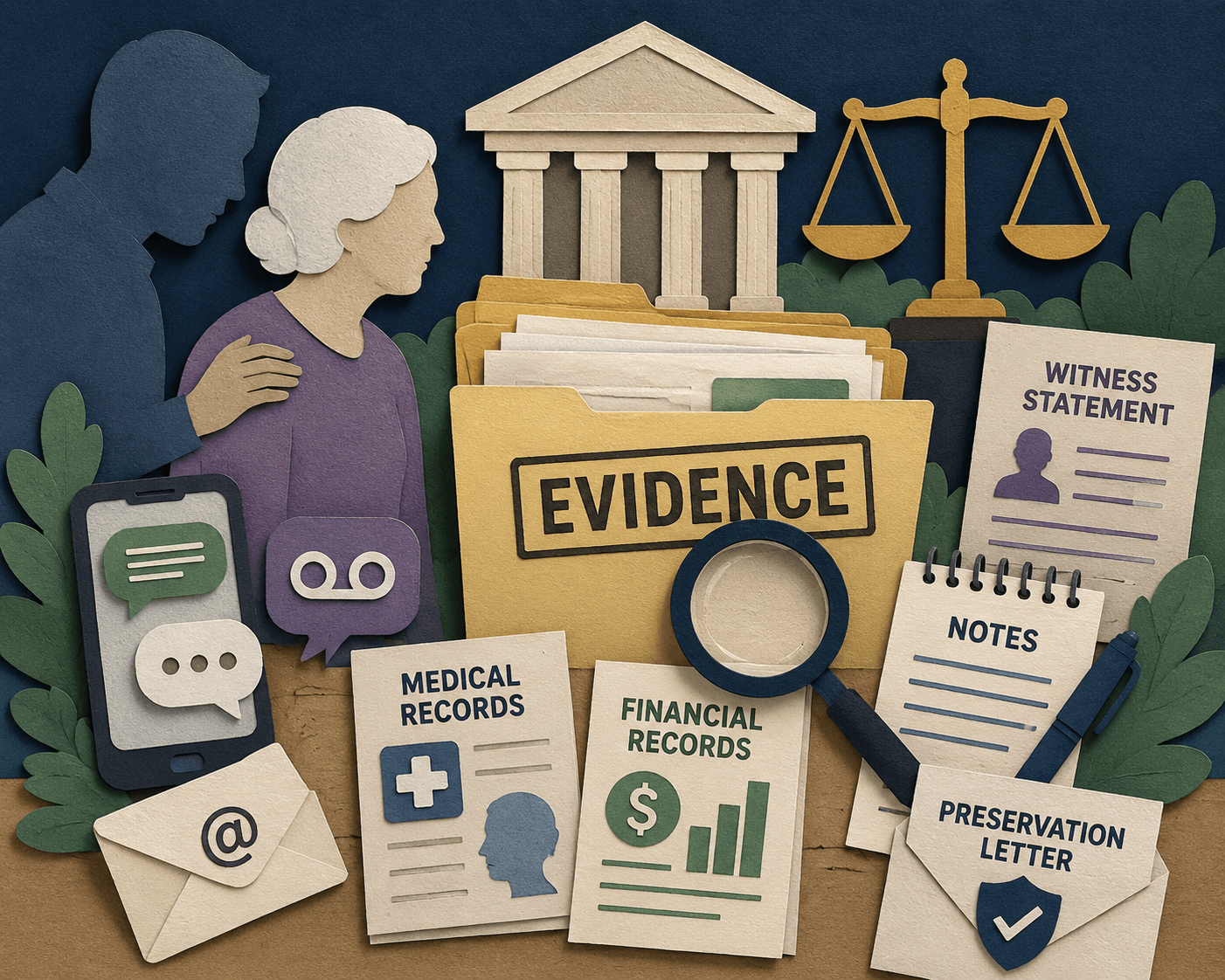
Evidence That Wins California Trust Contests and Elder Financial Exploitation Cases

Why the Record Is Everything
I am Michael Hackard, founder of Hackard Law. Over five decades of California trust and estate litigation, I have fought for heirs, beneficiaries, and elder abuse victims across Sacramento, the San Francisco Bay Area, and Los Angeles. I have written four books on inheritance protection and produced more than 1,000 educational videos that have drawn over seven million views. In that time, one truth has proven itself again and again: the families who recover are almost always the families who preserved evidence before they fully understood what it was.
This post is about what actually wins these cases. Not legal theories. Not courtroom drama. The record.
Hackard Law provides contingency fee representation for qualified trust contest and elder financial exploitation cases – no upfront costs to you. To speak with our team, call (916) 313-3030.
Quick Summary
Evidence preserved early determines what any attorney can accomplish later in a California trust contest or elder financial exploitation case. Acting quickly – before records are purged or communications are deleted – is often the difference between a recoverable case and a lost one.
- Text messages, voicemails, and emails are fragile and must be preserved the day they are identified
- Medical records establish a cognitive baseline and deviation around the time of disputed transfers
- Financial records reveal when unusual transactions began and how they escalated
- Contemporaneous notes written close in time to an event carry significant evidentiary weight
- A preservation letter from counsel creates a legal duty to retain records and triggers consequences if documents are destroyed
Four Pieces of Evidence That Tell the Whole Story
Let me describe four real pieces of evidence – the kind that surface in trust contests and elder financial exploitation cases across California.
A text message a stepdaughter sent to her brother four days before she drove their mother to an attorney’s office: “She is doing laundry, going through paperwork, literally on speed. I keep telling her to lay down and she won’t. She is going to hurt herself.”
A voicemail the mother left six months before she died: “This isn’t a good time right now. I’m a little confused. Di will be here on the 7th through the 12th. Maybe if you call during that time she can get things straightened out.”
A trust document that identified a man’s four children by name – and misspelled every single one.
A text sent from an elder’s phone to his daughter: “Don’t call me.”
None of these items were created as legal evidence. All of them became the center of their respective cases. The stepdaughter who sent that text had no idea she was writing the core of the case against herself. She sent it to her brother. He kept it. Four days before the signing, describing their mother as confused and at risk of hurting herself – that text demonstrated the mother’s condition at the time of the trust restatement better than any medical record could.
For more on how these disputes unfold, the top 10 most common probate, trust, and estate battles offer useful context on the patterns California families encounter.
The Five Evidence Categories That Decide Cases
Medical Records
Medical records from the years surrounding disputed transfers establish two things: the baseline and the deviation. A patient who asked the same question three times in ten minutes. A documented hospitalization during the period a power of attorney was signed. A diagnosis that appeared in the chart six months before anyone told the family.
Once a lawsuit is filed, these documents can be obtained directly from a family member with healthcare agent authority or through a subpoena. There is a time limit. Medical facilities purge records and adhere to retention schedules. Now is the time to ask for them, not after the lawsuit has started.
When a power of attorney is at the center of the dispute, the medical record often becomes the most important document in the file. Families dealing with suspected power of attorney abuse should move quickly to preserve these records.
Financial Records
Account statements, wire transfer histories, and transaction logs establish the timeline of the taking. When the first unusual transfer happened. When the pattern accelerated. When accounts that had been stable for decades began to move.
Without a preservation letter, financial institutions follow their standard retention schedules. Records from three years ago may not exist by the time litigation is filed. A preservation letter sent by counsel creates a legal duty to retain those records – and triggers spoliation consequences if documents are subsequently destroyed.
Case Pattern: A family suspected that an elder’s caregiver had redirected funds over a two-year period. When counsel sent a preservation letter to the relevant financial institution early in the matter, account records that would otherwise have been purged under routine retention policy remained available. The transaction timeline those records revealed became the foundation of the recovery.
Communications
Texts, emails, voicemails, and letters are the most valuable evidence in these cases – and the most fragile. A deleted text thread is gone. A voicemail that expires after thirty days is gone. An email chain that seemed unimportant at the time may be the most significant document at deposition.
Forward important emails to a dedicated account the day you receive them. Screenshot text threads with visible timestamps. What looks trivial today may be central six months from now. California beneficiaries who are uncertain about their rights while evidence is accumulating can learn more about what beneficiaries can do when trustees delay or withhold.
Contemporaneous Notes
Notes written in the days or weeks after an observation – dated to when the event occurred – carry weight precisely because they were made close in time. A daughter who wrote in a notebook on December 14th that her father seemed confused about who she was, and that the caregiver was present during the entire visit, has something more valuable than memory. She has a record.
Courts understand that memory fades and that recollections shaped by later events are less reliable than notes made at the time. A simple dated journal entry, written honestly and without legal strategy in mind, can be more persuasive than a polished declaration written years after the fact.
Case Pattern: In a matter involving a disputed trust amendment, a son had kept a running notebook of his visits with his father over eighteen months. The entries were plain and specific – dates, observations, who was present, what his father said. Those notes tracked a decline that medical records confirmed but could not fully describe. The notebook became one of the most cited exhibits in the proceeding.
Witness Observations
Witness observations tie everything together. A neighbor who watched a caregiver drive an elder to the same unknown office six times in one fall – and mentioned it to his wife at the time – became the discovery that opened a case a family believed was already closed. A home health aide who observed an elder being pressured to sign documents. A bank teller who flagged a transaction as unusual.
These witnesses often do not know what they saw mattered until someone asks. Identifying and reaching them early – before memories fade or circumstances change – is part of building the record that makes a case recoverable. Families navigating these situations in California can find guidance on how to choose the right probate lawyer for their specific circumstances.
Why Preservation Letters Matter
A preservation letter is one of the most powerful early tools in trust litigation and elder financial exploitation cases. When counsel sends a preservation letter to a financial institution, a care facility, or an opposing party, it creates a formal legal duty to retain relevant records. If those records are subsequently destroyed, the destroying party faces spoliation consequences – including adverse jury instructions that allow a factfinder to conclude the destroyed evidence was unfavorable.
Institutions and individuals carry on their regular activities without a preservation letter. Emails are erased. Bank records are deleted. Records on phones expire. Before a single motion is filed, the letter modifies the legal environment.
For families evaluating their options, understanding contingency fee representation in California trust litigation can help clarify how to access qualified legal help without upfront costs.
The Human Stakes Behind the Evidence
I have spent five decades watching families navigate the most painful intersections of grief, betrayal, and legal complexity that exist. Discovery, forensic analysis, and the pursuit of justice – these are not just legal strategies, but safeguards for families threatened by undue influence and fraud.
When a trust document misspells the names of four children, it is not just a drafting error. It is a signal that the document was prepared by someone who did not know the family – and that the elder who supposedly directed it may not have been directing anything at all. The financial toll grows with every month that passes without action. The fracture often runs too deep for any judgment to mend, but recovery of what was taken is still worth fighting for.
What dishonesty attempted to steal is restored by an unwavering dedication to the truth. The record is important because of this. For this reason, what a lawyer can do in the months and years that follow depends on what they do in the initial weeks after realizing what has happened.
Key Definitions
- Preservation letter: A formal written notice from counsel to a party or institution demanding that relevant records be retained and not destroyed.
- Spoliation: The destruction or alteration of evidence after a preservation duty has been established, which can result in adverse legal consequences including negative jury instructions.
- Trust restatement: A document that replaces the terms of an existing trust while keeping the trust entity intact, often used to change beneficiaries or trustees.
- Contemporaneous notes: Written records created at or close to the time of an observed event, valued for their proximity to the facts they describe.
- Healthcare agent: A person designated under a healthcare directive to make medical decisions and, in some cases, to access medical records on behalf of an incapacitated individual.
- Subpoena: A court order requiring a person or institution to produce documents or testify in a legal proceeding.
- Cognitive baseline: A documented record of an individual’s mental functioning at a particular point in time, used to measure later decline or deviation.
- Undue influence: Pressure or manipulation that overcomes a person’s free will and causes them to act against their own interests, a recognized basis for invalidating trust and estate documents in California.
- Financial exploitation: The wrongful taking, concealing, or misuse of an elder’s funds, property, or assets, often by a person in a position of trust or confidence.
- Retention schedule: An institution’s standard policy governing how long particular categories of records are kept before being destroyed.
What to Do Next
- Look for any texts, emails, or voicemails that describe the elder’s condition, confusion, or unusual behavior – forward or screenshot them immediately.
- Get copies of financial account statements covering the past three to five years while they are still available.
- Write down everything you remember observing, dated to when each event occurred, and keep those notes in a secure location.
- Try to avoid contacting opposing parties directly about documents – a preservation letter from counsel is far more effective and legally consequential.
- Look for neighbors, home health aides, bank staff, or others who may have witnessed unusual behavior or transactions and note their contact information.
- Get copies of any trust or estate documents you have access to, including older versions that predate the disputed changes.
- Try to avoid waiting to consult an attorney – records are being purged on ordinary retention schedules right now.
- Reach out to the elder’s treating physicians or care facilities to understand what records exist and how to request them.
- Look for a California trust and estate litigation attorney who handles cases on contingency so that upfront costs are not a barrier.
- Call Hackard Law at (916) 313-3030, or visit our contact page to schedule a consultation.
CALL THE SAGE | When Experience Matters, Families Listen
🏛️ We practice California trust & estate & elder financial abuse litigation
⚖️ We represent heirs, beneficiaries, and elder abuse victims
🎥 1,000+ educational videos | 7 million+ views | 4 published books
🎯 “After thousands of cases, I see the pattern others miss.”
CONTINGENCY REPRESENTATION – No Win, No Fee
Throughout California: Sacramento | Los Angeles | Bay Area
📞 CALL THE SAGE: (916) 313-3030
Subscribe for weekly insights on:
- Elder financial abuse warning signs and prevention
- Trust and estate litigation strategies
- Inheritance protection for California families
- Family protection strategies
When your inheritance is under attack, Call The Sage.
Hackard Law | 10640 Mather Blvd, Mather CA 95655
Attorney Advertisement | Michael Hackard, State Bar #71067
RELATED VIDEOS
Trust & Will Challenges | Commitment and Experience
What it takes to successfully challenge a trust or will in California.
Mental Illness | Contesting a California Will or Trust
How mental illness factors into contesting a California will or trust.
Trust Traps Part 2 | Financial Entanglement: How Estate Predators Tighten Their Grip
How financial predators gradually entrench themselves in an elder’s estate.
Say What? | Estate and Trust Drafting Attorney Mishaps
Real examples of costly errors made by attorneys drafting estate documents.
Sibling Estate & Trust Duels | Drama and Trauma
The emotional and legal battles that erupt between siblings over estates.
California Trust Litigation: 5 Factors to Bear in Mind
Five key considerations anyone facing California trust litigation should understand.
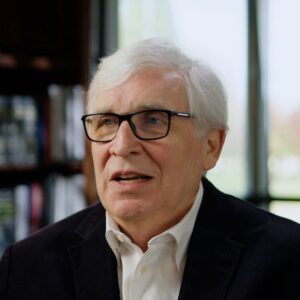 Michael Hackard is the founder of Hackard Law, a California trust and estate litigation firm with more than five decades of experience protecting the inheritance rights of families across Sacramento, the San Francisco Bay Area, and Los Angeles. He is the author of six published books on inheritance protection and has produced more than 1,000 educational videos with over seven million views.