


 (916) 775-8542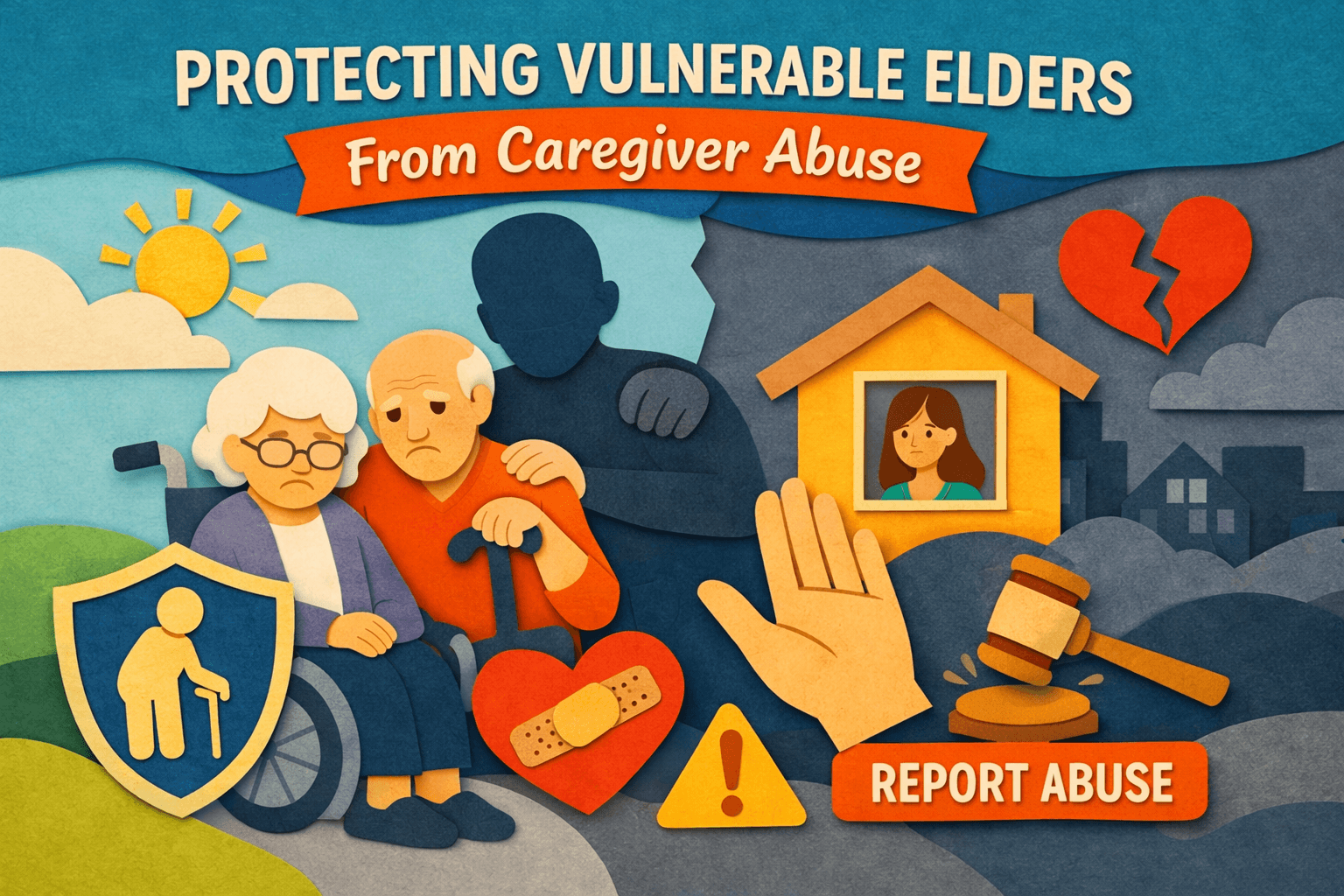
5 Red Flags of Caregiver Exploitation Every California Family Should Know

Protecting Vulnerable Elders From Caregiver Abuse
I’m Michael Hackard, founder of Hackard Law. Over more than five decades of practicing trust and estate litigation, I have represented families across Sacramento, the San Francisco Bay Area, and Los Angeles who discovered that a caregiver had crossed the line from providing care to stealing an inheritance. In my four published books on inheritance protection, I detail how caregiver exploitation unfolds and what families can do to stop it. Through more than 1,000 educational videos — now with over seven million views — I continue to educate families about recognizing the warning signs before it is too late.
Caregiver exploitation is among the most devastating forms of elder financial abuse, striking at those who are most dependent and least able to defend themselves. Most caregivers serve with kindness and honor, but when trust is broken, the consequences can be swift and severe—an entire legacy lost in the space of a few months. Recognizing the early signs is not just a legal safeguard; it is an act of love and stewardship for those who came before us.
Hackard Law provides contingency fee representation for qualified cases, meaning families pay no upfront costs to hold exploitative caregivers accountable. You can learn more about contingency fee options for trust and estate litigation.
If you suspect a caregiver is exploiting your loved one, contact Hackard Law today for a confidential consultation.
Quick Summary
Caregiver exploitation follows recognizable patterns. Families who learn to spot the warning signs can intervene before the damage becomes irreversible. Michael Hackard identifies five critical red flags.
- Isolation of the elder from family members and friends
- Unexplained or suspicious financial transactions
- Sudden & unperceived changes to wills, trusts, or powers of attorney that benefit the caregiver
- Unusual or expensive gifts flowing from the elder to the caregiver
- A decline in health or hygiene despite available resources for proper care
Red Flag One: Isolation From Family and Friends
An exploitative caregiver often begins by isolating the elder from the people who love them most. The caregiver may intercept phone calls, block emails, or manufacture excuses for why visits are not possible. “Grandma’s not feeling well today” becomes the refrain whenever a family member tries to arrange a visit.
Isolation serves a deliberate purpose. It removes the witnesses who would otherwise notice that something is wrong. When no one else has regular access to the elder, the caregiver gains unchecked control over daily decisions, finances, and even the elder’s understanding of reality.
When a loved one becomes harder to reach, families must listen to what the silence is saying. Excuses that pile up between you and your parent or grandparent are rarely accidental; they are often the first bricks in a wall meant to keep you out. If you notice this distance growing, it is time to ask hard questions and, if needed, seek help to protect those you love.
Case Pattern: The Gatekeeper Caregiver
I have seen the pattern too often: a live-in caregiver quietly takes control of the phone, arranges ‘rest days’ that always seem to fall on family visits, and by the time the door is opened again, the family’s inheritance has already slipped away. In these moments, swift action is not just about recovering money—it is about restoring trust and reconnecting families before the damage becomes permanent.
Red Flag Two: Unexplained Financial Transactions
Financial exploitation is the core of most caregiver abuse. It shows up as large bank withdrawals, unusual purchases, new credit cards opened in the elder’s name, or sudden expensive gifts directed toward the caregiver. ATM withdrawals may appear on an elder’s statements who rarely uses cash.
These betrayals rarely begin with a single bold act. They start quietly—a small withdrawal, a grocery bill, a favor repaid—and grow as the caregiver tests how far trust can be stretched. By the time the pattern is clear, what was once a nest egg may have vanished, leaving families to wonder how it happened so quickly.
One of the best resources available to families is regular financial statement monitoring. California law provides civil remedies, including double damages and attorney fee recovery, for elder financial abuse. Families who catch unauthorized transactions early have the strongest position to recover stolen assets.
Red Flag Three: Changes in Legal Documents
Modifications to wills, trusts, or powers of attorney that benefit a caregiver represent one of the most alarming signs of exploitation. A parent who has maintained the same estate plan for decades suddenly rewrites a will to leave everything to a caregiver who has been in the home for six months. A caregiver who persuades a vulnerable elder to grant power of attorney effectively gains control over the elder’s entire financial life.
These changes, particularly when made without independent legal advice or when the elder shows signs of cognitive decline, raise serious concerns about undue influence under California law. Undue influence occurs when a person in a position of trust uses that relationship to override the elder’s free will and direct assets toward themselves.
The California Probate Code establishes a presumption of undue influence when certain conditions exist, including when a caregiver in a confidential relationship with the elder benefits from a last-minute document change. Families who discover these changes should consult a trust and estate litigation attorney immediately.
Case Pattern: The Last-Minute Trust Amendment
A common pattern involves a caregiver who arranges for an attorney — often one unfamiliar with the elder’s history — to draft a trust amendment naming the caregiver as primary beneficiary. The amendment is signed while the elder’s longtime family members are ignorant of the meeting. When challenged, these amendments frequently fail to withstand judicial scrutiny because they bear the hallmarks of undue influence and inheritance theft.
Red Flag Four: Unusual or Expensive Gifts
It is natural for elders to show gratitude to those who care for them—a card, a small gift, a kind word. But when tokens of thanks become treasures—a cherished ring, a new car, or envelopes of cash that far exceed the cost of care—families must pause and ask whether generosity has been replaced by manipulation.
Such gifts often signal something deeper: an elder who no longer grasps the true value of what is being given, or who feels compelled to please the only person left in their daily life. As isolation grows, so too does the risk that gifts are no longer acts of free will, but signs of subtle coercion.
Any gifts that families learn about should be recorded and compared to the elder’s past generosity patterns. An out-of-character gift — particularly one that depletes savings or transfers valuable property — deserves immediate attention. These transfers may constitute elder financial exploitation under California law.
Red Flag Five: Declining Health or Hygiene
Neglect and exploitation are often twin shadows in the lives of vulnerable elders. When a caregiver is more interested in bank balances than well-being, the signs are written on the body and in the home: weight lost without reason, illnesses left untreated, a house that slips from order into neglect.
This kind of neglect is especially cruel, because the very resources meant to provide comfort and dignity are instead diverted. When one person holds the purse strings and the daily schedule, an elder can be left wanting for care even as their savings quietly disappear.
When families see a loved one fading under a caregiver’s watch, it is not enough to chalk it up to age. Ask where the money for care is truly going. If a caregiver arrives in a new car while the elder misses meals and medical visits, the story is clear—and it is time to act. By learning these patterns, families can draw the line before it is crossed.
Key Definitions
- Caregiver Exploitation: The abuse of a caregiving relationship to gain unauthorized access to an elder’s finances, property, or legal documents
- Undue Influence: Excessive influence that overcomes an elderly person’s free will that causes them to act against their own interests, as defined under California Welfare and Institutions Code Section 15610.70
- Power of Attorney: A legal document granting another person authority to act on someone’s behalf in financial or legal matters
- Elder Financial Abuse: The illegal or improper use of an elder’s funds, property, or assets, as defined under California law
- Double Damages: A remedy available under California elder abuse statutes that allows courts to award twice the actual damages suffered
- Trust Amendment: A legal modification to the terms of a living trust, which may change beneficiaries, trustee designations, or distribution instructions
- Contingency Fee Representation: A fee arrangement where the attorney’s payment is contingent on recovering assets, meaning clients pay no upfront legal fees
- Probate Code Presumption: Under California law, a rebuttable presumption that certain transfers to caregivers and others in confidential relationships resulted from undue influence
What to Do Next
- Document every red flag you observe, including dates, amounts, and descriptions of concerning behavior
- Request copies of recent bank and financial statements for your loved one
- Ask to review current estate planning documents, including any recent amendments to trusts or wills
- Visit your loved one unannounced to assess their living conditions and physical health
- Contact Adult Protective Services if you believe your loved one faces immediate danger
- Consult a Sacramento County probate litigation attorney to evaluate your legal options
- Preserve all evidence of financial transactions, gifts, and communications with the caregiver
- Consider petitioning the court for a conservatorship if your loved one cannot protect themselves
- Review the top ten most common probate, trust, and estate battles to understand how these disputes unfold
If your family is facing caregiver exploitation, call Hackard Law at (916) 313-3030 to discuss your case and learn how California law can help you recover what was taken.
Call the Sage
CALL THE SAGE | When Experience Matters, Families Listen
THE EXPERTISE:
📚 50 years California trust, estate & elder financial abuse litigation
⚖️ We represent heirs, beneficiaries, and elder abuse victims
🎥 1,000+ educational videos | 7 million+ views | 4 published books
🎯 “After thousands of cases, I see the pattern others miss.”
CONTINGENCY REPRESENTATION — No Win, No Fee
Throughout California: Sacramento | Los Angeles | Bay Area
📞 CALL THE SAGE: (916) 313-3030
Subscribe for weekly insights on:
- Elder financial abuse warning signs and prevention
- Trust and estate litigation strategies
- Inheritance protection for California families
- Family protection strategies
When your inheritance is under attack, call The Sage.
Hackard Law | 10640 Mather Blvd, Mather, CA 95655
Attorney Advertisement | Michael Hackard, State Bar #71067
RELATED VIDEOS
Inheritance Heists Ch. 9: Caregiver Undue Influence Against Seniors
Exact topical match — directly addresses caregiver undue influence against seniors, the central theme of the blog.
Should a Paid Caregiver Inherit $4 Million? | Undue Influence
Directly mirrors Red Flag Three (document changes benefiting caregivers) and the broader caregiver exploitation narrative of the blog.
Estate Plan Sabotage: How to Stop Undue Influence Before It’s Too Late
Strongly matches Red Flag Three (last-minute trust amendments, will changes) and the blog’s call to action for early legal intervention.
Trust Traps Part 4: How to Defeat Inheritance Heists & Undue Influence
Directly cited in the blog’s body content and aligns with the legal remedies and challenge strategies discussed throughout.
Capacity & Undue Influence | CA Estate Litigation
Directly relevant to the blog’s discussion of elders with cognitive decline signing documents under caregiver pressure and California Probate Code presumptions.
Stopping Undue Influence & Estate Theft | CA Probate and Trust Litigation Attorneys
Reinforces the blog’s ‘What to Do Next’ section and call to action, offering families a clear path to legal recourse in California.
 Michael Hackard is the founder of Hackard Law, a California trust and estate litigation firm with more than five decades of experience protecting the inheritance rights of families across Sacramento, the San Francisco Bay Area, and Los Angeles. He is the author of four published books on inheritance protection and has produced more than 1,000 educational videos with over seven million views.