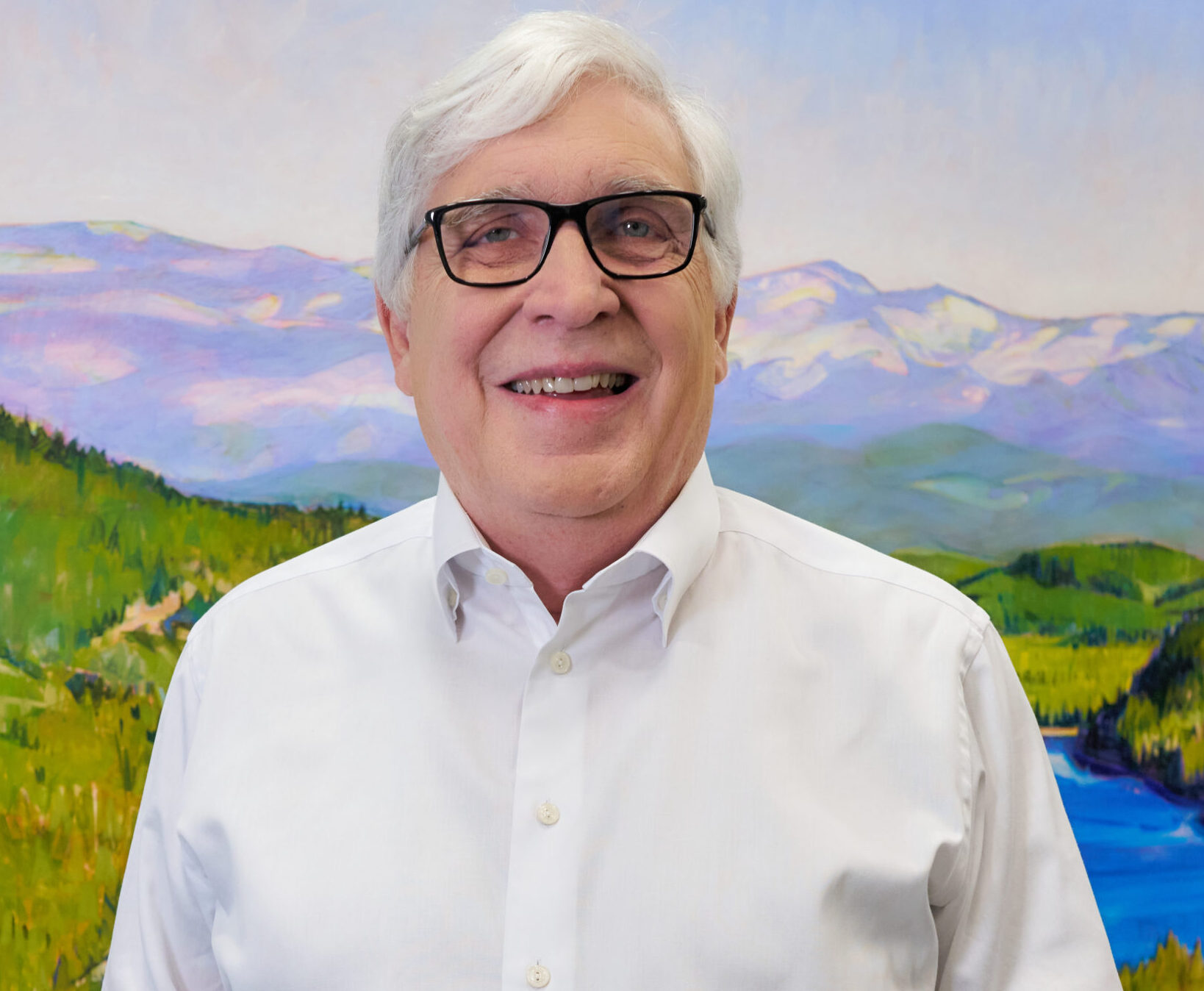
I’m Michael Hackard, founder of Hackard Law. Over five decades of practice, I have fought for heirs, beneficiaries, and elder abuse victims across California – from Sacramento to the San Francisco Bay Area and Los Angeles. I have written four published books on inheritance protection and, with my team, produced more than 1,000 educational videos that have reached over seven million viewers. I built this firm on a simple conviction: families deserve lawyers who keep getting better, not just lawyers who have been around a long time.
This post is a little different from most of what we publish. It is inspired by a song – Vince Gill’s “Young Man’s Town” – and by a mentor who shaped how I think about learning, leadership, and the responsibility to pass hard-won knowledge to the next generation. That spirit drives everything we do at Hackard Law today.
Hackard Law handles qualified trust, estate, and elder financial abuse cases on a contingency fee basis – no upfront costs to you. To speak with our team, call (916) 313-3030.
Quick Summary
Hackard Law transformed its litigation practice during and after COVID, emerging as a sharper, more client-focused firm built on decades of mentorship and deliberate reinvention.
The firm serves trust beneficiaries, heirs, and elder abuse victims throughout California.
COVID forced a rethinking of deposition strategy, trial preparation, and case development
Lessons from great lawyers – including cross-examination authority Roger Dodd – reshaped how the firm litigates
Mock jury trials, focused chronologies, and sophisticated discovery are now standard tools.
The goal is always the same: come out of every challenge stronger than you entered it.
The Song That Started This Conversation
Vince Gill has said that “Young Man’s Town” is one of his favorite songs he has ever written. Its lyrics cut straight to something real: “We’ve gotta face it, it’s a young man’s town. I knew this day was coming all along. So why bitch and moan and say they done you wrong. Just teach them what you know and pass it on down.”
Gill explained in an interview that the song was about finding a gracious way to hand the baton to a younger generation – without bitterness, without ego, with purpose. Those words landed hard for me. Teaching what you know and passing it down is not just a sentiment. At Hackard Law, it is a practice.
That is part of why we have published nearly 1,000 educational videos and why I wrote my books on protecting America’s elders. Knowledge shared is knowledge multiplied.
A Mentor Worth Remembering
The most important professional lesson I ever received came from a man named Peter Baier. He was a Yale and Yale Law School graduate, a California State Senator from 1970 to 1978, and someone many called the conscience of the Senate. I worked for him through the Senate Fellows Program in 1975. He was also a committed conservationist who authored California’s Wild and Scenic Rivers Act of 1972.
Peter told me something I have never forgotten. When faced with a unique or difficult problem, he would call the most knowledgeable person in the country about that problem and ask for their advice. He said it almost always worked. I have followed that practice ever since – reaching out to prominent statesmen, entrepreneurs, authors, and lawyers over the decades. Most are honored by the call. Some are not. But the helpful far outnumber the rest.
That habit of seeking out the best thinking available is baked into how Hackard Law operates today.
How COVID Changed Everything
When the courts shut down in March 2020, Hackard Law faced the same disruption every litigation firm did. Depositions went remote. Trial dates disappeared. The pace of litigation changed entirely. But we made a decision early: we would commit to coming out of the crisis stronger than we entered it.
We took the time the pandemic created and used it to rethink our practice from the ground up. Estate and trust cases are typically tried in probate court before a judge. Elder financial abuse cases go to civil juries. Getting to trial quickly became impossible – but preparation became everything. We developed a sharper awareness that deposition is really trial. What happens in a deposition shapes the entire arc of a case.
Case Pattern: After a trustee had been routinely mismanaging assets for years, a family in California hired Hackard Law. The opposing party’s inconsistencies were revealed early and thoroughly because thorough deposition preparation had been handled as trial preparation from the beginning. The beneficiaries’ inheritance was safeguarded by the terms of the case’s resolution.
Applying Senator Baier’s lesson, I reached out to Roger Dodd, one of the country’s leading authorities on cross-examination and the author of a foundational book on cross-examination for depositions. His techniques transformed how our team approaches witness questioning. Discovery became more sophisticated, more timely, and more precisely targeted. Every deposition is now built around a focused event chronology that maps the key facts of the case.
Mock Juries, Case Themes, and the Discipline of Preparation
One of the most significant changes we made is the regular use of online mock juries during trial preparation. We use mock jury trials to test case value, develop compelling case themes, and identify which facts matter most to real people – not just to lawyers.
This matters because what juries think is far more important than what we lawyers think. Our own assumptions about what is persuasive are often wrong. Mock juries cut through that. They tell us where our case is strong, where it is weak, and what story we need to tell more clearly.
We also bring in a plaintiffs jury consultant early – not at the eve of trial, but at the beginning of a lawsuit. Building a case theme from day one shapes every decision that follows: what documents to request, which witnesses to depose, and how to frame the facts for a judge or jury.
Case Pattern: In an elder financial abuse matter, early mock jury testing revealed that jurors responded most strongly not to the dollar amount at stake, but to the isolation of the elder from family members. That insight reshaped the entire case narrative. The outcome reflected the strength of a story told from the right angle.
For beneficiaries who want to understand their rights before a dispute escalates, our guide on what California trust beneficiaries must know covers the essentials. Families dealing with elder financial abuse should also know that California law provides for double damages and attorney fee recovery in proven cases.
Strength at Every Stage
I will be honest about something. I do not have the physical endurance to grind through a hotly contested jury trial the way I once did. That is simply the truth. But our Hackard Law attorneys – Brian Jeremiah, Sarah Cullen, Dave Jones, and Heath Lengel – do. They bring the strength. I bring the decades of pattern recognition, the relationships, and the responsibility to teach.
For decades, I have stood with families at some of the worst moments of their lives – when a parent’s estate has been stolen, when a trustee has betrayed a trust, when an elder has been manipulated out of a lifetime of savings. The financial toll grows with every passing month of inaction. The fracture that runs through a family after inheritance theft often runs too deep for any judgment to fully mend. That is why preparation, strategy, and the relentless pursuit of truth matter so much.
Discovery, forensic analysis, and the pursuit of justice – these are not just legal strategies, but safeguards for families threatened by undue influence and fraud. A steadfast commitment to truth restores what dishonesty tried to steal.
Try to document everything – dates, conversations, financial transactions – even informally, before formal litigation begins.
Look into contingency fee representation, which allows qualified clients to pursue justice without paying upfront legal fees – our contingency fee guideexplains how it works.
Call Hackard Law at (916) 313-3030 to speak with our team about your situation.
You can also reach us through our contact pageto request a free consultation.
CALL THE SAGE | When Experience Matters, Families Listen
🏛️ We practice California trust & estate & elder financial abuse litigation
⚖️ We represent heirs, beneficiaries, and elder abuse victims
Common questions answered about when to hire an estate litigation attorney in California.
Frequently Asked Questions
Hackard Law combines more than five decades of litigation experience with a deliberate investment in modern trial preparation tools, including mock juries, focused event chronologies, and advanced deposition techniques. The firm handles cases on a contingency fee basis, meaning qualified clients pay nothing upfront. That combination of depth and accessibility sets the firm apart.
Mock juries are used during case preparation – not just before trial – to test case themes, evaluate how real people respond to the facts, and identify which arguments are most persuasive. This process shapes discovery strategy and helps the legal team build the strongest possible narrative long before a courtroom appearance.
Yes. Hackard Law represents heirs, beneficiaries, and elder abuse victims throughout California, including in Sacramento, the San Francisco Bay Area, Los Angeles, Santa Clara, and Alameda County. Cases involving elder financial abuse often qualify for enhanced remedies under California law, including double damages and attorney fee recovery.
A contingency fee means you pay no attorney fees unless your case is won or settled. Hackard Law offers this arrangement for qualified trust, estate, and elder financial abuse cases, making it possible for families to pursue justice even when they cannot afford traditional hourly billing.
The sooner the better. Early intervention preserves evidence, protects assets, and prevents further harm. If you suspect a trustee is acting improperly, an estate document has been changed under suspicious circumstances, or an elder has been financially exploited, do not wait – call (916) 313-3030.
About the Author
Michael Hackard is the founder of Hackard Law, a California trust and estate litigation firm with more than five decades of experience protecting the inheritance rights of families across Sacramento, the San Francisco Bay Area, and Los Angeles. He is the author of four published books on inheritance protection and has produced more than 1,000 educational videos with over seven million views.


 (916) 313-3030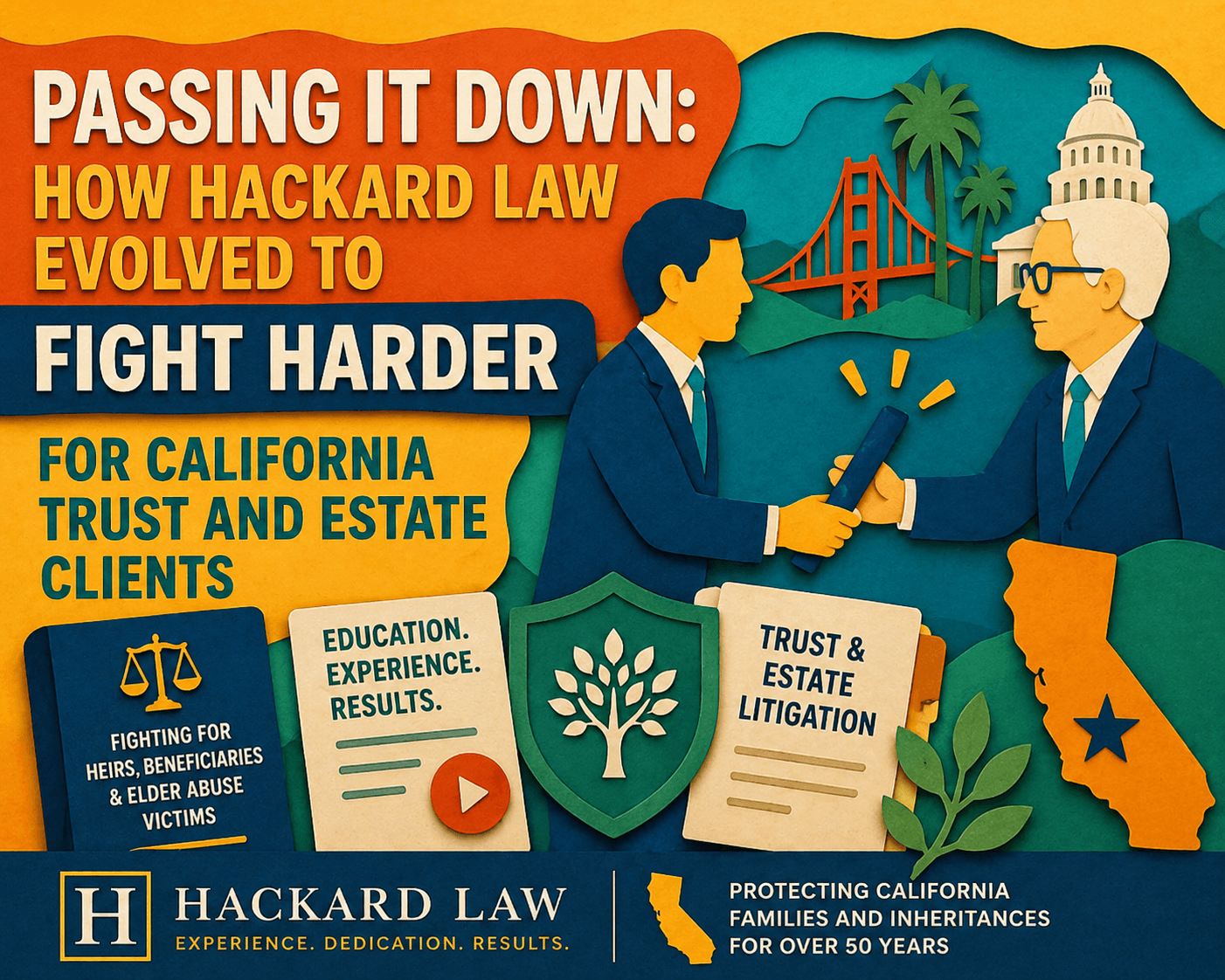
 Michael Hackard is the founder of Hackard Law, a California trust and estate litigation firm with more than five decades of experience protecting the inheritance rights of families across Sacramento, the San Francisco Bay Area, and Los Angeles. He is the author of four published books on inheritance protection and has produced more than 1,000 educational videos with over seven million views.