


 (916) 313-3030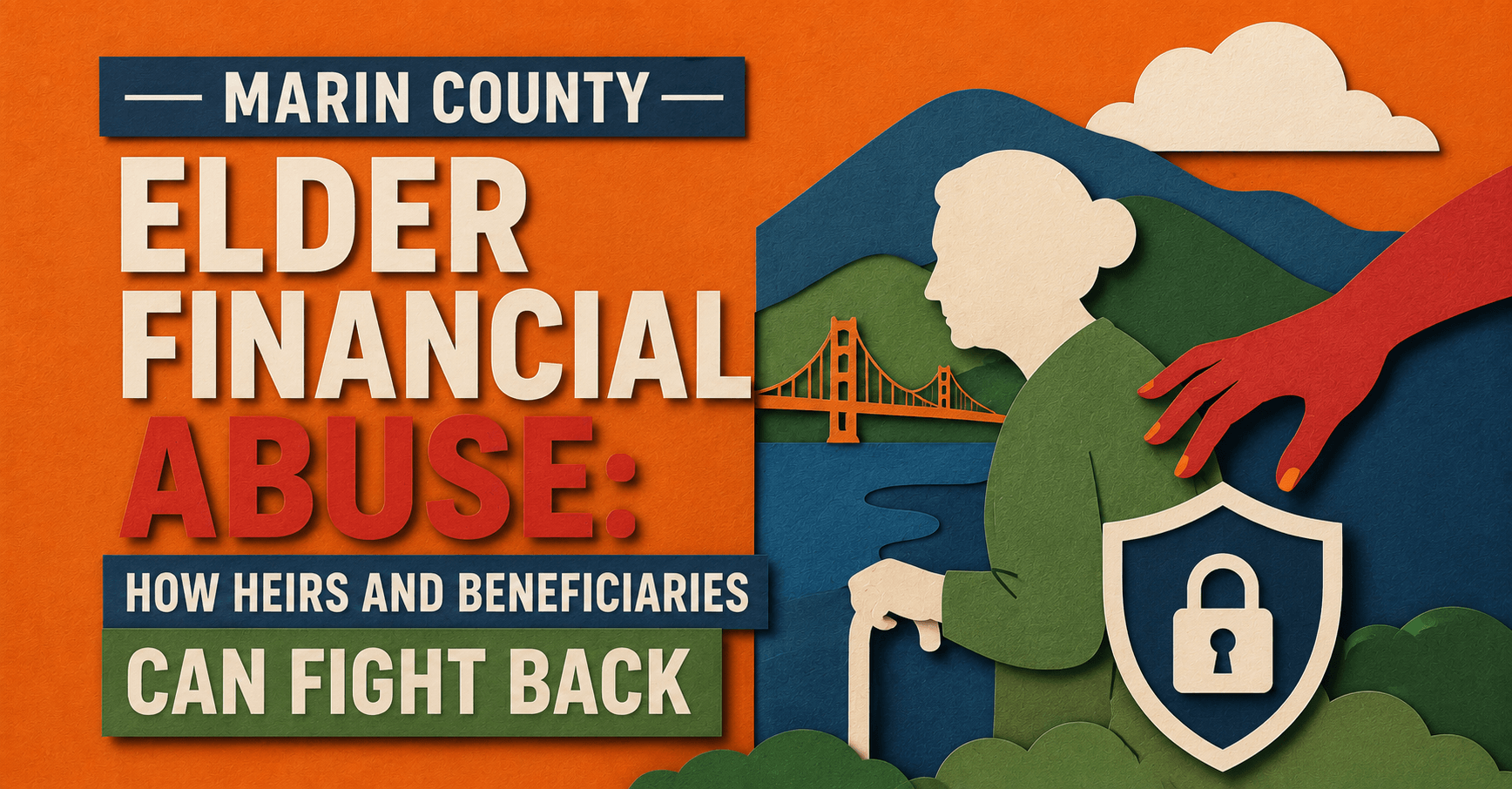
Marin County Elder Financial Abuse: How Heirs and Beneficiaries Can Fight Back

Who We Are and Why This Matters
I am Michael Hackard, founder of Hackard Law. Over five decades of practice, I have fought for heirs, beneficiaries, and elder abuse victims across California – from Sacramento and the San Francisco Bay Area to Los Angeles. I have written four books on inheritance protection and produced more than 1,000 educational videos that have reached over seven million viewers. That body of work reflects one consistent truth: elder financial abuse is not a rare exception. It is a growing crisis, and Marin County families are not immune.
Marin County carries one of the most substantial elderly populations in the state. With that demographic reality comes an elevated risk of financial exploitation – the kind that quietly strips a lifetime of savings, redirects inheritances, and leaves families with nothing but questions and grief. I have stood with families in these moments, and I know how much is at stake when an elder’s estate falls into the wrong hands.
Hackard Law provides contingency fee representation for qualified elder financial abuse and estate litigation cases – meaning no upfront costs to pursue your claim. If your family has been harmed, call us today at (916) 313-3030.
Quick Summary
Elder financial abuse in Marin County takes many forms, from caregiver theft to power of attorney misuse, and California law provides powerful remedies for those who act. Hackard Law represents heirs, beneficiaries, and elder abuse victims throughout California on a contingency fee basis.
- Caregiver exploitation, isolation tactics, and undue influence are among the most common abuse patterns
- Power of attorney abuse and joint account manipulation frequently target elderly Californians
- California law allows recovery of double damages, attorney fees, and punitive damages in proven elder abuse cases
- Contingency fee representation removes the financial barrier to pursuing these claims
- Early legal intervention often makes the difference between recovering assets and losing them permanently
The Most Common Elder Financial Abuse Patterns in Marin County
Elder financial abuse rarely announces itself. It builds gradually, often behind a mask of caregiving or family loyalty. Understanding the patterns is the first step toward stopping them.
Caregiver exploitation is one of the most prevalent forms. Professional or family caregivers who gain access to an elder’s home, finances, and daily life are positioned to commit serious financial harm – forging checks, making unauthorized withdrawals, or manipulating the elder into transferring property. The relationship of trust that makes caregiving possible is the same relationship that makes abuse so easy to conceal.
Abusers purposefully employ isolation as a tool. An abuser creates dependency and eliminates the social checks that could otherwise detect misconduct early by severing an elder from family and close friends. The elder is much more susceptible to coercion and manipulation once they are isolated. Families frequently talk about looking back and realizing the warning signs were present—the missed calls, the canceled visits, the abrupt shifts in communication or mood.
Undue influence in California estate law is a recognized legal theory that applies when coercion, manipulation, or psychological pressure causes an elder to change estate plans, add names to accounts, or transfer property in ways that do not reflect their true wishes. Courts examine the totality of the relationship – who had access, who benefited, and whether the elder had independent advice.
Case Pattern: Isolation Leads to Redirected Estate
Following the arrival of a new live-in caregiver, a Marin County family discovered that their elderly parent had stopped returning calls. Within months, the parent transferred a bank account into joint ownership and modified a trust to designate the caregiver as the principal beneficiary. The family filed a lawsuit following the parent’s passing. The estate was mostly returned to the legitimate heirs after the court discovered evidence of isolation and undue influence.
Power of Attorney Abuse and Joint Account Exploitation
Two of the most legally complex elder abuse scenarios involve instruments that were designed to help – powers of attorney and joint bank accounts.
A power of attorney grants an agent broad authority to manage an elder’s finances, property, and legal affairs. When that authority is used to serve the agent rather than the principal, it becomes a vehicle for theft. Agents have been known to drain accounts, sell real estate without authorization, redirect investment income, and change beneficiary designations – all while the elder remains unaware or too dependent to object. California courts take power of attorney abuse seriously, and Hackard Law has litigated these cases throughout the state.
Joint account exploitation follows a similar pattern. An elder adds a trusted person to a bank account for convenience – to help pay bills or manage day-to-day needs. That access is then used to make unauthorized withdrawals or to claim the account balance at death, bypassing the estate plan entirely. Disputed ownership claims over joint accounts are among the more contentious issues in California probate and trust litigation.
Case Pattern: Agent Drains Account Before Death
An agent under a durable power of attorney transferred substantial funds from an elder’s accounts to personal accounts over a period of eighteen months. The transfers were structured to avoid triggering bank alerts. After the elder’s death, beneficiaries who had expected a meaningful inheritance discovered the accounts were nearly empty. Forensic accounting revealed the pattern, and litigation under California’s elder financial abuse statutes resulted in a significant recovery, including attorney fees.
California’s Legal Remedies for Elder Financial Abuse
California provides some of the strongest statutory protections for elder financial abuse victims in the country. Under the Elder Abuse and Dependent Adult Civil Protection Act, prevailing claimants may recover double damages, attorney fees, and punitive damages – remedies that go well beyond what ordinary civil litigation allows.
These enhanced remedies exist because the legislature recognized that elder financial abuse is not simply a civil wrong. It is a betrayal of the most vulnerable members of our communities, and the law responds accordingly. You can read more about these remedies in our detailed guide to double damages and asset recovery under California law.
But remedies on paper mean nothing without the ability to pursue them. Hourly legal fees in complex estate litigation can reach $200,000 or more – a barrier that effectively denies justice to families who need it most. Contingency fee representation changes that equation. Hackard Law takes qualified elder financial abuse and estate cases on contingency, meaning families pay nothing unless we recover on their behalf.
For a broader look at how California families can protect inherited assets, our California inheritance theft guide covers the legal landscape in detail.
Why Cognitive Decline Makes Elders Prime Targets
Victims are not chosen at random by abusers. They search for weaknesses, and one of the most exploitable conditions an elderly person may encounter is cognitive decline. An elderly person may find it more difficult to identify manipulation, recall agreements, or express concerns to family members due to memory loss, confusion, and diminished judgment.
California courts recognize this reality. Evidence of cognitive decline at the time an estate plan was changed, a property was transferred, or an account was restructured is directly relevant to claims of undue influence and lack of capacity. Hackard Law works with medical records, financial records, and witness testimony to build the evidentiary record that courts require. Our resource on why seniors with cognitive decline are prime targets for manipulation explains this dynamic in depth.
For many years, I have supported families who felt helpless in the face of swiftly moving and covert abusers. With each month that assets stay in the wrong hands, the financial cost increases. Families frequently have too deep of a rift for any judgment to completely heal. But what dishonesty attempted to steal is restored by an unwavering dedication to the truth, which is what Hackard Law does on a daily basis. In addition to being legal tactics, discovery, forensic analysis, and the pursuit of justice serve as protections for families under threat from fraud and exploitation.
Key Definitions
- Elder financial abuse: The wrongful taking, concealment, or appropriation of an elder’s money, property, or assets by a person who stands in a position of trust or confidence.
- Undue influence: Excessive pressure or manipulation that overcomes an elder’s free will and causes them to act in a way that benefits the abuser rather than themselves.
- Power of attorney: A legal document authorizing one person (the agent) to act on behalf of another (the principal) in financial or legal matters.
- Contingency fee representation: A fee arrangement where the attorney is paid only if the client recovers money, with no upfront costs to the client.
- Double damages: A statutory remedy under California elder abuse law allowing a court to award twice the actual damages proven in a qualifying case.
- Isolation tactic: A deliberate strategy used by abusers to cut an elder off from family, friends, and advisors, increasing dependence and vulnerability.
- Joint account exploitation: The misuse of shared bank account access to make unauthorized withdrawals or claim ownership of funds at the elder’s death.
- Probate: The court-supervised process of administering a deceased person’s estate, including validating a will and distributing assets.
- Capacity: The legal standard for whether a person had sufficient mental ability to understand and consent to a legal transaction at the time it occurred.
- Forensic accounting: A financial investigation technique used in litigation to trace unauthorized transfers, identify patterns of theft, and reconstruct account histories.
What to Do Next
- Look for sudden changes in your loved one’s estate plan, account ownership, or financial behavior – these are often the first signs of exploitation.
- Get copies of any recent trust amendments, deeds, account changes, or powers of attorney before records become harder to access.
- Try to avoid confronting the suspected abuser directly before speaking with an attorney, as this can cause assets to be moved or destroyed.
- Document your observations – dates, conversations, behavioral changes, and financial transactions – in writing as soon as possible.
- Look into whether your loved one has been isolated from family members or longtime friends, and note when that pattern began.
- Explore your options under California’s elder financial abuse statutes, which provide enhanced remedies including attorney fees and double damages.
- Review our elder financial exploitation resource for a deeper understanding of how these cases unfold.
- Try to act quickly – California has statutes of limitations that can bar claims if too much time passes after the abuse occurred.
- Reach out to learn whether your case qualifies for contingency fee representation through our contact page.
- Call Hackard Law at (916) 313-3030 to speak with our team about your family’s situation and what legal options may be available to you.
CALL THE SAGE | When Experience Matters, Families Listen
🏛️ We practice California trust & estate & elder financial abuse litigation
⚖️ We represent heirs, beneficiaries, and elder abuse victims
🎥 1,000+ educational videos | 7 million+ views | 4 published books
🎯 “After thousands of cases, I see the pattern others miss.”
CONTINGENCY REPRESENTATION – No Win, No Fee
Throughout California: Sacramento | Los Angeles | Bay Area
📞 CALL THE SAGE: (916) 313-3030
Subscribe for weekly insights on:
- Elder financial abuse warning signs and prevention
- Trust and estate litigation strategies
- Inheritance protection for California families
- Family protection strategies
When your inheritance is under attack, Call The Sage.
Hackard Law | 10640 Mather Blvd, Mather CA 95655
Attorney Advertisement | Michael Hackard, State Bar #71067
RELATED VIDEOS
Elder Financial Abuse | Warning Signs | CA Trust Litigation
Learn to spot the red flags of elder financial abuse before it’s too late.
POA Vultures | Power of Attorney Abuse
Explores how abusers exploit power of attorney to drain an elder’s finances.
Tips to Fight Elder Financial Abuse | Keep It Juicy!
Practical strategies families can use to push back against elder financial exploitation.
Inheritance Heists: Commitment to Protecting Heirs and Beneficiaries
Covers how heirs and beneficiaries can protect their rightful inheritance from theft.
Bay Area Estate & Trust Litigation Battles | Disinherited House Beneficiaries
Examines estate and trust disputes affecting Bay Area families cut out of inheritances.
How Does a Lawyer Enforce Elder Financial Abuse Law? | CA Trust Litigation
Explains the legal tools California attorneys use to pursue elder financial abuse claims.
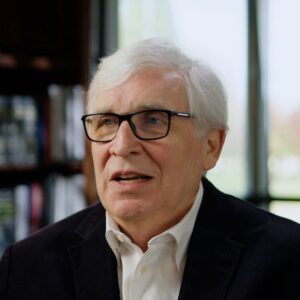 Michael Hackard is the founder of Hackard Law, a California trust and estate litigation firm with more than five decades of experience protecting the inheritance rights of families across Sacramento, the San Francisco Bay Area, and Los Angeles. He is the author of six published books on inheritance protection and has produced more than 1,000 educational videos with over seven million views.