


 (916) 313-3030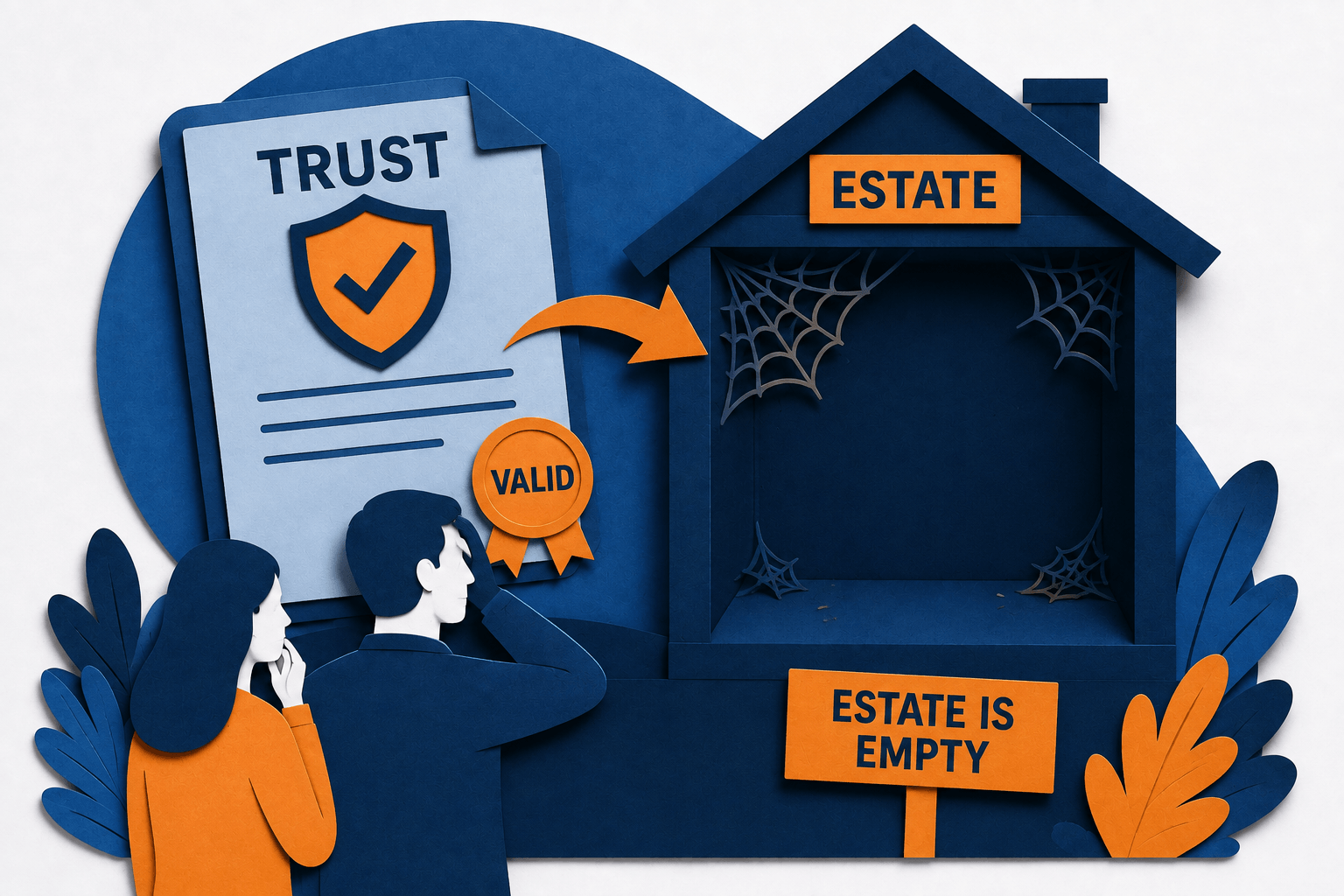
Pre-Death Estate Stripping: When the Trust Is Valid but the Estate Is Empty

The Phone Call That Comes After the Funeral
I am Michael Hackard, founder of Hackard Law and a California trust and estate litigation attorney with five decades of practice. I have written four published books on inheritance protection and produced more than 1,000 educational videos that have reached over seven million viewers. My firm serves families across California – from Sacramento and the San Francisco Bay Area to Los Angeles and the communities in between.
The call I receive more often than any other comes after the funeral. The family has had time to grieve, time to travel home, time to sit with the quiet. Then someone picks up the trust document. The names are right. The percentages are right. The attorney did their work. Then they pull the account statements. The accounts are empty.
This is not a story about a forged signature or a suspicious will. It is a story about wealth that was removed before the estate plan ever had a chance to govern it. Pre-death estate stripping is one of the most damaging – and least understood – forms of inheritance theft in California. And it is exactly the kind of case my firm was built to pursue.
Hackard Law provides contingency fee representation for qualified cases, meaning no upfront costs to families who need to fight back. To speak with our team, call (916) 313-3030.
Quick Summary
Pre-death estate stripping occurs when assets are removed from a future estate before death – through business restructuring, beneficiary designation changes, power of attorney abuse, or trustee self-dealing – leaving a valid estate plan with nothing left to distribute.
- The estate plan may be perfectly drafted yet cover almost no remaining assets
- California law provides remedies even when every signature is genuine
- Several California statutes run from the date of discovery, not the date of death
- Acting within the first thirty days of discovery is materially different from waiting months
- Families watching asset shifts in real time have more powerful legal tools than those acting after death
What Pre-Death Estate Stripping Actually Looks Like
Most families carry a mental image of inheritance theft: a forged document, a name added at the last minute, a will that looks suspicious. Pre-death estate stripping does not look like that. The documents look fine – because the taking did not go through the documents.
There are several different mechanisms. Control and value are transferred outside of the estate plan when a family business is transferred into a newly established LLC while the parent is still living. A beneficiary designation form was covertly altered during a hospital stay, resulting in the incorrect person receiving a retirement account or life insurance policy. While the elder is recuperating from a procedure the family was unaware of, real property is retitled. Someone with a power of attorney that the parent signed during a period of cognitive decline methodically liquidates a portfolio.
By the time the estate plan takes effect, there is nothing left for it to govern. The house, maybe. The furniture. A checking account with a few months of expenses. The California inheritance theft guide outlines many of these patterns in detail, and the picture is consistent: the taking happens upstream, before the documents apply.
Case Pattern: For the final two years of her life, a parent with a well-written revocable trust was primarily cared for by one adult child. During that time, a deed signed at the kitchen table retitled her house, and her investment accounts were moved to a joint account with that child. After her passing, the trust was found to be airtight. Before she passed away, the estate it was supposed to oversee had been largely dismantled. These kinds of transfers can be reached by California courts through capacity issues and undue influence related to the signing events, not the trust itself.
What California Law Actually Asks
California courts do not simply ask whether a document looks valid. The question is whether the person who signed it understood what they were signing – governed by California Probate Code sections 810 through 813 – and whether someone used their vulnerability to change the outcome.
Even if a transfer is properly documented, it may still be voidable. Even if someone else made the decision, a signature may still be genuine. The validity of the trust does not imply the integrity of the estate. California law treats these as separate legal issues.
Families dealing with life insurance beneficiary designation changes made during a period of diminished capacity have a specific set of remedies. Families dealing with LLC formations designed to move a family business out of reach have others. Power of attorney abuse – where an agent transfers assets to themselves – carries both civil and criminal exposure under California law. Each mechanism has a corresponding legal response.
Case Pattern: An elder signed a power of attorney naming a neighbor as agent after his children moved out of state. Over the following eighteen months, the agent transferred funds from multiple accounts into accounts the agent controlled. The transfers were documented, the signatures were genuine, and every transaction appeared routine on its face. After the elder’s death, his heirs pursued the agent under California’s elder financial abuse statutes. The fact that the signatures were real did not protect the agent from liability – the question was whether the elder understood and consented to each transfer.
The Mechanisms That Move Wealth Before Death
Understanding how pre-death estate stripping works helps families recognize it in real time. The four most common mechanisms are LLC formations, beneficiary designation changes, trustee self-dealing, and power of attorney abuse.
LLC formations can move a family business or real property portfolio outside the estate plan entirely. If the elder retains a minority interest and the controlling interest passes to another party, the estate plan may inherit a nearly worthless shell. Beneficiary designation changes on retirement accounts and life insurance bypass the trust and will entirely – they pass by contract, not by document, and a single form change can redirect hundreds of thousands of dollars. For families navigating these issues in Southern California, the Los Angeles estate litigation practice at Hackard Law handles exactly these disputes.
Trustee self-dealing is a category of its own. An administrative trustee who systematically liquidates trust assets, directs funds to related parties, or pays themselves excessive compensation can drain a trust’s value without ever touching the trust instrument. The document remains valid. The assets disappear. Families in the Bay Area dealing with trustee misconduct can find additional resources through Santa Clara estate litigation and Oakland estate litigation practice pages.
For a broader look at how these patterns appear across California probate courts, the top ten most common probate, trust, and estate battles resource provides useful context.
Why Timing Is Everything
Pre-death estate stripping is governed by a number of California statutes that take effect on the date of discovery rather than the date of death. That distinction is important. If a family takes action within thirty days of learning about the issue, they will have access to financial records, witnesses, and evidence that might not be available six months later. Accounts are moved. Witnesses disperse. Electronic documents are overwritten.
The legal remedies available to a living elder are also more powerful than those available after death. If the elder is still alive and transfers are occurring in real time, a court can act to freeze accounts, void transfers, and remove an agent before additional harm occurs. After death, the remedies shift – but they do not disappear. California courts can still reach transfers made years before death if those transfers were the product of undue influence, fraud, or lack of capacity.
The contingency fee guide for California trust and estate litigation explains how families without resources to pay hourly fees can still pursue these claims. Cost should not be the reason a family walks away from a legitimate case.
What Families Should Do When the Estate Is Empty
For decades, I have stood with families who discovered – too late, they feared – that the estate plan they trusted had been hollowed out before it ever applied. I have seen this pattern more times than I can count, and I want families to understand something clearly: discovering the problem after death does not mean the remedies are gone. It means the clock is running, and the work needs to start now.
In addition to being legal tactics, discovery, forensic analysis, and the pursuit of justice serve as protections for families under threat from fraud and undue influence. With each month of delay, the financial cost increases. A strong commitment to the truth can restore what dishonesty attempted to steal, but the rift that occurs in a family when one member steals the estate is frequently too deep for any judgment to heal.
If you are watching a parent’s accounts shift, a business get restructured, or an advisor get replaced – while the will and trust sit untouched – you may be watching pre-death estate stripping in real time. Call us. The sooner we can review the facts, the more options your family has.
Key Definitions
- Pre-death estate stripping: The removal of assets from a future estate before the owner dies, leaving the estate plan with little or nothing to distribute.
- LLC formation (as an estate mechanism): The creation of a limited liability company used to transfer ownership of a family business or real property out of the estate plan during the owner’s lifetime.
- Beneficiary designation: A contractual form on a retirement account, life insurance policy, or financial account that directs where assets pass at death, bypassing the will and trust entirely.
- Power of attorney: A legal document authorizing an agent to act on behalf of another person; when misused, the agent may transfer assets to themselves or third parties without the principal’s genuine consent.
- Capacity (Probate Code 810-813): California’s legal standard for determining whether a person understood the nature and consequences of a transaction at the time they signed it.
- Undue influence: Pressure or manipulation that substitutes another person’s will for the elder’s own, rendering a transaction voidable even if the signature is genuine.
- Trustee self-dealing: A trustee’s use of their administrative authority to benefit themselves or related parties at the expense of trust beneficiaries.
- Voidable transfer: A transfer that appears valid on its face but can be set aside by a court because of fraud, undue influence, or lack of capacity.
- Discovery rule: A legal principle that starts the statute of limitations clock from the date a party discovered – or reasonably should have discovered – the harm, rather than from the date it occurred.
What to Do Next
- Look for account statements, beneficiary designation forms, and deed records going back at least three to five years before death.
- Get copies of any power of attorney documents, LLC formation records, or trust amendments signed during the elder’s final years.
- Try to avoid destroying or discarding any financial records, even those that appear routine or insignificant.
- Look for patterns in account activity – systematic withdrawals, transfers to unfamiliar accounts, or large one-time payments to individuals.
- Talk to family members who had regular contact with the elder during the period in question, and document what they observed.
- Look for medical records or physician notes from the period when key documents were signed – these are often central to capacity and undue influence claims.
- Try to avoid confronting the person suspected of the taking before speaking with an attorney – early confrontations can cause evidence to disappear.
- Review the five things California trust beneficiaries must know before taking any action on your own.
- Consult with a California trust and estate litigation attorney who handles pre-death asset stripping cases – general estate planning attorneys are not the right resource for this.
- Call Hackard Law at (916) 313-3030, or visit our contact page to schedule a consultation with our team.
CALL THE SAGE | When Experience Matters, Families Listen
🏛️ We practice California trust & estate & elder financial abuse litigation
⚖️ We represent heirs, beneficiaries, and elder abuse victims
🎥 1,000+ educational videos | 7 million+ views | 4 published books
🎯 “After thousands of cases, I see the pattern others miss.”
CONTINGENCY REPRESENTATION – No Win, No Fee
Throughout California: Sacramento | Los Angeles | Bay Area
📞 CALL THE SAGE: (916) 313-3030
Subscribe for weekly insights on:
• Elder financial abuse warning signs and prevention
• Trust and estate litigation strategies
• Inheritance protection for California families
• Family protection strategies
When your inheritance is under attack, Call The Sage.
Hackard Law | 10640 Mather Blvd, Mather CA 95655
Attorney Advertisement | Michael Hackard, State Bar #71067
RELATED VIDEOS
Trust Traps Part 2 | Financial Entanglement: How Estate Predators Tighten Their Grip
Explores how predators use financial entanglement to gain control over estate assets.
Trust Traps Part 3: Manufacturing a Crisis to Seize Control of Estate Assets
Shows how bad actors manufacture emergencies to illegitimately seize control of an estate.
What Are Common Acts of Fraud in Trust or Probate? | California Estate Litigation Attorney
Walks through the most common fraudulent acts seen in California trust and probate cases.
A Message for Abused Trust and Estate Beneficiaries
Speaks directly to beneficiaries who believe their inheritance rights have been violated.
San Francisco Trust and Estate Litigation Timing Is Critical Hackard Law
Explains why acting quickly after discovering estate problems can make or break your case.
Disputed Trust & Estate Bank Accounts | CA Probate Litigation
Covers legal disputes over bank accounts that have been improperly accessed or drained.
 Michael Hackard is the founder of Hackard Law, a California trust and estate litigation firm with more than five decades of experience protecting the inheritance rights of families across Sacramento, the San Francisco Bay Area, and Los Angeles. He is the author of six published books on inheritance protection and has produced more than 1,000 educational videos with over seven million views.