


 (916) 313-3030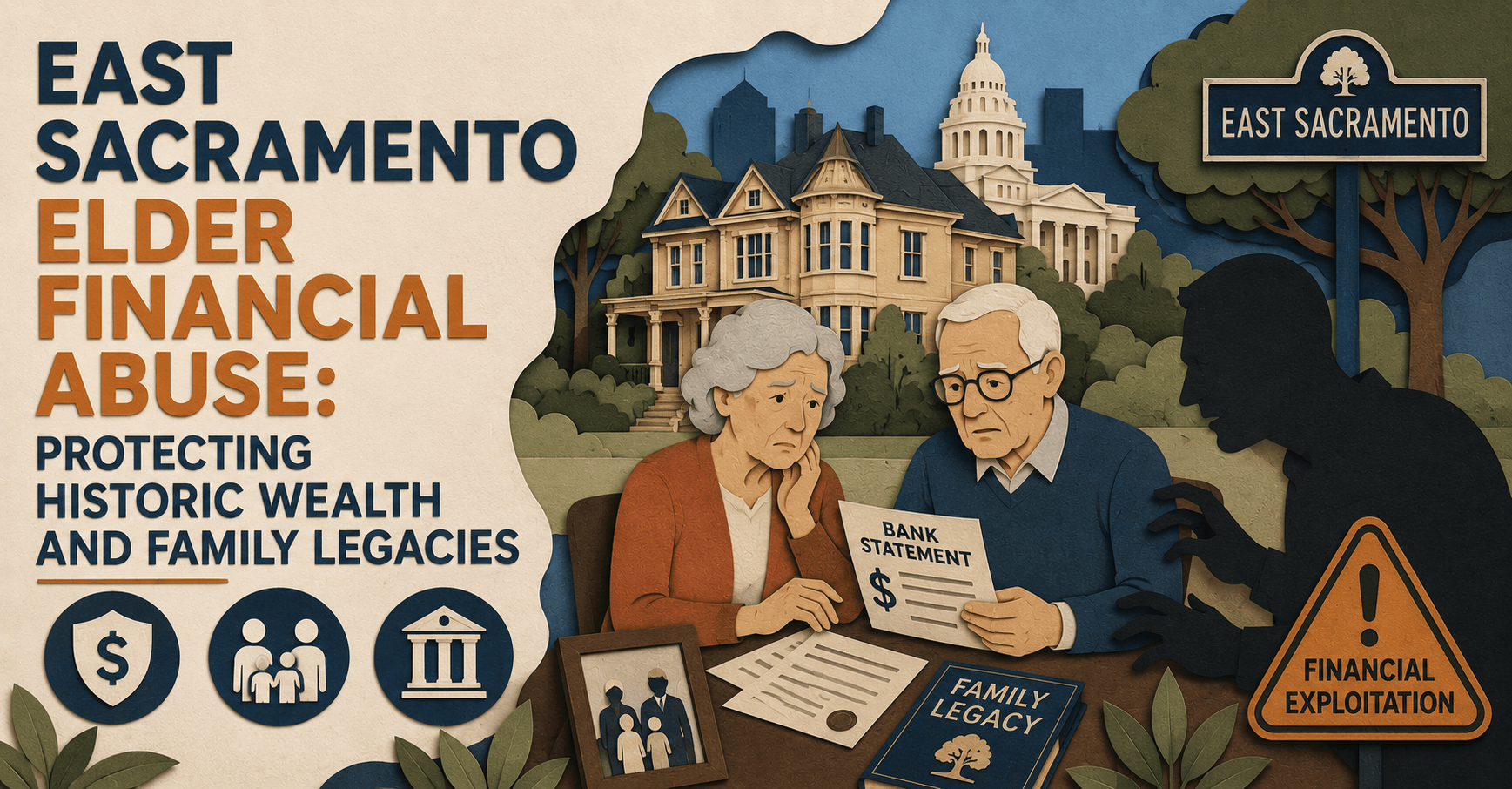
East Sacramento Elder Financial Abuse: Protecting Historic Wealth and Family Legacies

I’m Michael Hackard, founder of Hackard Law. Over my five decades of practice, I have fought for heirs, beneficiaries, and elder abuse victims across Sacramento, the San Francisco Bay Area, and Los Angeles. I have written four books on inheritance protection and produced more than 1,000 educational videos that have reached over seven million viewers. What I have learned in that time is this: financial exploitation does not discriminate by zip code. In fact, concentrated, multigenerational wealth often draws it closer.
East Sacramento – the Fabulous Forties, Portal Park, River Park, and the neighborhoods surrounding Sutter and UC Davis Medical Centers – represents some of Sacramento’s most established and affluent communities. Physicians, judges, attorneys, and business owners built substantial wealth here over lifetimes of distinguished service. As this generation ages, predators are taking notice. The same tight-knit neighborhood character that defines East Sacramento can mask abuse that would be visible in other settings. By the time families recognize what has happened, significant damage has already been done.
Hackard Law provides contingency fee representation for qualified elder financial abuse and estate litigation cases – no upfront costs, no attorney fees unless we recover for you. Call us today at (916) 313-3030.
Quick Summary
Due to its concentration of wealthy doctors, lawyers, and multigenerational families, East Sacramento’s elderly population is a prime target for financial abuse. Strong remedies are available under California law, but there are stringent timeframes.
- Elder financial abuse in East Sacramento often involves caregivers, household staff, professional colleagues, or family members exploiting cognitive decline
- Historic properties in the Fabulous Forties – some worth $2 to $5 million – are frequent targets of deed manipulation and below-market transfers
- California Welfare and Institutions Code section 15610.30 allows recovery of stolen assets, attorney fees, and double damages for bad faith conduct
- Hackard Law has litigated elder financial abuse and trust cases in Sacramento County Superior Court for over four decades
- Time limits apply – generally three years from discovery – making early consultation essential
The Wealth Profile That Attracts Predators
East Sacramento is not simply a wealthy neighborhood. It is a community where wealth carries history. The Fabulous Forties – those blocks between J Street and Folsom Boulevard from 40th to 49th streets – feature Tudor, Colonial Revival, and Mediterranean homes built in the 1920s and 1930s, many now worth $2 to $5 million. River Park’s mid-century homes along the American River draw physicians and attorneys who want established neighborhoods near downtown hospitals and courthouses. Portal Park’s brick-lined streets house executives and professionals who have spent decades building their estates.
Sacramento’s institutional class consists of these families. Park benches, hospital wings, and philanthropic foundations all bear their names. Doctors who spent forty years working at Sutter Medical Center. Lawyers who established themselves in Sacramento’s legal system. Judges who served with distinction before retiring. Proprietors whose businesses influenced the local economy. This type of wealth builds up discreetly over the course of a lifetime and can vanish just as silently if exploitation goes unnoticed.
For a deeper look at how elder financial exploitation develops and what warning signs families should recognize, Hackard Law has published extensive resources to help families get ahead of these situations.
How Neighborhood Familiarity Becomes a Vulnerability
East Sacramento’s greatest strength – its close, multigenerational community character – can become a liability for elderly residents experiencing exploitation. Everyone knows everyone in the Fabulous Forties. Long-term relationships span decades. Neighbors watch out for each other. But this familiarity can mask abuse rather than prevent it.
Other neighbors presume good intentions when a longtime neighbor assists an elderly widow in handling her business. Colleagues and friends respect family authority when a doctor’s adult child assumes financial responsibility. No one disputes a relationship that precedes the entrance of most present neighbors when a maid of thirty years progressively takes over home accounting. Concerned neighbors frequently remain mute due to societal pressure to avoid interfering in other people’s business, which is particularly strong in established professional groups. Significant harm has already been done by the time someone gets over their reluctance to express concerns.
This dynamic is part of why early legal intervention in elder financial abuse matters so much. Waiting for obvious proof is often waiting too long.
Case Pattern: A Trusted Inner Circle
A retired physician in an East Sacramento historic home develops mild cognitive impairment. A longtime housekeeper, trusted for over two decades, begins managing mail, accompanying the physician to the bank, and gradually redirecting account access. Neighbors and adult children living out of state assume the arrangement is benevolent. By the time family members notice irregularities in account statements, hundreds of thousands of dollars have moved. The pattern is one Hackard Law has seen across Sacramento County: trust built over years weaponized in months.
Exploitation Patterns Specific to East Sacramento
Because of the area’s social dynamics and professional income, certain kinds of elder financial exploitation are more common in places like East Sacramento.
One of the most prevalent is the exploitation of physician estates. Retired professionals may be reluctant to identify cognitive decline in themselves after spending their careers diagnosing it in others. Predators exploit this sense of professional pride. Family members and coworkers who are used to respecting the elder’s authority might not voice concerns until serious harm has been done.
Multigenerational family manipulation is another recurring theme. Established East Sacramento families often include complex inheritance expectations and long-standing tensions that predators exploit – or that provide cover for a family member’s own conduct. A troubling pattern involves one family member, often the one who remained in Sacramento, manipulating an aging parent to change estate plans, redirect assets, or disinherit relatives who moved away. The family’s prominence can delay intervention because others assume someone must already be watching out for the elder.
The historic home scheme deserves particular attention. A Fabulous Forties Tudor purchased for $150,000 in 1975 may now be worth $3 million. Predators target these properties – convincing elderly owners to add names to deeds, executing transfers during periods of diminished capacity, or manipulating owners into below-market sales. Sacramento’s historic preservation community sometimes notices changes in home ownership only after exploitation has already occurred.
Professional colleague exploitation is also a pattern Hackard Law confronts. Retired attorneys, physicians, and business owners maintain professional relationships spanning decades. Former colleagues or practice partners who recognize cognitive decline may exploit the shared professional background to gain financial access. The trust that a stranger could never establish becomes the mechanism of abuse.
For families concerned about how undue influence and elder financial abuse operate in practice, understanding these patterns is the first step toward protecting a loved one.
Case Pattern: The Charitable Circle Predator
An elderly East Sacramento matriarch with a family foundation and significant donor relationships develops early-stage dementia. A new acquaintance cultivates her trust through shared charitable involvement – attending events, offering to assist with foundation correspondence, gradually positioning himself as an indispensable advisor. Over two years, he redirects charitable funds and gains influence over her estate planning. The pattern: predators who enter through charitable circles can move slowly enough that family members mistake exploitation for friendship.
What California Law Provides for Victims
California provides powerful legal tools for heirs, beneficiaries, and elder abuse victims under Welfare and Institutions Code section 15610.30. Financial abuse includes taking property through undue influence, fraud, or from someone lacking capacity. Successful claims can recover all property taken or its current value, attorney fees and litigation costs, double damages for bad faith conduct, and punitive damages in egregious cases.
For East Sacramento families, where historic properties and professional wealth are at stake, the potential for double damages and full asset recovery is significant. California also imposes strict deadlines – generally three years from discovery of the abuse or four years from the date of occurrence. Trust contests may carry even shorter windows. These deadlines are not flexible, and delay compounds the financial toll.
Hackard Law has litigated trust, estate, and elder financial abuse cases in Sacramento County Superior Court for over four decades. We know the judges, the courthouse, and the community. For additional context on the full scope of our Sacramento practice, the Sacramento elder financial abuse lawyer page outlines how we approach these cases from investigation through recovery.
Key Definitions
- Elder financial abuse: Taking, secreting, appropriating, obtaining, or retaining property of an elder for a wrongful use or with intent to defraud, under California Welfare and Institutions Code section 15610.30.
- Undue influence: Excessive persuasion that overcomes a person’s free will, causing them to act in a manner inconsistent with their own interests – a recognized basis for voiding contracts, deeds, and estate documents in California.
- Diminished capacity: A cognitive state in which a person lacks sufficient mental ability to understand the nature and consequences of a legal transaction, such as signing a deed or amending a trust.
- Deed manipulation: The fraudulent addition of names to a property deed, transfer of title, or execution of a below-market sale during a period when the owner lacks full capacity.
- Contingency fee representation: A fee arrangement in which the attorney advances litigation costs and collects no attorney fees unless and until a recovery is made on behalf of the client.
- Double damages: A statutory remedy under California elder abuse law that allows courts to award twice the actual damages when a defendant acted in bad faith.
- Trust contest: A legal proceeding challenging the validity of a trust amendment or trust document, often on grounds of undue influence, fraud, or lack of capacity.
- Cognitive baseline: A patient’s established pattern of mental functioning over time, which longtime physicians can recognize – and which new healthcare providers may lack knowledge of.
- Caregiver exploitation: Financial abuse carried out by a person providing in-home or facility-based care, who uses their access and the elder’s dependency to redirect assets.
- Multigenerational manipulation: A pattern in which one family member exploits an aging relative’s cognitive decline to alter inheritance plans in ways that benefit themselves at the expense of other heirs.
What to Do Next
- Look for sudden changes in an elderly family member’s estate documents, financial accounts, or property records – especially if a new person has recently entered their life.
- Get copies of recent bank statements, trust amendments, deeds, and power of attorney documents as soon as concerns arise.
- Try to avoid confronting the suspected person directly before speaking with an attorney – doing so can accelerate asset movement or destruction of evidence.
- Document what you observe: dates, names, specific transactions, and any statements the elder has made about their wishes.
- Look for signs of isolation – an elder who is suddenly unavailable by phone, whose mail is being managed by someone else, or who has stopped attending familiar social or charitable activities.
- Try to avoid assuming that a family member or longtime employee is above suspicion; most exploitation in communities like East Sacramento involves someone the family already trusted.
- Consult with a Sacramento estate litigation attorney as soon as possible – California’s deadlines for elder financial abuse claims are strict, and delay narrows your options.
- Review the guarding against elder financial abuse resource to understand what evidence matters most in these cases.
- Call Hackard Law at (916) 313-3030 for a confidential consultation – there are no upfront costs for qualified cases.
- Reach our team through the contact page to tell us what you are seeing and learn whether you have a case worth pursuing.
CALL THE SAGE | When Experience Matters, Families Listen
🏛️ We practice California trust & estate & elder financial abuse litigation
⚖️ We represent heirs, beneficiaries, and elder abuse victims
🎥 1,000+ educational videos | 7 million+ views | 4 published books
🎯 “After thousands of cases, I see the pattern others miss.”
CONTINGENCY REPRESENTATION – No Win, No Fee
Throughout California: Sacramento | Los Angeles | Bay Area
📞 CALL THE SAGE: (916) 313-3030
Subscribe for weekly insights on:
- Elder financial abuse warning signs and prevention
- Trust and estate litigation strategies
- Inheritance protection for California families
- Family protection strategies
When your inheritance is under attack, Call The Sage.
Hackard Law | 10640 Mather Blvd, Mather CA 95655
Attorney Advertisement | Michael Hackard, State Bar #71067
RELATED VIDEOS
Elder Financial Abuse Attorneys | Sacramento County
Sacramento County attorneys explain how they fight elder financial exploitation cases.
Elder Financial Abuse Talk | Eskaton Sacramento
A Sacramento community talk covering how elder financial abuse happens and who is at risk.
Protecting California’s Elders with Alzheimer’s | Elder Financial Abuse
Explains how cognitive decline from Alzheimer’s makes California elders vulnerable to financial predators.
Estate Fraud: Protect Generational Wealth from Deception
Covers how deceptive schemes target families with multigenerational wealth and what legal protections exist.
POA Vultures | Power of Attorney Abuse
Details how bad actors exploit power of attorney to steal from vulnerable elders.
The Wolf at the Door: Ep. 17 | Contingency Fees in Elder Financial Abuse Lawsuits
Explains how contingency fee arrangements work in elder financial abuse litigation.
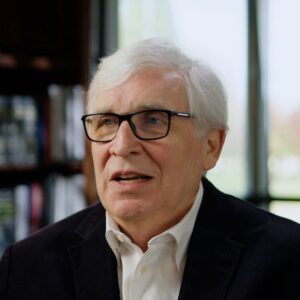 Michael Hackard is the founder of Hackard Law, a California trust and estate litigation firm with more than five decades of experience protecting the inheritance rights of families across Sacramento, the San Francisco Bay Area, and Los Angeles. He is the author of six published books on inheritance protection and has produced more than 1,000 educational videos with over seven million views.