


 (916) 313-3030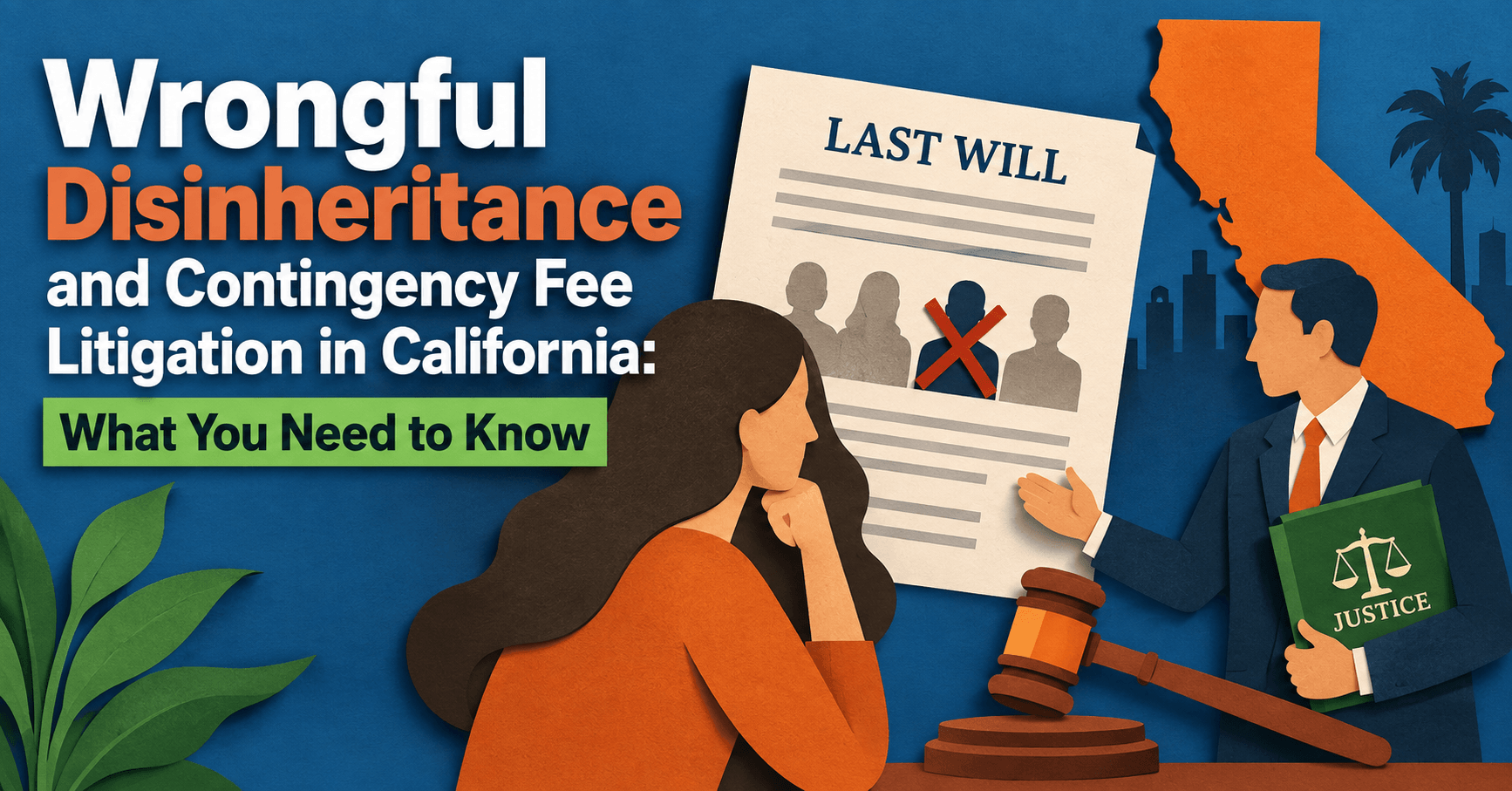
Wrongful Disinheritance and Contingency Fee Litigation in California: What You Need to Know

When a Lifetime of Family Expectations Is Erased
I am Michael Hackard, founder of Hackard Law. Over five decades of practice, I have fought for heirs, beneficiaries, and elder abuse victims whose inheritances were stolen, diverted, or destroyed by manipulation and fraud. I have written four published books on inheritance protection and produced more than 1,000 educational videos that have reached over seven million viewers. I understand what disinheritance does to a family – not just financially, but emotionally – because I have sat across from clients in Sacramento, the San Francisco Bay Area, and Los Angeles who are living through it.
Long-held expectations are destroyed by disinheritance. A parent’s decades-old estate plan is abruptly altered. A sibling who has always been present is completely absent. Those who are left behind frequently experience confusion, grief, and the same question: what can I do now, and how can I pay for it?
Hackard Law provides contingency fee representation for qualified cases – meaning no upfront costs to pursue your claim. To find out whether your case qualifies, call us at (916) 313-3030.
Quick Summary
Wrongful disinheritance is one of the most common and painful forms of estate abuse in California. Contingency fee arrangements give heirs and beneficiaries access to experienced litigation they could not otherwise afford.
- Disinheritance is often caused by undue influence, isolation, or caregiver manipulation
- Most California law firms handle estate litigation on an hourly basis only – contingency fee firms are the exception
- Contingency fees typically range from 33⅓% to 40% of the recovery
- Costs such as filing fees, depositions, and mediator fees may be advanced by the firm
- Cases resolve before trial roughly 97% of the time, usually with each side bearing its own attorney fees
What Drives Wrongful Disinheritance
Disinheritance is rarely random. In the cases Hackard Law litigates, there is almost always an identifiable actor – a caregiver who moved in and gradually took control, a sibling with financial problems who isolated the parent, or a romantic partner who appeared late in life and redirected a lifetime of accumulated wealth. The isolation of a vulnerable elder from children, grandchildren, and siblings is often the first step.
Some family members see it coming. Others are completely blindsided. An estate plan that had been in place for twenty or thirty years is quietly amended, and the change only surfaces after the parent has passed. By then, the window to act is narrow and the emotional weight is enormous.
Undue influence is a recognized legal basis for challenging these changes under California law. When someone in a position of trust uses that position to substitute their own wishes for the elder’s, the resulting documents – whether a will, a trust amendment, or a deed – may be voidable. For families navigating these waters in the Bay Area, understanding what California beneficiaries can do is an essential starting point.
Case Pattern: In the last months of their parent’s life, a family member learns that their parent changed the trust to remove all previous beneficiaries and replace them with a live-in caregiver. Two years prior, the parent was diagnosed with moderate cognitive decline, according to records. In the end, a negotiated settlement that restored the original distribution resulted from litigation centered on capacity and undue influence.
Why Most Families Cannot Afford Hourly Estate Litigation
Estate and trust litigation is expensive. Depositions, court reporters, forensic accountants, mediators, filing fees – the costs accumulate quickly, often before a single hearing is held. My experience is that most California law firms pursuing these cases work exclusively on an hourly basis. That is an understandable business decision. Firms carry significant risk when they take contingency cases, and when there is no recovery, that risk becomes a real loss.
The result is a representation gap. Families who have been wrongfully disinherited – often the very people who should be inheriting – find themselves unable to fund a case to recover what was taken from them. The contingency fee model exists precisely to bridge that gap. A firm that believes in the merits of a case agrees to litigate it without charging by the hour, taking its fee only if and when money is recovered.
For Bay Area families dealing with contested trusts in Santa Clara, Alameda, or Contra Costa counties, Alameda County estate litigation and Santa Clara estate litigation resources can help clarify what options exist in your jurisdiction.
How Contingency Fees Work in California Estate Cases
A contingency fee is a written attorney-client agreement in which the attorney litigates the case without being paid until money is distributed – whether from the opposing party, the estate, or a settlement fund. The percentage is negotiated between attorney and client, and in California estate and trust litigation, fees generally fall between 33⅓% and 40% of the recovery.
Litigation costs, such as filing fees, witness fees, subpoena fees, deposition fees, court reporter fees, mediator fees, jury fees, and associated costs, are distinct from attorney fees. It is up for negotiation whether the client advances all, part, or none of those expenses. The company advances expenses in many contingency agreements and is paid back at the time of distribution.
California law imposes ethical and statutory requirements on contingency fee agreements. The contract must be in writing, must clearly state the percentage, and must explain how costs are handled. Hackard Law’s contingency fee guide provides a detailed breakdown of what to look for and what questions to ask before signing any fee agreement.
Case Pattern: After a sibling took full control of their parent’s finances and living situation, an adult child in the Bay Area was removed from a trust. The family hired Hackard Law on a contingency basis because they lacked the money to pay an attorney hourly. The case’s mediation restored a significant portion of the original inheritance.
What Can Be Litigated on a Contingency Basis
Not every estate dispute qualifies for contingency representation. Hackard Law focuses on substantial cases where there is a financially accountable party and a meaningful recovery at stake. Within that framework, several types of claims are regularly handled on contingency.
Pure disinheritance cases – where a beneficiary was removed from a will or trust through undue influence, fraud, or lack of capacity – are the most common. Executor and trustee removal petitions are another. When a fiduciary is misusing estate or trust assets, draining accounts, hiding property, or simply refusing to account, a removal petition combined with a damages claim may be pursued together. Mountain View contingency trust litigation illustrates how this plays out in high-stakes Bay Area cases.
One dynamic that surprises many clients is the asymmetry of fees. Those challenging wrongdoing must pay their own attorneys, while the executor or trustee being challenged can often use estate or trust assets to fund their defense. Challengers effectively pay twice – once for their own counsel and once, indirectly, for the opposition. This imbalance makes contingency representation not just convenient but essential for many families. Understanding how legal fees work in trust disputes is critical before committing to any litigation strategy.
The Reality of Pretrial Resolution
Approximately 97% of estate and trust cases resolve before trial. That resolution may come through direct negotiation, formal mediation, a mandatory settlement conference, or a combination of all three. Pretrial resolution generally means each side bears its own attorney fees – the estate does not typically reimburse the challenger’s legal costs even if the challenge succeeds.
The assessment of contingency cases is influenced by this reality. When a firm takes on a contingency case, it is wagering its own time and resources on the result. Hackard Law is selective because of this. A financially responsible party, unambiguous proof of misconduct, and a sizable recovery sufficient to cover both parties’ litigation costs are all requirements for a case.
For families in the Bay Area – from San Jose to Oakland to San Mateo – the Santa Clara will and trust contest page and related resources can help you understand what courts in your county require before a challenge moves forward.
Key Definitions
- Contingency fee: An attorney fee arrangement in which the lawyer is paid only upon a successful recovery, typically a percentage of the amount obtained.
- Undue influence: Pressure or manipulation that overrides a person’s free will in making estate planning decisions, recognized as grounds to void a will or trust amendment under California law.
- Disinheritance: The removal of a person from a will, trust, or other inheritance vehicle, whether through legitimate estate planning or through wrongful interference.
- Litigation costs: Out-of-pocket expenses incurred during a lawsuit, including filing fees, deposition costs, court reporter fees, and mediator fees – separate from attorney fees.
- Executor: A person named in a will to administer an estate, with fiduciary duties to the beneficiaries and the court.
- Trustee: A person or institution responsible for managing trust assets according to the trust’s terms and California fiduciary law.
- Capacity: The legal standard for whether a person had sufficient mental ability to execute a valid will or trust at the time of signing.
- Recovery: The total amount obtained through settlement, mediation, or trial, from which contingency fees and advanced costs are typically deducted.
- Mandatory settlement conference: A court-ordered meeting before trial in which a judge or neutral evaluator encourages the parties to reach a negotiated resolution.
- Fiduciary: A person – such as a trustee or executor – who is legally obligated to act in the best interests of another party.
What to Do Next
- Look for a written timeline of when the estate plan changed and who was involved in those changes.
- Get copies of all versions of the will or trust, including any amendments, as far back as possible.
- Try to avoid destroying or discarding any communications – texts, emails, letters – between the influencer and the deceased.
- Look for medical records from the period when the changes were made, especially any documentation of cognitive decline.
- Try to identify witnesses – neighbors, doctors, other family members – who observed the elder’s condition or the influencer’s behavior.
- Get copies of any financial account records showing unusual transfers or changes in beneficiary designations.
- Look for any powers of attorney that were executed around the same time as the estate plan changes.
- Try to avoid waiting too long – California imposes strict deadlines on trust and will contests that can permanently bar a claim.
- Reach out to an attorney who handles these cases on contingency before concluding you cannot afford to pursue your rights.
- Call Hackard Law at (916) 313-3030 to discuss whether your case qualifies for contingency representation, or visit our contact page to get started.
CALL THE SAGE | When Experience Matters, Families Listen
🏛️ We practice California trust & estate & elder financial abuse litigation
⚖️ We represent heirs, beneficiaries, and elder abuse victims
🎥 1,000+ educational videos | 7 million+ views | 4 published books
🎯 “After thousands of cases, I see the pattern others miss.”
CONTINGENCY REPRESENTATION – No Win, No Fee
Throughout California: Sacramento | Los Angeles | Bay Area
📞 CALL THE SAGE: (916) 313-3030
Subscribe for weekly insights on:
- Elder financial abuse warning signs and prevention
- Trust and estate litigation strategies
- Inheritance protection for California families
- Family protection strategies
When your inheritance is under attack, Call The Sage.
Hackard Law | 10640 Mather Blvd, Mather CA 95655
Attorney Advertisement | Michael Hackard, State Bar #71067
RELATED VIDEOS
Contingency Fee Agreements in CA Estate, Trust & Probate Litigation
Explains how contingency fee agreements work in California estate and trust cases.
Can I Hire A Contingency Fee Lawyer in Probate and Trust Litigation?
Answers whether beneficiaries can retain a contingency fee attorney for probate disputes.
Inheritance Heists Ch. 3: Why Contingency Fees Work for Beneficiaries in Trust Litigation
Breaks down why contingency fees give trust beneficiaries a real fighting chance.
California Trust Litigation Contingency Fees | The Pros and Cons
Walks through the advantages and drawbacks of contingency fee arrangements in trust litigation.
Top 10 Types of Estate Battles | CA Probate & Trust Litigation
Covers the most common disputes that arise in California probate and trust cases.
What Are Common Acts of Fraud in Trust or Probate? | California Estate Litigation Attorney
Identifies fraudulent acts that frequently surface in California trust and probate litigation.
 Michael Hackard is the founder of Hackard Law, a California trust and estate litigation firm with more than five decades of experience protecting the inheritance rights of families across Sacramento, the San Francisco Bay Area, and Los Angeles. He is the author of six published books on inheritance protection and has produced more than 1,000 educational videos with over seven million views.