


 (916) 313-3030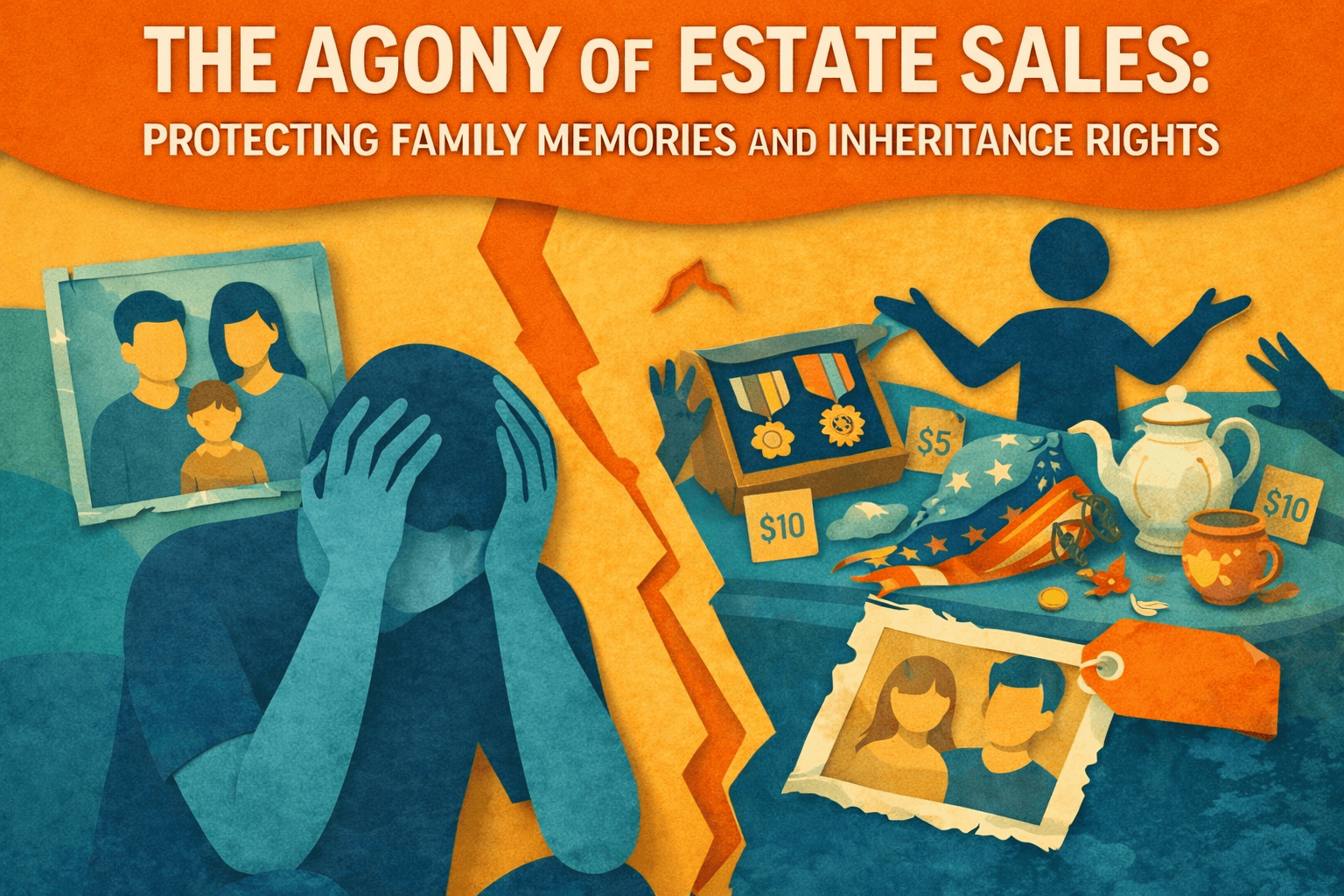
The Agony of Estate Sales: Protecting Family Memories and Inheritance Rights

When Estate Sales Become a Source of Grief
I’m Michael Hackard, founder of Hackard Law. Over more than five decades of practicing trust and estate litigation, I have walked alongside families through some of the most emotionally difficult moments of their lives. I am the author of four published books on inheritance protection and have produced more than 1,000 educational videos with over seven million views — all aimed at helping California families understand their rights when grief, confusion, and conflict collide. My firm serves families across Sacramento, the San Francisco Bay Area, and Los Angeles, and the patterns I describe in this post appear in every one of those communities.
The sale of a deceased loved one’s personal property is one of those moments that few people prepare for. It is a collision of grief, memory, money, and family dynamics. This post addresses the emotional and practical challenges that estate sales create, and what families can do to protect themselves — and each other — during the process.
Hackard Law provides contingency fee representation, meaning there are no upfront costs for qualified cases.
If your family is facing a dispute related to an estate sale, personal property distribution, or trust administration, call Hackard Law at (916) 313-3030 for a consultation.
Quick Summary
Estate sales involve far more than economics. They carry deep emotional weight for families already enduring the loss of a loved one. Here is what California families should know:
- Haste in scheduling an estate sale leads to regret — families benefit from a thoughtful plan before selling personal property.
- Family heirlooms may hold meaning that far exceeds their dollar value, and disregard for those memories can fracture relationships.
- Blended and estranged families face heightened risk of emotional upheaval during the distribution of a deceased parent’s belongings.
- Preparation, communication, and patience are the best tools families have to navigate estate sales with dignity.
Why Estate Sales Carry So Much Emotional Weight
Common human experience teaches us that we all have something to share, something that we know more about because of our own direct experiences. A hairdresser knows far more about hair than a realtor. A realtor knows more about real estate than a truck driver. And an attorney with decades of trust and estate litigation experience has encountered the repeat patterns — and the repeat heartbreaks — that families face when a loved one dies.
When we lose a parent or spouse, grief engulfs us. The spiritual, emotional, and financial challenges of that loss are enormous. The sale of a deceased person’s personal property makes every one of those challenges real and immediate. Items that once held deep meaning — a father’s military uniform, a grandmother’s china set, childhood photographs — are suddenly reduced to price tags on folding tables.
Most of us have experienced the underlying sadness of visiting someone else’s estate sale. Hackard Law sees items that clearly once meant something to a person or a family. They may look like a home-based thrift shop, or they may represent the quiet discard of memories for money. Either way, the experience carries a weight that is hard to describe.
Case Pattern: The Discarded Military Uniform
In a pattern that appears repeatedly, a father passes away, and his second spouse or stepchildren organize a rapid estate sale. The father’s military uniform, service medals, and personal letters are discarded or sold, rather than being offered to his biological children. The economic value of these items may be minimal, but their meaning to the first family is immeasurable. By the time the children learn what happened, the items are gone. The resulting grief and resentment can last for decades.
The Danger of Haste in Estate Sales
One of the clearest lessons from decades of working with grieving families is this: haste should be avoided. Too many times, a child of a deceased parent expresses deep regret that he or she did not take the time to think carefully about what should be done with the personal property.
There are many ways to avoid this regret. Ideally, the family comes together and agrees on a plan for splitting the property. This can happen in stages — an initial division followed by a later one. The family should not rush into having an estate sale. Such sales may ultimately be necessary, but they produce better outcomes when preceded by a thoughtful distribution and retention plan, discussed with all family members.
A trustee or executor has a fiduciary duty to act in the best interests of the beneficiaries when they are in charge of the process. A trustee who schedules a hasty estate sale without consulting the beneficiaries may be breaching that duty. Families who believe a trustee is not being accountable or is ignoring their requests must seek legal guidance promptly.
Disputes over personal property and real estate in trust litigation are among the most emotionally charged issues families face. A deliberate, transparent approach can prevent years of bitterness.
Blended Families and the Risk of Heirloom Destruction
Estranged and blended families face a heightened risk of emotional upheaval during estate sales. It is bitterly common for a stepparent or step-sibling to discard family heirlooms belonging to the first family with little care for the memories they represent.
The heirlooms of the first family — rich in memory and meaning — sometimes end up in a garbage can. Family items are prized only for their economic value, and their ties back to family life are completely subsumed by another heir’s desire for money. Michael Hackard identifies this pattern as one of the most destructive forces in estate administration.
This is not merely an emotional concern. When family heirlooms, personal property, or items of sentimental value are disposed of without proper notice to all beneficiaries, it can give rise to legal claims. Beneficiaries have rights under California law, and those rights extend to the handling of personal property within an estate or trust. Disputes of this nature fall among the most common probate and estate battles that California families encounter.
Case Pattern: The Heirlooms Sold Without Notice
A surviving spouse arranges an estate sale within weeks of the decedent’s death. Items from the decedent’s first marriage, which include photo albums, jewelry, and handwritten letters, are sold or donated. The decedent’s children from the first marriage receive no notice and no opportunity to claim any of the items.
They were disappointed to learn what had occurred. When the children discover that the same disrespect for their rights may also apply to financial assets, this pattern frequently intensifies into more extensive trust or probate litigation.
Preparing for the Emotional Reality
Michael Hackard titled his original observation “The Agony of Estate Sales” because the word agony is not an overstatement. This is not a how-to exercise or a list of statutes. Ultimately, estate sales involve family harmony, the challenges of grief, and the desire to remember our parents — our devotion to them, and their devotion to us.
If you remember one thing, be prepared for the emotions. You are not weak because you feel the sadness of loss and the melancholy of selling or giving away items that you or your family once held dear. Reach out to others who share the same grief and reasons.
Knowing that estate sales bring a roller coaster of emotions, you and your family deserve understanding. Do what you can to bear the sufferings that seem endemic to the sale of a loved one’s personal property. Forgive the slights that at times seem unavoidable. Comfort other family members who may be suffering in ways they cannot express. To paraphrase what many of our parents told us when sibling fights got serious: try to be gentle with each other.
Families who want to understand the broader process of estate administration and how to choose the right probate lawyer for their situation should educate themselves early — before conflict takes root.
Legal Protections for Beneficiaries During Estate Sales
When personal property is administered through an estate or trust, California law offers significant protections for heirs, beneficiaries, and victims of elder abuse. A trustee or executor may face legal repercussions. These can be surcharge, removal, or damages, if they sell property without the required authority, without giving notice, or for less than market value.
Beneficiaries should understand that they have the right to request a full accounting of estate assets, including personal property. They have the right to object to proposed sales. They have the right to petition the court if a fiduciary is acting improperly. Hackard Law litigates these disputes throughout California, including in Sacramento County, Alameda County, and Los Angeles.
Michael Hackard’s published books on inheritance protection address many of the patterns that arise in estate sale disputes and offer practical guidance for families navigating these situations.
Key Definitions
- Estate Sale: The sale of a deceased person’s personal property, typically conducted at the decedent’s home or through a professional service.
- Personal Property: Movable items owned by the decedent, including furniture, jewelry, clothing, artwork, collectibles, and household goods.
- Fiduciary Duty: The legal obligation of a trustee or executor to act in the best interests of the beneficiaries, including the proper handling of personal property.
- Trustee: The person or entity responsible for managing trust assets, including decisions about the sale or distribution of personal property.
- Executor/Administrator: The person appointed by the court or named in a will to manage the probate estate.
- Accounting: A formal report of all estate or trust transactions, including sales of personal property and distributions to beneficiaries.
- Surcharge: A court-ordered financial penalty imposed on a trustee or executor who breaches fiduciary duties.
- Distribution Plan: A written plan for how personal property will be divided among beneficiaries before any sale occurs.
- Beneficiary Rights: Legal entitlements of persons named in a trust or will, including the right to information, accounting, and fair treatment in property distribution.
What to Do Next
- Avoid rushing into an estate sale — give yourself and your family time to grieve and plan.
- Communicate with all family members and beneficiaries before scheduling any sale or disposal of personal property.
- Create a written inventory of all personal property, including items of sentimental value.
- Agree on a distribution plan before selling anything — an initial split followed by a later division can reduce conflict.
- Request a formal accounting from the trustee or executor if you believe property has been sold or discarded improperly.
- Photograph and document all personal property before any items are moved, sold, or donated.
- Consult a trust litigation attorney if you believe your rights as a beneficiary are being violated.
- Seek emotional support from family members, counselors, or grief support groups during the process.
- Contact Hackard Law at (916) 313-3030 if you need guidance on protecting your inheritance rights during an estate sale.
If you are facing an estate sale dispute or believe that personal property has been improperly handled, call Hackard Law at (916) 313-3030 to discuss your situation.
CALL THE SAGE | When Experience Matters, Families Listen
THE EXPERTISE:
📚 50 years California trust, estate & elder financial abuse litigation
⚖️ We represent heirs, beneficiaries, and elder abuse victims
🎥 1,000+ educational videos | 7 million+ views | 4 published books
🎯 “After thousands of cases, I see the pattern others miss.”
CONTINGENCY REPRESENTATION — No Win, No Fee
Throughout California: Sacramento | Los Angeles | Bay Area
📞 CALL THE SAGE: (916) 313-3030
Subscribe for weekly insights on:
• Elder financial abuse warning signs and prevention
• Trust and estate litigation strategies
• Inheritance protection for California families
• Family protection strategies
When your inheritance is under attack, Call The Sage.
Hackard Law | 10640 Mather Blvd, Mather CA 95655
Attorney Advertisement | Michael Hackard, State Bar #71067
Related Videos
The Quiet Agony of an Estate Sale after a Loved One’s Passing
Directly mirrors the blog’s core theme and title — the highest keyword match (17) of all candidates. Essential companion video covering the agony of estate sales and protecting family memories.
Watch Out for Estate Sale Fraud | WKYC Interview
One of only two candidates directly about estate sales — perfectly on-topic for a blog focused on protecting inheritance rights during the estate sale process.
How an Estate Lawyer Keeps Peace in the Family After Loss
Directly matches the blog’s emphasis on family harmony, grief, and the role of legal counsel in preventing estate sale disputes — strong keyword hit score of 7.
Robin Williams | Blended-Family Estate Tragedy
Directly supports the blog’s major section on blended families and heirloom destruction — a compelling real-world case study of exactly the dynamics described.
Blended Family Challenges: Stepmothers, Stepchildren & Estate Litigation Battles | Hackard Law
Directly addresses the stepparent/stepchild conflict patterns the blog identifies as a primary driver of estate sale disputes and heirloom destruction.
What If My Loved One Wrote More Than One Will? | Hackard Law Estate Litigation FAQ
Second-highest keyword hit score (8) among candidates; relevant to the blog’s audience of families navigating complex estate administration and beneficiary rights after a loved one’s passing.
 Michael Hackard is the founder of Hackard Law, a California trust and estate litigation firm with more than five decades of experience protecting the inheritance rights of families across Sacramento, the San Francisco Bay Area, and Los Angeles. He is the author of four published books on inheritance protection and has produced more than 1,000 educational videos with over seven million views.