


 (916) 775-8542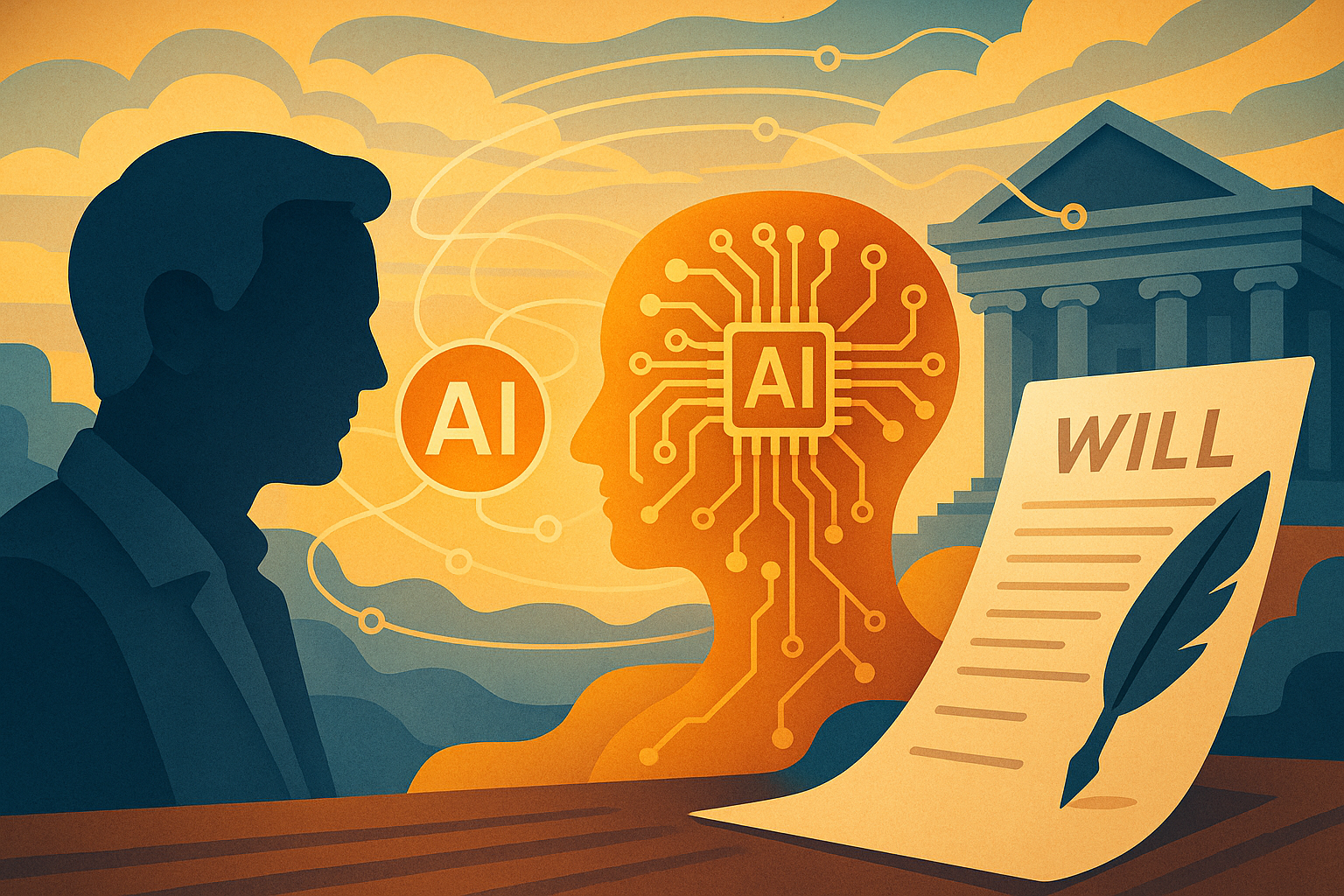
AI Estate Planning Sacramento: Balancing Tech and Trust

A New Frontier in Estate Law
Everything is changing—how we communicate, bank, shop, and even plan our futures. But one of the most unexpected places it’s happening is in the field of estate planning. Artificial intelligence, once limited to science fiction, now plays a role in how families plan, preserve, and transfer their legacies.
The transition is not just technological; it’s personal. Think about the role technology has in family discussions at the dinner table, how stories are kept alive in digital format, and how possibilities for the future are influenced by the devices in our pockets. Estate planning brushes against all these strands, particularly as technology provides us with tools to organize, monitor, and even decipher our intentions. But with every innovative step ahead, we need to step back and ask ourselves: are we safeguarding our intentions, or merely facilitating them for better processing?
Where Tradition Meets Technology
In Sacramento, where tradition and innovation thrive together, families are starting to face the confluence of AI and law. Whereas previously, it was just paper files and in-person meetings, now digital files, automated drafting, and insights from algorithms are added.
Our city, rich with both history and advancement, is a fertile ground for such dialogues. We have neighbors discussing online will kits at neighborhood coffee houses, and multigenerational families struggling to answer the question: “Will AI grasp what most matters to us?” The answer involves not only a technical response, but contemplation of what values underpin our community.
But with each innovation comes opportunity and risk. The question that families and lawyers alike ask is simple: can AI make estate planning better without sacrificing the human insight that makes it valuable?
The answer, like so many things in life, is complex. Technology can accelerate things and pick up on details that might otherwise be overlooked, but it cannot substitute for the subtle knowledge gained from decades of experience, or the compassion needed to walk a family through tough choices. This is the tightrope we walk at Hackard Law—employing every available tool, but never forgetting that technology must never overtake the human interaction at the heart of what we do.
The Emergence of AI in Legal Daily Life
Artificial intelligence is no longer science fiction; it is reality. Estate attorneys utilize AI-based tools for document review, risk identification, and financial projections. Families use web portals to create wills or trusts, which previously required multiple office appointments.
The use of AI in estate planning isn’t reserved for the technologically inclined or the affluent. Grandparents, single parents, and entrepreneurs alike are finding themselves filling out forms and conducting interviews online. The promise is obvious: greater access, greater convenience, and—hopefully—fewer obstacles between intention and action.
From Sacramento to Silicon Valley, emerging platforms promote “smart wills” that produce legal documents based on web-based questionnaires. Others claim to foresee tax exposure or recommend optimal inheritance patterns using algorithms.
Convenient as they might be, the systems have their limitations. They are based on logic, not emotion. They understand the language of the law but not the history of a family. And in estate planning, that makes all the difference.
It’s one thing to mark a box or fill in a space; it’s another to tell a story, disclose a hope, or express a fear that can define a family’s future. Effective estate planning doesn’t just inquire about what you have, but why it matters—and to whom.
A Sacramento Story: When the Algorithm Missed the Emotion
A couple in Elk Grove, a young one, opted to make their estate plan on an AI-based online platform. It had the appeal of being efficient: no waiting, no appointments, and immediate access to legal documents. They had heard commercials about experiencing peace of mind within minutes, and they were ready to cross this off their list.
The website requested that they put down assets and list heirs. They named their two children, but not their newly adopted nephew, who had joined the family months earlier. When the husband suddenly died, the will did not mention the nephew.
The couple didn’t do it on purpose, but it was binding. The court adhered to the document. What the couple thought the AI “meant” became a regrettable omission that needed an expensive legal fix.
When we looked at the case, you could see that the program had succeeded: it produced a legitimate document. What it was unable to do was pose the sorts of questions that a lawyer would: “Are there any dependents unmentioned? Has your household recently altered?”
Technology is great, but empathy cannot be replaced.
As attorneys, we are not only tasked with writing documents, but with listening intently to the uttered and unuttered needs of clients. A computer program can crunch numbers, but cannot hear the hesitation in a parent’s voice or reassure when doubt shrouds a choice. That kind of care comes only from real human interaction.
How AI Helps Estate Lawyers Serve Families Better
Though AI cannot substitute for human judgment, it can render estate attorneys more effective, precise, and expedient. At Hackard Law, we regard technology as a tool, not to replace judgment but to augment it.
The following are a few ways in which AI assists contemporary estate planning in Sacramento:
- Document Review and Risk Detection
AI software can review wills, trusts, and tax returns to detect errors or missing information. This is time-saving and prevents costly mistakes.
- Asset Valuation and Projection
Financial data can be analyzed by AI programs to determine how your assets can grow, depreciate in value, or influence taxes in the future.
- Fraud Detection and Online Safety
Computer software can track digital estate transactions and notify attorneys to potential meddling or unauthorized intrusion.
- Forensic Probability of Probate Outcomes
AI can scan years of case histories to forecast outcomes in estate conflicts, enabling attorneys to prepare better.
- Efficient Communication
Internet chat and scheduling software enables clients to converse more easily with law firms and receive updates securely.
In brief, precision is handled by AI, while empathy is handled by humans. Both combine to form a synergy between efficiency and comprehension.
The Digital Legacy: What Happens to Online Assets?
Estate planning used to be concerned with physical property—houses, automobiles, jewelry, and accounts. Nowadays, digital assets are just as valuable.
Take the example of the family that finds, upon the death of a loved one, that much of their assets are invested in online investment platforms or cryptocurrency wallets. If you lose the correct digital keys, they are gone forever. This new reality calls both for technical expertise and a profound understanding of how families transfer and manage value in the digital world.
Sacramento families are increasingly holding online business, cryptocurrency, social media profiles, and intellectual property stored in the cloud. These kinds of assets may have both monetary and emotional value.
Artificial intelligence software can assist in locating and documenting digital assets by scanning email accounts, financial documents, and online storage. But the law is behind.
Numerous Sacramento families have collections of digital photos, unpublished manuscripts, or online enterprises that are the result of years of toil and meaning. The challenge is to ensure these assets are not merely cataloged but passed down in a manner that respects both legalities and emotional importance.
Most families overlook putting instructions on digital access into their wills. Without them, heirs might struggle to obtain passwords or inherit accounts. Certain websites even close down unused accounts after a period.
The takeaway is obvious: if your life is leaving an online trace, your estate plan should as well.
At Hackard Law, we collaborate with clients to uncover hidden digital assets and to create plans that reduce risk and enhance clarity for future generations. The process usually includes teamwork with cybersecurity experts, financial planners, and—most importantly—the families themselves.
The Ethical Challenges of AI in Estate Law
AI presents amazing efficiency, but it also gives rise to ethical and legal issues.
For example, what if a family uses an AI-created will that contains a mistake? Who is at fault—the software writer, the site, or the user? These are not theoretical issues; they are real problems that need new solutions and continuous monitoring.
Data Privacy: Estate information tends to be very personal and sensitive. AI systems are subject to rigorous data protection regulations.
Algorithmic Bias: When an AI system is trained with narrow or biased data, its suggestions can prefer some financial practices or groups.
Automation Overreliance: A machine is unable to recognize the nuanced emotional motivation behind estate plans, such as leaving differently for a child who has special needs.
Accountability: When documents created by AI are problematic, determining who is legally at fault can be complex.
Estate planning remains, therefore, a human task. A human lawyer has to decide context, equity, and emotional subtlety—the things in which algorithms cannot excel.
At our firm, we have seen situations where a trusted friend is named as executor, only for relationships to change years later. AI can flag inconsistencies, but it takes a human advisor to ask, “Has anything changed that we should discuss?” This ongoing relationship, built on trust, is what makes estate planning truly effective.
AI in Probate and Litigation
The impact of AI goes beyond planning estate disputes themselves. In Sacramento’s probate courts, lawyers are starting to employ AI for:
Case Research: AI software rapidly summarizes decades of case law to find pertinent precedents.
Pattern Recognition: Programs examine how judges have decided similar disputes.
Evidence Organization: AI processes thousands of pages of records for hearings and depositions.
These devices are time-saving and improve efficiency, allowing families to receive answers quickly. But technology can never replace the expertise of a lawyer in court. True skill is not only an understanding of the law but also understanding when and how to apply it.
There is a distinction between reading precedent and making an argument in front of a judge who recalls your previous case. AI can sequence the facts, but the lawyer embroiders them into a narrative that rings true in court.
Balancing Technology and Tradition
Estate planning has always been foresight. AI merely introduces a new dimension to that foresight.
Other families fear that technology will render the process impersonal. Our experience is the opposite—thoughtfully applied, AI allows us to save time for richer conversations about what our clients hold most dear. Instead of spending hours on paperwork, we can delve into the core of the issue: what type of legacy do you want to leave?
But the fundamental remains the same: safeguarding what is most valuable. Whether creating a trust or challenging a will, technology cannot substitute empathy, judgment, and integrity.
Sacramento families that hold on to innovation coupled with wisdom will stand to gain the most. Responsible use of AI facilitates quicker management of documents and more profound insight, while the attorney makes certain that every word represents true intent.
As one client has said to me, “The computer made me comprehend my numbers, but you taught me to comprehend my heart.” It is that balance that true estate planning resides in.
We are ultimately tasked with imparting clarity to chaos and ensuring that, regardless of the tools we employ, the ultimate plan is a true reflection of a client’s life—not just the assets, but also the relationships, memories, and dreams that make those assets meaningful.
Preparing for the Future: Sacramento’s Next Generation
Younger Sacramento families already exist in a digitally-first world. They own cryptocurrency, online investment portfolios, or innovative digital assets such as music, photography, and intellectual property.
These families tend to be eager to experiment with new sites and apps for every aspect of their finances. But as we’ve learned, what may be convenient can have flaws. The more digital possessions you have, the better it is to keep records, give sharing authority to trusted individuals, and ensure your plan gets reviewed frequently.
These families tend to utilize online estate resources since they appear cheap and easy. But they soon discover that digital assets have rewritten the book. A forgotten password or an asset nobody knows about can hold up the legal process for months.
Attorneys now partner with cybersecurity professionals to assist their clients in managing digital estates properly. AI may assist in monitoring the whereabouts of assets and who has access to them. Nevertheless, the ultimate decisions and knowledge rest with the client and his/her attorney.
As successive generations age, digital estate planning will be as ubiquitous as physical wills, but the sageness behind it will be eternal.
The technology will shift, but the reasons we plan don’t: love of family, clear intent, and the expectation that we leave things better than we found them. These are the principles we act upon, regardless of how sophisticated our software is.
Practical Steps for Sacramento Families Using AI Tools
If you are deciding to use AI-enriched platforms for estate planning, remember these principles:
- Check the Platform’s Legal Credentials
Ensure that licensed attorneys review or validate the documents generated. Ask about the credentials of those behind the platform you’re using, and don’t hesitate to seek a second opinion if something feels unclear or incomplete.
- Use AI as a Drafting Tool, Not a Final Authority
Consider AI-created papers as a template to hone with expert advice. Come prepared with goals, questions, and issues—an experienced lawyer can assist you in breaking them down into an actionable plan that suits your specific situation.
- Safeguard Your Digital Privacy
Ensure the platform securely stores, encrypts, and erases sensitive information. Your privacy and your family’s is most important—select services that highly regard security and openness.
- Align AI Tools with Conventional Documents
Hold online drafts in synchronism with formal paper copies, whether filed or notarized. This action avoids ambiguity among your loved ones and sees your wishes fulfilled without undue delay.
- Update Regularly
As technology changes, so should your plan. Plan to review it every several years or after significant events—marriages, births, or major financial changes. Life is changing; your estate plan should be as well.
AI can make it easier, but never substitute for the power of a conversation—one that puts your intentions into law and legacy. At Hackard Law, we think the best plans originate in honest dialogue, thoughtful listening, and a shared commitment to your family’s future.
The Sacramento Advantage: Where Innovation Meets Legacy
Sacramento sits midway between California’s government center and the innovation corridor of Silicon Valley. This positions it as a natural hub for developing legal practices.
Local law firms, such as Hackard Law, are seeking means to incorporate technology in an ethical manner. It is not an end in itself, but rather to provide more clarity, precision, and accessibility to families.
By leveraging the power of AI, we can cut down on paperwork, minimize the risk of errors, and respond to questions more rapidly. But we never forget that each family has its own story and that technology must always serve, not supplant, the relationships at the core of our practice.
When utilized wisely, AI can eliminate paperwork, increase accuracy, and expedite resolutions, freeing families to do what matters most: maintain peace of mind.
As Sacramento continues to develop as a center of policy and innovation, we aspire to lead the way in how technology and heritage complement each other for the greater good.
A Closing Reflection
Artificial intelligence can forecast results, but not feelings. It can process information, but not passion. It can write sentences, but not feel the warmth in them.
Estate planning has always been a deeply human process—a bridge between life and legacy. Technology may make that bridge stronger, but it should never replace the human touch that gives it life.
Our greatest inheritance is not the wealth we leave behind, but the love and intention with which we plan for those who follow. Wisdom and compassion remain the most valuable tools in every era.
Sacramento families who find this balance will thrive in the age of AI—using technology for precision while trusting experience for guidance. Because legacies aren’t created by machines, but by people who plan with heart and foresight.
If you’re ready to explore how AI estate planning Sacramento can help protect your family’s legacy, contact Hackard Law today to start the conversation.