I am Michael Hackard, founder of Hackard Law, and over five decades of practice, I have fought for heirs, beneficiaries, and elder abuse victims across California. I have authored four books on inheritance protection and produced more than 1,000 educational videos that have reached over seven million viewers. My firm litigates estate and trust disputes in California’s superior courts, serving families in Sacramento, the San Francisco Bay Area, and Los Angeles.
Art disputes in estates may sound like an unusual corner of the law, but they surface more often than most families expect. A single painting can be worth more than every piece of furniture in a home combined. When an estate plan uses broad language like “paintings, furniture and furnishings,” the scene is set for a serious legal fight over who gets what.
Hackard Law handles these cases on a contingency fee basis – no upfront costs for qualified cases. If you are facing an art-related estate dispute, call us at (916) 313-3030 to discuss your situation.
Quick Summary
In California, art and painting disputes arise within estates when ownership, value, and distribution are unclear. There are certain legal rules in California law that deal with artwork-related problems.
Vague terms like “paintings” in an estate plan might lead to serious disagreements over expensive artwork.
When and how museums or dealers are required to surrender artwork to an estate is governed by bailment law.
Whether an artwork is separate property or a shared marital asset depends on community property laws.
Charitable bequests also raise concerns about a trustee’s authority to sell art.
When estate planners specifically identify, value, and oversee the disposition of artwork, litigation can be prevented.
Why Art Disputes Arise in California Estates
Wide-ranging wording meant to be thorough is frequently used in estate plans. Until a beneficiary asserts that a single picture valued at several hundred thousand dollars belongs under a completely different clause, phrases such as “all paintings, furniture and furnishings” appear sufficiently unambiguous. One important piece of art might have a huge worth difference from the rest of the household’s possessions.
Wealthy collectors are not the only ones involved in these debates. A painting in a family house that was purchased decades ago may have increased in value without anyone realizing it. That painting unexpectedly becomes the focus of a dispute when the original owner passes away, and the inheritance is divided.
As a Sacramento estate lawyer, I have witnessed these disputes arise in probate court when they might have been completely avoided with careful planning. Fairness, family expectations, and the significance of a loved one’s last desires are often at the center of the conflict rather than merely the painting.
Specific Identification, Valuation, and Charitable Bequests
When artwork is specifically identified in an estate plan – by title, artist, or description – disputes over which item was intended are far less likely. The problem arises when a testator or trust settlor uses general language and leaves multiple heirs to argue over what was meant.
A different but no less significant issue is valuation. Beneficiaries may dispute fiercely about a piece’s value in the absence of a formal evaluation, making buyout discussions and equal distribution more difficult. Before a dispute can be settled, courts frequently need independent evaluations.
Charitable bequests of artwork to museums or foundations add a further layer of complexity. If a painting is left to a charitable trust or museum, the terms of that bequest control what the trustee may do with it. Not every bequest grants the trustee authority to sell the work. If the painting has appreciated significantly, a trustee who sells without that authority may face a breach of fiduciary duty claim. Understanding what California beneficiaries can do when a trustee delays or acts outside their authority is critical in these situations.
Case Pattern: A family member learns that the trustee sold a picture that was left to a nonprofit organization without the trust instrument’s express permission. The remaining beneficiaries contest the sale, contending that the money should be reinvested in the estate. The main points of contention are whether the charity donation was appropriately honored and the extent of the trustee’s authority.
Bailment Law and Recovering Art from Museums and Dealers
One of the more technical issues in art-related estate disputes involves bailment. A bailment exists when one party transfers possession of property – but not ownership – to another. Museums that hold artwork on indefinite loan, and art dealers holding pieces on consignment, are classic examples of bailees.
Under California law, a bailee is not in breach of its duty to return the property until a demand is made and rejected. This means that an estate representative or rightful heir must formally demand the return of the artwork before any legal claim for wrongful retention can proceed. Knowing when and how to make that demand – and documenting it properly – is an important step in the recovery process.
California has both general statutes and specific provisions that assist in recovering art held by third parties. The process for retrieval can be straightforward or complicated depending on the terms of the preceding loan or consignment agreement, whether title was ever formally transferred, and whether the bailee disputes the claimant’s ownership rights.
Case Pattern: An estate representative learns that a valuable painting has been on loan to a regional museum for over a decade. The museum, unaware of the owner’s death, has made no arrangements for return. After a formal demand is made, the museum disputes the estate’s authority to reclaim the work, pointing to ambiguous language in the first loan agreement. Litigation follows to estprove cleartle and compel return.
Partial Ownership, Community Property, and Dividing Art
Some of the most difficult art disputes involve claims of partial ownership. When two or more parties claim a share of a single painting, the practical question becomes unavoidable: how do you divide a work of art?
Courts have several tools available. Declaratory relief can confirm the respective ownership interests of competing claimants. A receiver or partition referee may be appointed to manage the sale of the artwork and distribute proceeds according to each party’s confirmed share. These remedies are not ideal – no one benefits from forced litigation over a treasured piece – but they exist precisely because co-ownership disputes over indivisible assets are a recognized legal problem.
Another factor is the community property laws in California. Regardless of what the estate plan states regarding the other half, the surviving spouse may have a one-half interest in the painting if it was purchased by the decedent during a marriage. A thorough examination of financial documents and the acquisition history is necessary to ascertain whether artwork was obtained with separate funds, inherited individually, or bought jointly. These are the kinds of probate and estate battles that demand thorcomprehensive preparation andinite legal strategy.
I have supported families for decades as they navigate the complex legal claims and profound human loss. Meaning and memory are conveyed through art. The financial cost increases when that meaning is the focus of legal action, and the division within a family is frequently too severe for any ruling to heal. In addition to being legal tactics, discovery, forensic analysis, and the pursuit of clear title are protections for families who have a right to know that their loved one’s desires are faithfully carried out.
Key Definitions
Bailment: A legal relationship in which one party transfers possession, but not ownership, of property to another party for a specific purpose.
Bailee: The person or entity that receives possession of property under a bailment – such as a museum holding art on loan.
Bailor: The person or entity that transfers possession of property to the bailee while retaining ownership.
Declaratory relief: A court ruling that establishes the legal rights and obligations of parties without ordering specific action, often used to confirm ownership of disputed property.
Partition referee: A court-appointed officer who manages the sale of jointly owned property when co-owners cannot agree on disposition.
Consignment: An arrangement in which an owner delivers artwork to a dealer for sale, retaining title until the sale is completed.
Community property: In California, assets acquired by either spouse during a marriage are generally owned equally by both spouses.
Separate property: Assets owned by one spouse before marriage, or received as a gift or inheritance during marriage, that are not subject to community property rules.
Charitable bequest: A gift of property to a nonprofit organization or charitable trust made through a will or trust instrument.
Breach of fiduciary duty: A trustee’s failure to act in the best interests of beneficiaries as required by the trust instrument and California law.
What to Do Next
Look for any written appraisals, purchase records, or prior valuations of artwork in the estate.
Get copies of the will or trust to identify how paintings and art are described and to whom they are directed.
Look for any loan agreements, consignment contracts, or museum correspondence related to artwork held outside the home.
Try to avoid informal agreements among heirs about art distribution before consulting an attorney – these can complicate later legal claims.
Look for evidence of how and when artwork was acquired, including whether it was purchased during a marriage.
Get copies of any correspondence between the estate representative and museums or dealers holding artwork.
Try to avoid allowing artwork to be moved, sold, or transferred before ownership is legally confirmed.
Call Hackard Law at (916) 313-3030 to discuss your situation with an attorney who handles art-related estate disputes across California. You can also reach us through our contact page.
CALL THE SAGE | When Experience Matters, Families Listen
🏛️ We practice California trust & estate & elder financial abuse litigation
⚖️ We represent heirs, beneficiaries, and elder abuse victims
Explains how overlooked asset details and outdated designations create costly estate disputes.
Frequently Asked Questions
California courts interpret estate plan language according to the testator’s intent, but vague terms like “paintings” can support competing claims when the value of one item dramatically exceeds others. If the dispute cannot be resolved among the parties, a probate court will determine what the language covers based on the document as a whole and any available extrinsic evidence.
Yes, but the process requires a formal demand for return. Under California bailment law, a museum or other bailee is not in breach of its duty until a demand is made and rejected. Once that demand is refused, the estate representative may pursue legal action to compel the return of the artwork.
If a painting was purchased with marital funds during a California marriage, the surviving spouse likely holds a one-half community property interest regardless of what the estate plan says about the remaining half. Establishing whether artwork is community or separate property requires reviewing how and when it was acquired.
Yes. California law allows a court to appoint a partition referee to oversee the sale of jointly owned property when co-owners are deadlocked. The proceeds are then divided according to each party’s confirmed ownership interest. Declaratory relief may first be needed to establish those interests.
Document what you know and act quickly. Unauthorized removal of estate assets can constitute conversion or theft, and California law provides remedies including recovery of the asset and damages. Contact an estate litigation attorney as soon as possible to preserve your options and prevent further dissipation of the estate.
About the Author
Michael Hackard is the founder of Hackard Law, a California trust and estate litigation firm with more than five decades of experience protecting the inheritance rights of families across Sacramento, the San Francisco Bay Area, and Los Angeles. He is the author of six published books on inheritance protection and has produced more than 1,000 educational videos with over seven million views.


 (916) 313-3030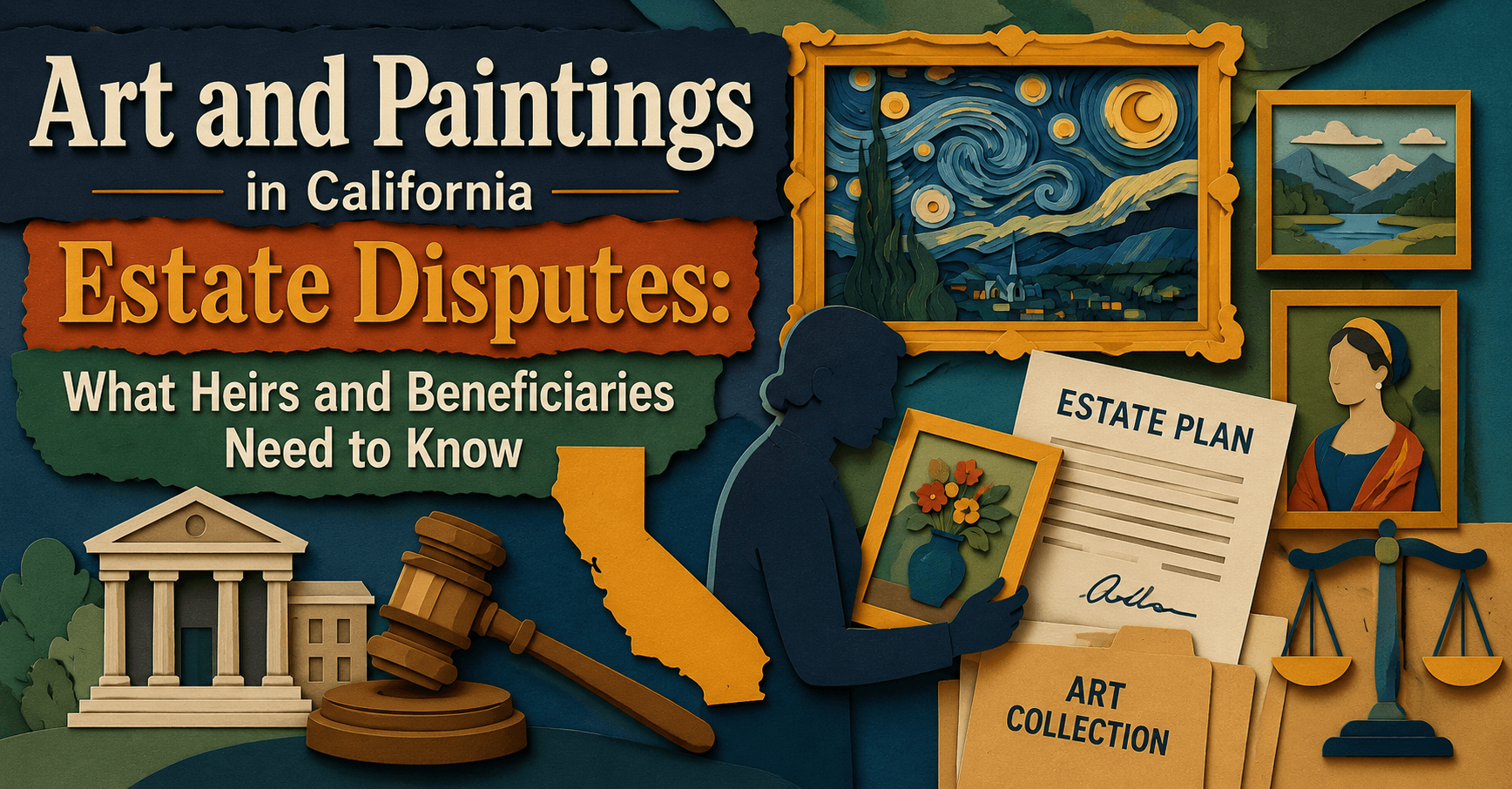

 Michael Hackard is the founder of Hackard Law, a California trust and estate litigation firm with more than five decades of experience protecting the inheritance rights of families across Sacramento, the San Francisco Bay Area, and Los Angeles. He is the author of six published books on inheritance protection and has produced more than 1,000 educational videos with over seven million views.