


 (916) 313-3030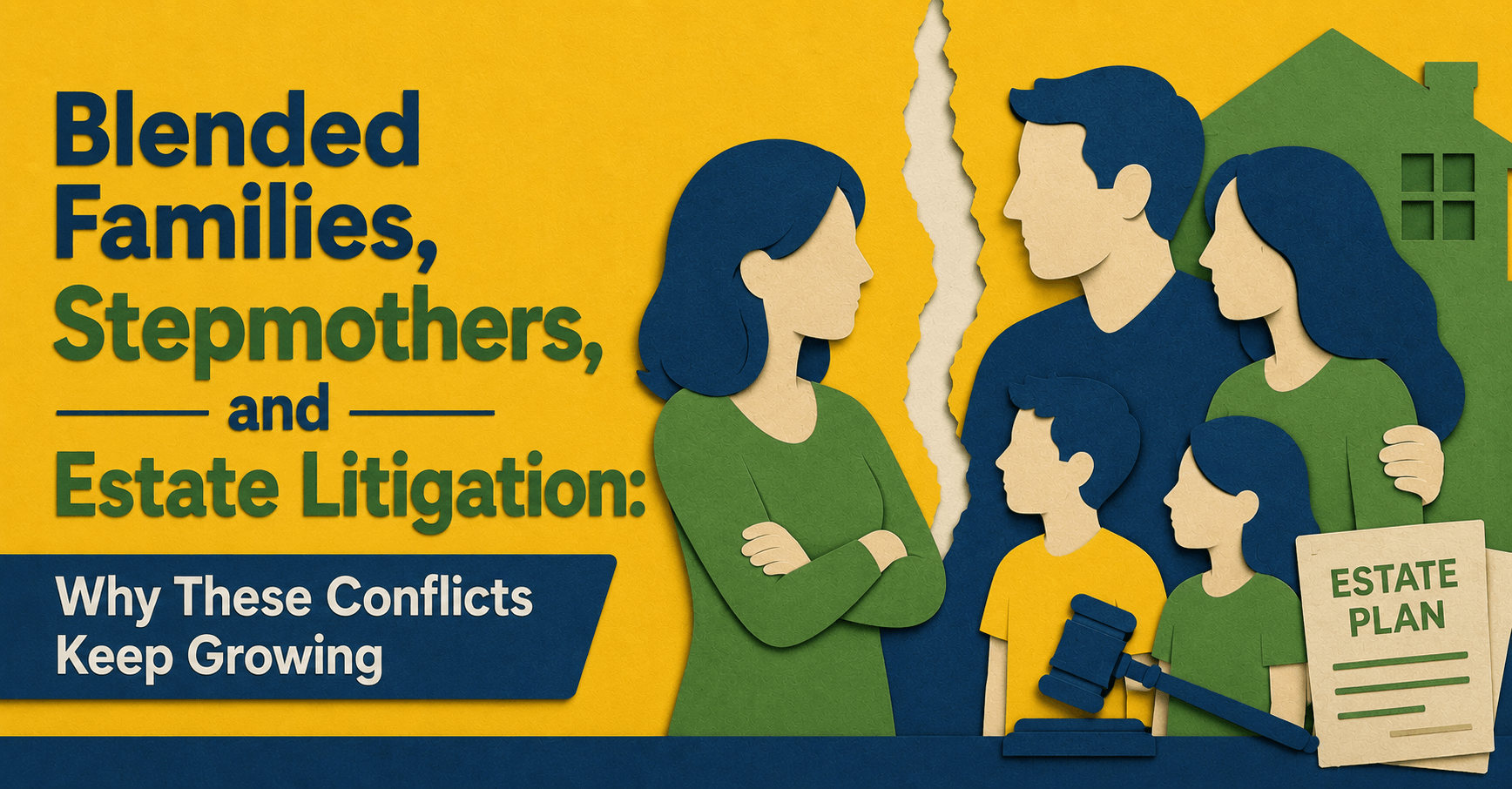
Blended Families, Stepmothers, and Estate Litigation: Why These Conflicts Keep Growing

Why Blended Families End Up in Court
I am Michael Hackard, founder of Hackard Law. Over five decades of practice, I have fought for heirs, beneficiaries, and elder abuse victims across California – from Sacramento and the San Francisco Bay Area to Los Angeles. I have written four books on inheritance protection, and my firm has produced more than 1,000 educational videos that have reached over seven million viewers. That depth of experience gives me a clear view of the fault lines where family wealth fractures – and blended families sit directly on one of the most active of those fault lines.
Last week, the prestigious wealth management journal ThinkAdvisor asked me last week to talk about this exact topic: why stepmothers are frequently at the center of estate and trust disputes, and why blended families are disproportionately vulnerable to them. It was a broad discussion, and I want to highlight the main ideas here for families who might be dealing with or approaching similar challenges.
Hackard Law handles these cases on a contingency fee basis, meaning qualified clients pay nothing upfront. If your inheritance rights are at stake, call us at (916) 313-3030.
Quick Summary
Blended families create structural tensions that often surface only after a parent dies, leaving stepchildren and surviving spouses in direct conflict over assets, trusts, and estate plans.
- Approximately half of Hackard Law’s current cases involve disputes between a stepmother and the genetic children of a deceased father.
- Cognitive decline in elderly parents makes them vulnerable to undue influence that can reshape estate plans late in life.
- New FINRA rules now give financial advisors tools to intervene when elderly clients show signs of exploitation.
- California law provides civil remedies – including double damages – for elder financial abuse.
- Early legal intervention is often the difference between recovering assets and losing them permanently.
The Blended Family Fault Line
Blended families are common in America, and most function with genuine warmth and goodwill. But when a parent ages, becomes ill, or begins to show signs of cognitive decline, the structural tensions that were always present can break into the open. A surviving stepmother and the deceased father’s children from a prior relationship often have competing interests – and those interests collide most sharply over money.
I told ThinkAdvisor that roughly half of my active cases involve this exact dynamic: a stepmother on one side, genetic children on the other, and a disputed estate or trust in between. That figure is not a coincidence. It reflects the reality that blended families rarely plan carefully for what happens after the second spouse dies – or what happens if the second spouse outlives the parent by many years and controls assets the children believed were protected for them.
These disputes are not always the product of bad intent. Sometimes they arise from poor estate planning, ambiguous trust language, or a parent who simply never told each side what the other could expect. But sometimes – and this is where litigation becomes necessary – the conflict traces back to undue influence or outright financial exploitation.
Case Pattern: A father in his late seventies remarried after the death of his first wife. His adult children from the first marriage had always understood that the family home and investment accounts would eventually pass to them. After the father’s health declined, his new wife became the sole trustee of a revocable trust that had been quietly amended. The children received nothing at his death. Litigation revealed that the amendments had been executed during a period when the father lacked testamentary capacity.
Undue Influence and Cognitive Decline
Undue influence is one of the most litigated concepts in California estate law, and blended family cases are where it appears most often. When an elderly parent begins to lose cognitive capacity – whether from dementia, Alzheimer’s, or other conditions – they become far more susceptible to pressure from those closest to them. A surviving spouse who controls access to doctors, attorneys, and financial advisors is in a powerful position to shape estate documents in ways that benefit herself at the expense of the children.
California courts look at a range of factors when evaluating undue influence: the vulnerability of the elder, the authority the influencer held, the tactics used to gain control, and the inequity of the resulting estate plan. When those factors align, a court can set aside trust amendments, will changes, and even property transfers. You can read more about these patterns in my book, The Wolf at the Door, which covers undue influence and elder financial abuse in depth.
For families who suspect this is happening – or has already happened – early legal intervention is critical. The longer assets remain under the control of someone who obtained them through manipulation, the harder recovery becomes.
What FINRA Rules Mean for Elder Protection
During my ThinkAdvisor interview, I also discussed recent FINRA rule changes that affect how financial and investment advisors handle accounts belonging to elderly clients. These rules now allow – and in some cases require – advisors to place a temporary hold on suspicious transactions when they have a reasonable belief that financial exploitation is occurring.
This is a meaningful development. Financial advisors often have earlier visibility into exploitation than family members or attorneys do. When an elderly client suddenly requests large transfers to a new beneficiary, changes account ownership, or begins liquidating long-held investments, an alert advisor can now act as a genuine safeguard rather than simply processing the transaction.
For adult children who are concerned about a parent’s finances, building a relationship with that parent’s financial advisor – and making sure the advisor knows who to contact if something looks wrong – can be one of the most practical protective steps available. You can also learn more about the full landscape of elder financial exploitation and what California law allows families to do about it.
Case Pattern: An adult daughter noticed that her elderly mother’s investment account had been depleted by more than $400,000 over eighteen months. The mother, who had been diagnosed with early-stage dementia, had no memory of authorizing the transfers. Her new companion had been added as a joint account holder. The firm’s compliance department, alerted by an advisor who had known the family for years, had flagged the transactions but had not yet acted. Litigation under California’s elder financial abuse statutes ultimately allowed the family to pursue double damages and attorney fee recovery.
When Trustees Fail Beneficiaries
In blended family disputes, the stepmother often serves as the trustee of the surviving trust after the father’s death. That position carries serious legal obligations – to all beneficiaries, not just herself. When a trustee delays distributions, fails to account for trust assets, or makes self-dealing transactions, beneficiaries have legal tools to respond.
California law requires trustees to act with loyalty, prudence, and impartiality. When those duties are breached, courts can compel accountings, surcharge trustees for losses, and remove them from their role. Beneficiaries who are being stonewalled should understand that a trustee’s failure to account is not just frustrating – it is actionable. Similarly, if you believe distributions are being withheld without cause, California law gives you the right to demand timely action.
For decades, I have stood with families who were told they had no options – that the trust documents were final, that the trustee’s decisions were unreviewable, that the time to act had passed. In most of those cases, that was simply not true. Discovery, forensic accounting, and a steady commitment to the facts have restored what manipulation tried to steal.
Key Definitions
- Blended family: A family unit in which one or both spouses have children from a prior relationship, creating competing lines of inheritance.
- Undue influence: Pressure exerted on a vulnerable person that overcomes their free will and substitutes the influencer’s desires for the person’s own intentions.
- Testamentary capacity: The legal and mental ability to understand the nature and effect of making a will or trust amendment.
- Cognitive decline: A gradual loss of memory, reasoning, or judgment that can make an elder susceptible to exploitation.
- Surviving spouse: The husband or wife who outlives the other; in blended families, this person may be a stepparent to the deceased’s children.
- Trustee: The person or institution responsible for managing and distributing trust assets according to the trust’s terms.
- Surcharge: A court-ordered remedy requiring a trustee to personally repay losses caused by a breach of fiduciary duty.
- FINRA: The Financial Industry Regulatory Authority, which sets conduct rules for broker-dealers and investment advisors, including rules on protecting elderly clients.
- Civil elder financial abuse: A California cause of action that allows victims or their families to recover double damages and attorney fees when financial exploitation of an elder is proven.
- Contingency fee: A fee arrangement in which the attorney is paid only if the case is won or settled, with no upfront cost to the client. See how contingency fees work in trust litigation.
What to Do Next
- Look for signs that a parent’s estate plan changed significantly after a new spouse or companion entered the picture.
- Get copies of any trust documents, amendments, and financial account records as early as possible.
- Try to avoid waiting – California has strict statutes of limitations for trust contests and elder abuse claims.
- Look for a pattern of isolation: was the elder cut off from longtime friends, family members, or advisors?
- Try to identify the elder’s financial advisors and determine whether any suspicious transactions were flagged.
- Get a timeline of when cognitive decline began relative to when estate documents were signed or changed.
- Look into whether a trustee has provided required accountings – silence is often a warning sign.
- Review our guide to guarding against elder financial abuse for a broader picture of what California law allows.
- Try to avoid confronting a suspected influencer directly before speaking with an attorney – doing so can complicate litigation.
- Call Hackard Law at (916) 313-3030 to discuss your situation. You can also reach us through our contact page.
CALL THE SAGE | When Experience Matters, Families Listen
🏛️ We practice California trust & estate & elder financial abuse litigation
⚖️ We represent heirs, beneficiaries, and elder abuse victims
🎥 1,000+ educational videos | 7 million+ views | 4 published books
🎯 “After thousands of cases, I see the pattern others miss.”
CONTINGENCY REPRESENTATION – No Win, No Fee
Throughout California: Sacramento | Los Angeles | Bay Area
📞 CALL THE SAGE: (916) 313-3030
Subscribe for weekly insights on:
- Elder financial abuse warning signs and prevention
- Trust and estate litigation strategies
- Inheritance protection for California families
- Family protection strategies
When your inheritance is under attack, Call The Sage.
Hackard Law | 10640 Mather Blvd, Mather CA 95655
Attorney Advertisement | Michael Hackard, State Bar #71067
RELATED VIDEOS
Alzheimer’s, Widowed Stepmothers & Estate Crimes | Episode 2
Explores how Alzheimer’s and widowed stepmothers fuel estate crimes and family disputes.
Alzheimer’s, Widowed Stepmothers & Estate Crimes | Episode 5
Examines the intersection of cognitive decline, stepmothers, and contested estates.
Inheritance Heists Ch. 11: Blended Family Estate Fights – Litigation or Mediation?
Weighs litigation versus mediation as options for resolving blended family estate battles.
Elder Financial Abuse | California Estate & Trust Litigation
Covers California laws and remedies available to victims of elder financial abuse.
Detecting Elder Financial Abuse | CA Trust Litigation Attorneys
Explains how to spot warning signs of financial exploitation targeting elderly individuals.
How to Protect Families from Elder Financial Abuse | CA Trust Litigation
Outlines practical steps families can take to prevent elder financial exploitation.
 Michael Hackard is the founder of Hackard Law, a California trust and estate litigation firm with more than five decades of experience protecting the inheritance rights of families across Sacramento, the San Francisco Bay Area, and Los Angeles. He is the author of six published books on inheritance protection and has produced more than 1,000 educational videos with over seven million views.