I am Michael Hackard, founder of Hackard Law. Over five decades of practice, I have fought for heirs, beneficiaries, and elder abuse victims across California – from Sacramento and the San Francisco Bay Area to Los Angeles. I have written four published books on inheritance protection and produced more than 1,000 educational videos that have reached over seven million viewers. I have watched California’s legal landscape shift in real time, and few shifts carry more consequence for families than the evolving framework around elder financial abuse. The baby boomer generation is aging, and the law is catching up – sometimes faster than the attorneys on the other side of the courtroom expect.
Hackard Law provides contingency fee representation for qualified elder financial abuse and estate litigation cases – no upfront costs to you. To find out whether your situation qualifies, call us at (916) 313-3030.
Quick Summary
The way estate disputes are contested is changing as California strengthens its legal protections for elders against financial exploitation.
Under California law, an elder is any person aged 65 or older residing in the state.
Elder financial abuse claims can be tried before a jury using a preponderance of the evidence standard – lower than the clear and convincing standard common in probate court.
Prevailing plaintiffs in financial elder abuse cases may recover attorney fees, creating strong incentives for private attorneys to pursue these claims.
The coming $30 trillion wealth transfer from baby boomers to millennials is accelerating legislative and judicial change.
Families who act early have more legal tools available to them.
Why California’s Elder Financial Abuse Law Is Shifting
California’s regulatory protections for elders are not static. They are expanding in direct response to demographic pressure. As the state’s baby boomers grow older, legislatures responsive to their constituents are building out a broader framework of safeguards against financial predators. The legislative intent is explicit: encourage private attorneys to investigate and prosecute civil elder abuse claims on behalf of those who cannot fight alone.
For decades, probate court operated under a clear and convincing evidence standard – a high bar that favored the status quo. Elder financial abuse claims tried in civil court operate differently. Liability need only be proven by a preponderance of the evidence, meaning it is more likely than not that the abuse occurred. That difference is not a technicality. It changes the entire litigation calculus for families pursuing justice.
The Proof Standard Gap and What It Means for Families
Probate lawyers who have spent careers in the traditional trust and estate world sometimes carry assumptions that do not survive contact with civil elder abuse litigation. The clear and convincing standard, familiar in probate court trials, does not apply when elder financial abuse claims move to a jury. Attorneys accustomed to that higher bar – and the slower, more predictable rhythm of probate proceedings – can find themselves unprepared for discovery demands, motions in limine, jury instruction disputes, and the full machinery of civil litigation.
This is not a minor procedural difference. It is a structural shift that favors families who have been harmed. Civil litigators who handle these cases regularly understand that preparation, not proclamation, wins trials. Overconfidence in early hearings is a pattern I have watched unravel more than once.
Case Pattern: A family member with power of attorney began redirecting an elderly parent’s assets shortly after a dementia diagnosis. Because the claim was pursued as elder financial abuse rather than a standard probate dispute, the lower burden of proof and the availability of attorney fees made litigation viable. The case resolved with substantial asset recovery that would have been far harder to achieve under the probate court’s traditional evidentiary standard.
Attorney Fees and the Incentive to Fight
One of the most consequential features of California’s elder financial abuse statute is the fee-shifting provision. When a plaintiff proves liability by a preponderance of the evidence, the court awards attorney fees. This provision exists for a reason: it makes it economically possible for private attorneys to take on cases that might otherwise go unpursued.
For families, this means that the financial barrier to legal representation is lower than they might assume. The law is designed to bring capable attorneys into these cases. Hackard Law’s contingency fee model aligns with that intent – we take on the financial risk so families can pursue what is rightfully theirs.
Case Pattern: An adult child noticed that a sibling had been named sole beneficiary of a revised trust executed while their parent was in cognitive decline. Pursuing the claim as elder financial abuse – rather than a will contest alone – opened access to jury trial rights, a lower proof standard, and potential fee recovery. The combination proved decisive in reaching a settlement that restored the original estate plan’s intent.
The $30 Trillion Wealth Transfer and Its Legal Consequences
History teaches that economics shapes law. Over the next 30 to 40 years, an estimated $30 trillion will transfer from baby boomers to the next generation. That scale of wealth movement creates pressure – on families, on courts, and on the legal profession itself. Legislatures are responding. Courts are adapting. And the attorneys who understand where the law is heading will be better positioned to protect the families who come to them.
California’s heightened proof standards in traditional estate disputes may continue to erode as social and economic forces push toward stronger elder protections. That erosion is not accidental. It reflects a deliberate policy choice: the orderly transfer of wealth matters, but not more than protecting the people who built that wealth.
For a deeper understanding of how financial exploitation unfolds and what legal tools exist, the elder financial exploitation guide at Hackard Law covers the full landscape.
Undue influence is one of the most common mechanisms used to redirect an elder’s estate. Families dealing with suspected manipulation should review undue influence in California estate law to understand how courts evaluate these claims.
What I Have Seen – and Why It Drives This Work
For decades, I have stood with families at some of the most difficult moments of their lives. I have seen the financial toll grow as exploitation goes unaddressed – compounding month by month while families hesitate, uncertain whether the law can help them. I have seen the fracture run too deep for any judgment to mend the relationships that were broken along the way. And I have seen a steadfast commitment to truth restore what dishonesty tried to steal.
Discovery, forensic analysis, and the pursuit of justice are not just legal strategies. They are safeguards for families threatened by undue influence, financial predators, and the quiet erosion of an elder’s autonomy. The law is moving in the right direction. The families I represent deserve attorneys who are moving with it.
If you are dealing with a suspected elder financial abuse situation in Sacramento County or anywhere in California, the Sacramento County probate litigation team at Hackard Law is ready to evaluate your case.
Key Definitions
Elder (California law): Any person aged 65 or older who resides in California, regardless of mental or physical condition.
Elder financial abuse: The taking, secreting, appropriating, obtaining, or retaining of real or personal property of an elder for a wrongful use or with intent to defraud.
Preponderance of the evidence: The standard of proof in civil elder abuse cases – meaning it is more likely than not that the abuse occurred.
Clear and convincing evidence: A higher proof standard historically applied in probate court proceedings, requiring strong and substantial evidence.
Attorney fee shifting: A statutory provision allowing prevailing elder abuse plaintiffs to recover their legal fees from the defendant.
Undue influence: Excessive persuasion that overcomes an elder’s free will and causes them to act in a way that is contrary to their own interests.
Power of attorney: A legal document granting one person authority to act on another’s behalf – and a common vehicle for financial exploitation when misused.
Contingency fee: A fee arrangement where the attorney is paid only if the client recovers – no upfront cost to the client.
Probate court: The California court with jurisdiction over wills, trusts, guardianships, and estate administration.
Civil litigation: Court proceedings outside probate, including jury trials, where elder financial abuse claims may be pursued under a lower proof standard.
What to Do Next
Look for signs of sudden changes to a loved one’s estate documents, especially after a health decline or new caregiver relationship.
Get copies of any trust amendments, will revisions, or beneficiary designation changes made in the last several years.
Look for unexplained financial transactions, missing assets, or new account signatories you do not recognize.
Try to avoid confronting the suspected abuser directly before speaking with an attorney – doing so can complicate the legal record.
Look into whether a power of attorney was recently executed or modified, as a misused power of attorney is one of the most common tools in financial elder abuse.
Get a timeline together – dates of document changes, health events, and new relationships around your loved one can be critical to building a case.
Try to gather medical records or physician notes that speak to your loved one’s cognitive state at the time key documents were signed.
Michael Hackard discusses actionable steps seniors and families can take to prevent financial abuse.
Frequently Asked Questions
Elder financial abuse claims can be brought in civil court before a jury, using the lower preponderance of the evidence standard rather than the clear and convincing standard common in probate. This distinction gives families a meaningful legal advantage and opens access to attorney fee recovery that probate proceedings typically do not provide.
Any person aged 65 or older who resides in California qualifies as an elder under the state’s elder abuse statutes. The protections apply regardless of whether the person has a diagnosed cognitive condition, though cognitive decline often plays a role in how exploitation occurs.
Yes. California law provides for attorney fee awards when a plaintiff proves elder financial abuse liability by a preponderance of the evidence. This fee-shifting provision is one of the primary reasons private attorneys are able to take these cases on a contingency basis.
As baby boomers age and transfer an estimated $30 trillion in wealth over the coming decades, California’s legal system is adapting to protect that transfer from exploitation. Legislative and judicial pressure is building toward stronger elder protections, which is reshaping how estate and trust disputes are litigated.
As early as possible. Assets can be moved or dissipated quickly, and delay can limit the legal remedies available. Early intervention gives attorneys the best opportunity to preserve evidence, identify recoverable assets, and pursue all available claims before the statute of limitations runs.
About the Author
Michael Hackard is the founder of Hackard Law, a California trust and estate litigation firm with more than five decades of experience protecting the inheritance rights of families across Sacramento, the San Francisco Bay Area, and Los Angeles. He is the author of four published books on inheritance protection and has produced more than 1,000 educational videos with over seven million views.


 (916) 313-3030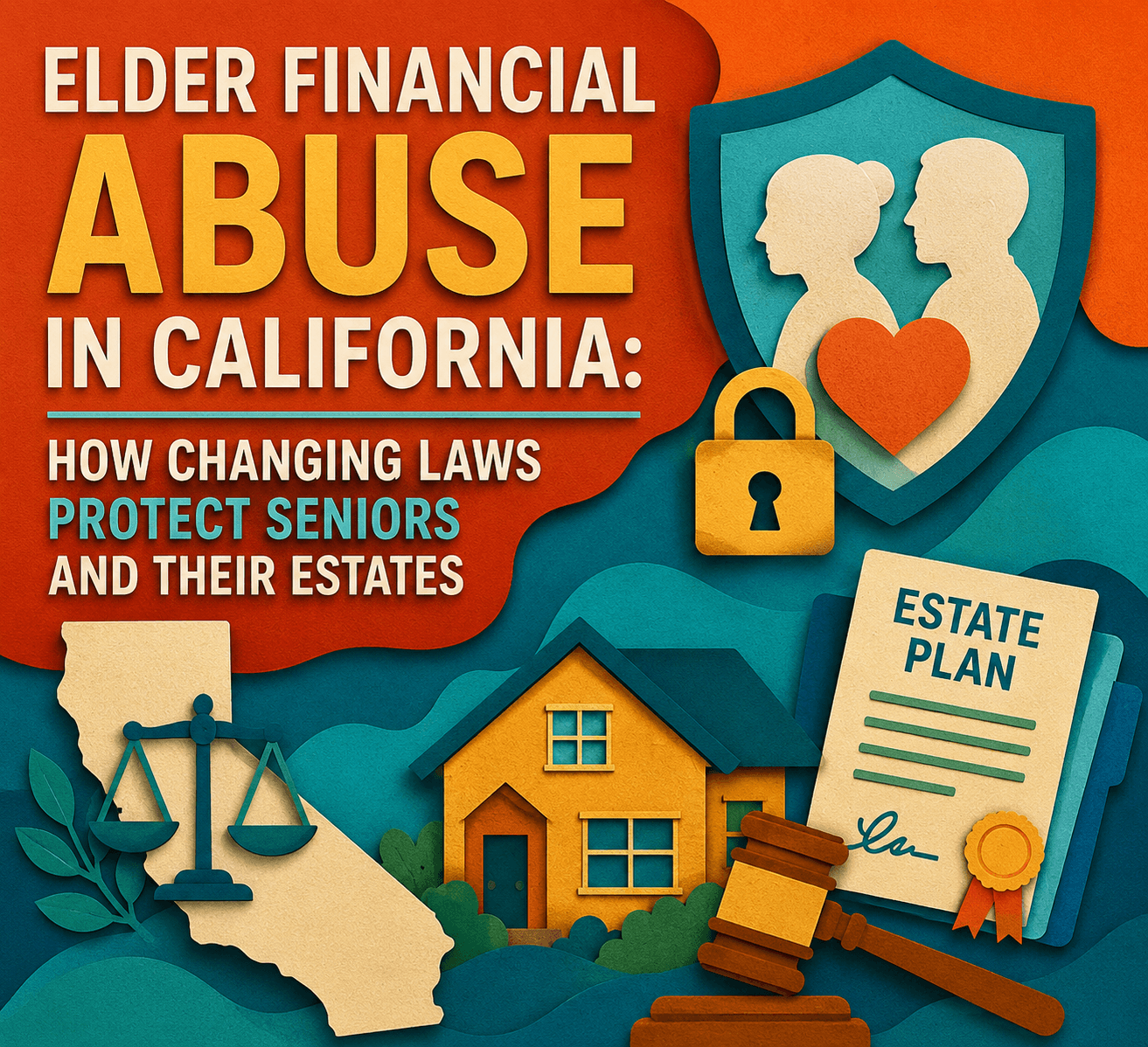
 Michael Hackard is the founder of Hackard Law, a California trust and estate litigation firm with more than five decades of experience protecting the inheritance rights of families across Sacramento, the San Francisco Bay Area, and Los Angeles. He is the author of four published books on inheritance protection and has produced more than 1,000 educational videos with over seven million views.