


 (916) 313-3030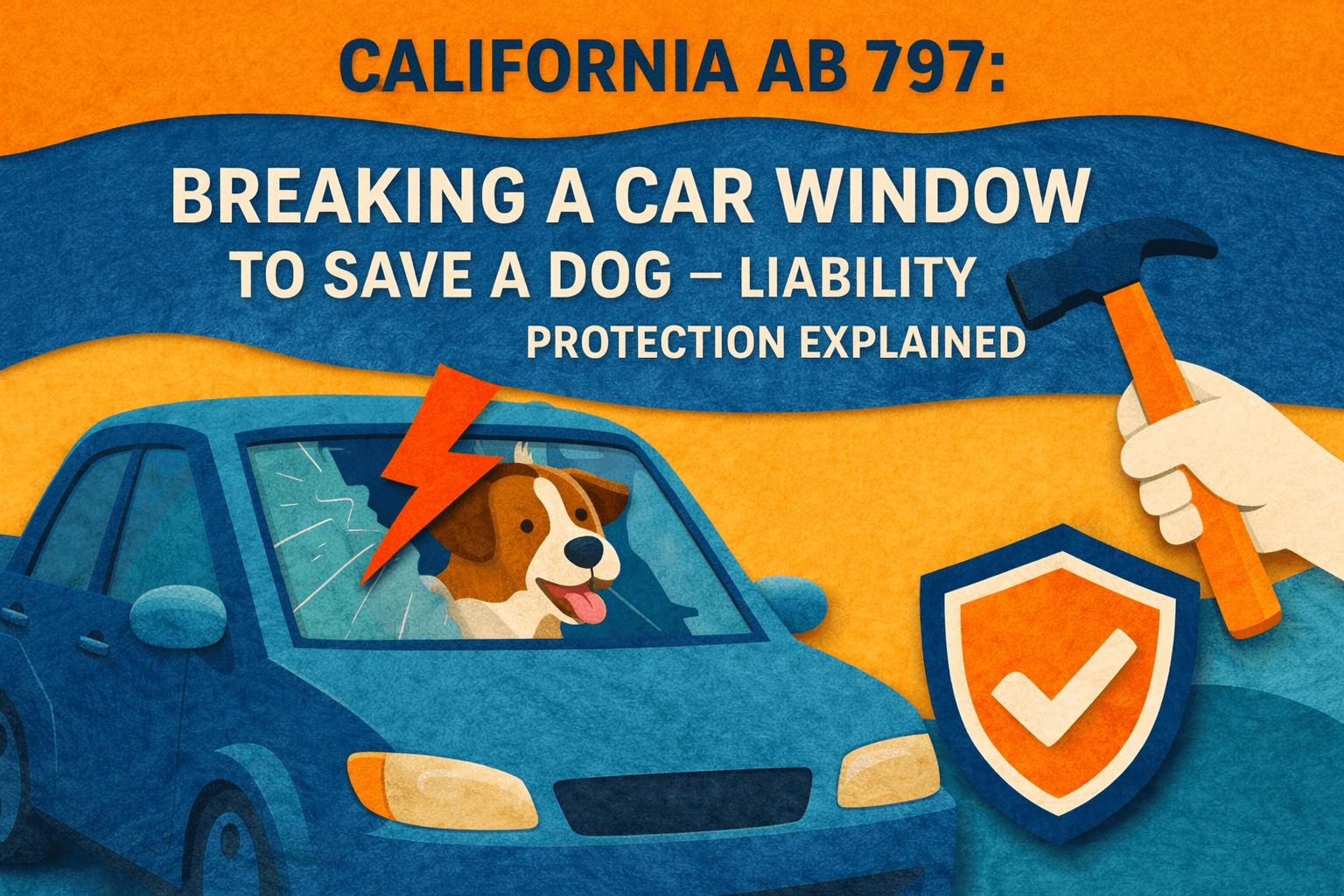
California AB 797: Breaking a Car Window to Save a Dog — Liability Protection Explained
A California Attorney’s Perspective on Good-Faith Rescue Laws
I’m Michael Hackard, founder of Hackard Law. Over more than five decades of practicing law in California, I have seen the legal system evolve in important ways — sometimes through landmark court decisions and sometimes through smart, common-sense legislation. I am the author of four published books on inheritance protection and have produced more than 1,000 educational videos with over seven million views, covering everything from trust litigation to the broader legal issues that affect California families. My firm represents clients across Sacramento, the San Francisco Bay Area, and Los Angeles, and while our core focus remains trust and estate litigation, I believe it is important to discuss laws that touch every Californian’s daily life. Assembly Bill 797 is one of those laws. It addresses a situation almost anyone could face: a dog locked inside a sweltering car, clearly suffering, with no first responder in sight. What do you do? This new bill gives Californians a clear answer — and legal protection for doing the right thing.
Hackard Law provides contingency fee representation for qualified trust and estate cases, meaning families pay no upfront costs to pursue justice.
If you have questions about California liability law or need help protecting your family’s rights, contact Hackard Law today for a free consultation.
Quick Summary: What Assembly Bill 797 Does
California’s Assembly Bill 797 passed the State Senate unanimously and now heads to the State Assembly for a final vote. The bill creates a liability shield for people who act in good faith to rescue animals trapped inside dangerously hot vehicles.
- Liability protection for rescuers who break a car window to save an animal in immediate danger of heat stroke or death.
- Good-faith requirement — the rescuer must reasonably believe the animal is in imminent peril and must not use excessive force.
- Existing law context — it is already illegal in California to leave children or animals inside a hot car.
- Temperature reality — even on a 70-degree day, a car’s interior can reach 104 degrees in just 30 minutes.
Why This Law Matters for Every Californian
Picture a 100-degree summer afternoon in the Central Valley or the Inland Empire. You walk through a grocery store parking lot and see a dog locked inside a truck with the windows rolled up. The animal is panting heavily, showing clear signs of distress. There are no police or firefighters nearby. Every minute counts.
Before AB 797, a rescuer in that scenario faced a real legal dilemma. Breaking the window could save the dog’s life, but it could also expose the rescuer to a lawsuit for property damage. The bill eliminates that tension by ensuring that good-faith rescuers cannot be held civilly liable for the damage they cause while saving an animal’s life.
The unanimity of the Senate vote reflects broad agreement that protecting life — human or animal — should not come with a legal price tag.
The Legal Concept of Good Faith and Liability Shields
Good faith is a foundational concept across many areas of California law. In trust and estate litigation, good faith governs how trustees must act when managing assets on behalf of beneficiaries. In this new legislation, good faith determines whether a rescuer qualifies for the liability shield.
To qualify under AB 797, a person must have a reasonable belief that the animal faces imminent danger of suffering or death. The rescuer should also attempt to locate the vehicle’s owner or contact law enforcement before taking action. These requirements prevent the law from being abused while still empowering bystanders to act decisively when an animal’s life hangs in the balance.
California has long recognized that certain protective actions deserve legal immunity. The state’s existing Good Samaritan statutes shield individuals who provide emergency medical care from liability, provided they act in good faith. AB 797 extends this same principle to animal rescue. Understanding how California structures the stages of legal proceedings helps illustrate why liability shields like this one matter — litigation is expensive and emotionally draining, and sensible laws prevent unnecessary courtroom battles.
Case Pattern: The Parking Lot Dilemma. A family returning from a weekend trip stopped at a rest area on Interstate 5. Their neighbor, who happened to be in the same lot, noticed the family’s dog locked inside their car while temperatures soared above 100 degrees. The neighbor broke the rear window, rescued the dog, and later faced threats of a property damage lawsuit. Under AB 797, that neighbor would have clear protection from civil liability.
Temperature Science: Why Hot Cars Are Deadly
Many people underestimate how quickly a car’s interior heats up. Research from the American Veterinary Medical Association shows that on a 70-degree day, a car’s interior can reach 104 degrees within 30 minutes. On a 90-degree day, interior temperatures can climb past 130 degrees in under 20 minutes. At 100 degrees outside, interior temperatures can spike to 170 degrees — a lethal environment for any living creature.
Children and animals are especially vulnerable. Dogs regulate body temperature primarily through panting, which becomes ineffective once the ambient air temperature exceeds their body temperature. Children have a higher surface-area-to-body-mass ratio than adults, meaning they absorb heat faster.
This scientific reality is exactly why California already makes it illegal to leave a child or animal in a hot car. AB 797 simply closes the gap by protecting the people who intervene. California families deserve to know that acting to protect those who cannot protect themselves will not result in punishing litigation.
How This Connects to Broader California Protective Laws
California has a strong tradition of enacting laws that protect vulnerable populations. The state’s elder financial abuse statutes, for example, provide powerful civil remedies — including double damages and attorney fees — for seniors who have been financially exploited. The Welfare and Institutions Code creates specific protections for individuals who cannot advocate for themselves.
AB 797 fits within this broader framework. The bill recognizes that animals, like children and elderly individuals, depend on others to safeguard their well-being. When the law empowers people to act without fear of retribution, more lives are saved.
For families navigating the California legal system, understanding how protective statutes work is essential. Whether you are dealing with a trust dispute or evaluating your rights under a new consumer protection law, the underlying principle is the same: California law rewards good-faith action and punishes those who exploit positions of power.
Case Pattern: The Good Samaritan Defense. A retired teacher in Southern California saw a small dog convulsing inside a locked sedan on a 95-degree afternoon. She called 911, waited several minutes, and then used a tire iron to break the passenger window. The dog survived. The vehicle owner threatened a lawsuit. Under AB 797, the teacher’s good-faith actions would be legally protected, and the vehicle owner’s claim would fail.
What Californians Should Remember About Vehicle Heat Safety
AB 797 is not just about legal liability. It is a public safety reminder. Every summer, California emergency rooms treat children and animals suffering from heat-related injuries sustained inside parked vehicles. Prevention is always better than rescue.
Never leave a child or pet unattended in a parked vehicle, even for a few minutes. Cracked windows do not provide adequate ventilation in extreme heat. If you see an animal or child in distress inside a hot car, call 911 immediately. Document the situation with photos or video if you can do so safely. If you must break a window, use the least amount of force necessary and remain at the scene until first responders arrive.
These steps align with both existing California law and the requirements of AB 797. Families who understand their legal rights and responsibilities are better equipped to act confidently when it matters most.
Key Definitions
- Assembly Bill 797: A California bill that shields good-faith rescuers from civil liability when they break a vehicle window to save an animal in immediate danger from heat.
- Good Faith: An honest, reasonable belief that action is necessary to prevent harm — a standard used across many areas of California law.
- Liability Shield: A legal protection that prevents a person from being sued for damages caused while performing a protected action.
- Good Samaritan Law: A statute that protects individuals who voluntarily provide emergency assistance from civil liability.
- Heat Stroke: A life-threatening condition caused by prolonged exposure to excessive heat, common in animals and children left in hot vehicles.
- Civil Liability: The legal obligation to pay damages to another person for harm caused by one’s actions.
- Property Damage Claim: A lawsuit seeking compensation for damage to personal property, such as a broken car window.
- Imminent Danger: A situation where harm or death is likely to occur within minutes without intervention.
What to Do Next
- Never leave children or pets unattended inside a parked vehicle, regardless of the outside temperature.
- Call 911 first if you see an animal or child trapped inside a hot car.
- Document the scene with photos, video, and notes about the time and temperature.
- Attempt to locate the vehicle owner by checking nearby businesses or having the license plate announced.
- Use minimal force if you must break a window — target a corner of the glass farthest from the animal.
- Stay at the scene until law enforcement or animal control arrives to provide your account.
- Know your rights under California’s liability and protective statutes so you can act with confidence.
- Share this information with family, friends, and neighbors to spread awareness before the next heat wave.
If you are facing a legal dispute in California and need guidance on protecting your family’s rights, reach out to Hackard Law for a confidential consultation.
CALL THE SAGE | When Experience Matters, Families Listen
📚 50 years California trust, estate & elder financial abuse litigation
⚖️ We represent heirs, beneficiaries, and elder abuse victims
🎥 1,000+ educational videos | 7 million+ views | 4 published books
🎯 “After thousands of cases, I see the pattern others miss.”
CONTINGENCY REPRESENTATION — No Win, No Fee
Throughout California: Sacramento | Los Angeles | Bay Area
📞 CALL THE SAGE: (916) 313-3030
Subscribe for weekly insights on:
- Elder financial abuse warning signs and prevention
- Trust and estate litigation strategies
- Inheritance protection for California families
- Family protection strategies
When your inheritance is under attack, Call The Sage.
Hackard Law | 10640 Mather Blvd, Mather CA 95655
Attorney Advertisement | Michael Hackard, State Bar #71067
RELATED VIDEOS
CA Trust Beneficiary Rights | Do the Right Thing
The ‘Do the Right Thing’ theme directly echoes the blog’s core message about good-faith rescue and California’s tradition of legally protecting those who act to defend the vulnerable.
Trust Beneficiary Litigation | Prevention, Protection & Pursuit
‘Prevention, Protection & Pursuit’ closely aligns with the blog’s three-pronged public safety message: prevent hot-car tragedies, protect good-faith rescuers from lawsuits, and pursue justice when needed.
The Biggest Misunderstandings About Estate Lawyers — Explained
The blog addresses widespread misunderstandings about civil liability when breaking a car window to save an animal. This video’s educational, myth-busting approach mirrors that goal.
California Gambling Trustees | Breaking Bad on Fiduciary Duties
The theme of California law holding bad actors accountable while protecting those who act in good faith ties directly to AB 797’s liability framework. ‘Breaking Bad’ also resonates with the ‘breaking a window’ context.
How to Choose the Right Trusts Lawyer for Your Situation
The blog ends with a strong call to consult a California attorney. This video supports that action by helping readers understand how to find the right legal counsel.
Los Angeles Trust Litigation Attorney | Asking the Right Questions
The blog repeatedly urges readers to understand their legal rights and ask informed questions before and after intervening in a hot-car emergency. This video reinforces that empowerment-through-knowledge theme.
 Michael Hackard is the founder of Hackard Law, a California trust and estate litigation firm with more than five decades of experience protecting the inheritance rights of families across Sacramento, the San Francisco Bay Area, and Los Angeles. He is the author of four published books on inheritance protection and has produced more than 1,000 educational videos with over seven million views.