


 (916) 313-3030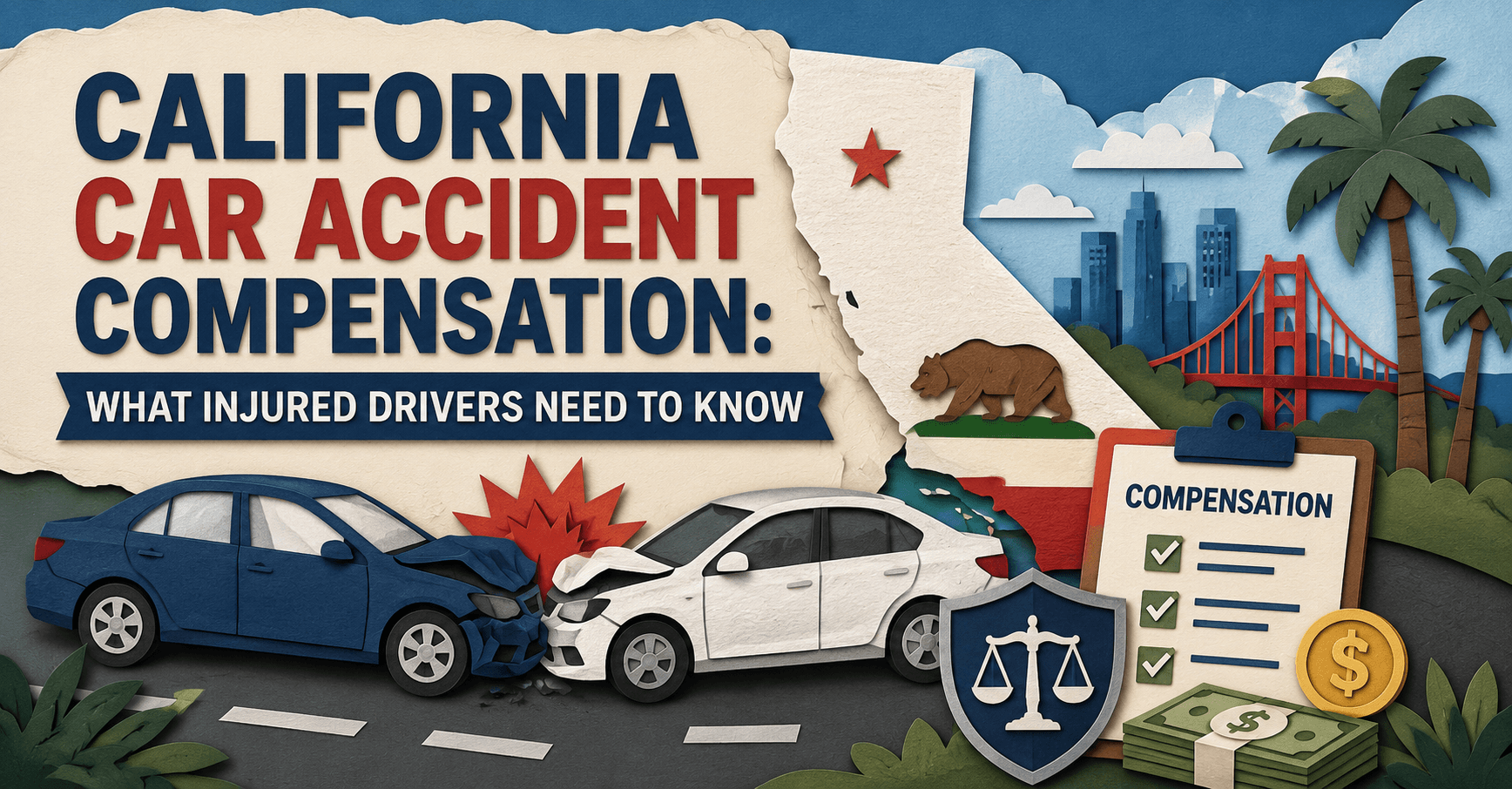
California Car Accident Compensation: What Injured Drivers Need to Know

Who Hackard Law Is and Why This Matters
I am Michael Hackard, founder of Hackard Law. More than five decades ago, I represented my first client injured in a car crash, and the principles that shaped that case still govern California courts today. Over my career, I have authored four published books on protecting families from inheritance loss, and our firm has produced more than 1,000 educational videos that have reached over seven million viewers. Hackard Law serves injured Californians throughout Sacramento, the San Francisco Bay Area, and LA, and we bring that same commitment to vehicle accident cases that we bring to every matter we handle.
The foundation of California’s compensation system is a simple principle: when a driver’s carelessness results in injury, the victim should be compensated to the extent permitted by law. Although that idea seems straightforward, putting it into practice following a significant collision necessitates a thorough comprehension of what the law covers, what damages are available, and what evidence is most important.
Hackard Law provides contingency fee representation – meaning there are no upfront costs for qualified cases. If you or someone you love has been hurt in a vehicle accident, call us at (916) 313-3030.
Quick Summary
When another party’s negligence caused the collision and the ensuing injuries, California law permits injured drivers and passengers to obtain compensation. Pain, suffering, and medical expenses are covered by both economic and non-economic damages.
- Negligence is the inability to take the necessary precautions to keep others safe.
- Common crash types include rear-end collisions, T-bone crashes, single-vehicle accidents, merging clashes, and low-speed impacts.
- Past and future medical costs as well as lost wages are covered by economic damages.
- Non-economic damages cover pain, suffering, grief, humiliation, and loss of enjoyment of life
- Hackard Law handles these cases on a contingency fee basis – no recovery, no fee.
How California Defines Negligence in Vehicle Accident Cases
Failing to take reasonable precautions to keep oneself or others safe is considered negligence. The injured party in a car accident case has to prove that the defendant was careless, that the plaintiff suffered harm, and that the defendant’s carelessness played a significant role in that harm. Every claim is built upon these three components.
California has a basic safety rule that no one should needlessly endanger another person. That rule is grounded in common sense, but it is also reinforced by statutes, traffic regulations, and decades of court decisions. When a driver ignores a red light, texts behind the wheel, or merges without checking mirrors, they have violated that rule – and the law holds them accountable.
The first step to a just recovery for injured Californians navigating these claims is comprehending the legal framework. The contingency fee guide for California trust and estate litigation at Hackard Law reflects the same access-to-justice philosophy we apply to personal injury representation.
The Most Common Types of Vehicle Accidents in California
Rear-end collisions are the most common type of car accident in the nation, according to the National Highway Traffic Safety Administration. They occur in parking lots, construction zones, intersections, and highways. The striking driver is at fault in the majority of these collisions.
Single-vehicle accidents are often due to driver error – cell phone use, speeding, drunk driving, or drowsy driving. But not always. Rollover accidents sometimes trace back to design defects. Road hazards, unmarked obstructions, and defective vehicle parts can all contribute to crashes that have nothing to do with the driver’s choices. Passengers in single-vehicle crashes may still have a valid claim against a negligent driver or a product manufacturer.
T-bone or cross-traffic crashes are among the most violent. In an instant, a driver who runs a red light or fails to yield can cause catastrophic injuries. Clipping crashes – where a driver changes lanes, enters from a ramp, or merges as a lane ends – happen with unsettling frequency on California highways. Low-speed accidents, those under ten miles per hour, may seem minor but regularly injure bicyclists, pedestrians, and anyone caught in a driver’s blind spot while backing up.
Case Pattern: Severe orthopedic injuries were sustained by a passenger in a car hit by a driver who ran a red light at a busy intersection. The case was settled with compensation covering years of projected future treatment costs and lost earning capacity because the at-fault driver’s negligence was evident and the medical records were comprehensive.
Economic Damages: What the Law Covers
California law divides recoverable damages into two categories. Economic damages are the measurable financial losses tied to the injury. They include past medical expenses – the bills already incurred – and future medical expenses, which may stretch years or even decades ahead.
Paying someone only for the care they have already received while ignoring any future surgeries, therapy, or medication they may require would be unfair. The same reasoning holds true for lost wages. A person’s loss should be factored in if an injury prevented them from working for months or permanently decreased their earning potential. A defendant cannot legitimately claim that future losses are someone else’s problem and that only past losses are relevant.
Each case has a unique economic picture. Some require quick recuperation times and low medical expenses. Others include the kind of financial disruption that completely alters a family’s future, recurrent surgeries, and permanent disability.
Non-Economic Damages: The Human Cost of Injury
Although more difficult to measure, non-economic damages are just as real. Physical pain, mental suffering, loss of enjoyment of life, and disfigurement are compensable losses. Also, the physical impairment, inconvenience, grief, anxiety, humiliation, and emotional stress are all recognized as compensable losses under California law.
I have known a woman who has endured dozens of surgeries after a crash caused by another driver’s negligence. She is courageous. She is fully present for her family and for everyone around her. She is also in near-constant pain – pain that is not likely to go away. She does not complain. But the grief for what she has lost, for what she cannot do, for what cannot be fixed – that is real. She uses a walker. At times, a wheelchair. That is not inconvenient in some abstract sense. It is distressing every single day.
This case, and the cases of thousands of other injured Californians, is ultimately about compensation. Not punishment. Not politics. An effort to make people as whole as the law allows after a catastrophic injury. Who would argue that she should bear the financial cost of an injury she did not choose and did not cause?
For non-economic damages, jurors do not have a set formula. They arrive at a reasonable figure by using their judgment, which is informed by the evidence and common sense. Because of this, each injury’s human story is just as important as its medical history.
Case Pattern: A distracted driver struck a construction worker, causing a spinal injury that ended his career. His non-economic losses, such as the loss of a physical identity developed over decades of skilled labor and the sorrow of watching his children grow up while he sat on the sidelines, were just as important to his family’s eventual recovery as his economic losses.
Key Definitions
- Negligence: The failure to use reasonable care to prevent harm to oneself or others, forming the basis of most vehicle accident claims.
- Substantial factor: The legal standard requiring that a defendant’s negligence meaningfully contributed to causing the plaintiff’s harm.
- Economic damages: Quantifiable financial losses including past and future medical expenses, lost wages, and reduced earning capacity.
- Non-economic damages: Subjective losses such as pain, suffering, grief, humiliation, disfigurement, and loss of enjoyment of life.
- Lost earning capacity: Compensation for the long-term reduction in a person’s ability to earn income due to injury.
- Rear-end collision: The most common vehicle accident type, in which a following vehicle strikes the vehicle ahead, typically placing fault on the striking driver.
- T-bone crash: A side-impact collision, often occurring at intersections, frequently caused by red-light running or failure to yield.
- Product liability: Legal responsibility of a manufacturer or designer when a defective vehicle component contributes to an accident or injury.
- Contingency fee: A fee arrangement in which the attorney is paid only if the client recovers compensation, with no upfront costs to the client.
What to Do Next
- Look for and preserve all evidence from the crash scene, including photos, witness contact information, and police report numbers.
- Get copies of all the medical documents and bills as soon as they are available, and keep them organized from the start.
- Try to avoid giving recorded statements to insurance adjusters before speaking with an attorney.
- Look for documentation of any missed work or income loss, including pay stubs and employer communications.
- Even if your injuries seem minor, get checked out because some conditions take days or weeks to fully manifest.
- Try to avoid settling quickly with an insurance company before the full extent of your injuries is known.
- Look for an attorney who handles vehicle accident cases on a contingency fee basis, so cost is not a barrier to representation.
- Call Hackard Law at (916) 313-3030 to discuss your situation with no upfront cost.
- Check our contact page to meet our team and schedule a consultation.
CALL THE SAGE | When Experience Matters, Families Listen
🏛️ We practice California trust & estate & elder financial abuse litigation
⚖️ We represent heirs, beneficiaries, and elder abuse victims
🎥 1,000+ educational videos | 7 million+ views | 4 published books
🎯 “After thousands of cases, I see the pattern others miss.”
CONTINGENCY REPRESENTATION – No Win, No Fee
Throughout California: Sacramento | Los Angeles | Bay Area
📞 CALL THE SAGE: (916) 313-3030
Subscribe for weekly insights on:
- Elder financial abuse warning signs and prevention
- Trust and estate litigation strategies
- Inheritance protection for California families
- Family protection strategies
When your inheritance is under attack, Call The Sage.
Hackard Law | 10640 Mather Blvd, Mather CA 95655
Attorney Advertisement | Michael Hackard, State Bar #71067
RELATED VIDEOS
Introducing the Sage | A Veteran Trust Litigator’s Experience & Preparation
A seasoned litigator shares how decades of experience shapes case preparation and strategy.
Hackard Law: Estate, Trust & Probate Litigation for Sacramento and Northern CA
An overview of Hackard Law’s litigation services across Sacramento and Northern California.
America’s Elders | Who Will Tell Their Story?
Explores how vulnerable adults can find legal advocates to protect their rights and interests.
5 Key Tips on Trust Mediation & Settlement | CA Estate & Trust Litigation Attorney
Practical guidance on navigating mediation and reaching fair settlements in California disputes.
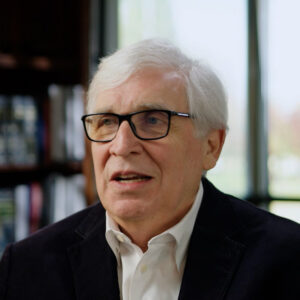 Michael Hackard is the founder of Hackard Law, a California trust and estate litigation firm with more than five decades of experience protecting the inheritance rights of families across Sacramento, the San Francisco Bay Area, and Los Angeles. He is the author of six published books on inheritance protection and has produced more than 1,000 educational videos with over seven million views.