


 (916) 313-3030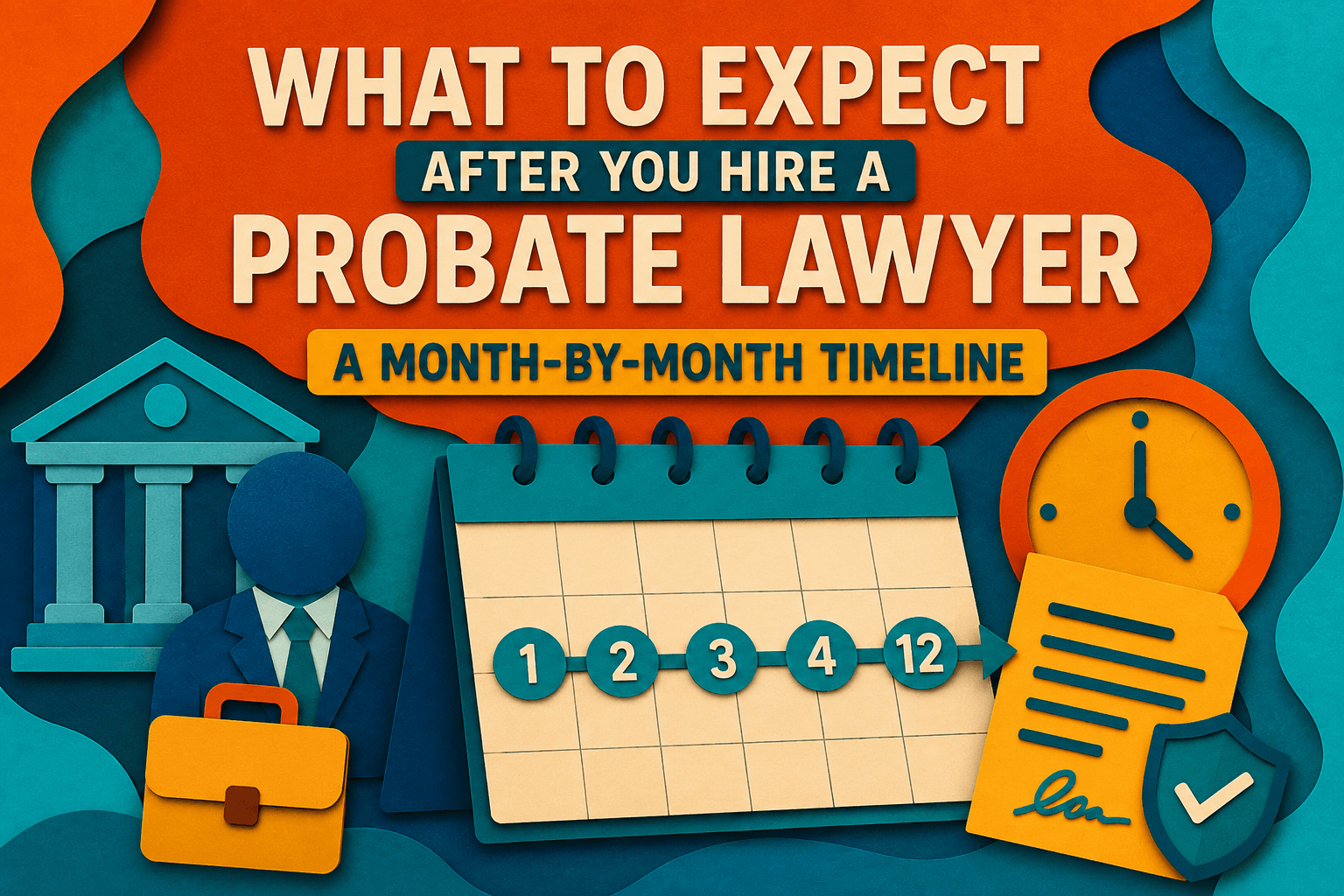
May 15th, 2026
What to Expect After You Hire a Probate Lawyer: A Month-by-Month Timeline (And the Traps No One Warns You About)

Publication Date May 15, 2026 in Estate Litigation
Sandra sat across from her probate attorney for the first time about three weeks after her mother died. She had gathered the documents, signed the retainer, and written the check. Walking out of that office, she exhaled for the first time since she had gotten the call about her mother. She thought the hard part was over. What Sandra didn’t know, what nobody had told her, was that she had just accepted a legal responsibility that would follow her for the next twelve months, with real deadlines, real liability, and real consequences if she treated it like a waiting game. We have seen Sandra’s story play out hundreds of times in California probate cases. The California probate timeline is not a passive process that attorneys manage while families grieve. It is a structured legal proceeding in which the personal representative’s engagement, judgment, and communication directly determine what the estate will look like at closure.
This is the guide that Sandra needed on day one.
Hiring the Lawyer Is the Starting Gun, Not the Finish Line
There is a persistent and damaging myth about probate that the legal industry, unintentionally, reinforces every time it tells families to “let us handle everything.” The myth is this: once you retain a probate attorney, your job is essentially done. You wait. The lawyer files things. Eventually, checks arrive.
The reality, drawn from decades of estate and trust litigation practice, looks entirely different. Probate in California is a court-supervised proceeding administered at the county level, meaning every filing, every deadline, and every decision is subject to judicial oversight. The personal representative, whether named in a will or appointed by the court when no will exists, carries legal authority and legal responsibility throughout. That responsibility does not transfer to the attorney when you sign a retainer. It operates in parallel with everything your attorney does. Executors who understand this from the beginning protect themselves. Those who don’t sometimes find out the hard way, when a beneficiary files an objection, or when a creditor’s claim emerges that the estate shouldn’t have had to fight.
The relationship works best when both parties treat it as what it actually is: a structured partnership with defined roles. Your attorney navigates the legal system. You stay informed, provide accurate information promptly, make decisions when asked, and document your reasoning throughout. Neither role is optional.
Month 1: The Setup Phase (and the Filing Trap)
The first month of California probate is deceptively administrative-looking. Your attorney prepares and files a petition with the appropriate county superior court to formally open the probate proceeding. That petition must identify the decedent, the proposed executor, the estimated value of the estate, and the nature of the assets involved. It sounds straightforward. In practice, this is where the first significant risk emerges, not from malice or negligence, but from a structural reality that most families never anticipate.
The 58 counties in California follow a single probate code, but each implements it according to its own local regulations, formatting specifications, electronic filing procedures, and standards for probate examiners. Before every hearing, the probate examiner, a court official, reviews filings to ensure they comply with procedural rules. Attorneys gain knowledge of the preferences, standards, and common deficiency flags of each county’s examiner by working in that particular courthouse. A petition that passes without comment in Sacramento Superior Court may come back flagged in Los Angeles or Alameda County for reasons unrelated to the substantive merit of the filing. When a filing is deficient, the hearing gets pushed back. Sometimes weeks. Sometimes months.
This is the filing deficiency trap, and we consider it the most avoidable source of delay in California probate administration. The fix is not guaranteed, but it is straightforward: hire an attorney who practices regularly in the county where the estate will be administered. That attorney has already learned what the local examiner expects. They get it right the first time.
Your responsibilities in Month 1 extend beyond simply providing documents. You should confirm in writing who your primary contact at the firm will be, how frequently you can expect status updates, and what your fee structure covers, because California probate attorney fees for ordinary services are governed by statute based on estate value, but extraordinary services can generate additional charges that families sometimes discover after the fact. Get the scope of representation in writing before the petition is filed.
Months 2–4: Active Administration (Where Estates Lose the Most Value)
The period from roughly the second through the fourth month of California probate is the active administration phase, when inadequate legal representation is most costly for families. Most executors believe the hardest work ends when the court issues Letters Testamentary or Letters of Administration, the official documents granting the executor legal authority to act on the estate’s behalf. In our experience, that belief is the single most dangerous assumption in all of probate administration.
During this phase, California law requires that creditors be notified in a local newspaper, and creditors are then given a defined window to file claims against the estate. Your attorney manages the deadline-sensitive steps of this publication and tracking process, but the executor must understand what is happening and why. The creditor claim period is not a formality. Estates with real property, business interests, outstanding debts, or complex financial histories may surface creditor claims that weren’t anticipated, and how those claims are handled determines how much value remains for the beneficiaries at the end.
During this stage, the majority of estate assets will be appraised by a Probate Referee appointed by the court. This process is coordinated by your attorney, who is also in charge of making sure that all assets eligible for probate are located and submitted for appraisal. Sometimes, inexperienced lawyers completely overlook assets, especially when they use boilerplate forms without carrying out in-depth asset investigations. When this occurs, beneficiaries have good reason to object, the estate inventory is incomplete, and the accounting will ultimately be incorrect. This pattern has caused what ought to have been a straightforward estate closing to become a contentious process that lasted for years.
Tax obligations also surface during the active administration phase. Whether the estate requires a federal estate tax return, a final income tax return for the decedent, or a fiduciary income tax return for the estate itself, these obligations come with deadlines that the executor and the attorney must track together. Missing a tax deadline can expose the estate, and the executor personally, to penalties and interest that reduce the final distribution to beneficiaries.
The executor’s role during Months 2 through 4 is to stay engaged, respond promptly to information requests from the attorney, and resist the impulse to distribute assets. In our experience, well-intentioned executors move money or transfer property before the creditor claim period closes far more often than most families would expect, and often before taxes are resolved or before the court has approved any distribution. That impulse is understandable because families want closure, and assets sitting in an estate account feel like they belong to the beneficiaries who are waiting. But premature distribution can expose the executor to personal liability, and learning what executor misconduct looks like in practice is worth doing before that impulse becomes a problem.
The Executor Liability Warning Most Attorneys Don’t Give You
Many lawyers soften this part of the probate discussion, which we believe is detrimental to the families they represent. In California, personal liability for executors is real, documented, and far more prevalent than most people realize when they take on the position.
Fiduciaries include executors. This implies that they have a legal duty of care to each and every beneficiary of the estate, and even inadvertent violations of this duty may give rise to personal liability claims. The most common patterns we observe are not instances of dishonest behavior. These are instances of decent people who committed three distinct types of errors. First: distributing assets before creditors are paid, under the assumption that the estate’s debts were manageable and the beneficiaries were waiting. Second: commingling estate funds with personal funds, often because it seemed convenient during a chaotic time. Third: disengaging from the legal process and failing to make timely decisions when the attorney needed them, then later being unable to document why certain choices were made.
Those executors had no malicious intent. They all found themselves in circumstances where creditors or beneficiaries had valid legal claims against them. Staying involved, maintaining documentation, and explicitly—not generally—following your lawyer’s advice are the only dependable safeguards. Your lawyer’s advice to not distribute without a judge’s approval is legally binding. Understanding how probate accounting works and what transparency requires is not optional reading for someone serving as an executor in California.
Months 5–12+: The Home Stretch That Isn’t
Many executors feel that the tide is finally turning in their favor as they approach the final months of probate. Claims from creditors have been examined. The assets have been valued. It feels like the hard work is done. The preparation, filing, and court approval of a final accounting—a thorough document that details every dollar that entered the estate, every dollar that was disbursed, and the suggested distributions to each beneficiary—are what this phase actually calls for.
Beneficiaries must receive the final accounting before the court will approve it. They have the right to object. In straightforward estates with clear communication throughout, objections are rare. But in estates where beneficiaries felt excluded from information, where communication was inconsistent, or where the family dynamics were already strained, the final accounting becomes the moment where quietly building tensions surface as formal legal objections. A contested accounting extends the timeline, increases legal fees, and often damages family relationships far more than the underlying dispute might have required.
The lawyer submits a petition for final distribution after the accounting is accepted, requesting the court’s permission to give the beneficiaries the remaining assets. The probate estate is closed at that hearing. This hearing is frequently routine if everything has been handled correctly, including paying creditors, resolving taxes, and completing an uncontested accounting. The final distribution hearing is where the consequences usually come into play if the previous months were handled carelessly.
For executors managing estates in contested situations, or in families with complex histories that might lead to inheritance disputes, understanding how California probate mediation can sometimes resolve conflict before it reaches a final hearing is worth a conversation with your attorney long before Month 10.
What Blended Families Need to Understand Before Month 3
California has one of the largest blended-family populations in the country, and probate disputes involving stepchildren, half-siblings, and second spouses are not uncommon in this state. When an estate includes beneficiaries from different family configurations, children from a first marriage alongside a surviving spouse from a second, for example, the potential for contested proceedings increases significantly.
The pattern we observe most often is not outright fraud or deliberate exclusion. It is the absence of proactive communication during administration. When beneficiaries don’t receive updates, don’t understand why the process is taking as long as it is, and don’t feel that their interests are being acknowledged, suspicion fills the information vacuum. That suspicion becomes questions. Questions become accusations. Accusations become formal objections to the accounting or, in more serious cases, claims of executor misconduct or undue influence, which can extend the litigation considerably.
The likelihood of conflict at the accounting stage is significantly reduced when an attorney incorporates beneficiary communication into the administration process from Month 1, treating each heir as a stakeholder deserving of open and regular updates. Ask your lawyer specifically about their heir communication protocol if you are an executor overseeing an estate with several beneficiaries who have various relationships to the deceased. You can learn a lot about the course of the upcoming year from the answer.
How to Know If Your Probate Lawyer Is the Right One
The question of whether you have hired the right probate attorney often doesn’t announce itself clearly until something goes wrong. There are, however, signals worth paying attention to in the early weeks of the relationship that can tell you a great deal about how the process will unfold.
The most reliable signal is communication. Does your attorney, or a clearly identified member of their team, respond to your questions within a reasonable time? Do they explain what is happening in terms you can understand, or do they offer generic reassurances that everything is “on track”? When you ask about a specific deadline or a specific step in the process, do they give you a substantive answer? An attorney who is not communicating well in Month 1 is not going to communicate better in Month 6, when the stakes are higher and the decisions are harder.
Knowledge of local courts is the second indication. Inquire directly about the number of probate cases this lawyer has handled in this particular county. How did they interact with the local probate examiner? Have they rehearsed before the judge who will be in charge of this estate? These are not hostile inquiries. Any seasoned lawyer will confidently and directly respond to these reasonable questions. Regular practice in the relevant county allows an attorney to protect the estate from needless delays because they are familiar with the procedural landscape.
We also tell clients to understand what choosing the right probate lawyer for their specific situation involves before they sign anything, because the retainer agreement is the beginning of a partnership, and the terms of that partnership matter enormously.
When the Stakes Are High, Local Knowledge and Litigation Experience Matter
We have been on both sides of what happens when probate goes wrong. We have represented executors defending against beneficiary claims arising from administrative missteps. We have represented beneficiaries who discovered that an estate had been mismanaged in ways that cost them significant inheritance value. Everything about our front-end administration strategy is influenced by that litigation-side viewpoint. After a year of inadequate communication, we are aware of the contested accounting. When an executor distributes before creditors are settled, we are aware of the consequences. Before the first hearing is even set, we are aware of where filing deficiencies are pointed out and why a lawyer without local court experience is a liability.
If you are an executor or a beneficiary navigating California probate right now, the time to ask the right questions is before something goes wrong, not after. Understanding how long estate distribution typically takes and what drives delays can help you set realistic expectations and stay engaged in ways that protect both you and the estate. Our Sacramento probate litigation team is ready to talk through where you are in the process and what the next phase requires.
The California probate timeline is navigable. The families who get through it intact are the ones who understood from day one that hiring the lawyer was the starting gun, not the finish line.
 Michael Hackard is the founder of Hackard Law, a California trust and estate litigation firm with more than five decades of experience protecting the inheritance rights of families across Sacramento, the San Francisco Bay Area, and Los Angeles. He is the author of four published books on inheritance protection and has produced more than 1,000 educational videos with over seven million views.