


 (916) 313-3030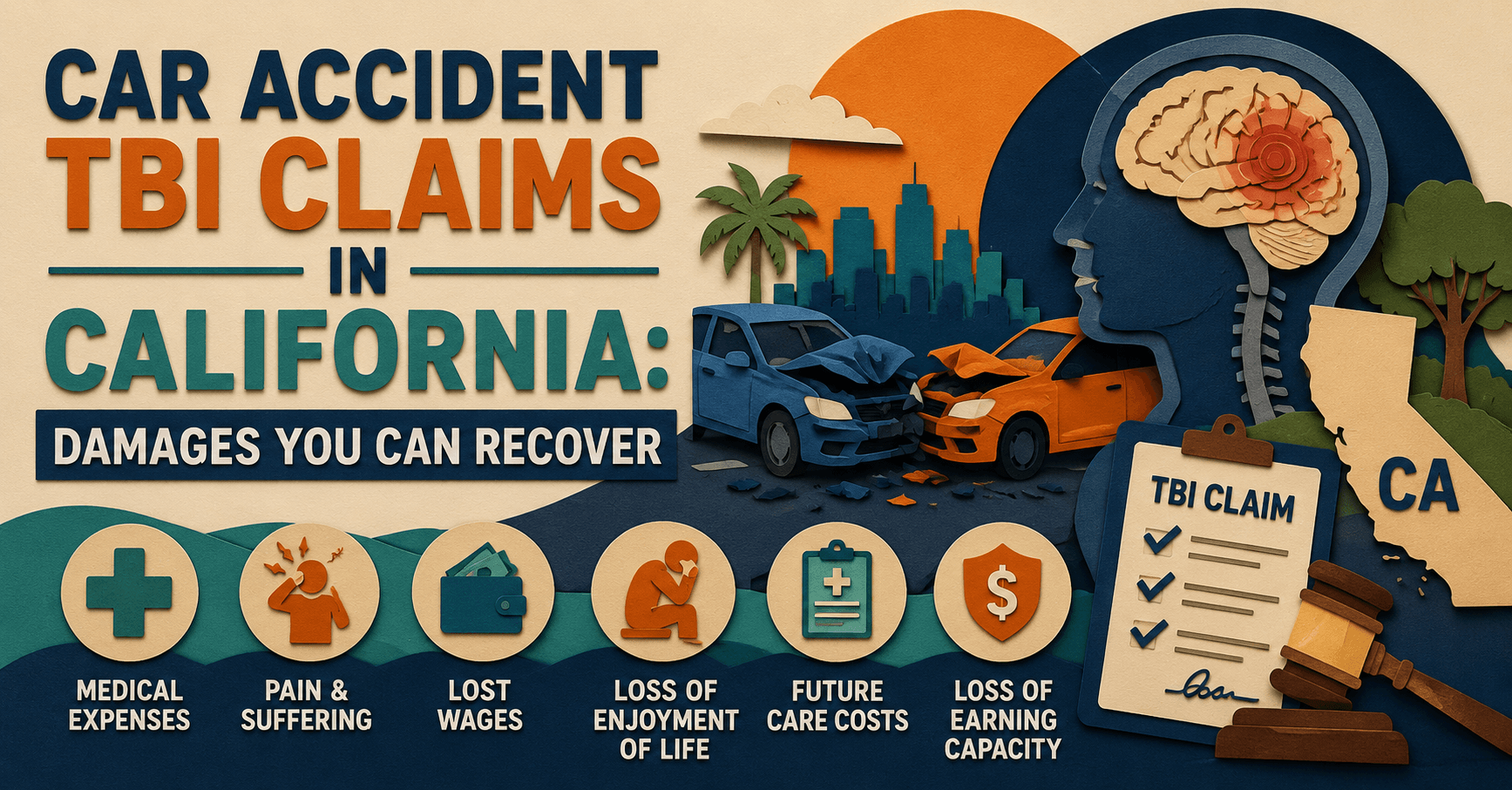
Car Accident TBI Claims in California: Damages You Can Recover

What Families Need to Know About Brain Injury Claims
I’m Michael Hackard, founder of Hackard Law. Over five decades of practice, I have fought for people who were hurt through no fault of their own – and some of the most serious cases I handle involve traumatic brain injuries caused by careless drivers. Car accidents account for roughly one in four traumatic brain injuries in this country. That number is not a statistic to me; it represents real people whose lives were upended in an instant. Hackard Law serves clients across California, including Sacramento, the San Francisco Bay Area, and Los Angeles. I have also authored four published books on protecting the rights of those harmed by others, and our firm has produced more than 1,000 educational videos that have reached over seven million viewers. My goal in every case is the same: make sure injured people understand what they are owed and fight to recover it.
Hackard Law handles qualified personal injury cases on a contingency fee basis – you pay nothing upfront, and we only get paid if we recover for you. To talk through your situation, call us at (916) 313-3030.
Quick Summary
In California, car crashes are a major contributor to traumatic brain injuries, and sufferers are entitled to both monetary and non-monetary damages. Knowing what losses qualify – and documenting them thoroughly – is the foundation of a strong claim.
- Car accidents cause approximately 1 in 4 traumatic brain injuries nationwide.
- Medical expenses, missed wages, rehabilitation, and housing adaptations are examples of economic damages.
- Non-economic damages include impaired quality of life, emotional discomfort, and pain and suffering.
- Documentation of every loss, present and future, is essential to maximizing recovery.
- Hackard Law handles TBI cases on contingency – no upfront costs for qualified claims.
Why Traumatic Brain Injuries Deserve Serious Legal Attention
Traumatic brain injuries are not always visible. A person can walk away from a crash, pass initial screenings, and still suffer lasting cognitive, emotional, and physical harm in the weeks and months that follow. This is one reason why many survivors do not immediately connect their symptoms to the accident. Understanding why some brain injury survivors don’t realize they’re injured is critical – delays in diagnosis can complicate both medical recovery and legal claims.
According to California law, victims may seek damages that fully compensate them for their injuries. That means not just the emergency room bill, but every cost and consequence that flows from the injury – including those that have not yet arrived.
Economic Damages: The Financial Toll of a Brain Injury
The financial toll grows quickly after a serious TBI. Medical expenses are the most immediate concern, but they rarely stop at the hospital. Ongoing care – neuropsychological evaluations, cognitive rehabilitation, therapy, and medication – can extend for years or even a lifetime.
Another significant category is lost income. Reduced earning potential must be computed and included in the claim if the injury keeps a person from going back to work or restricts the kind of employment they can do. Recoverable economic losses could include home adaptations for assistive technology and accessibility. Every dollar that is spent as a result of someone else’s negligence belongs on the table.
For a deeper look at how California courts value these claims, our resource on TBI settlement amounts in California walks through the factors that influence outcomes.
Case Pattern: A driver rear-ended at highway speed sustained a mild TBI that went undiagnosed for several weeks. By the time a neuropsychological evaluation confirmed the injury, the person had already lost a promotion and accumulated significant therapy costs. Thorough documentation of both the delayed diagnosis and the downstream financial losses became the backbone of the recovery.
Non-Economic Damages: Pain, Suffering, and What the Numbers Miss
Non-economic damages are the most difficult to measure and can make up the majority of a TBI settlement or verdict. California law recognizes that physical pain is only part of what an injured person endures. Emotional distress, anxiety, grief, humiliation, and mental anguish are all compensable. So is the diminished quality of life that comes when a person can no longer do the things that gave their days meaning.
In evaluating pain and suffering, Hackard Law looks at three core factors: the severity of the harm, the duration of the injury, and the extent to which it interferes with daily life. Scarring, disfigurement, and physical limitations are also considered. These are not soft add-ons – they are real losses that deserve real compensation.
If you are wondering whether your situation supports a claim, our page on whether you can sue for brain damage provides a clear starting point.
Case Pattern: A passenger in a vehicle collision sustained a moderate TBI and was left with chronic headaches, mood changes, and an inability to return to a physically demanding career. The non-economic damages in that type of case – the lost identity, the altered relationships, the daily inconvenience – often exceed the medical bills many times over.
Documentation: The Foundation of Every Successful Claim
No matter how serious the injury, a claim without documentation is a claim at risk. Hackard Law works with clients from the earliest stages to make sure every loss is recorded – medical records, billing statements, employment records, therapy notes, and personal journals that capture how the injury affects daily life.
Future damages require particular attention. A neuropsychologist’s report projecting long-term cognitive effects, or a life care planner’s estimate of future medical needs, can make the difference between a settlement that covers a person’s real needs and one that falls short. The Sacramento traumatic brain injury lawyer page outlines how Hackard Law approaches this process for clients in Northern California.
For decades, I have stood with people who were told their injuries were minor, their claims were exaggerated, or their cases were not worth pursuing. A steadfast commitment to truth restores what carelessness tried to steal – and that commitment starts with building a complete, documented record of every harm.
Key Definitions
- Traumatic brain injury (TBI): A disruption in normal brain function caused by a blow, jolt, or penetrating head injury – ranging from mild concussion to severe cognitive impairment.
- Economic damages: Measurable financial losses resulting from an injury, including medical bills, lost wages, and costs of future care.
- Non-economic damages: Compensation for intangible losses such as pain, suffering, emotional distress, and diminished quality of life.
- Cognitive rehabilitation: Therapy designed to help TBI survivors regain memory, attention, problem-solving, and other cognitive functions.
- Neuropsychological evaluation: A formal assessment of brain function conducted by a licensed neuropsychologist, often used to document TBI severity and prognosis.
- Reduced earning potential: The difference between what a person could have earned before an injury and what they are capable of earning afterward.
- Life care plan: A document prepared by a medical professional projecting the long-term care needs and associated costs for a seriously injured person.
- Pain and suffering: A broad legal category covering physical pain, emotional distress, grief, anxiety, and other non-financial consequences of an injury.
- Contingency fee: A fee arrangement in which the attorney is paid only if the client recovers money – no upfront cost to the client.
What to Do Next
- Get medical attention immediately after any accident, even if you feel fine – TBI symptoms can appear days or weeks later.
- Look for changes in mood, memory, concentration, or sleep patterns and report them to your doctor.
- Get copies of all medical records, billing statements, and any accident or police reports.
- Keep a personal journal documenting how the injury affects your daily life, work, and relationships.
- Try to avoid giving recorded statements to insurance adjusters before speaking with an attorney.
- Look for any employment records that reflect missed work, reduced hours, or a change in job duties following the injury.
- Photographs, witness contact details, and car damage records are examples of evidence that should be preserved from the accident scene.
- Learn more about your options on our practice areas overview page.
- Call Hackard Law at (916) 313-3030 to discuss your case at no cost.
- Reach out through our contact page to schedule a free consultation.
CALL THE SAGE | When Experience Matters, Families Listen
🏛️ We practice California trust & estate & elder financial abuse litigation
⚖️ We represent heirs, beneficiaries, and elder abuse victims
🎥 1,000+ educational videos | 7 million+ views | 4 published books
🎯 “After thousands of cases, I see the pattern others miss.”
CONTINGENCY REPRESENTATION – No Win, No Fee
Throughout California: Sacramento | Los Angeles | Bay Area
📞 CALL THE SAGE: (916) 313-3030
Subscribe for weekly insights on:
- Elder financial abuse warning signs and prevention
- Trust and estate litigation strategies
- Inheritance protection for California families
- Family protection strategies
When your inheritance is under attack, Call The Sage.
Hackard Law | 10640 Mather Blvd, Mather CA 95655
Attorney Advertisement | Michael Hackard, State Bar #71067
RELATED VIDEOS
Unlocking the Science Behind Traumatic Brain Injury (TBI) in Car Accidents
Explores the medical science of how car accidents cause traumatic brain injuries.
Understanding Traumatic Brain Injury: Common Types Resulting from Car Accidents
Breaks down the different types of brain injuries that commonly result from crashes.
What is the Cost of Care for a Traumatic Brain Injury (TBI)? | Hackard Law TBI FAQ
Walks through the real financial costs families face after a serious brain injury.
Why Some Brain Injury Survivors Don’t Realize They’re Injured | Hackard Law
Explains why TBI symptoms are often missed or delayed after an accident.
Settling mTBI Claims: How Soon is Too Soon?
Discusses the risks of settling a mild traumatic brain injury claim too early.
What Elements are Needed to Prove Negligence in Traumatic Brain Injury (TBI) | Hackard Law TBI FAQ
Outlines what injured victims must prove to hold a negligent driver legally responsible.
 Michael Hackard is the founder of Hackard Law, a California trust and estate litigation firm with more than five decades of experience protecting the inheritance rights of families across Sacramento, the San Francisco Bay Area, and Los Angeles. He is the author of six published books and has produced more than 1,000 educational videos with over seven million views.