


 (916) 313-3030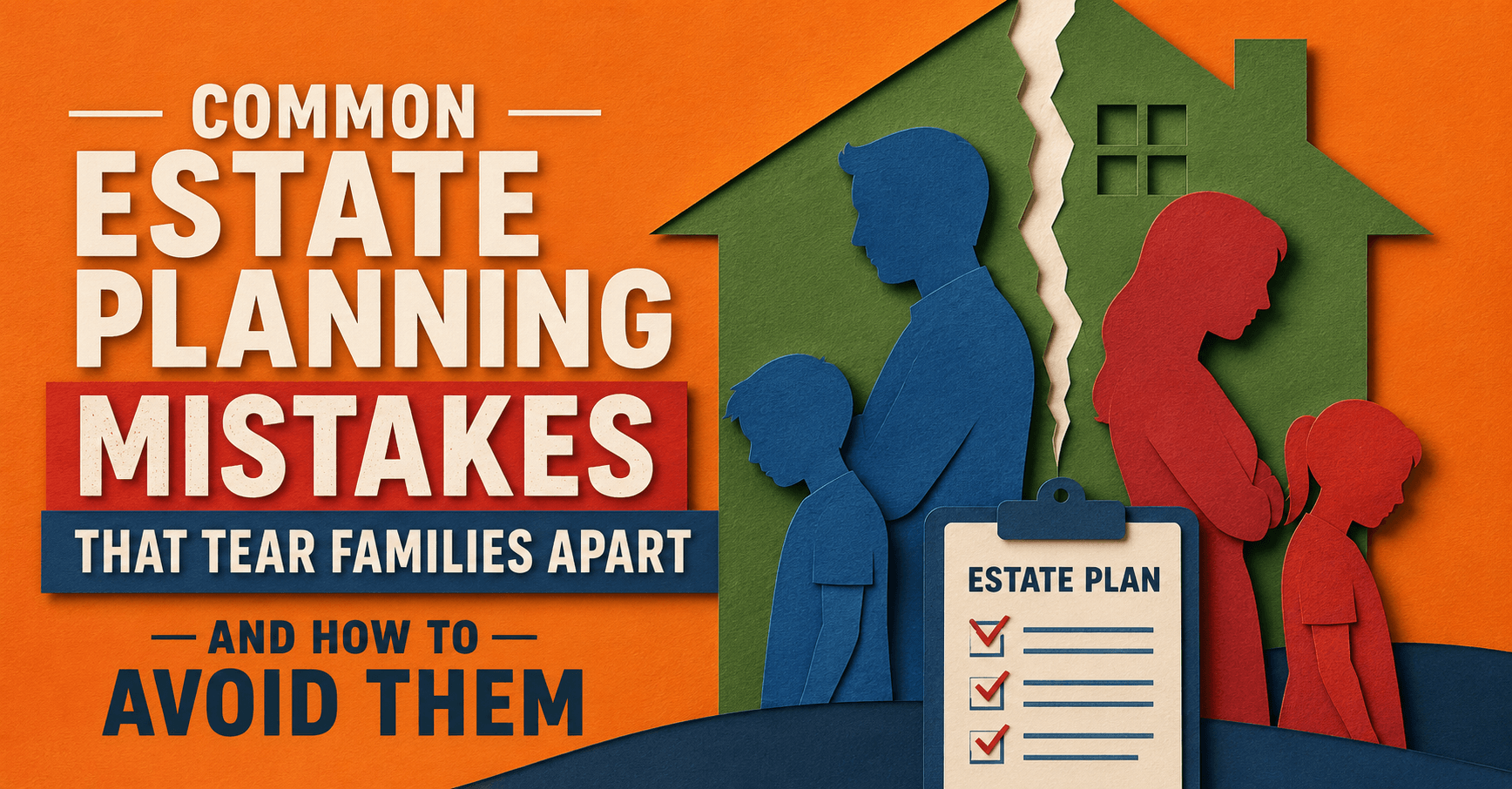
Common Estate Planning Mistakes That Tear Families Apart — And How to Avoid Them
Why Even Well-Intentioned Estate Plans Fail
I am Michael Hackard, founder of Hackard Law. Over five decades of practice, I have fought for heirs, beneficiaries, and elder abuse victims across California – from Sacramento to the San Francisco Bay Area to Los Angeles. I have written four published books on inheritance protection and produced more than 1,000 educational videos that have reached over seven million viewers. In all that time, one truth has stayed constant: most estate disputes do not begin with bad intentions. They begin with incomplete planning.
Families spend years building bonds and legacies, only to watch them unravel in a courtroom over a missing signature or a vague sentence in a will. I have seen this happen far too many times. The good news is that these outcomes are almost always preventable. In this post, I want to walk you through the most common estate planning pitfalls – and more importantly, what you can do right now to protect your family.
Hackard Law provides contingency fee representation for qualified cases, meaning there are no upfront legal costs to get started. To find out whether your situation qualifies, call us at (916) 313-3030.
Quick Summary
Errors in estate planning, not a lack of planning, are the main cause of family inheritance disputes in California. Even a well-written plan may fail due to ambiguous language, outdated beneficiary designations, or procedural mistakes.
- A missing signature or improper witnessing can render a will legally invalid
- Outdated documents may no longer reflect your actual wishes or family circumstances
- DIY estate planning tools often fail to meet California’s specific legal requirements
- Vague asset instructions – especially for real property – frequently trigger sibling conflicts
- Clear communication with family members reduces the risk of contested estates
The Real Reason Estate Plans Go Wrong
Many people assume that inheritance disputes only happen when someone failed to plan at all. That assumption is wrong. In my experience, the far more common scenario involves a plan that existed but was incomplete, outdated, or poorly drafted.
Think about a man named John who died with a will that initially appeared to be in order. There were no signatures on it. The wording was unclear about who would inherit his house. His children, who were already grieving, started to doubt and misunderstand each other. Years of litigation, escalating legal costs, and strained family ties resulted from what ought to have been a simple procedure. Often, the fracture is too deep for any judgment to heal.
John’s story is not unusual. Across California, families face the same outcome every day – all because of mistakes that a qualified attorney could have caught before they became courtroom battles. Understanding how poor drafting leads to litigation is the first step toward protecting your own family.
The Emotional Stakes Behind Every Document
Estate planning is not just a legal exercise. It carries emotional weight that most people underestimate until it is too late.
Think about a family vacation home with no clear instructions about who gets to keep it. Siblings start second-guessing each other’s motives. Old rivalries resurface. Resentments that had been dormant for years come back to the surface. Before long, a place that should hold cherished memories becomes a source of open conflict.
Dividing assets is just one aspect of your estate plan. It’s about keeping your family peaceful. Care and clarity are communicated by a well-written plan. Families don’t heal together; instead, they spend years in courtrooms in the absence of that clarity.
Case Pattern: Vacation Home Conflict. A family in California received a coastal property without any instructions regarding buyout rights or shared use. One sibling declined to sell, while the other two wanted to. The disagreement turned into a lawsuit that lasted for almost three years. The dispute could have been settled in a matter of days rather than years with a well-written trust clause outlining a buyout procedure.
The DIY Trap and Why It Backfires
The do-it-yourself method of estate planning is one of the most common errors I observe. It’s easy to think you can do this on your own with the help of online templates and fast searches. However, California estate law is not universally applicable, and your family bears all the consequences if you make a mistake.
California has specific requirements for valid wills – proper witnessing, notarization in certain contexts, and clear identification of beneficiaries. Some online forms do not meet these standards at all. A person who believes their will is solid may unknowingly leave behind a document that a court will refuse to honor. When that happens, the law decides who inherits – not you.
DIY planning may save a small amount of money today. It can cost your family everything tomorrow. Knowing how to choose the right probate lawyer for your situation is a critical first step toward avoiding this outcome.
Case Pattern: Invalid Online Will. A Northern California man used a free online template to draft his will. After his death, the document was found to lack a required witness signature under the California Probate Code. His estate passed by intestate succession – not according to his stated wishes. His domestic partner received nothing. A licensed attorney reviewing the document beforehand would have caught the deficiency immediately.
What a Qualified Estate Planning Attorney Actually Does
Hackard Law litigates the aftermath of estate planning failures every day. That experience gives us a clear view of what goes wrong – and what proper planning looks like before disputes arise.
A qualified estate planning attorney does not simply fill in blanks on a form. They examine the nuances of your family structure, your assets, and your long-term goals. They anticipate the disputes that could arise and recommend tools – trusts, powers of attorney, advance health directives – that protect your wishes both during your lifetime and after. For families with complex circumstances, such as a child with special needs, a closely held business, or assets held in multiple states, the right legal structure makes an enormous difference.
Yes, hiring an attorney costs money. But it is an investment in your family’s peace of mind, and it is almost always far less expensive than the cost of litigation. For those concerned about upfront costs, Hackard Law’s contingency fee representation guide explains how qualified cases can move forward without out-of-pocket legal fees.
For decades, I have stood with families who came to us after the damage was already done – after the will was contested, after the trust was looted, after the family relationships had fractured. A steadfast commitment to truth restores what dishonesty tried to steal. But prevention is always the better path. Clear estate planning communication with both your attorney and your family is the foundation of a plan that holds.
Key Definitions
- Testamentary capacity: The legal standard requiring that a person be of sound mind when signing a will or trust document.
- Intestate succession: The process by which California law distributes a deceased person’s assets when no valid will exists.
- Beneficiary designation: A named individual or entity entitled to receive assets such as life insurance proceeds or retirement accounts directly, outside of probate.
- Power of attorney: A legal document authorizing a designated person to make financial or legal decisions on another’s behalf.
- Advance health directive: A document specifying a person’s medical wishes and naming an agent to carry them out if they become incapacitated.
- Trust: A legal arrangement in which a trustee holds and manages assets for the benefit of named beneficiaries.
- Probate: The court-supervised process of validating a will and distributing a deceased person’s estate.
- No-contest clause: A provision in a will or trust that penalizes a beneficiary who challenges the document in court.
- Pour-over will: A will that directs any assets not already held in a trust to flow into the trust upon death.
- Special needs trust: A trust created to protect assets for a beneficiary with a disability without making them ineligible for government assistance.
What to Do Next
- Look for an estate planning attorney who focuses on California trust and estate law, not a generalist.
- Get copies of all existing estate planning documents and check whether they are signed, witnessed, and dated correctly.
- Try to avoid letting years pass without reviewing your plan – life changes such as marriage, divorce, new children, or new property all require updates.
- Look for any beneficiary designations on life insurance policies, retirement accounts, and bank accounts to confirm they still match your current wishes – a life insurance beneficiary challenge is one of the most common and avoidable disputes.
- Consider whether any family members – especially those with special needs or complex financial situations – require dedicated planning structures.
- Try to avoid leaving your family without a clear explanation of your choices, especially decisions that might surprise or upset someone.
- Look into whether your digital assets – online accounts, cryptocurrency, digital files – are addressed in your plan; California families increasingly face digital inheritance disputes that proper planning can prevent.
- Get copies of your documents stored in a secure, accessible location that your trusted family members or attorney can reach when needed.
- Call Hackard Law at (916) 313-3030 to discuss your situation with an attorney who has five decades of California estate experience.
- You can also reach us through our contact page to request a consultation at no upfront cost for qualified cases.
CALL THE SAGE | When Experience Matters, Families Listen
🏛️ We practice California trust & estate & elder financial abuse litigation
⚖️ We represent heirs, beneficiaries, and elder abuse victims
🎥 1,000+ educational videos | 7 million+ views | 4 published books
🎯 “After thousands of cases, I see the pattern others miss.”
CONTINGENCY REPRESENTATION – No Win, No Fee
Throughout California: Sacramento | Los Angeles | Bay Area
📞 CALL THE SAGE: (916) 313-3030
Subscribe for weekly insights on:
- Elder financial abuse warning signs and prevention
- Trust and estate litigation strategies
- Inheritance protection for California families
- Family protection strategies
When your inheritance is under attack, Call The Sage.
Hackard Law | 10640 Mather Blvd, Mather CA 95655
Attorney Advertisement | Michael Hackard, State Bar #71067
RELATED VIDEOS
Avoid These 5 Costly Beneficiary Designation Mistakes
Learn which beneficiary designation errors can derail an otherwise solid estate plan.
Successor Trustee Disputes: When Siblings Battle for Control of the Family Trust
Siblings fighting over trust control can destroy family relationships and drain estates.
CA Estate & Trust Litigation Battles | A House Divided
Real California families torn apart by inheritance disputes over property and trust assets.
Business Succession Myths That Could Destroy Your Family Legacy
Common misconceptions about business succession planning that put family legacies at serious risk.
Family Home Estate Disputes | Fortune and Misfortune
How disputes over a family home can quickly turn inheritance into costly courtroom battles.
POA Vultures | Power of Attorney Abuse
How bad actors exploit power of attorney documents to take advantage of vulnerable elders.
 Michael Hackard is the founder of Hackard Law, a California trust and estate litigation firm with more than five decades of experience protecting the inheritance rights of families across Sacramento, the San Francisco Bay Area, and Los Angeles. He is the author of six published books and has produced more than 1,000 educational videos with over seven million views.