


 (916) 313-3030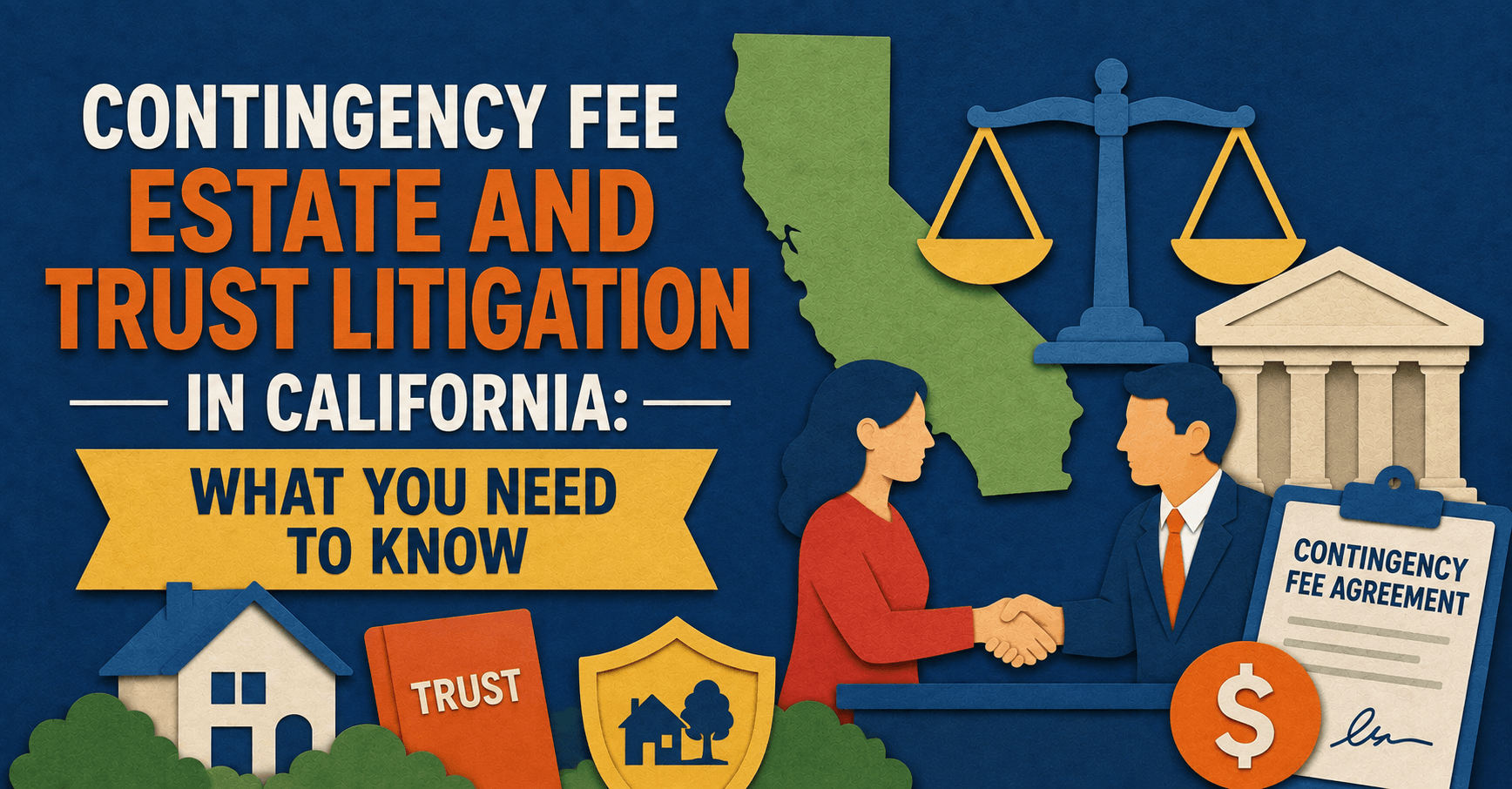
Contingency Fee Estate and Trust Litigation in California: What You Need to Know

Understanding the Contingency Fee Difference
I’m Michael Hackard, founder of Hackard Law. Over five decades of practice, I have fought for heirs, beneficiaries, and elder abuse victims whose inheritances were wrongfully taken or withheld. I have written four published books on inheritance protection, and our firm has produced more than 1,000 educational videos that have reached over seven million viewers. Hackard Law serves clients across California’s major urban centers – Sacramento, the San Francisco Bay Area, and Los Angeles – handling estate and trust litigation where the stakes are high and the families we represent deserve a real chance at justice.
One of the most common questions I receive is simple: how do I afford a lawyer when the estate or trust is already being mishandled? The answer, for many clients, is a contingency fee arrangement. Under this model, you pay no attorney’s fees upfront. Our fee comes from a percentage of what we recover for you.
Hackard Law provides contingency fee representation at no upfront cost for qualified cases – call us at (916) 313-3030 to discuss whether your situation qualifies.
Quick Summary
Contingency fee arrangements allow clients to pursue estate and trust litigation without paying hourly fees while the case is in progress. Hackard Law accepts a carefully selected number of contingency cases statewide based on thorough risk analysis.
- Contingency fees are typically a percentage of the recovery, not an hourly charge
- California courts recognize that contingency fees may be higher than hourly rates because the attorney bears the financial risk
- Not every estate or trust dispute qualifies for contingency representation
- Hackard Law evaluates multiple risk factors before accepting a case
- Families who could not otherwise afford litigation gain access to experienced representation
What California Courts Say About Contingency Fees
The legal foundation for contingency fee arrangements in California is well established. As far back as 1962, the California Supreme Court explained in Raider v. Thrasher that a contingency fee contract, because it involves a gamble on the result, may properly provide for larger compensation than would otherwise be reasonable. The logic is straightforward: the attorney assumes the risk that no fee will be earned at all if the case is lost.
In 2001, the California Supreme Court returned to this theme in Ketchum v. Moses, citing legal economist Richard Posner’s explanation that a contingency fee compensates the attorney not only for legal services rendered, but for the implicit loan of those services. Because the risk of default – losing the case – is far higher than in a conventional loan, the rate must reflect that risk. These are not abstract legal principles. They shape how Hackard Law structures its agreements and how we evaluate every case we consider.
For a deeper look at how contingency arrangements work in practice across California, our contingency fee guide for estate and trust litigation walks through the key considerations in plain language.
Why Most Firms Prefer Hourly Billing
In my experience, the percentage of law firms accepting hourly fee arrangements in estate and trust litigation is far higher than those willing to work on contingency. That reality is understandable. When an attorney charges by the hour, the firm is paid regardless of outcome. When an attorney works on contingency, every hour invested is a financial bet on the case’s success.
This dynamic creates a meaningful divide in access to justice. Families dealing with a misappropriated trust or a manipulated will often face two painful choices: drain their own savings to pay hourly fees, or walk away from a legitimate claim. Contingency representation breaks that impasse.
Case Pattern: A family in Northern California suspected that a sibling had manipulated a parent’s trust amendments during the parent’s final months of cognitive decline. Unable to fund hourly litigation, they had no realistic path to court. After a contingency fee evaluation, the case moved forward – and the disputed assets were recovered through settlement.
For families navigating these situations, understanding how trust beneficiaries can protect their rights is a critical first step before any litigation decision is made.
The Risk Analysis Behind Every Case We Accept
Hackard Law accepts a relatively small number of the cases brought to us. That is not a limitation – it is a commitment to quality and to the clients we serve. Before accepting a contingency case, we work through a detailed risk analysis. The factors we weigh include the existence or absence of key documents, court jurisdiction, whether the parties have legal standing to initiate litigation, costs beyond attorney’s fees in hard-fought cases, the time a case is likely to require, the credibility of witnesses, the probability of a favorable judgment, the likely size of any recovery, and the inherent unpredictability of court and jury decisions.
Every one of these variables affects whether a contingency arrangement makes sense – for the client and for the firm. Taking on a case we cannot win serves no one.
Case Pattern: A Southern California beneficiary brought a claim involving a handwritten amendment to a trust that appeared shortly after a caregiver moved into the home. The document trail, witness statements, and timeline all supported a strong undue influence claim. After risk analysis confirmed a viable path to recovery, the case proceeded on contingency and resolved favorably for the family.
For a broader view of the disputes that most commonly reach litigation, our overview of the most common probate, trust, and estate battles provides helpful context.
What Contingency Representation Means for Your Family
For decades, I have stood with families who were told they had no options – that the trust documents were final, that the transfers had already happened, that litigation was too expensive to pursue. I have seen that hopelessness give way to something better when the right case meets the right legal strategy.
The financial toll of a wrongful exclusion from an estate grows with every passing month. Assets are spent, transferred, or hidden. The fracture that runs through a family when inheritance theft goes unanswered often runs too deep for any judgment to mend the relationships – but a steadfast commitment to truth can restore what dishonesty tried to steal. That is what contingency fee litigation makes possible for families who would otherwise have no voice in court.
Discovery, forensic document analysis, witness depositions, and the pursuit of accountability – these are not just legal strategies, they are the means by which families reclaim what belongs to them. Michael Hackard has built Hackard Law around exactly that mission.
For families in the Bay Area, our work on Alameda County estate litigation reflects the same commitment to contingency-based access to justice that guides every case we accept statewide.
Key Definitions
- Contingency fee: A fee arrangement where the attorney is paid a percentage of the recovery only if the case is won or settled – no recovery means no attorney’s fee.
- Hourly fee arrangement: A billing structure where the client pays for attorney time regardless of outcome.
- Risk analysis: The process by which an attorney evaluates the strengths, weaknesses, costs, and probable outcomes of a case before agreeing to represent a client.
- Standing: The legal right of a party to bring a claim in court – not every family member has standing in every estate or trust dispute.
- Jurisdiction: The authority of a particular court to hear a case, which depends on factors including the location of the trust, the decedent’s residence, and the type of claim.
- Recovery: The monetary amount obtained through judgment or settlement that forms the basis for calculating a contingency fee.
- Undue influence: Improper pressure exerted on a person to change estate planning documents in a way that does not reflect their true wishes.
- Document risk: The uncertainty created when key estate planning records are missing, altered, or of questionable authenticity.
- Witness credibility: The degree to which a court or jury is likely to believe a witness’s testimony, a factor attorneys weigh heavily in contingency decisions.
- Implicit loan: The economic concept, recognized by California courts, that a contingency fee attorney effectively lends legal services to the client and must be compensated for that financial risk.
What to Do Next
- Look for any trust, will, or estate planning documents that may have been changed in the period before a loved one’s death or incapacity.
- Get copies of trust accountings, bank statements, or financial records that may show unusual transfers.
- Write down a timeline of events – who had access to the person, when documents were signed, and what changed in the estate plan.
- Look for any correspondence between the person and caregivers, advisors, or family members that might reflect pressure or manipulation.
- Try to avoid confronting other family members or potential parties before speaking with an attorney – early conversations can affect the case.
- Reach out to a California estate litigation attorney who handles contingency fee cases to get an honest evaluation of your situation.
- Review our resource on bridging the representation gap with contingency fees to understand what the process looks like from the start.
- If you are in the Los Angeles area, learn more about contingency options for LA trust litigation to understand your local options.
- Call Hackard Law at (916) 313-3030 to speak with our team about whether your case may qualify for contingency representation.
- Visit our contact page to submit your information and schedule a consultation.
CALL THE SAGE | When Experience Matters, Families Listen
🏛️ We practice California trust & estate & elder financial abuse litigation
⚖️ We represent heirs, beneficiaries, and elder abuse victims
🎥 1,000+ educational videos | 7 million+ views | 4 published books
🎯 “After thousands of cases, I see the pattern others miss.”
CONTINGENCY REPRESENTATION – No Win, No Fee
Throughout California: Sacramento | Los Angeles | Bay Area
📞 CALL THE SAGE: (916) 313-3030
Subscribe for weekly insights on:
- Elder financial abuse warning signs and prevention
- Trust and estate litigation strategies
- Inheritance protection for California families
- Family protection strategies
When your inheritance is under attack, Call The Sage.
Hackard Law | 10640 Mather Blvd, Mather CA 95655
Attorney Advertisement | Michael Hackard, State Bar #71067
RELATED VIDEOS
Contingency Fees | Access To Probate, Trust & Estate Litigation
Explains how contingency fees open the door to probate and trust litigation.
Can I Hire A Contingency Fee Lawyer in Probate and Trust Litigation?
Answers whether beneficiaries can retain a contingency fee attorney for their case.
Contingency Fee Agreements in CA Estate, Trust & Probate Litigation
Walks through how contingency fee agreements work in California estate and trust cases.
California Trust Litigation Contingency Fees | The Pros and Cons
Weighs the advantages and drawbacks of contingency fee arrangements in trust disputes.
Inheritance Heists Ch. 3: Why Contingency Fees Work for Beneficiaries in Trust Litigation
Explores why contingency fees give beneficiaries a fighting chance in trust litigation.
Trust Litigation Contingency Fees | Shifting the Balance of Power
Discusses how contingency fees level the playing field for heirs against well-funded opponents.
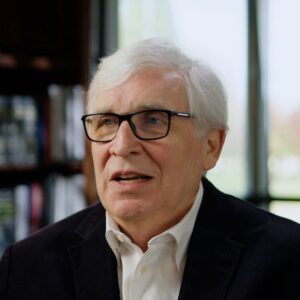 Michael Hackard is the founder of Hackard Law, a California trust and estate litigation firm with more than five decades of experience protecting the inheritance rights of families across Sacramento, the San Francisco Bay Area, and Los Angeles. He is the author of six published books on inheritance protection and has produced more than 1,000 educational videos with over seven million views.