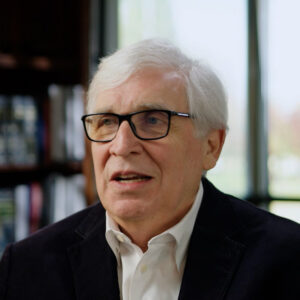
I am Michael Hackard, founder of Hackard Law. Over five decades of practice, I have fought for heirs, beneficiaries, and elder abuse victims across California – from Sacramento and the San Francisco Bay Area to Los Angeles. I have written four published books on inheritance protection and produced more than 1,000 educational videos that have reached over seven million viewers. In all that time, one obstacle has stayed constant: good people with legitimate claims who cannot afford to pay an attorney by the hour.
That reality drives everything we do at Hackard Law. A trust dispute is not a luxury legal problem. It is often a family’s home, a lifetime of savings, or a parent’s final wishes being overridden by someone with more money and more leverage. The legal system should not be available only to those who can write a large retainer check. This post explains how contingency fee representation works, why it matters, and what you can do if you believe you have a claim.
Hackard Law provides contingency fee representation for qualified trust and estate cases – meaning no upfront costs and no attorney fees unless we recover for you. To find out if your case qualifies, call us at (916) 313-3030.
Quick Summary
Contingency-fee representation allows families in California to pursue trust and estate claims without paying upfront legal fees, making the legal system accessible to everyone.
Hackard Law takes qualified trust dispute cases on contingency – you pay no attorney fees unless there is a recovery.
This model is especially important for beneficiaries who have been shut out of an estate or trust by a well-funded trustee or co-heir.
Court-appointed professionals and experienced litigators often work together in these cases to protect beneficiaries.
Cases can involve contested trusts, elder financial abuse, trustee misconduct, and inheritance theft.
Serving clients throughout California, including Sacramento, the Bay Area, and Los Angeles
What a Contingency Fee Actually Means for You
A contingency fee arrangement means the attorney’s compensation is tied to the outcome of your case. If there is no recovery, there is no attorney’s fee. This is a fundamentally different model from hourly billing, where legal costs accumulate whether you win or lose.
This structure can make the difference between a beneficiary who can fight and one who cannot in trust and estate disputes. The harmed party frequently lacks the funds to file a lawsuit when a trustee has embezzled assets, when a will was altered under dubious circumstances, or when an elder was tricked into signing away an inheritance. That obstacle is eliminated by the contingency model.
Hackard Law’s contingency fee guide for California trust and estate litigation explains in detail how this arrangement works and what qualifies a case for this type of representation. Understanding the structure before you call can help you ask the right questions.
Case Pattern: A beneficiary of a family trust discovered that a sibling acting as the only trustee had removed significant real estate from the trust before the beneficiary’s parent passed away. The beneficiary did not have the money to hire a lawyer. Thanks to contingency representation, the estate was returned to its proper distribution after the case continued and the transfers were challenged.
Why Access to Counsel Changes Everything in Trust Disputes
Dan Collins, a court-appointed representative with years of experience working across estates, companies, and individuals, put it plainly: what he values about working with Hackard Law is that the firm affords people without money the opportunity to access what is rightfully theirs. That observation comes from someone who has seen the full landscape of estate administration – and who understands how often the playing field is uneven.
Trustees, executors, and those who have taken control of an estate frequently have access to the estate’s own funds to pay their legal defense. Beneficiaries, by contrast, often have nothing until the dispute is resolved. Without a contingency fee option, many legitimate claims simply never get filed. That imbalance is not justice – it is a structural advantage for whoever holds the assets.
Not every dispute qualifies for contingency representation. The case needs to involve a meaningful recovery – assets, real property, trust funds, life insurance proceeds, or other value that can be pursued through litigation or negotiation. Within that framework, Hackard Law litigates a wide range of trust and estate matters throughout California.
Common case types include contested trusts and wills, trustee misconduct and breach of fiduciary duty, elder financial abuse, undue influence claims, and inheritance theft. In Sacramento, cases often involve family real estate and multi-decade trusts. In Alameda County and the Bay Area, disputes frequently arise in high-value estates where assets changed hands under questionable circumstances. Where in Los Angeles and Glendale, elder financial abuse and contested trust amendments are among the most common issues Hackard Law addresses.
Case Pattern: An adult child in Northern California contacted Hackard Law after discovering that a caregiver had convinced their elderly parent to amend a trust just months before death, removing three children as beneficiaries. The amendment was challenged on the grounds of undue influence. The case settled with a recovery that restored the original distribution.
How Court-Appointed Professionals Support These Cases
In complex trust and estate disputes, attorneys do not always work alone. Court-appointed representatives – professionals assigned by a judge to oversee estates, protect incapacitated individuals, or manage companies caught in litigation – play a significant role in how cases develop and resolve.
These professionals bring an independent perspective to the proceedings. They are not advocates for either side; they are officers of the court whose job is to ensure that assets are protected, that records are preserved, and that the process moves forward fairly. When Hackard Law litigates alongside court-appointed representatives, the combination of independent oversight and aggressive advocacy often produces better outcomes for the families involved.
For those navigating a trust dispute and unsure where to begin, understanding how to choose the right probate lawyer for your situation is a useful starting point before making any decisions.
Why This Model Matters to Families, Not Just Courts
For decades, I have stood with families at some of the most painful moments of their lives – after a parent has died, after a sibling has taken what was not theirs, after a caregiver has drained an account that took a lifetime to build. The legal tools available to fight back are real and effective. But they are only useful if people can access them.
When a claim is not filed, the financial cost increases. After years, the rift in a family is frequently too deep for any judgment to heal. What dishonesty attempted to steal is restored by an unwavering dedication to the truth, and that restoration starts with a single phone call. In addition to being legal tactics, discovery, forensic accounting, and the pursuit of accountability through the legal system are ways that families recover what is rightfully theirs.
I have written about these issues in four books, available through the Hackard Law books page, and I believe that informed families are better equipped to protect themselves. Knowledge is the first defense.
Key Definitions
Contingency fee: An attorney fee arrangement where the lawyer is paid only if the case results in a recovery, typically as a percentage of the amount obtained.
Trust dispute: A legal conflict involving the administration, validity, or distribution of a trust, often between beneficiaries and trustees.
Trustee: The person or institution named in a trust document to manage and distribute trust assets according to the trust’s terms.
Beneficiary: A person designated to receive assets or income from a trust or estate.
Breach of fiduciary duty: A trustee’s failure to act in the best interests of the beneficiaries as required by law and the trust document.
Undue influence: Pressure or manipulation that overrides a person’s free will, often used to change estate documents in favor of the manipulator.
Elder financial abuse: The illegal or improper use of an elder’s funds, property, or assets, which is a civil and criminal violation under California law.
Court-appointed representative: A professional assigned by a judge to oversee an estate, protect a vulnerable individual, or manage assets during litigation.
Retainer: An upfront payment to an attorney, typically required in hourly billing arrangements but not in contingency fee cases.
Recovery: The money or assets obtained through settlement or judgment in a legal case, which forms the basis for a contingency fee.
What to Do Next
Look for signs that a trust or estate has been mishandled – unexplained asset transfers, amended documents near the time of death, or a trustee who refuses to provide accountings.
Get copies of the trust document, any amendments, and financial statements if you can access them.
Try to avoid confronting the trustee or potential the person who acted wrongfully directly before speaking with an attorney, as this can complicate your case.
Write down a timeline of events, including dates, names, and what you observed or were told.
Look into whether your case involves elder financial abuse, which, under California law, carries additional remedies, including double damages.
Reach out to an attorney early – statutes of limitations apply to trust and estate claims, and delay can cost you the right to recover.
Ask specifically about contingency fee representation when you call, and be prepared to describe the assets at stake.
Outlines contingency fee trust litigation options available to Southern California beneficiaries.
Frequently Asked Questions
Cases that involve a meaningful financial recovery – such as misappropriated trust assets, real property transferred under suspicious circumstances, or elder financial abuse – are the most likely to qualify. Hackard Law evaluates each case individually based on the facts, the assets involved, and the strength of the legal claims.
Timelines vary widely depending on complexity, the willingness of parties to negotiate, and court schedules. Some cases resolve through settlement within months, while contested matters that go to trial can take two years or longer. Early legal intervention generally improves both speed and outcome.
Yes. Late-stage trust amendments are among the most commonly contested documents in California estate litigation, particularly when the person who benefited from the change had close access to the deceased. Claims based on undue influence or lack of capacity are well-established legal theories in California courts.
A court-appointed representative is a neutral professional assigned by a judge to protect assets, oversee an estate, or represent a vulnerable party during litigation. They work independently of the attorneys on either side and report directly to the court, providing an objective check on how estate assets are being handled.
Yes. Hackard Law serves clients throughout California, including the San Francisco Bay Area and Los Angeles. The firm litigates in courts across the state and handles cases in Alameda County, Santa Clara County, Los Angeles County, and many other jurisdictions.
About the Author
Michael Hackard is the founder of Hackard Law, a California trust and estate litigation firm with more than five decades of experience protecting the inheritance rights of families across Sacramento, the San Francisco Bay Area, and Los Angeles. He is the author of six published books on inheritance protection and has produced more than 1,000 educational videos with over seven million views.


 (916) 313-3030