


 (916) 313-3030
DNA Paternity and Inheritance in California: Why 99.99% Is Not Enough
When Science Meets the Law of Inheritance
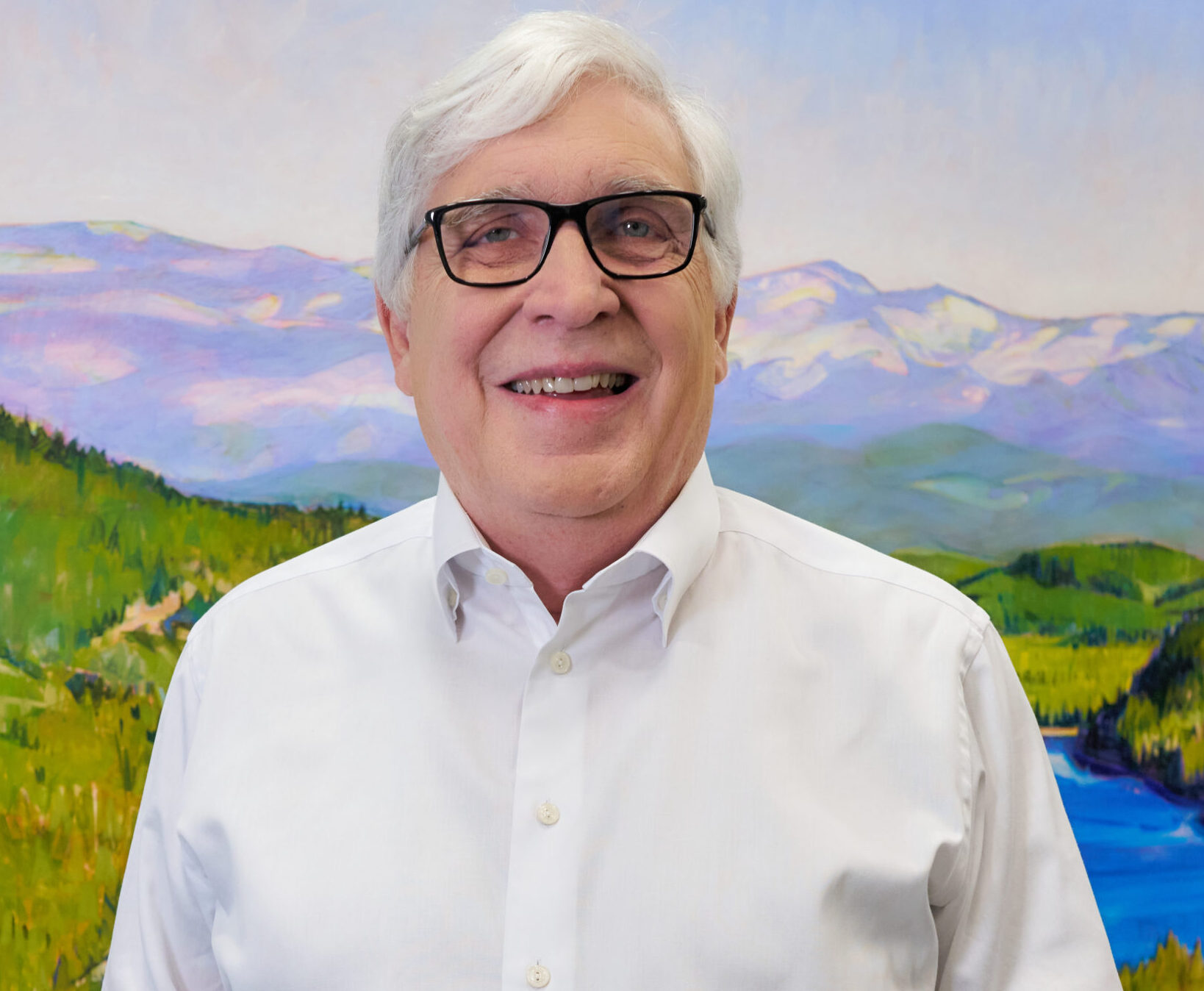
I am Michael Hackard, founder of Hackard Law. Over more than five decades of practicing trust and estate litigation, I have watched genetic science transform the way families prove biological relationships. I have authored four published books on inheritance protection and produced more than 1,000 educational videos, which have now reached over 7 million views. My firm represents heirs, beneficiaries, and elder abuse victims across Sacramento, the San Francisco Bay Area, and Los Angeles in disputes that involve contested parentage, intestate succession, and wrongful exclusion from estates.
The intersection of DNA technology and inheritance law is one of the most fascinating—and frustrating—areas in California probate. A person may have near-certain genetic proof that a decedent was his or her parent, yet California law may still deny that person an inheritance. Understanding why requires a close look at statutory requirements, court interpretations, and the gap between scientific certainty and legal standing.
Hackard Law provides contingency fee representation for qualified cases, meaning families pay no upfront costs while pursuing their rightful inheritance.
If you believe you have been wrongfully excluded from an estate or need to establish heirship, call Hackard Law at (916) 313-3030 for a consultation.
Quick Summary
Prince’s 2016 death without a will thrust DNA paternity into the global spotlight. California’s intestacy laws impose strict requirements that go far beyond a DNA match. Here is what families and potential heirs need to know.
- A California appellate court denied heirship despite a 99.9996% DNA paternity match because additional statutory requirements were not met.
- California law generally requires either a lifetime court-ordered paternity finding or evidence that the decedent openly held the claimant out as his or her child.
- Scientific advances in DNA testing continue to outpace legislative updates, leaving many biological children without inheritance rights.
- Potential heirs should consult with a California probate attorney early to understand their legal standing.
Prince’s Estate and the DNA Question
In 2016, the world learned that the legendary musician Prince had apparently died without a will or trust. The absence of any estate plan immediately opened the door to intestacy—the legal process by which a court distributes assets when no written plan exists. Multiple individuals came forward claiming to be Prince’s biological children, seeking DNA tests to prove their parentage.
A Minnesota judge authorized the release and analysis of Prince’s blood to the DNA Diagnostic Center. Minnesota law allows blood and genetic testing, but it also imposes a detailed statutory framework for determining father-child relationships when the alleged father has already died. Each claimant faced significant legal hurdles between receiving favorable test results and actually inheriting a share of the estate.
Prince’s situation is not unique. Contested parentage claims arise in probate disputes across California with surprising frequency. Whenever a wealthy individual dies intestate, individuals who believe they are biological children may come forward. The legal question is never simply whether DNA confirms a biological link—it is whether the claimant meets every statutory requirement the legislature has imposed.
California’s Strict Standard for Posthumous Paternity
California intestacy law sets a high bar for anyone attempting to establish a parent-child relationship with a deceased person. A California Court of Appeals addressed this issue directly in a case where a DNA test showed a 99.9996% probability that the decedent was the claimant’s father. Despite this overwhelming genetic evidence, the court denied the claimant’s heirship.
The court cited three critical failures. First, no court had ordered a paternity finding during the decedent’s lifetime. Second, there was no evidence that the decedent ever openly held the claimant out as his child. Third, there was no finding of impossibility—meaning the decedent could have acknowledged the child during his lifetime but chose not to, or at least there was no proof that he could not have done so.
The impossibility exception exists for narrow circumstances, such as when a father dies before the child is born. In that situation, the father had no opportunity to publicly acknowledge the child. But if the father lived during the child’s lifetime and simply never came forward, California law treats that silence as legally significant.
Case Pattern: The Unacknowledged Child
In a pattern that arises in California intestacy disputes, an adult child learns of a biological parent’s death and seeks a share of the estate. DNA testing confirms the relationship beyond any reasonable doubt. However, because the decedent never acknowledged the child publicly or through a court order, the child’s claim fails under current statutory requirements. The outcome leaves the biological child with no inheritance despite indisputable science.
The Gap Between Genetic Science and Legislative Action
One of the concurring justices in the California appellate case acknowledged the court’s frustration. The justice wrote that the court was legally constrained in how it could consider DNA evidence. While the genetic results were compelling, the statute did not permit the court to rely on DNA alone to establish heirship.
This justice went further, strongly urging the California legislature to revise the probate code. The proposed change would allow a parent-child relationship to be established with a deceased parent where the decedent acknowledged—even privately—that the child was his during his lifetime. Under such a revision, inheritance rights could be established through clear and convincing genetic evidence of paternity combined with clear and convincing evidence that the father acknowledged fathering the child.
Scientific advances in genetic testing will continue to create pressure for statutory changes. DNA analysis has evolved dramatically since the O.J. Simpson trial introduced the public to forensic genetics in 1994. Today’s tests achieve probabilities that leave virtually no scientific doubt. Yet the law has not kept pace.
Legislative reform in this area, while seemingly self-evident, still requires the full legislative process. Bills must be introduced, debated, amended, and enacted. Until that happens, California courts remain bound by the existing probate code. Families navigating these issues should understand both the intestate succession framework and the specific statutory requirements for proving parentage after death.
Why Estate Planning Eliminates the Problem
The Prince situation carries a powerful lesson for every California family: estate planning eliminates the ambiguity that intestacy creates. When a person creates a valid trust or will, that document controls who inherits. There are no legal obstacles, no DNA testing requirements, and no requirement to demonstrate parentage.
A parent who wants to include a child—whether publicly acknowledged or not—can name that child as a beneficiary in a trust or will. The document speaks for itself. Conversely, a person who does not want certain individuals to inherit can make that clear through proper estate planning.
Dying intestate forces the state to make decisions that the decedent could have made privately and clearly. Every adult with assets should have, at a minimum, a written estate plan that reflects his or her wishes. For families with complex dynamics—including children from multiple relationships, estranged family members, or private acknowledgments of parentage—a well-drafted trust is essential.
Case Pattern: The Missing Trust
A California decedent with significant assets and children from multiple relationships died without a trust or will. Several individuals came forward claiming to be biological children. Genetic testing confirmed some claims and disproved others. However, even the confirmed biological children faced years of litigation because the decedent never formalized a parentage acknowledgment. A simple trust document naming each intended beneficiary would have resolved the matter in months rather than years.
Families who face contested trust or probate situations benefit from retaining counsel who understands both the litigation and the underlying estate planning failures that create disputes.
Contingency Fee Access and Representation
Heirship disputes and intestacy claims can be expensive to litigate. Many potential heirs lack the financial resources to fund years of court proceedings, especially when they must prove a parent-child relationship that the decedent never formalized.
Contingency fee representation addresses this access-to-justice problem. Under a contingency fee arrangement, the attorney advances the costs of litigation and receives payment only if the case results in a recovery. This model allows families to pursue legitimate inheritance claims without bearing the financial risk of upfront legal fees.
Hackard Law evaluates potential heirship and estate dispute cases on their merits. When the facts and the law support a claim, contingency fee representation can level the playing field between a claimant and a well-funded estate or opposing party.
Key Definitions
- Intestacy: The legal condition of dying without a valid will or trust. State law determines who inherits.
- Heirship: The legal status of being entitled to inherit from a decedent’s estate under intestacy laws.
- Paternity: The legal and biological determination that a person is the father of a child.
- DNA Diagnostic Testing: Genetic analysis used to determine biological relationships, including parent-child connections.
- Clear and Convincing Evidence: A standard of proof higher than a preponderance of the evidence but lower than beyond a reasonable doubt.
- Intestate Succession: The statutory order in which relatives inherit when no estate plan exists.
- Impossibility Finding: A court determination that a decedent could not have openly acknowledged a child during his lifetime, such as when the father died before the child’s birth.
- Probate Code: The body of California statutory law governing wills, trusts, estates, and the administration of decedent’s property.
- Concurring Opinion: A judicial opinion that agrees with the result of the majority but offers additional reasoning or urges legislative action.
What to Do Next
- Determine whether the decedent died with or without a valid will or trust.
- Gather any evidence that the decedent acknowledged you as his or her child during the decedent’s lifetime, including letters, photographs, financial records, or witness testimony.
- Request DNA testing through appropriate legal channels if biological parentage is in dispute.
- Review California’s intestate succession statutes to understand the requirements for establishing a parent-child relationship after death.
- Consult Michael Hackard’s published books on inheritance protection for a deeper understanding of how California law treats contested estates.
- Contact a California probate litigation attorney as early as possible, because statutes of limitation and filing deadlines apply.
- Preserve all documents, communications, and records related to the decedent and the claimed relationship.
- Do not sign any agreements or releases from the estate without legal counsel.
If you need to establish heirship or protect your inheritance rights in California, contact Hackard Law at (916) 313-3030 for a case evaluation.
CALL THE SAGE | When Experience Matters, Families Listen
THE EXPERTISE:
📚 50 years California trust, estate & elder financial abuse litigation
⚖️ We represent heirs, beneficiaries, and elder abuse victims
🎥 1,000+ educational videos | 7 million+ views | 4 published books
🎯 “After thousands of cases, I see the pattern others miss.”
CONTINGENCY REPRESENTATION — No Win, No Fee
Throughout California: Sacramento | Los Angeles | Bay Area
📞 CALL THE SAGE: (916) 313-3030
Subscribe for weekly insights on:
• Elder financial abuse warning signs and prevention
• Trust and estate litigation strategies
• Inheritance protection for California families
• Family protection strategies
When your inheritance is under attack, Call The Sage.
Hackard Law | 10640 Mather Blvd, Mather CA 95655
Attorney Advertisement | Michael Hackard, State Bar #71067
RELATED VIDEOS
Why Prince Needed a Trust in the Event of His Death
Directly mirrors the blog’s central case study — Prince’s intestate death is the primary real-world example used throughout the post to illustrate why estate planning matters and how dying without a trust creates costly inheritance disputes.
What If There’s No Will? | Get Inheritance Rights in Writing
Squarely addresses the intestacy scenario at the heart of the blog — what happens when someone dies without a will, and why getting inheritance rights documented in writing is critical for families navigating paternity and heirship claims.
Cut Out of the Inheritance? | Hackard Law Estate Litigation FAQ
Directly relevant to the blog’s core audience — biological children who are wrongfully excluded from an estate despite DNA evidence, and who need to understand their legal options.
Liz Hurley’s Rich Son | Damian Hurley’s Inheritance
Provides a complementary real-world celebrity paternity and inheritance case alongside Prince’s story, reinforcing the blog’s theme that DNA paternity intersects with complex inheritance law in high-profile estate disputes.
“I Think I’ve Heard This Case Before:” Experience Matters for Your Inheritance
Reinforces the blog’s emphasis on retaining experienced California probate litigation counsel — heirship and posthumous paternity claims are highly complex, and pattern recognition from decades of experience is essential to success.
CA Probate Litigation Attorney | “A Chef is Not a Cook”
Supports the blog’s call to action for readers to seek a skilled California probate litigation attorney, emphasizing that specialized expertise — not just general legal knowledge — is required for intestacy and heirship disputes.
 Michael Hackard is the founder of Hackard Law, a California trust and estate litigation firm with more than five decades of experience protecting the inheritance rights of families across Sacramento, the San Francisco Bay Area, and Los Angeles. He is the author of four published books on inheritance protection and has produced more than 1,000 educational videos with over seven million views.