


 (916) 313-3030
Equal vs. Equitable: What Bay Area Families Must Know Before Finalizing an Estate Plan

Why Equal and Equitable Are Not the Same Thing
I am Michael Hackard, founder of Hackard Law, and over five decades of practice, I have fought for heirs, beneficiaries, and elder abuse victims across California. I have written four books on inheritance protection, including The Wolf at the Door: Undue Influence and Elder Financial Abuse, and my firm has produced more than 1,000 educational videos that have reached over seven million viewers. I serve families throughout the San Francisco Bay Area, Sacramento, and Los Angeles – and the question I hear more often than almost any other is this: should my estate be divided equally, or equitably?
Those two words sound similar. In practice, they can produce very different outcomes. An equal distribution gives each heir the same dollar amount. An equitable distribution gives each heir what is fair, and fair is not always the same as equal. Getting this distinction right before you finalize your estate plan can spare your family years of conflict and litigation.
Hackard Law provides contingency fee representation for qualified estate, trust, and elder financial abuse cases, meaning no upfront costs to you. To talk through your situation, call us at (916) 313-3030.
Quick Summary
Baby boomers are transferring an estimated $68 trillion in wealth over the next 25 years, and how that wealth is divided will shape family relationships for generations. Understanding the difference between equal and equitable distribution is one of the most important decisions a parent can make.
- Equal distribution splits assets equally among all heirs.
- Equitable distribution splits assets based on what is fair given each heir’s circumstances.
- Equal and equitable often produce the same result – but not always.
- Failing to plan at all means California law decides who gets what.
- Poor planning is one of the most common causes of trust and estate litigation.
The $68 Trillion Wealth Transfer and What It Means for Your Family
America is in the middle of the largest wealth transfer in history. Forty-five million U.S. households are expected to pass $68 trillion to the next generation over the next 25 years. Baby boomers – my generation – are thinking harder than ever about how to structure that transfer wisely.
Failure to plan is a lost opportunity. Without a will or trust, California’s intestate succession laws determine how your estate is divided, with no regard for the individual needs of your children or the relationships you spent a lifetime building. Estate-related litigation is often a direct result of that kind of failed or incomplete planning.
Hackard Law litigates estate, trust, and elder financial abuse cases throughout California’s major urban counties, including Santa Clara, Alameda, and San Francisco. Families in the Bay Area who want to understand how poor drafting leads to courtroom battles will find that the equal-versus-equitable question sits at the center of many of those fights.
What Equal Distribution Actually Means
An equal distribution is straightforward: if Mom and Dad have three children – call them Johnny, Susie, and Max – each child receives one-third of the estate. The math is clean. The intent seems fair.
But equal distribution assumes that each heir is in roughly the same position in life. When that assumption breaks down, equality can become deeply inequitable. A surgeon with a thriving practice and a stable family does not have the same financial needs as a sibling struggling with addiction or a sibling who has depended on parental support for years. Giving each of them the same dollar amount may honor arithmetic but ignore reality.
The top probate and estate battles that reach California courts often trace back to this exact tension, a plan that looked fair on paper but felt deeply unfair to the people living with the results.
A Thought Experiment: Three Children, Endless Variables
Consider what happens when we look honestly at three siblings. Johnny could be a West Point graduate, a committed family man, and a successful business owner, or he could be someone with three failed marriages, a substance abuse history, and a new partner urging him to take his inheritance early and move abroad. Susie could be a dedicated nurse who balances her career with caring for her aging parents, or she could be someone who lost her nursing license to addiction and has relied on her parents for years. Max, let’s say, is a San Francisco surgeon: stable, connected to his family, financially secure.
If Mom and Dad divide their estate equally among these three, Max receives a windfall he does not need. The responsible version of Johnny is fine either way. But the struggling versions of Johnny and Susie may receive money they are not equipped to manage, and it may disappear within months.
Case Pattern: A family struggling with an addicted adult child
In one pattern Hackard Law has seen across many cases, parents left equal shares to three children, one of whom had a documented history of substance abuse. That child’s share vanished within a year of distribution, and the family experienced further strife due to perceived injustice. The heir and the family’s harmony might have been safeguarded by a discretionary trust with a spendthrift clause.
Tools That Make Equitable Distribution Work
California trust law gives parents real tools to address unequal circumstances without abandoning fairness. A spendthrift clause prevents a beneficiary from assigning or pledging their trust interest before it is distributed, shielding the funds from creditors and impulsive decisions. A discretionary distribution standard authorizes the trustee to limit or withhold payments based on specified conditions, including sobriety requirements.
Parents who spent significant money on a child’s rehabilitation over the years may also choose to account for those lifetime gifts when structuring the estate, thereby reducing that child’s share to reflect what has already been given. This is not punishment – it is honest accounting.
Estate planning communication between parents and their children, while uncomfortable, is one of the most effective ways to prevent the kind of surprise and resentment that fuels litigation after a parent is gone. Transparency does not require full disclosure of every dollar, but it does require honesty about intent.
Case Pattern: Parents who adjusted shares to reflect lifetime support
In another pattern, parents who had paid for years of housing, legal fees, and medical care for one child chose to reduce that child’s share of the trust to reflect those advances. When documented carefully and explained in the trust instrument, this approach held up in court and preserved the family’s ability to move forward.
When Equal Becomes Inequitable – and Why It Leads to Litigation
I have litigated hundreds of estate and trust cases over the decades. One pattern I return to again and again is the parent who chose equal distribution not because it was right for their family, but because it was easier than having a hard conversation. Equal felt neutral. It felt safe from accusations of favoritism.
But heirs, beneficiaries, and elder abuse victims who feel that a distribution was unjust – even a technically equal one – will sometimes pursue litigation to correct what they see as a wrong. And sometimes they are right. A trust that fails to account for a sibling who isolated a parent, manipulated their decisions, or exploited a position of caregiving is not a fair trust, even if the numbers look equal.
For Bay Area families, Santa Clara estate litigation and Oakland estate litigation increasingly involve disputes rooted in exactly this kind of planning gap. Discovery, forensic analysis, and the pursuit of justice – these are not just legal strategies, but safeguards for families threatened by undue influence and exploitation.
I have supported families for decades who were unaware that equity and equality were two different things until it was too late. When distributions are disputed, the financial cost increases. Often, the fracture is too deep for any judgment to heal. What dishonesty attempted to steal is restored by an unwavering dedication to the truth, but a well-planned estate can stop the theft entirely.
Key Definitions
- Equal distribution: A division of estate assets that gives each heir the same quantity or dollar amount, regardless of individual circumstances.
- Equitable distribution: A division of estate assets based on fairness, taking into account each heir’s needs, contributions, and life situation.
- Spendthrift clause: A trust provision that prevents a beneficiary from transferring or pledging their interest before distribution, protecting funds from creditors and poor decisions.
- Discretionary trust: A trust in which the trustee has authority to decide how much and when to distribute assets to beneficiaries, based on defined standards.
- Sobriety clause: A condition in a trust that ties distributions to a beneficiary’s demonstrated sobriety, often verified by testing.
- Intestate succession: The process by which California law distributes a deceased person’s assets when no valid will or trust exists.
- Spendthrift beneficiary: An heir who may lack the financial discipline or stability to manage a lump-sum inheritance responsibly.
- Advancement: A lifetime gift from a parent to a child that may be counted against that child’s eventual inheritance share.
- Trustee discretion: The authority granted to a trustee to make judgment calls about distributions within the boundaries set by the trust document.
- Undue influence: Pressure or manipulation that overrides a person’s free will in making estate planning decisions, often used to benefit one heir at the expense of others.
What to Do Next
- Look for signs that your current estate plan treats heirs equally without accounting for their actual circumstances.
- Get copies of any trust or will documents and review them with an attorney who handles estate litigation, not just planning.
- Try to avoid leaving a lump-sum distribution to a beneficiary with known addiction, financial instability, or dependency issues without protective provisions.
- Look into spendthrift clauses and discretionary distribution standards if you have concerns about any heir’s ability to manage funds.
- Try to avoid assuming that equal is always safe – document your reasoning in the trust instrument so your intent is clear.
- Look for opportunities to have honest conversations with your children about your estate plan before it becomes a source of conflict.
- Get a second opinion if your estate planning attorney has not raised the equal-versus-equitable question with you.
- Review the contingency fee representation guide if you believe a loved one’s estate was distributed unfairly.
- Call Hackard Law at (916) 313-3030 to tell us your story – we are ready to listen.
Visit our contact page to reach us online and schedule a consultation.
CALL THE SAGE | When Experience Matters, Families Listen
🏛️ We practice California trust & estate & elder financial abuse litigation
⚖️ We represent heirs, beneficiaries, and elder abuse victims
🎥 1,000+ educational videos | 7 million+ views | 4 published books
🎯 “After thousands of cases, I see the pattern others miss.”
CONTINGENCY REPRESENTATION – No Win, No Fee
Throughout California: Sacramento | Los Angeles | Bay Area
📞 CALL THE SAGE: (916) 313-3030
Subscribe for weekly insights on:
- Elder financial abuse warning signs and prevention
- Trust and estate litigation strategies
- Inheritance protection for California families
- Family protection strategies
When your inheritance is under attack, Call The Sage.
Hackard Law | 10640 Mather Blvd, Mather CA 95655
Attorney Advertisement | Michael Hackard, State Bar #71067
RELATED VIDEOS
Five Wealth Transfer Ideas for Baby Boomers
Practical strategies baby boomers can use to pass wealth to the next generation.
Successor Trustee Disputes: When Siblings Battle for Control of the Family Trust
What happens when siblings clash over who controls a family trust after a parent dies.
Community vs. Separate Property in California Trusts: What Families Need to Know
How California distinguishes community and separate property when assets pass through a trust.
Why Every Family Business Needs a Succession Plan
Why failing to plan business succession can tear apart a family and its legacy.
Trustee Duties and Accountability in Multi-Generational Trust Planning | Hackard Law
How trustees must fulfill their obligations when managing trusts across multiple generations.
San Mateo County Trust Administration When Trustees Breach Fiduciary Duties Hackard Law
What Bay Area beneficiaries can do when a trustee fails to honor their fiduciary duties.
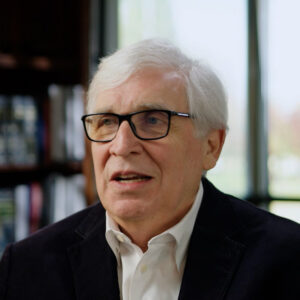 Michael Hackard is the founder of Hackard Law, a California trust and estate litigation firm with more than five decades of experience protecting the inheritance rights of families across Sacramento, the San Francisco Bay Area, and Los Angeles. He is the author of four published books on inheritance protection and has produced more than 1,000 educational videos with over seven million views.