


 (916) 313-3030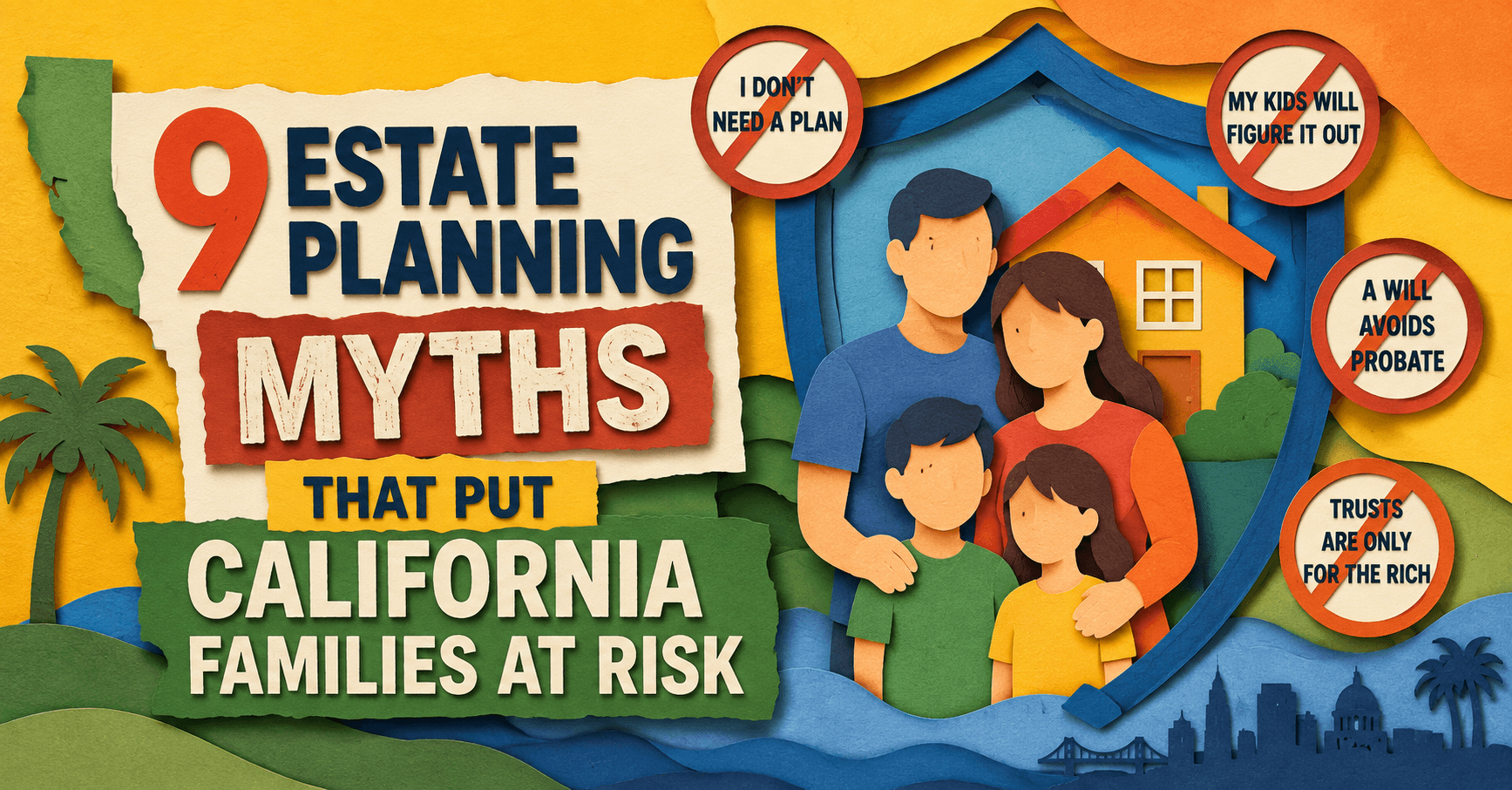
9 Estate Planning Myths That Put California Families at Risk

Why Myths About Estate Law Are So Dangerous
I’m Michael Hackard, founder of Hackard Law. Over five decades of trust and estate litigation, I have seen what happens when families make critical decisions based on assumptions rather than facts. I have authored four books on inheritance protection and produced more than 1,000 educational videos that have reached over seven million viewers. That body of work has one consistent purpose: giving families the accurate information they need before a crisis strikes.
Hackard Law serves Sacramento, the San Francisco Bay Area, Los Angeles, and other parts of California. The myths I discuss below aren’t made up. They cause real conflicts, real delays in planning, and real financial losses for real families. The law doesn’t work with the best of intentions. Documents, facts, and unambiguous legal intent are its foundations. Planning based on fiction can have disastrous outcomes.
Hackard Law offers contingency fee representation for qualified trust and estate litigation cases, meaning no upfront costs to pursue your claim. To speak with our team, call (916) 313-3030.
Quick Summary
Myths about estate planning cause probate, family strife, and unintended consequences for families in California. Protecting your legacy starts with knowing what the law actually requires.
- A will alone does not prevent probate or address incapacity.
- Trusts must be funded to work – drafting alone is not enough.
- Verbal instructions to family members carry no legal weight.
- Estate planning is not a one-time event – it must be updated as life changes.
- Even modest estates benefit from a complete, well-structured plan.
Myths About Who Gets What
Myth 1: Everything Will Automatically Go to My Spouse or Children
This is one of the most persistent and damaging beliefs in estate law. California’s intestacy rules – the default rules that apply when someone dies without a valid will – do not automatically deliver assets to the people you love in the way you expect. Blended families, unmarried partners, estranged relatives, and minor children all create complications that intestacy law handles mechanically, not personally.
Without a plan, your estate may go through a lengthy probate process. A court may appoint a guardian for your minor children. Assets may be distributed in proportions that reflect statutory formulas, not your wishes. A proper estate plan ensures that your voice – not the state’s – controls what happens to what you have built.
Myth 2: Estate Planning Is Only for the Wealthy
Many families wait until it’s too late to take action because they believe estate planning is only for the wealthy. The size of your estate is not a factor in estate planning. It is about the people who depend on you. Even a modest estate benefits from avoiding probate, naming decision-makers during incapacity, and preventing unnecessary family conflict. The cost of not planning – in court fees, family division, and lost assets – almost always exceeds the cost of planning thoughtfully.
Case Pattern: Unfunded Trust, Unintended Probate
A Californian family believed that a trust their parents had established years prior would ensure the smooth transfer of their modest home and savings to their adult children. It turned out that the house had never been moved into the trust after the parents passed away. A substantial amount of the estate was spent on court and legal fees during the estate’s probate process, which postponed distribution for over a year. The parents’ intended outcome was completely different.
Myths About Wills, Trusts, and Documents
Myth 3: A Will Is All You Need
A will is an important document, but it is not a complete estate plan. A will does not prevent probate – it simply directs the probate court on how to distribute your assets. It also does not address what happens if you become incapacitated during your lifetime. And it does not control assets that pass by beneficiary designation, joint tenancy, or other non-probate mechanisms.
A living trust, durable powers of attorney, health care directives, and appropriately aligned beneficiary designations are all common components of a comprehensive plan. Together, these resources offer protection and continuity throughout your life, not just when you pass away. Gaps in this structure are a leading cause of the courtroom battles described in how poor drafting by an estate planning lawyer leads to litigation.
Myth 4: A Trust Requires No Further Action After Signing
Drafting a trust is only the beginning. For a trust to function, assets must be transferred into it – a process called funding. Real property must be re-titled. Bank accounts must be updated. Business interests and financial accounts must be aligned with the trust structure. An unfunded trust cannot perform its purpose. When families discover this too late, the estate often falls back into probate despite everyone’s best intentions.
This is one of the most common gaps that leads directly to litigation. Families who want to understand how real estate disputes arise within trust structures will recognize this pattern immediately.
Myth 5: Telling My Family What I Want Is Enough
Family conversations are beneficial. They are not enforceable by law. Recollections are different. Different interpretations exist. Particularly when grieving, siblings remember the same conversation in completely different ways. The legal requirements needed to guide the distribution of an estate are nearly never met by verbal instructions. A formal, compliant estate plan eliminates uncertainty and guarantees that your intentions are accurately carried out.
For a deeper look at why estate planning communication must be backed by documents, not just dialogue, this resource offers practical guidance.
Case Pattern: Verbal Promise, Legal Dispute
An adult child thot that over many years of conversations, her mother had promised her the family home. The written trust stipulated that upon the mother’s passing, the house would be sold and the proceeds would be split equally among the three siblings. Although the daughter objected to the distribution, the trust document remained in effect in the absence of a written amendment that reflected the mother’s intent. The disagreement caused months of litigation and shattered the family.
Myths About Lawyers and Ongoing Planning
Myth 6: Estate Planning Lawyers Just Draft Documents
A competent estate planning lawyer does much more than just draft documents. They help identify potential threats to your family’s structure, anticipate legal issues, and develop a plan that upholds your principles and evolves with the times. Their responsibilities include long-term stewardship, risk management, and legal advice. The objective is to understand your life and safeguard what matters most to you, not to fill out forms.
Myth 7: Estate Planning Is a One-Time Event
Your plan must adapt as life does. The structure of your estate may change due to marriage, divorce, the birth of a child, the death of a beneficiary, the purchase of new property, or changes in tax law, all of which can make an outdated plan risky. An antiquated plan can be just as detrimental as none at all. Regularly reviewing and updating your documents guarantees that they remain in line with your goals and current situation.
Families dealing with the consequences of outdated plans – or plans that were never updated after major life events – will find that the top probate, trust, and estate battles in California often trace back to exactly this failure.
Myth 8: Probate Is Not a Real Concern
Probate in California can be lengthy, costly, and entirely public. It may require court approval for routine transactions. It adds stress and delay at a time when families need clarity most. For many estates, a well-designed trust can minimize or eliminate probate entirely, preserving both privacy and family resources. Dismissing probate as a minor inconvenience is a mistake that families often regret after the fact.
Myth 9: My Family Will Work It Out
This is the myth I have seen cause the most harm. Families want to believe that love and goodwill will carry them through. But grief, uncertainty, financial pressure, and differing expectations can strain even the closest relationships. Clear planning, built with informed legal guidance, protects family harmony by removing the ambiguity that conflict feeds on.
For decades, I have stood with families who came to us after this myth failed them. The fracture often runs too deep for any judgment to mend. A steadfast commitment to truth restores what dishonesty tried to steal – but prevention is always less costly than litigation. Discovery, careful legal strategy, and the pursuit of justice are not just legal tools. They are safeguards for families who deserved better planning from the start.
Key Definitions
- Intestacy: The legal condition of dying without a valid will, leaving asset distribution to be determined by state law rather than personal intent.
- Probate: The court-supervised process of validating a will and distributing a deceased person’s estate, often lengthy and public in California.
- Living trust: A legal arrangement in which a person transfers assets to a trust during their lifetime, allowing those assets to pass to beneficiaries without probate.
- Trust funding: The process of transferring ownership of assets into a trust so the trust can actually control and distribute them.
- Durable power of attorney: A legal document authorizing a designated person to manage financial affairs if the principal becomes incapacitated.
- Health care directive: A document specifying a person’s medical wishes and designating someone to make health care decisions during incapacity.
- Beneficiary designation: A form attached to financial accounts, retirement plans, or life insurance policies that directs who receives the asset at death, outside of a will or trust.
- Estate plan: A coordinated set of legal documents – including a will, trust, powers of attorney, and directives – designed to manage and transfer a person’s assets and responsibilities.
- Contingency fee representation: A fee arrangement in which an attorney is paid from the recovery rather than requiring upfront payment, making legal help accessible for qualifying cases. See the contingency fee guide for California trust and estate cases.
What to Do Next
- Look for a complete estate plan that includes a will, living trust, powers of attorney, and health care directives – not just one document.
- Get copies of all existing estate planning documents and review whether assets have been properly transferred into any trust.
- Try to avoid relying on verbal conversations with family members as a substitute for written, legally enforceable instructions.
- Look for a licensed California estate planning attorney who can review your current plan and identify gaps.
- To ensure they are in line with your overall plan, obtain copies of all beneficiary designations on bank accounts, retirement plans, and life insurance policies.
- Try to avoid waiting for a major life event to trigger a review – schedule periodic updates as circumstances change.
- Look for resources on how estate litigation in Alameda County or your region handles disputes that arise from planning failures.
- Review the service areas Hackard Law covers across California to confirm we serve your region.
- Call Hackard Law at (916) 313-3030 to discuss your situation with our team.
- To begin safeguarding your family’s legacy, get in touch via our contact page and ask for a consultation.
CALL THE SAGE | When Experience Matters, Families Listen
🏛️ We practice California trust & estate & elder financial abuse litigation
⚖️ We represent heirs, beneficiaries, and elder abuse victims
🎥 1,000+ educational videos | 7 million+ views | 4 published books
🎯 “After thousands of cases, I see the pattern others miss.”
CONTINGENCY REPRESENTATION – No Win, No Fee
Throughout California: Sacramento | Los Angeles | Bay Area
📞 CALL THE SAGE: (916) 313-3030
Subscribe for weekly insights on:
- Elder financial abuse warning signs and prevention
- Trust and estate litigation strategies
- Inheritance protection for California families
- Family protection strategies
When your inheritance is under attack, Call The Sage.
Hackard Law | 10640 Mather Blvd, Mather CA 95655
Attorney Advertisement | Michael Hackard, State Bar #71067
RELATED VIDEOS
Business Succession Myths That Could Destroy Your Family Legacy
Common misconceptions about business succession that can unravel a family’s hard-built legacy.
Community vs. Separate Property in California Trusts: What Families Need to Know
How California property rules affect what spouses and families actually inherit through a trust.
What Does a Trust Administration Lawyer Really Do
A plain-language look at the real role a trust administration attorney plays for families.
POA Vultures | Power of Attorney Abuse
How bad actors exploit power of attorney documents to take advantage of vulnerable people.
Safeguarding the Family Legacy: Sandra’s Story | Hackard Law
A real client story about protecting an inheritance when estate planning goes wrong.
Trustee Duties and Accountability in Multi-Generational Trust Planning | Hackard Law
What trustees are legally required to do when managing a trust across multiple generations.
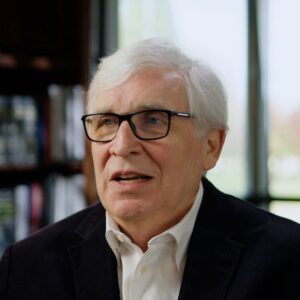 Michael Hackard is the founder of Hackard Law, a California trust and estate litigation firm with more than five decades of experience protecting the inheritance rights of families across Sacramento, the San Francisco Bay Area, and Los Angeles. He is the author of six published books on inheritance protection and has produced more than 1,000 educational videos with over seven million views.