


 (916) 313-3030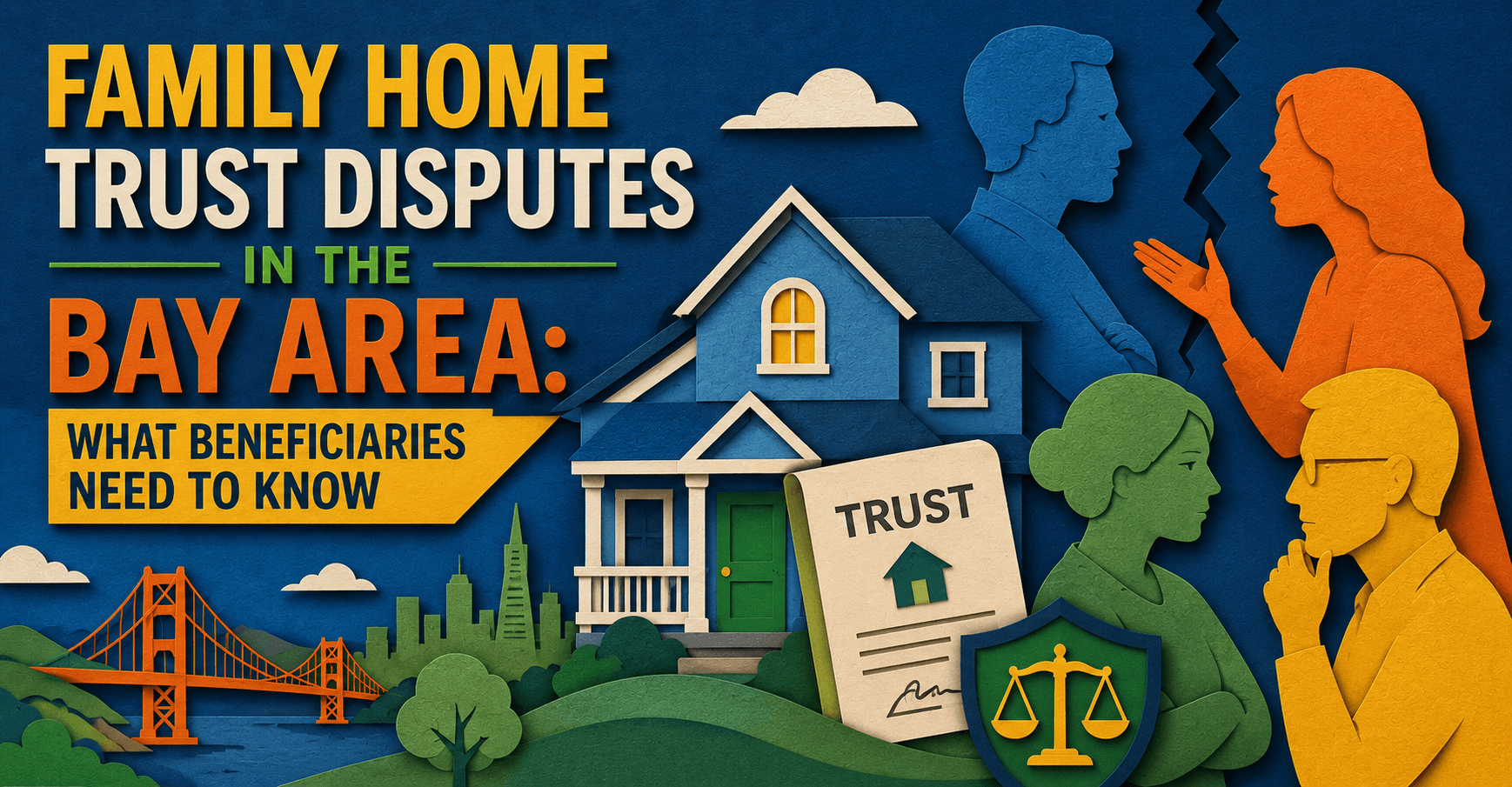
Family Home Trust Disputes in the Bay Area: What Beneficiaries Need to Know

When the Family Home Becomes the Battleground
I am Michael Hackard, founder of Hackard Law, and over five decades of practice, I have stood beside heirs, beneficiaries, and elder abuse victims in some of California’s most emotionally charged estate battles. I have written four published books on inheritance protection and produced more than 1,000 educational videos that have reached over seven million viewers. When it comes to the family home inside a trust, I have seen this conflict arise in virtually every form imaginable – in Sacramento, across the San Francisco Bay Area, and throughout Los Angeles.
The family home is rarely just an asset. It carries memory, identity, and deep personal meaning for everyone who grew up inside it. When a trust distributes the home to one beneficiary and leaves others without it, the result is often litigation that is as tangled and frustrating as the legendary Gordian Knot Alexander the Great famously solved with a sword. California trust law does not offer such a clean solution, but it does offer remedies – and I have spent decades pursuing them.
Hackard Law handles qualified trust and estate litigation cases on a contingency fee basis, meaning families who cannot afford hourly rates pay no upfront costs. Call us at (916) 313-3030 to talk through your situation.
Quick Summary
Family home disputes inside California trusts are among the most emotionally intense and legally complex cases in estate litigation. They arise from a range of causes – from deliberate estate planning decisions to caregiver fraud and undue influence – and resolving them requires creative, enforceable solutions.
- The family home is often the only significant trust asset, making equitable division especially difficult.
- Disputes arise between the beneficiary who received the home and those who did not.
- Resolution options include outright sale, percentage splits, sum certain settlements, and buyouts.
- Occupants of the home often resist moving, which complicates and delays settlement.
- Undue influence and caregiver fraud are common drivers of disputed home transfers.
How These Disputes Begin
Not every family home dispute in a trust signals wrongdoing. A trust maker may have made a clear-eyed, deliberate decision to leave the house to one child while distributing other assets among the remaining children. That kind of plan, while sometimes resented, reflects the trust maker’s lawful right to dispose of property as they choose.
But many disputes are not that clean. Hackard Law litigates cases where a caregiver used undue influence and outright fraud to redirect the family home away from rightful heirs while the elder was vulnerable, isolated, or suffering near the end of life. These cases involve manipulation that is calculated and often hidden from other family members until after the death.
Understanding the most common probate, trust, and estate battles helps families recognize when a dispute is worth pursuing and what legal tools are available.
Case Pattern: Caregiver Redirection of the Family Home
An elderly widow in the East Bay who lived alone eventually became reliant on a live-in caregiver. The estate’s primary asset, the family home, was eventually transferred to the caregiver after the elder’s trust was amended several times over two years. The adult children learned of the amendments after the elder’s passing and contested them on the grounds of lack of capacity and undue influence. Medical records, witness testimony, and the timing of the amendments in relation to the elder’s cognitive decline were the main points of contention in the lawsuit.
Who Are the Parties in a Family Home Trust Dispute?
At minimum, two parties are in conflict: the beneficiary who received the home and the beneficiary or disinherited heir who did not. In practice, the trustee is usually aligned with the beneficiary named in the most recent trust amendment – the document the trustee is legally obligated to follow unless a court rules otherwise.
This alignment can leave other beneficiaries feeling outnumbered and powerless. They are not. California law gives beneficiaries meaningful rights, and understanding what California beneficiaries can do when a trustee acts against their interests is the first step toward effective action.
Sometimes other parties come into play, such as creditors, co-trustees, or people who think they were promised the house outside of the trust. Each new layer makes what is already a high-stakes conflict more complicated.
Settlement Paths: Untying the Knot
As the family home lawsuit progresses toward settlement, the parties must face an unpleasant fact: the house will typically need to be sold. When the house is the only substantial trust asset, no other option is viable. One of the most frequent challenges Hackard Law faces in these situations is occupants’ reluctance to accept this.
Several settlement structures are available. An outright sale with an agreed percentage split allows each party to receive their share directly from escrow. A sum certain settlement designates a fixed dollar amount as a priority payment from sale proceeds – sometimes secured by a deed of trust on the property itself. Both approaches can lead to a buyout, where the party who wants to keep the home finances the purchase and pays off the other party’s interest.
For Bay Area families navigating Alameda County estate litigation or disputes in Santa Clara, the path to resolution often runs through mediation before it reaches a courtroom. Alameda County mediation can be a faster, less costly alternative to a full trial, though it requires both parties to negotiate in good faith.
Case Pattern: Buyout After Disputed Amendment
In a Santa Clara County case, two siblings couldn’t agree on which version of their parents’ trust applied to the family home. According to the surviving sibling, the final amendment was valid. The other argued that improper influence caused the amendment. Rather than going to trial, the parties came to a buyout agreement whereby the occupant sibling obtained financing, paid the other a fixed sum, and retained the property. The litigation was significantly less costly for both parties than a full trial.
The Emotional Reality of Home Disputes
I have seen families split apart over the family home in ways that no amount of criticism can completely heal. Carrying costs, legal fees, and the opportunity cost of a frozen asset all increase with each month of unresolved litigation. However, the more profound injury is relational. Once spending holidays together in that home, siblings are now on opposing sides of a courtroom.
This emotional weight is not a distraction from the legal strategy – it is part of it. Distrust between the parties runs high in these cases. Any settlement must be enforceable and precise. Vague agreements fall apart. Practical arrangements – clear timelines for vacating, defined moving incentives, escrow-controlled distributions – are what hold resolutions together.
For families in the Bay Area working through Santa Clara estate litigation or disputes touching multiple counties, understanding the eight stages of trust and estate litigation helps set realistic expectations about what lies ahead.
Beyond legal tactics, discovery, forensic analysis, and the pursuit of justice protect families threatened by fraud and manipulation. What dishonesty attempted to steal is restored by an unwavering dedication to the truth.
Key Definitions
- Trust beneficiary: A person named in a trust to receive assets upon the trust maker’s death or upon specified conditions.
- Disinherited heir: A person who would otherwise inherit under law or a prior estate plan but was excluded by a later trust amendment or transfer.
- Undue influence: Improper pressure applied to a vulnerable person that overrides their free will in making estate planning decisions.
- Sum certain settlement: A settlement structure in which one party receives a fixed dollar amount as a priority payment before remaining proceeds are divided.
- Deed of trust: A security instrument that gives a lender or party a lien on real property to secure payment of an obligation.
- Buyout: An arrangement in which one party pays the other’s interest in a property to retain sole ownership.
- Trustee alignment: The practical reality that a trustee typically administers the most recently executed trust, often placing them in the same position as the beneficiary named in that document.
- Contingency fee representation: Legal representation where attorney fees are paid from any recovery, with no upfront cost to the client.
- Caregiver fraud: Deceptive conduct by a caregiver designed to redirect an elder’s assets to the caregiver’s benefit.
- Percentage split: A settlement structure in which net sale proceeds are divided among parties according to agreed percentages.
What to Do Next
- Look for any trust amendments executed in the final months or years of the trust maker’s life, especially after a health decline or change in living situation.
- Get copies of all trust documents, including any amendments and restatements, as early as possible.
- Look for records of the elder’s medical condition at the time any home transfer or trust change was made.
- Try to avoid confronting the occupant of the home directly – disputes escalate quickly without legal guidance.
- Look for evidence of a caregiver’s involvement in the trust maker’s financial or estate planning decisions.
- Get a professional appraisal of the home early so you have a realistic sense of what is at stake.
- Try to avoid signing any settlement agreement without having it reviewed by an attorney who handles trust litigation.
- Explore whether contingency fee representation is available for your case – it may remove the financial barrier to pursuing your rights.
- Learn how to choose the right probate lawyer for a case involving real property disputes.
- Call Hackard Law at (916) 313-3030 to discuss your case with an attorney who has decades of experience in California trust and estate litigation. You can also reach us through our contact page.
CALL THE SAGE | When Experience Matters, Families Listen
🏛️ We practice California trust & estate & elder financial abuse litigation
⚖️ We represent heirs, beneficiaries, and elder abuse victims
🎥 1,000+ educational videos | 7 million+ views | 6 published books
🎯 “After thousands of cases, I see the pattern others miss.”
CONTINGENCY REPRESENTATION – No Win, No Fee
Throughout California: Sacramento | Los Angeles | Bay Area
📞 CALL THE SAGE: (916) 313-3030
Subscribe for weekly insights on:
- Elder financial abuse warning signs and prevention
- Trust and estate litigation strategies
- Inheritance protection for California families
- Family protection strategies
When your inheritance is under attack, Call The Sage.
Hackard Law | 10640 Mather Blvd, Mather CA 95655
Attorney Advertisement | Michael Hackard, State Bar #71067
RELATED VIDEOS
A House Divided | Bay Area Beneficiary Trust Disputes
Explores how family home disputes inside Bay Area trusts divide beneficiaries.
How Bay Area Trust Beneficiary House Disputes are Million-Dollar Mashups
Breaks down why Bay Area trust house disputes often involve enormous financial stakes.
Disinherited House Beneficiaries | Bay Area Trust Litigation
Covers the legal options available to beneficiaries cut out of a family home.
Settling Bay Area Estate & Trust House Disputes | Contingency Fees
Explains how contingency fee arrangements work when settling Bay Area home disputes.
Bay Area Estate & Trust Litigation Battles | Disinherited House Beneficiaries
Looks at litigation battles faced by beneficiaries wrongfully excluded from a family home.
Blended Family Trust Disputes | A Formula For Conflict
Examines why blended families so frequently end up in bitter trust disputes.
 Michael Hackard is the founder of Hackard Law, a California trust and estate litigation firm with more than five decades of experience protecting the inheritance rights of families across Sacramento, the San Francisco Bay Area, and Los Angeles. He is the author of six published books and has produced more than 1,000 educational videos with over seven million views.