


 (916) 313-3030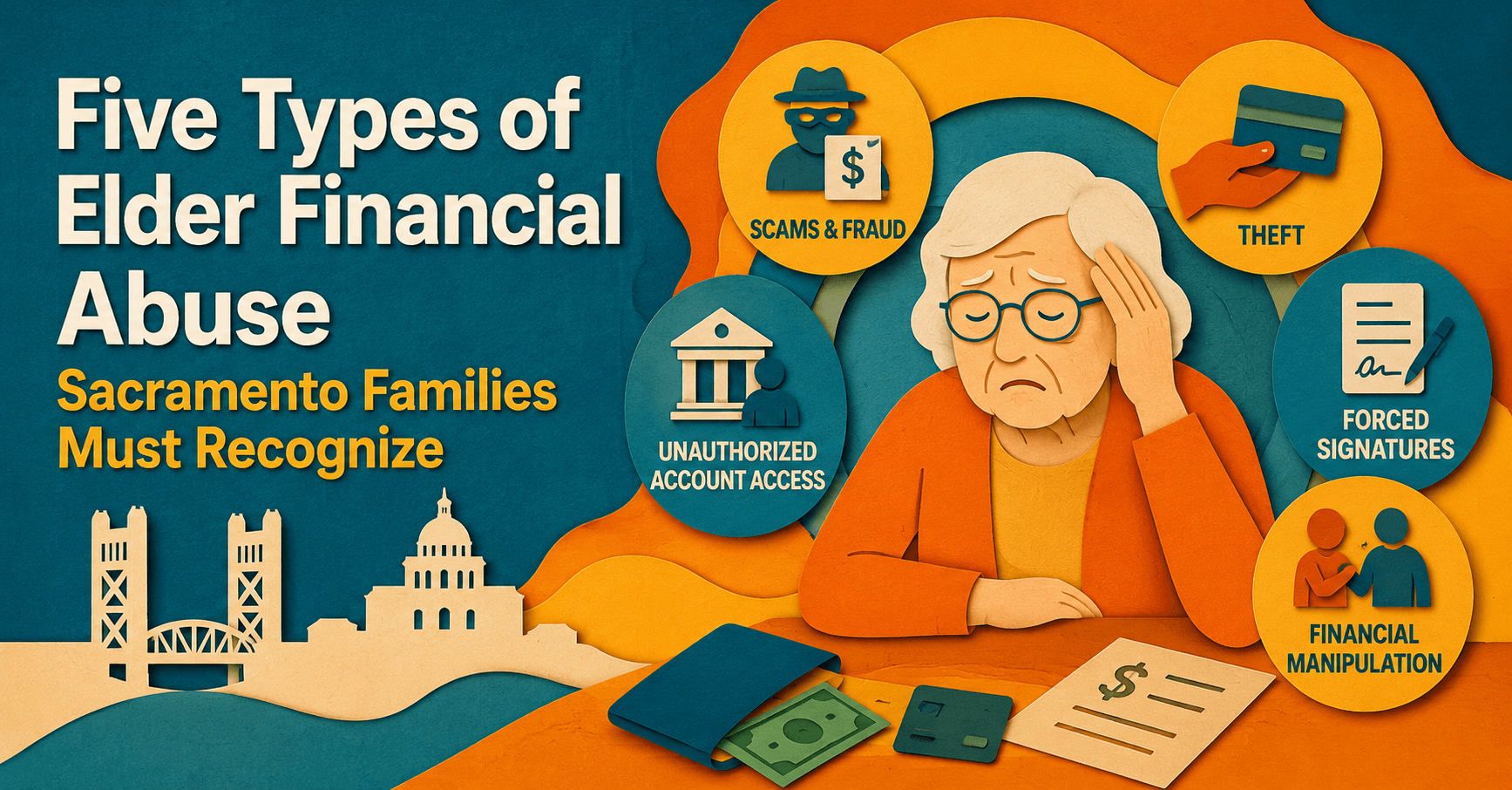
Five Types of Elder Financial Abuse Sacramento Families Must Recognize

What Sacramento Families Need to Know
I am Michael Hackard, founder of Hackard Law. Over five decades of practice, I have fought for heirs, beneficiaries, and elder abuse victims whose families were blindsided by financial predators. I have written four books on inheritance protection and produced more than 1,000 educational videos, which have reached over 7 million viewers. Elder financial abuse is not an abstract problem – it is something I have witnessed destroy families across Sacramento, the San Francisco Bay Area, and Los Angeles.
In this post, I want to walk you through five major types of elder financial abuse that Sacramento families need to recognize. Awareness is the first line of defense. When you know what to look for, you can act before the damage becomes irreversible.
Hackard Law provides contingency fee representation – no upfront costs for qualified cases. If you believe a loved one is being financially exploited, call us today at (916) 313-3030.
Quick Summary
Elder financial abuse takes many forms, and California families in Sacramento, Placer County, and El Dorado County are not immune. Identifying the warning indications early can make the difference between recovery and permanent loss.
- Caregiver abuse includes physical neglect, theft, and embezzlement.
- Financial exploitation drains accounts through hidden withdrawals and inflated charges.
- Power of attorney abuse redirects assets away from intended beneficiaries.
- Isolation cuts elders off from family members who might intervene.
- Unwarranted transfers alter estate plans through manipulation and undue influence.
Caregiver Abuse: When Trust Becomes a Liability
Caregivers are in a position of great trust. They have access to the daily routine, finances, drugs, and residence of an elderly person. The consequences can be disastrous when such trust is betrayed. Hackard Law has dealt with situations when people pretending to be authorized caregivers have embezzled money, disregarded medical needs, and separated elderly people from their relatives.
In these cases, the financial damage is often made worse by physical neglect. When money is stolen, basic needs go unmet, prescription medications go unfilled, and dental care goes uncovered. Even in situations where financial recovery is possible, families experience emotional harm like guilt, grief, and a broken sense of security that takes time to heal.
Case Pattern: Caregiver Embezzlement
A private caregiver was hired by a family in the Sacramento area to look after an aging parent. Cash withdrawals rose as the elder’s condition worsened. When family members finally gained access, they discovered suspicious bank transfers and months’ worth of unpaid medical bills. The trend clearly showed that the caregiver was being taken advantage of financially.
For a deeper look at how elder financial exploitation operates and what legal remedies exist, Hackard Law has compiled extensive resources for California families.
Financial Exploitation: The Many Faces of Theft
Financial exploitation rarely looks like a single dramatic theft. It accumulates – a cash withdrawal here, an inflated invoice there, a joint tenancy added to a bank account without the elder’s full understanding. By the time family members notice, the losses can be substantial.
Common patterns include grocery and medication bills that are far higher than they should be, with cash withdrawals benefiting the caregiver rather than the elder. Lawn services are billed at $300 per week for a small yard. Funds are redirected toward gambling or personal expenses while the elder’s medical and dental care go neglected. These are not isolated incidents – they are patterns of deliberate exploitation.
California law provides strong remedies for these situations, including the possibility of double damages and attorney’s fees in proven elder financial abuse cases. Early lawful intervention is critical to protecting assets and building a strong restitution claim.
Power of Attorney Abuse: A Legal Tool Turned Weapon
A power of attorney is designed to protect an elder – to ensure someone trusted can manage finances and property when the elder cannot. But in the wrong hands, it becomes a weapon. Hackard Law has seen POA holders transfer real property to themselves, seize the contents of safe deposit boxes, and make dramatic changes to bank accounts that directly contradict the elder’s will or trust.
These transfers aren’t always clear. A change in a property’s title might go unreported for months. On paper, a bank account restructured into joint tenancy might appear normal. The elder may have passed away by the time the manipulation is found, resulting in recovery more challenging but not impossible.
Understanding when a power of attorney becomes a weapon – and how California families can fight back – is essential knowledge for anyone with an aging parent or relative.
Case Pattern: POA Real Property Transfer
An elder executed a power of attorney naming a close associate as agent. Within months, the family home was transferred to the agent’s name. Trust provisions that would have distributed the property to the elder’s children were effectively negated. Litigation to void the transfer and restore the estate plan followed.
Isolation and Freeze-Outs: Cutting Off the Safety Net
One of the most sneaky strategies used in elder financial abuse is isolation, which takes away the persons who are most likely to become aware of and put an end to the misconduct. Door locks were changed. new front gates that are locked. Mobile phones were seized. When family members visit, doors are left unanswered. Elderly people were taken from their homes without telling their family members.
For family members on the outside, isolation creates fear and helplessness. They know something is wrong, but they cannot reach their loved one. By the time legal intervention is possible, an estate plan may already have been altered and assets transferred. The Sacramento elder financial abuse attorneys at Hackard Law grasp the urgency of these situations.
Isolation is not just emotionally cruel – it is a deliberate legal strategy by abusers to prevent detection. Courts take isolated evidence seriously, and it often forms a central part of undue influence claims in trust and estate litigation.
Unwarranted Transfers: Rewriting the Estate Plan
The final major type of abuse entails manipulating an elder into changing their estate plan – often in favor of someone who had previously been estranged from the family. A stepsibling, a distant relative, a new acquaintance. By whatever means, the abuser gains access to the elder, earns their confidence, and engineers a transfer of wealth that the elder’s family did not expect and the elder may not have truly intended.
These cases usually involve undue influence – a legal concept that describes the substitution of one person’s will for another’s. When an elder’s estate plan changes dramatically late in life, in favor of someone who has inserted themselves into the elder’s daily life, the law provides grounds to challenge those changes.
For families dealing with these situations, Hackard Law’s guide to early legal intervention in estate transfers outlines the steps that matter most in the critical early weeks.
For decades, I have stood with families who discovered – too late, or sometimes just in time – that someone they trusted had been systematically dismantling a loved one’s estate. Discovery, forensic analysis, and the search for justice are not just legal strategies – they are safeguards for families threatened by undue influence and fraud. The financial toll grows with every passing month. The fracture in family trust often runs too deep for any judgment to fully mend. A firm dedication to truth, however, can restore what dishonesty tried to steal.
Key Definitions
- Elder financial abuse: The wrongful taking, concealment, or appropriation of an elder’s money, property, or assets by a person in a position of trust or confidence.
- Undue influence: Excessive pressure that overcomes an elder’s free will and substitutes the desires of another person for their own.
- Power of attorney: A legal document authorizing one person to act on another’s behalf in financial or legal matters.
- Joint tenancy: A form of real estate ownership where two or more people share equal ownership with rights of survivorship – often misused to redirect assets.
- Caregiver exploitation: Financial or physical abuse committed by someone in a caregiving role, whether professional or informal.
- Isolation: The deliberate separation of an elder from family, friends, and support networks to facilitate financial control.
- Unwarranted transfer: A transfer of property or assets that contradicts an elder’s established estate plan, often accomplished through manipulation.
- Conservatorship: A court-supervised arrangement in which a person is appointed to manage the financial or personal affairs of an incapacitated adult.
- Probate litigation: Court proceedings to resolve disputes over a deceased person’s estate, including challenges to wills, trusts, and asset transfers.
- Double damages: A remedy available under California’s Elder Abuse and Dependent Adult Civil Protection Act that allows courts to award twice the actual financial losses in proven cases of elder financial abuse.
What to Do Next
- Look for sudden changes in an elder’s estate plan, especially if a new person has recently entered their life.
- Get copies of recent bank statements and compare withdrawal patterns over the past 12-24 months.
- Look for signs of isolation – unreturned calls, locked gates, new locks, or reports that the elder is unavailable to visitors.
- Try to avoid confronting a suspected abuser directly before speaking with an attorney, as this can complicate legal strategy.
- Document everything: dates, observations, financial irregularities, and any statements made by the elder.
- Look into whether a power of attorney has been recently executed or changed, and who holds it.
- Get copies of any recent deeds, title changes, or account modifications that seem inconsistent with the elder’s known wishes.
- Call Hackard Law at (916) 313-3030 to discuss your situation with an attorney who handles elder financial abuse cases across Sacramento, Placer County, and El Dorado County.
- Visit our contact page to schedule a consultation and learn how contingency fee representation may apply to your case.
CALL THE SAGE | When Experience Matters, Families Listen
🏛️ We practice California trust & estate & elder financial abuse litigation
⚖️ We represent heirs, beneficiaries, and elder abuse victims
🎥 1,000+ educational videos | 7 million+ views | 4 published books
🎯 “After thousands of cases, I see the pattern others miss.”
CONTINGENCY REPRESENTATION – No Win, No Fee
Throughout California: Sacramento | Los Angeles | Bay Area
📞 CALL THE SAGE: (916) 313-3030
Subscribe for weekly insights on:
- Elder financial abuse warning signs and prevention
- Trust and estate litigation strategies
- Inheritance protection for California families
- Family protection strategies
When your inheritance is under attack, Call The Sage.
Hackard Law | 10640 Mather Blvd, Mather CA 95655
Attorney Advertisement | Michael Hackard, State Bar #71067
RELATED VIDEOS
The Wolf at the Door: Ep. 8 | Types of Elder Financial Abuse
Breaks down the different forms of elder financial abuse and how they operate.
Elder Financial Abuse in East Sacramento | Hackard Law
Examines elder financial exploitation cases specific to the East Sacramento area.
How Families Stop Elder Financial Abuse | Communication & Trust
Explains how open family communication can help prevent elder financial exploitation.
POA Vultures | Power of Attorney Abuse
Explores how bad actors exploit the power of attorney to steal from vulnerable elders.
Caregiver Marriages | Elder Financial Abuse & Undue Influence
Looks at how caregivers use marriage and undue influence to gain control of elder assets.
Detecting Elder Financial Abuse | CA Trust Litigation Attorneys
Covers the warning signs families should watch for when elder financial abuse is suspected.
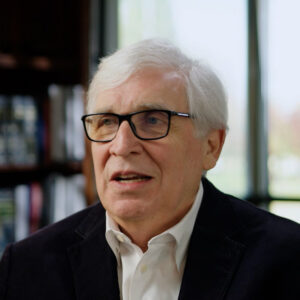 Michael Hackard is the founder of Hackard Law, a California trust and estate litigation firm with more than five decades of experience protecting the inheritance rights of families across Sacramento, the San Francisco Bay Area, and Los Angeles. He is the author of four published books on inheritance protection and has produced more than 1,000 educational videos with over seven million views.