(916) 313-3030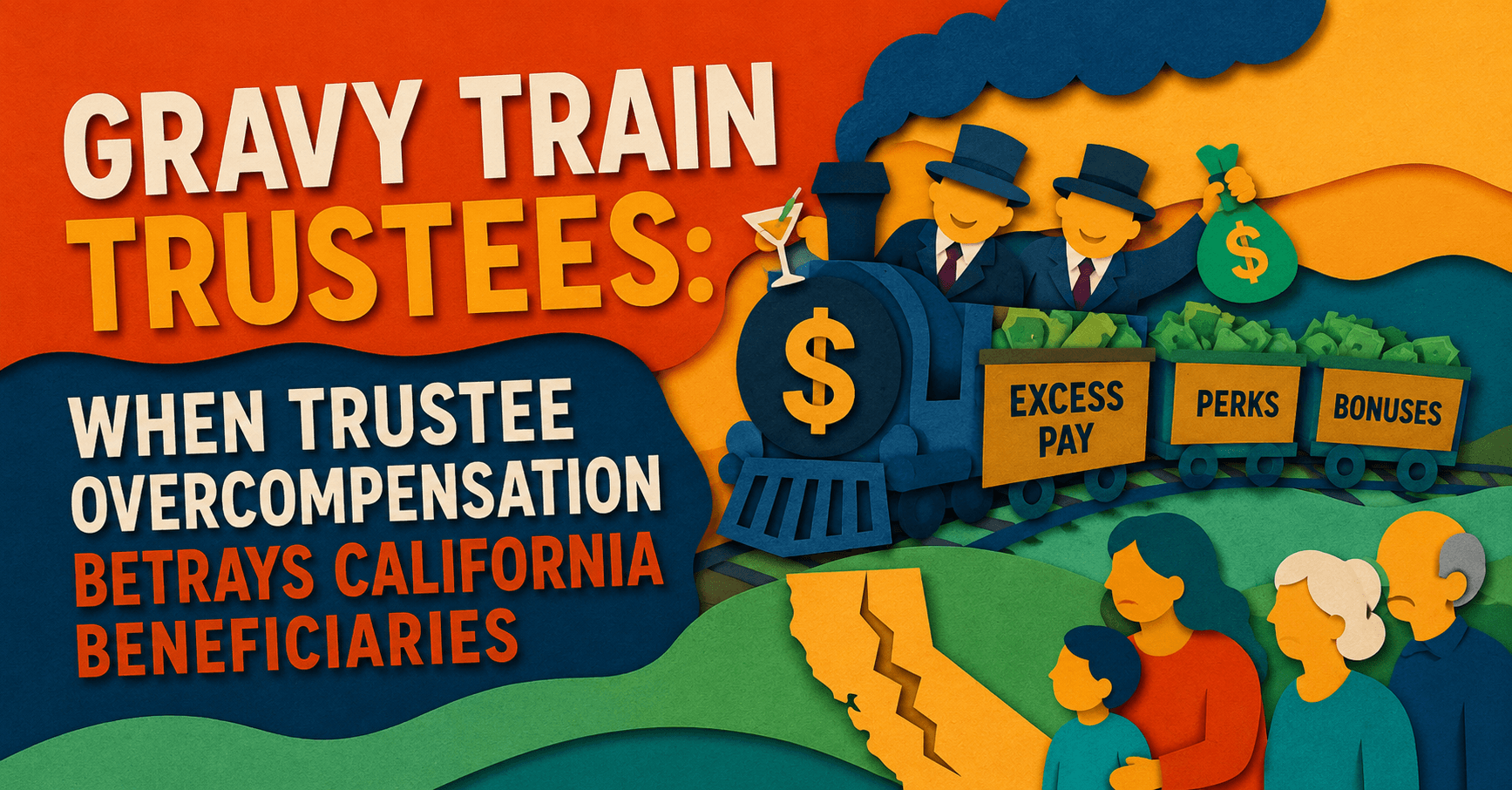
Gravy Train Trustees: When Trustee Overcompensation Betrays California Beneficiaries

Who This Is For
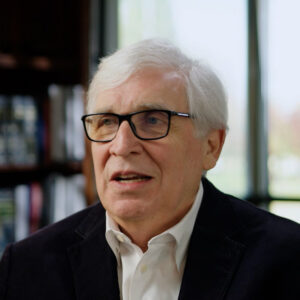
I am Michael Hackard, founder of Hackard Law, and over five decades of practice, I have fought alongside heirs, beneficiaries, and elder abuse victims whose inheritances were quietly drained – not by a stranger, but by the very trustee appointed to protect them. I have written four books on inheritance protection and produced more than 1,000 educational videos that have reached over seven million viewers. My firm serves clients throughout Sacramento, the San Francisco Bay Area, and Los Angeles, as well as Californians living out of state or abroad who need representation in California courts.
One issue I return to again and again is trustee overcompensation. When a trustee pays itself excessive fees – fees that dwarf what beneficiaries actually receive – something has gone deeply wrong. The trust was never created to enrich the trustee. It was created to benefit the people the grantor loved.
Hackard Law handles qualified trust and estate litigation on a contingency fee basis, meaning no upfront costs to you. If you believe a trustee is misusing trust assets, call us at (916) 313-3030.
Quick Summary
Trustee overcompensation is a pattern in which a trustee pays itself fees that are excessive, unjustified, or disproportionate to the trust’s purpose – leaving beneficiaries shortchanged and the grantor’s intent unfulfilled.
- California Probate Code § 16002 requires trustees to act solely in the interest of beneficiaries.
- Trustees are prohibited from using trust property for their own profit.
- When a trustee collects more in fees than it distributes to beneficiaries, litigation is often the only remedy.
- Trust protectors are one tool that can prevent or correct trustee overreach.
- Hackard Law litigates these cases in Alameda, Santa Clara, San Mateo, Contra Costa, Los Angeles, and Sacramento counties.
What “Gravy Train” Actually Means in Trust Law
The phrase gravy train has a plain meaning most people understand: getting paid well for doing very little. The Cambridge Dictionary puts it bluntly – a way of making money quickly, easily, and often dishonestly. When I use the term gravy train trustee, I am describing a trustee who treats the trust fund as a personal revenue source rather than a vehicle for the beneficiaries’ benefit.
This is not a critique of all trustees. Many trustees perform their duties with integrity and care. But a pattern exists – one Hackard Law has litigated across California – where a trustee’s fee payments grow year after year while distributions to beneficiaries stagnate or shrink. The trust estate erodes. The beneficiary receives less than the grantor intended. And the trustee, in some cases, resists every attempt to correct the imbalance.
Understanding what trust attorneys do in these situations is the first step toward protecting what rightfully belongs to the beneficiaries.
The Legal Foundation: California’s Duty of Loyalty
California Probate Code § 16002 is titled “Duty of Loyalty,” and its opening sentence leaves no room for ambiguity: the trustee has a duty to administer the trust solely in the interest of the beneficiaries. Not in the interest of the trustee. Not in the interest of the trust company. The beneficiaries.
California law also prohibits trustees from using or dealing with trust property for their own profit. These are not aspirational guidelines – they are enforceable legal duties. When a trustee violates them, the law provides remedies, including removal, surcharge, and recovery of improperly taken fees.
Where a trust has two or more beneficiaries – even when one of them is also a trustee – the trustee carries a duty of impartiality. A trustee-beneficiary who tilts distributions in their own favor while holding back co-beneficiaries is not just acting unfairly; they may be breaching their fiduciary duty under California law.
For a deeper look at what beneficiaries are entitled to know and demand, the five things California trust beneficiaries must know is a resource I recommend to every family that contacts us.
Case Pattern: A Trustee Who Paid Itself First
In a pattern Hackard Law has encountered across multiple matters, a corporate trustee managing a mid-sized family trust paid itself annual fees exceeding the total distributions made to the named beneficiary over the same period. The trust documents expressed the grantor’s clear intent to support the beneficiary’s health and maintenance. Litigation focused on surcharging the trustee for improperly taken fees and compelling a full accounting. The outcome reinforced that fee payments inconsistent with the grantor’s purpose are not simply a business disagreement – they are a breach of fiduciary duty.
When the Grantor’s Intent Gets Buried Under Fees
Many trust agreements open with language that makes the grantor’s purpose unmistakable. Language like “the grantor intends for the trust estate to be used to enrich the lives of his son, grandson, and granddaughters” is not boilerplate. It is a declaration of purpose. When a trustee’s fee payments consume trust principal that was meant for a grantor’s grandchild, the grantor’s intent has been buried.
The same is true for trusts that direct a trustee to pay all net income to a beneficiary semi-annually and grant discretion to distribute principal for the beneficiary’s support, maintenance, and health. Discretion to distribute does not mean discretion to withhold everything while collecting fees. Courts in California have consistently examined whether a trustee’s exercise of discretion is consistent with the trust’s stated purpose and the beneficiary’s actual needs.
Hackard Law litigates these disputes throughout the Bay Area, including in Alameda County, Santa Clara, and Oakland, as well as in Los Angeles and Sacramento courts.
Case Pattern: The Trustee Who Wouldn’t Leave
In another recurring pattern, a trustee facing removal for fee overreach used trust assets to fund its own legal defense – prolonging litigation and further depleting the estate. Beneficiaries who had already received far less than the trust intended were forced to watch the estate shrink further while the trustee fought to preserve its position. Ultimately, the court’s scrutiny of the trustee’s conduct led to a resolution that restored a measure of what the beneficiaries had lost. The financial toll had grown considerably by then, and the fracture in the family’s trust in the system ran deep.
The Trust Protector: A Structural Solution
Most trusts do not include a trust protector, but they probably should. A trust protector is a person or group – separate from the grantor, beneficiary, and trustee – appointed to exercise specific powers over the trust in the interest of beneficiaries. The concept exists precisely to address the problem of a rogue or self-dealing trustee.
A trust protector can, depending on how the trust is drafted, replace a trustee, modify distribution provisions, change investment direction, or, in some cases, terminate the trust entirely. Where a trust protector exists and has been given appropriate authority, the path to correcting trustee overreach is often shorter and less costly than full litigation.
For families already in conflict, understanding the contingency fee options available in California trust litigation can make the difference between pursuing a legitimate claim and walking away from it.
What Litigation Actually Looks Like
I want to be direct with you: not every trustee overcompensation case resolves the same way. Some trustees, when confronted with evidence of fee overreach, move toward resolution. Others dig in, using trust assets to fund their defense and prolonging the dispute at the beneficiary’s expense. Some cases reach early judicial resolution. Others require sustained litigation.
Hackard Law evaluates each case on its own facts. We look at the trust document, the fee history, the distribution record, and the grantor’s expressed intent. We look at whether the trustee kept proper accountings and whether those accountings were shared with beneficiaries as required by California law. We look at whether the trustee’s conduct crossed from poor judgment into breach of fiduciary duty.
In addition to being lawful tactics, discovery, forensic analysis, and the pursuit of accountability serve as protections for families whose inheritances are being discreetly depleted. What self-dealing attempted to steal is restored by an unfaltering devotion to the truth. I have supported families in similar circumstances for decades, and I am aware of the serious consequences when someone entrusted with a loved one’s legacy treats it as their own.
Learn more about Michael Hackard and the approach Hackard Law brings to these cases.
Key Definitions
- Trustee: A person or institution appointed to manage trust assets according to the trust’s terms and California law.
- Grantor (Settlor): The person who creates and funds the trust, whose intent governs how the trust is administered.
- Beneficiary: The person or persons chosen to receive the benefits of the trust estate.
- Duty of Loyalty: The California legal requirement (Probate Code § 16002) that a trustee administer the trust solely in the interest of beneficiaries.
- Trustee Overcompensation: A pattern in which a trustee pays itself fees that are excessive relative to the trust’s size, purpose, or the services actually rendered.
- Trust Protector: A third party appointed in a trust document to oversee trustee conduct and protect beneficiary interests, with powers that may include removing and replacing the trustee.
- Surcharge: A court-ordered remedy requiring a trustee to repay amounts improperly taken from the trust estate.
- Fiduciary Duty: The highest legal duty of care and loyalty, imposed on trustees under California law.
- Duty of Impartiality: The trustee’s obligation to treat all beneficiaries fairly, without favoring one over another.
- Trust Accounting: A formal record of all trust income, expenses, fees, and distributions that trustees are required to provide to beneficiaries under California law.
What to Do Next
- During the same time period, look for trends of high trustee fees combined with little or no beneficiary distributions.
- Obtain copies of all trust accountings; beneficiaries may request them under California law.
- Look for the trust document’s introductory language, which often clearly states the grantor’s purpose.
- Try to avoid confronting the trustee directly without legal guidance, as this can complicate later litigation.
- Look for any trust protector provisions in the trust document – these may provide a faster path to relief.
- Get independent legal advice before signing any trustee-proposed settlement or release.
- Look into whether the trustee is also a beneficiary, which creates conflicts of interest that courts scrutinize closely.
- Try to document all communications with the trustee in writing going forward.
- Call Hackard Law at (916) 313-3030 to discuss your complete situation with an attorney who handles these cases across California.
- Use our contact page to schedule a confidential consultation.
CALL THE SAGE | When Experience Matters, Families Listen
🏛️ We practice California trust & estate & elder financial abuse litigation
⚖️ We represent heirs, beneficiaries, and elder abuse victims
🎥 1,000+ educational videos | 7 million+ views | 4 published books
🎯 “After thousands of cases, I see the pattern others miss.”
CONTINGENCY REPRESENTATION – No Win, No Fee
Throughout California: Sacramento | Los Angeles | Bay Area
📞 CALL THE SAGE: (916) 313-3030
Subscribe for weekly insights on:
- Elder financial abuse warning signs and prevention
- Trust and estate litigation strategies
- Inheritance protection for California families
- Family protection strategies
When your inheritance is under attack, Call The Sage.
Hackard Law | 10640 Mather Blvd, Mather CA 95655
Attorney Advertisement | Michael Hackard, State Bar #71067
RELATED VIDEOS
All Aboard the Gravy Train | Runaway Trustees
Explores how trustees exploit their position to collect excessive fees at beneficiaries’ expense.
Betrayal of Trust | Trustee Failure to Distribute Assets
Examines what happens when trustees withhold distributions that rightfully belong to beneficiaries.
What Happens If a Trustee Mishandles Trust Assets? | Avoid a Shakedown
Walks through the consequences and legal options when a trustee misuses trust funds.
LA Trust Beneficiaries | Lawsuits Against Bad Trustees
Covers how beneficiaries can pursue legal action against trustees who breach their duties.
Trust Accounting | Options for Beneficiaries
Explains beneficiaries’ rights to demand accountings and scrutinize trustee fee payments.
San Mateo County Trust Administration When Trustees Breach Fiduciary Duties Hackard Law
Discusses trustee fiduciary duty breaches and the remedies available to harmed beneficiaries.