


 (916) 313-3030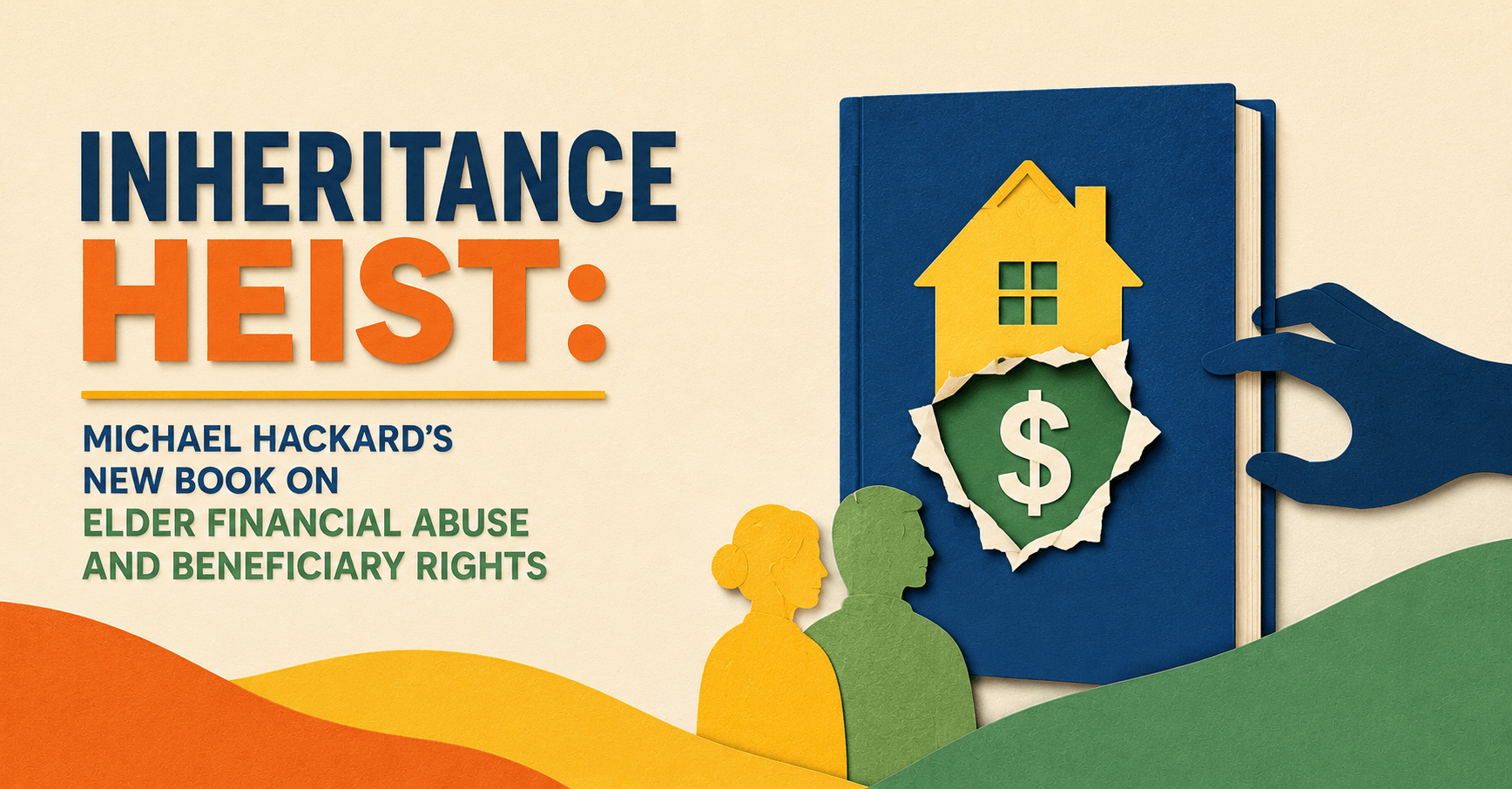
Inheritance Heist: Michael Hackard’s New Book on Elder Financial Abuse and Beneficiary Rights

Introducing Inheritance Heist
I am Michael Hackard, founder of Hackard Law, and I am proud to announce the publication of my new book, Inheritance Heist. Over five decades of practice, I have fought for heirs, beneficiaries, and elder abuse victims whose family legacies were stolen – often through the financial exploitation of vulnerable seniors. This book is the product of that experience, distilled into a practical guide for families who suspect something has gone wrong with an inheritance and for those who need to fight back.
I have written four books on inheritance protection, produced more than 1,000 educational videos with over seven million views, and litigated contested trust and estate matters across California – from Sacramento to the San Francisco Bay Area to Los Angeles. Inheritance Heist reflects what I have learned representing clients in these communities: that financial exploitation follows recognizable patterns, and that knowing those patterns can mean the difference between protecting a legacy and losing it forever.
Hackard Law provides contingency fee representation for qualified cases – no upfront costs to get started. To discuss your situation, call us at (916) 313-3030.
Quick Summary
Inheritance Heist is Michael Hackard’s guide to identifying, confronting, and recovering from elder financial abuse and inheritance theft in California. It addresses both prevention and litigation strategies for families facing these challenges.
- The book covers how to spot warning signs of elder financial exploitation before it is too late
- It addresses legal strategies for recovering beneficiary rights after an inheritance has been hijacked
- Key topics include cognitive decline, stepfamily conflicts, and cryptocurrency assets in estates
- Hackard Law litigates these cases on a contingency fee basis across California
- The book is designed for both families protecting a senior loved one and those already in dispute
Why Inheritance Theft Happens – and Why It Is So Hard to Catch
Elder financial abuse is not always obvious. Small changes in access and influence usually cause it to develop quietly. These changes may include a new friend overseeing finances, an abrupt alteration to estate documents, or a family member restricting contact with other relatives. Considerable harm may already have occurred by the time the pattern becomes apparent.
California law recognizes a wide range of conduct as elder financial abuse, from outright theft to the subtler manipulation of a senior’s estate planning decisions. The challenge for families is that many of these acts occur in private, leaving few witnesses and little paper trail. Inheritance Heist walks readers through the behavioral and documentary warning signs that courts and attorneys look for when evaluating these cases.
For a deeper look at how exploitation unfolds and what legal tools are available, the elder financial exploitation resource at Hackard Law covers the full landscape of these cases.
Case Pattern: Isolation and Document Changes
A senior whose social circle significantly shrank in their final years is a common pattern in estate litigation. One individual was granted exclusive access, who could be a caregiver or a new romantic partner. Within months, the senior’s trust was changed to exclude previous beneficiaries in favor of that person. Medical records and witness testimony were crucial in determining what transpired during the litigation, which centered on capacity and undue influence.
Cognitive Decline and the Vulnerability It Creates
One of the most important topics in Inheritance Heist is cognitive decline. As seniors age, conditions like dementia and Alzheimer’s disease can erode the mental capacity needed to make sound estate planning decisions. Those who would exploit a senior often time their actions deliberately – pressing for document changes when a person is most vulnerable.
California courts evaluate testamentary capacity and undue influence through a fact-intensive inquiry. Medical records, caregiver notes, financial account histories, and witness statements all become relevant. Early legal intervention in elder financial abuse and estate transfers can preserve evidence and prevent further harm before a senior passes away.
The civil remedies available for elder financial abuse in California include double damages and attorney fee recovery in proven cases – a significant incentive for families to act and a meaningful deterrent against exploitation.
Stepfamilies, Blended Households, and Inheritance Conflict
Inheritance Heist focuses on the specific conflicts that occur in blended families. Conflicts over estate administration frequently arise when a surviving spouse is a stepparent to the deceased’s children. A stepparent in charge of a trust may favor biological children or delay and reduce distributions to stepchildren. In estate litigation, these disagreements can be some of the most emotionally charged.
The trust terms, the trustee’s responsibilities, and the parties’ behavior all significantly affect the legal framework. In California, Hackard Law pursues compensation for mistreated beneficiaries and holds trustees responsible for fiduciary duty violations.
Case Pattern: Stepparent Trustee and Delayed Distributions
A surviving stepparent acting as trustee frequently postponed payments to adult stepchildren for years while still profiting personally from trust assets. The stepchildren received no explanation for the delay and had no access to accountings. In the end, the parties reached a settlement that reinstated the stepchildren’s portion of the estate after litigation included a request for a formal accounting and a petition to remove the trustee.
For families navigating trustee misconduct, understanding what happens when requests for an accounting are ignored is an important first step.
Cryptocurrency and Modern Estate Complications
Estate disputes increasingly involve digital assets, and Inheritance Heist addresses cryptocurrency as a growing source of conflict. Digital assets may be hidden, transferred, or simply lost if proper access credentials are not preserved. Beneficiaries may not know what digital holdings existed, and trustees may lack the technical knowledge – or the willingness – to account for them properly.
California law requires trustees to manage all trust assets with care, including digital holdings. When a trustee fails to account for cryptocurrency or other digital assets, that failure can itself be grounds for litigation. Families dealing with fraudulent transfers in California probate – including the concealment or dissipation of digital assets – have legal remedies available.
Fighting Back: Legal Strategies for Recovering Stolen Inheritances
For those who have already experienced inheritance theft, Inheritance Heist outlines the litigation strategies that can restore what was taken. Discovery, forensic accounting, and the pursuit of justice are not just legal tactics – they are the means by which families reclaim what dishonesty tried to steal. The financial toll of exploitation grows over time, and the fracture it causes in families often runs too deep for any judgment to fully mend. That is why acting early matters.
Hackard Law pursues these cases on a contingency fee basis, meaning qualified clients pay no attorney fees unless we recover. For decades, I have stood with families who had nowhere else to turn, and I have seen that a steadfast commitment to truth can restore what exploitation tried to take away.
Families concerned about ongoing or past elder financial abuse can also review Guarding Against Elder Financial Abuse in California Trust Litigation for a broader overview of protective strategies.
Key Definitions
- Elder financial abuse: The wrongful taking, concealment, or appropriation of an elder’s money, property, or assets, including through undue influence or fraud.
- Undue influence: Excessive pressure that overcomes a person’s free will and causes them to make estate planning decisions they would not otherwise make.
- Testamentary capacity: The mental ability required to make a valid will or trust amendment, including understanding one’s assets, family, and the effect of the document.
- Cognitive decline: A gradual loss of mental function, including memory and judgment, that can make seniors vulnerable to exploitation.
- Trustee: A person or institution appointed to manage trust assets for the benefit of beneficiaries according to the trust’s terms.
- Fiduciary duty: The legal obligation of a trustee or other representative to act in the best interests of beneficiaries, not themselves.
- Contingency fee: A fee arrangement in which an attorney is paid only if the case is successful, typically as a percentage of the recovery.
- Fraudulent transfer: A transfer of property made with intent to defraud creditors or beneficiaries, which may be reversed by a court.
- Accounting: A formal report from a trustee detailing all trust assets, income, expenses, and distributions.
- Digital assets: Online accounts, cryptocurrency holdings, and other electronically stored property that may form part of an estate.
What to Do Next
- Look for warning signs early – sudden changes in estate documents, isolation of a senior, or a new person gaining financial control are all red flags.
- Get copies of any trust or will amendments made in the senior’s final years, especially those that significantly changed beneficiaries.
- Try to avoid confronting a suspected abuser directly before consulting an attorney, as this can compromise evidence.
- Document what you observe – dates, names, and descriptions of concerning behavior.
- Look for financial records that may show unusual transfers or account changes.
- Try to obtain medical records if cognitive decline is a concern, as these can be critical in litigation.
- Get a copy of Inheritance Heist to understand the full range of legal strategies available to you.
- Visit Hackard Law’s practice areas overview to learn more about the cases we handle.
- Call Hackard Law at (916) 313-3030 to discuss your situation with our team.
- You can also reach us through our contact page to schedule a consultation.
CALL THE SAGE | When Experience Matters, Families Listen
🏛️ We practice California trust & estate & elder financial abuse litigation
⚖️ We represent heirs, beneficiaries, and elder abuse victims
🎥 1,000+ educational videos | 7 million+ views | 4 published books
🎯 “After thousands of cases, I see the pattern others miss.”
CONTINGENCY REPRESENTATION – No Win, No Fee
Throughout California: Sacramento | Los Angeles | Bay Area
📞 CALL THE SAGE: (916) 313-3030
Subscribe for weekly insights on:
- Elder financial abuse warning signs and prevention
- Trust and estate litigation strategies
- Inheritance protection for California families
- Family protection strategies
When your inheritance is under attack, Call The Sage.
Hackard Law | 10640 Mather Blvd, Mather CA 95655
Attorney Advertisement | Michael Hackard, State Bar #71067
RELATED VIDEOS
Inheritance Heists: Words of Hope for Disinherited Beneficiaries
Michael Hackard offers encouragement and guidance for beneficiaries who have been wrongfully disinherited.
Inheritance Heists Ch. 9: Caregivers & Elder Financial Exploitation
Explores how caregivers can exploit their position to financially abuse vulnerable elderly clients.
Cryptocurrency & Inheritance Heists | Michael Hackard Featured on Ted Danson’s Advancements
Michael Hackard discusses how cryptocurrency complicates inheritance theft and estate recovery cases.
Inheritance Heists Ch. 12: Stepmother Estate Battles Over Estate and Trust Assets
Examines the legal conflicts that arise when stepmothers contest estate and trust assets.
Uncovering Hidden Inheritance: Legal Tactics to Expose Estate Fraud | Michael Hackard
Michael Hackard walks through legal strategies attorneys use to uncover concealed estate fraud.
Detecting Elder Financial Abuse | CA Trust Litigation Attorneys
California trust litigation attorneys explain how to identify signs of elder financial abuse.
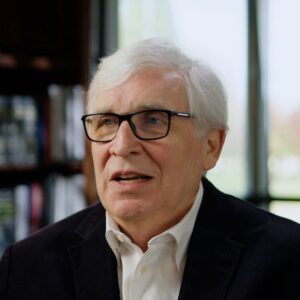 Michael Hackard is the founder of Hackard Law, a California trust and estate litigation firm with more than five decades of experience protecting the inheritance rights of families across Sacramento, the San Francisco Bay Area, and Los Angeles. He is the author of six published books on inheritance protection and has produced more than 1,000 educational videos with over seven million views.