


 (916) 313-3030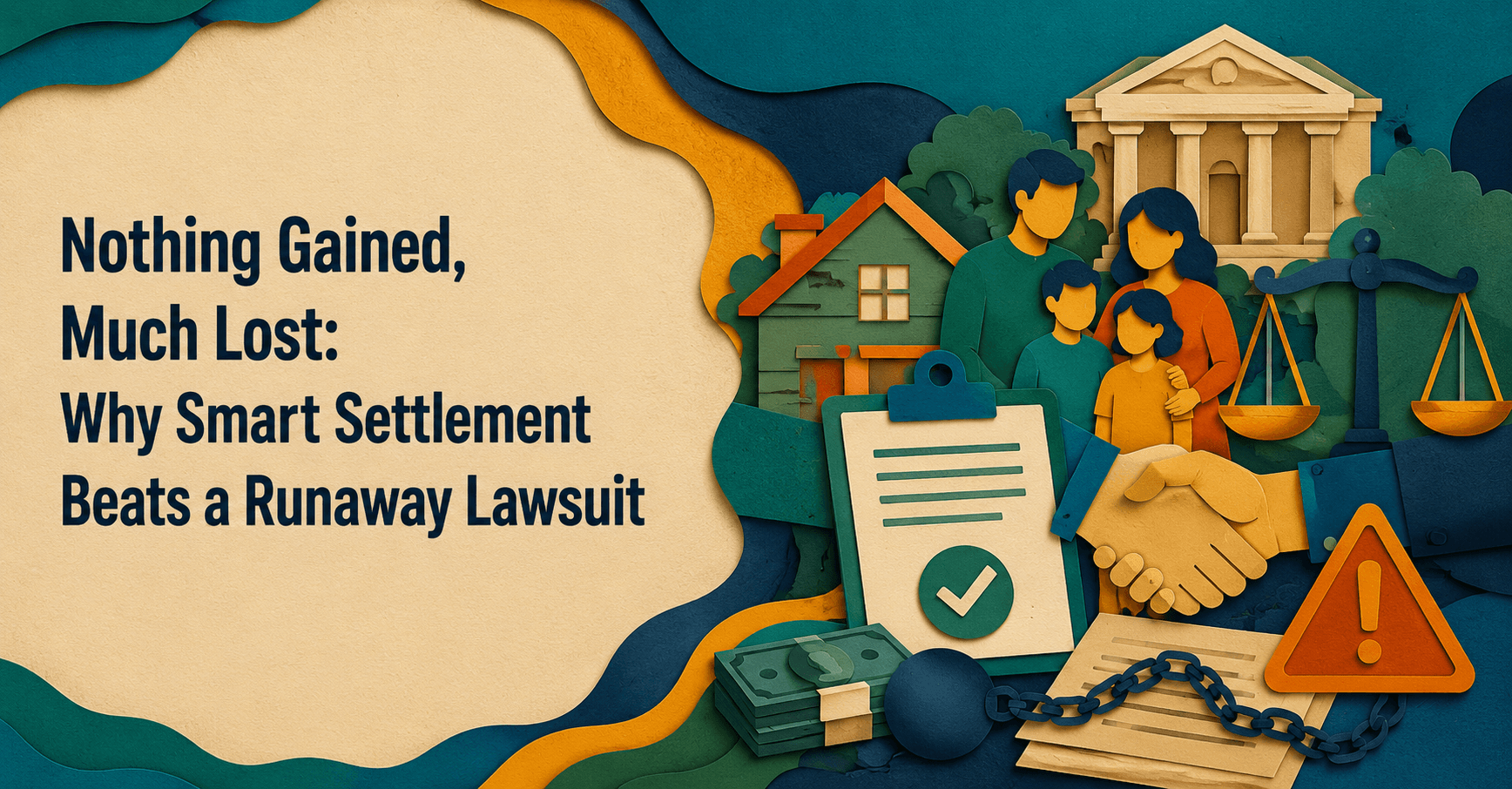
Nothing Gained, Much Lost: Why Smart Settlement Beats a Runaway Lawsuit

When Litigation Takes on a Life of Its Own
I am Michael Hackard, founder of Hackard Law. Over five decades of practice, I have fought for heirs, beneficiaries, and elder abuse victims across Sacramento, the San Francisco Bay Area, and Los Angeles. I have written four books on inheritance protection and produced more than 1,000 educational videos that have reached over seven million viewers. One phrase I return to again and again captures a hard truth about civil litigation: nothing gained, much lost.
That phrase describes what happens when a lawsuit stops being a tool for justice and becomes a consuming force of its own. Most people who find themselves in estate, trust, or elder financial abuse litigation have never experienced anything like it before. Once they do, very few call it enjoyable. What they call it, more often than not, is a necessary choice – one they made because someone took advantage of a vulnerable elder, manipulated a trust, or stole an inheritance that belonged to someone else.
The goal of litigation is resolution. It is not the litigation itself.
Hackard Law provides contingency fee representation – no upfront costs for qualified cases. If you believe you have a claim, call us at (916) 313-3030.
Quick Summary
Estate and trust litigation can be a very powerful weapon; however, there needs to be discipline in applying it. By knowing the outcome of cases, family members can avoid a lengthy fight.
- Most civil cases – roughly 97% – settle before trial.
- Courts facing backlogs from COVID-19 delays are actively encouraging early resolution.
- Undue influence on elders is one of the most common catalysts for estate and trust disputes.
- Pushing a case to trial without strong cause can produce a nothing-gained, much-lost outcome.
- Hackard Law focuses on significant cases where a meaningful financial recovery is achievable.
The Reality of Civil Litigation
Civil litigation is designed to resolve disputes between private parties – not to become anyone’s entire life. The common end goal is the recovery of money or real property. That recovery most often comes through a pretrial settlement, not a courtroom verdict.
Statistics bear this out. Approximately 97% of all civil cases are resolved before trial. Courts, already stretched thin on time and staff, actively encourage these settlements. In the aftermath of COVID-19, trial dates have been pushed further and further out. Whether the case calls for a bench trial or a jury, litigants in many California courts are waiting months – sometimes years – before their day in court arrives.
That delay makes all the difference. Moving forward without having an achievable way to get better is not a sign of determination; it only adds on to expenses, wastes energy, and might tear apart families beyond any legal settlement.
Undue Influence as the Catalyst
The use of undue influence against the old people is one of the most common causes that set off disputes involving estate and trusts. The breach of trust by the caregivers, relatives, or even the new spouse who influences the old people to alter the will or manipulate the trust or property becomes a very serious matter. The heirs who are aware of the manipulation are left with no choice but to take action.
They are right to act. But acting wisely matters as much as acting at all. California law provides meaningful remedies for these situations, including the possibility of double damages and attorney fee recovery in proven elder financial abuse cases. Early legal intervention can also preserve assets before they disappear.
Case Pattern: Isolation and Control
A pattern Hackard Law encounters involves an elder whose trusted caregiver gradually limits contact with adult children, then steers the elder toward estate changes that redirect assets to the caregiver. By the time family members recognize what happened, the elder has passed, and the trust has been rewritten. Early legal intervention – before the elder’s death – can sometimes reverse these transfers and hold the responsible party accountable.
Why Settlement Is Not Surrender
There is a persistent misconception that settling a case means giving up. That view misunderstands what litigation is for. A well-timed, well-negotiated settlement can return real property, restore financial accounts, and deliver justice without the uncertainty and expense of trial.
Mediations and settlements can often move faster than trial calendars allow. Courts are making it explicit that litigants with unresolved cases will wait – and that waiting has a cost. Hackard Law knows how to try cases. We also know how to settle them. Knowing the difference between a case worth pushing to verdict and one better resolved through skilled negotiation is not a weakness. It is the core of effective representation.
For beneficiaries navigating trustee misconduct, understanding when a trustee fails to account for assets is often the first step toward building a case with real leverage at the settlement table.
Case Pattern: The Delayed Distribution
This common pattern consists of a successor trustee delaying distributions, providing an inadequate accounting, and stonewalling beneficiary requests for months on end. Once a lawsuit is initiated and discovery starts, it comes to light that there have been some illegal transfers to the accounts of the trustee. The dispute is settled through mediation in favor of the beneficiaries.
Focusing on Cases That Matter
Hackard Law is selective. We focus on significant cases where we believe a substantial difference is achievable – cases where someone has been financially harmed and where the party responsible can be held accountable. That focus is not about turning away people in need. It is about bringing full commitment and resources to cases where the outcome can genuinely change a family’s future.
Elder financial exploitation takes many forms – caregiver manipulation, fraudulent transfers, predatory companions, and outright theft from trusts and estates. Each form demands a different legal strategy, and each requires an honest assessment of what litigation can realistically achieve.
For families dealing with caregiver financial exploitation, the question is not just whether a wrong was committed – it is whether the evidence, the assets, and the law align to produce a meaningful recovery.
The Human Stakes Behind Every Case
For years, I have been by the side of families who had their inheritance snatched away, whose old parents were swindled, and whose faith in justice has been challenged by the process of litigating their cases. I have witnessed what goes wrong when a case takes on a life of its own – the costs escalate, the stress strains relationships, and the fissure becomes too wide to be repaired through any ruling.
Discovery, forensic analysis, and the pursuit of justice – these are not just legal strategies, but safeguards for families threatened by undue influence and fraud. A steadfast commitment to truth restores what dishonesty tried to steal. That is the purpose of every case we take. Not the litigation itself, but what it can recover for the people who deserve it.
If you are concerned about elder financial abuse in an estate transfer, acting early is almost always better than waiting.
Key Definitions
- Undue influence: Pressure applied to an elder or vulnerable person that overcomes their free will and results in estate or financial changes that benefit the influencer.
- Pretrial settlement: A resolution reached between parties before a case proceeds to trial, often through negotiation or formal mediation.
- Mediation: A structured process in which a neutral third party helps disputing parties reach a voluntary agreement.
- Contingency fee representation: A fee arrangement in which the attorney is paid only if the case results in a recovery – no upfront cost to the client.
- Elder financial abuse: The illegal or improper use of an elder’s funds, property, or assets, often by someone in a position of trust.
- Trust beneficiary: A person entitled to receive distributions or benefits from a trust.
- Successor trustee: The person or institution named to manage a trust after the original trustee is unable or unwilling to serve.
- Fraudulent transfer: A transfer of assets made with the intent to defraud creditors or rightful heirs, which may be reversed by a court.
- Discovery: The pretrial phase in which parties exchange evidence, documents, and testimony relevant to the dispute.
- Civil litigation: The legal process by which private parties resolve disputes through the court system, typically seeking money damages or return of property.
What to Do Next
- Look for warning signs early – sudden changes to a will or trust, unexplained asset transfers, or isolation of an elder from family members.
- Get copies of relevant trust documents, account statements, and any correspondence with the trustee or estate administrator.
- Try to avoid waiting too long – There are California statutes of limitation that could render your claim barred by inaction.
- Look for an attorney who handles estate and trust litigation on a contingency fee basis so that upfront cost is not a barrier.
- Consider whether mediation might resolve the dispute faster than waiting for a trial date.
- Talk to an attorney about whether the facts of your case support a claim for elder financial abuse, which can carry enhanced remedies under California law.
- Review the contingency fee guide for California trust and estate litigation to understand your options before making any decisions.
- Call Hackard Law at (916) 313-3030 to discuss your situation with our team.
- Contact us through our contact page to schedule an appointment and get started on securing what your family deserves.
CALL THE SAGE | When Experience Matters, Families Listen
🏛️ We practice California trust & estate & elder financial abuse litigation
⚖️ We represent heirs, beneficiaries, and elder abuse victims
🎥 1,000+ educational videos | 7 million+ views | 4 published books
🎯 “After thousands of cases, I see the pattern others miss.”
CONTINGENCY REPRESENTATION – No Win, No Fee
Throughout California: Sacramento | Los Angeles | Bay Area
📞 CALL THE SAGE: (916) 313-3030
Subscribe for weekly insights on:
- Elder financial abuse warning signs and prevention
- Trust and estate litigation strategies
- Inheritance protection for California families
- Family protection strategies
When your inheritance is under attack, Call The Sage.
Hackard Law | 10640 Mather Blvd, Mather CA 95655
Attorney Advertisement | Michael Hackard, State Bar #71067
RELATED VIDEOS
The Wolf at the Door: Ep. 19 | Basics of Estate Litigation Strategy
Covers foundational strategy decisions every family faces when entering estate litigation.
Inheritance Heists Ch. 11: Blended Family Estate Fights – Litigation or Mediation?
Weighs the pros and cons of settling versus fighting blended family inheritance disputes.
Changes in California Estate Litigation: Elder Financial Abuse & Undue Influence
Explains how California law has evolved around undue influence and elder financial abuse claims.
Jury Trial vs. Bench Trial | CA Trust Litigation & Elder Financial Abuse
Breaks down the key differences between jury and bench trials in California trust cases.
Inheritance Heists Ch. 3: Contingency Advantages for Estate Litigation
Explains how contingency fee arrangements benefit families pursuing estate litigation claims.
The Cost of Elder Financial Abuse | California Estate & Trust Litigation
Examines the financial and personal toll elder financial abuse takes on victims and families.
 Michael Hackard is the founder of Hackard Law, a California trust and estate litigation firm with more than five decades of experience protecting the inheritance rights of families across Sacramento, the San Francisco Bay Area, and Los Angeles. He is the author of six published books and has produced more than 1,000 educational videos with over seven million views.