


 (916) 313-3030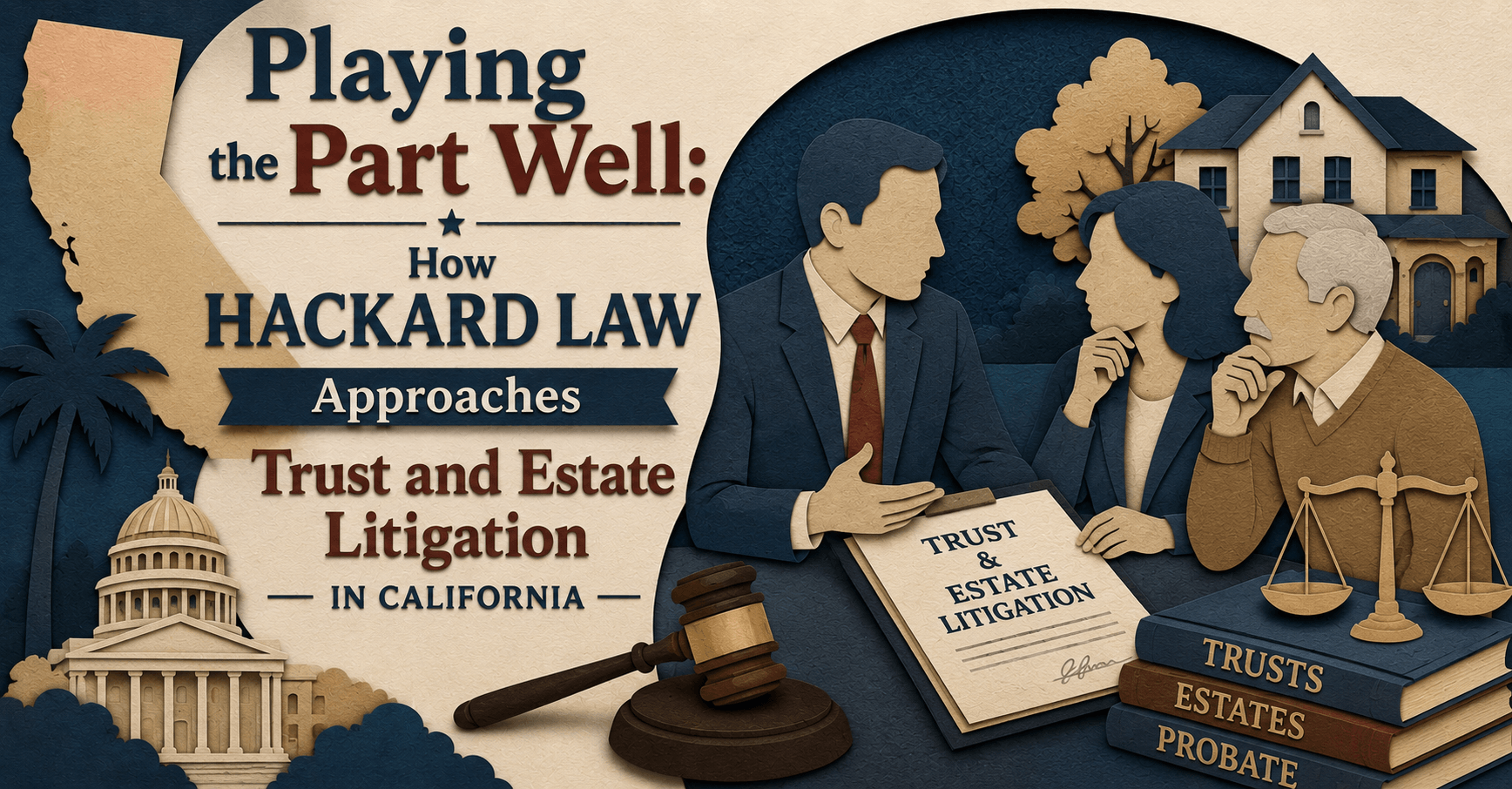
Playing the Part Well: How Hackard Law Approaches Trust and Estate Litigation in California
What It Means to Truly Advocate for a Client
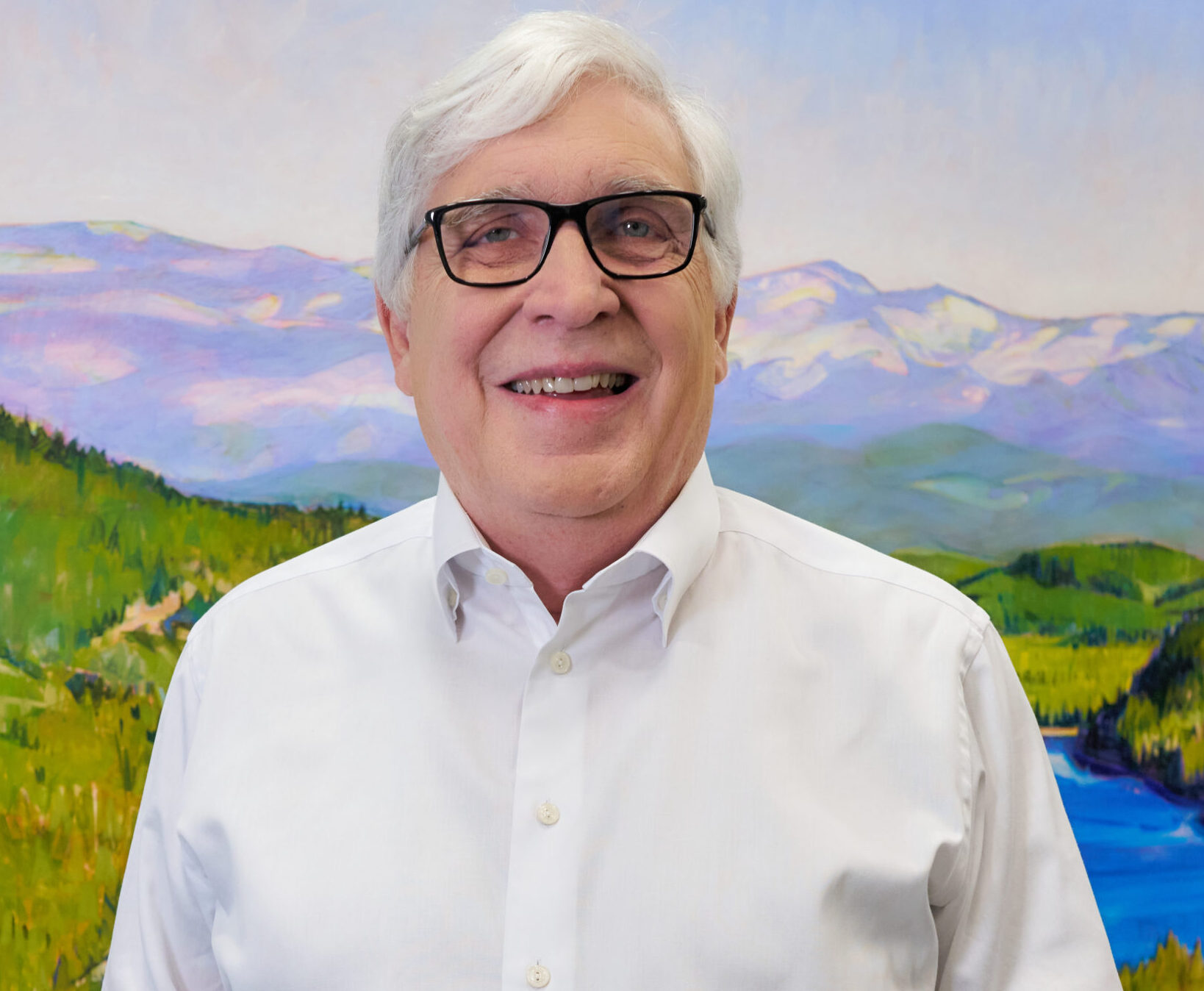
I’m Michael Hackard, founder of Hackard Law. Over five decades of practice, I have fought for heirs, beneficiaries, and elder abuse victims across California – from Sacramento and the San Francisco Bay Area to Los Angeles. I have written four books on inheritance protection, and our firm’s educational videos have reached more than seven million views across more than a thousand episodes. That reach matters to me because the families who find us are often facing the most difficult moments of their lives, and I want them to understand what real advocacy looks like before they ever pick up the phone.
Every case I take carries a standard I hold myself to: play the part well. Not just competently – well. That means excellence in advocacy, precision in legal strategy, and an unwavering commitment to the moral weight of what we do. Trust and estate litigation is not abstract. It involves real families, real inheritances, and real harm.
Hackard Law handles contingency fee representation for qualified cases – no upfront costs required. To discuss your situation, call us at (916) 313-3030.
Quick Summary
Trust and estate litigation demands mastery of three interlocking elements: the facts of what happened, the law that governs the dispute, and the proof needed to win. No single element is ever easy.
- Every case rests on facts, law, and proof – each presenting its own challenges
- Complex cases require a coordinated team of legal, financial, and medical professionals
- Losses teach more than victories – continuous improvement defines how Hackard Law operates
- Hackard Law litigates trust and estate cases throughout California on a contingency fee basis
- Early action protects beneficiaries and preserves evidence before it disappears
The Three Pillars of Every Trust and Estate Case
When I evaluate a new matter, I always return to the same framework: facts, law, and proof. These three pillars hold up every case – and any one of them can collapse a claim if handled poorly.
Facts can be clear or cloudy. In some disputes, the timeline is well-documented and the parties agree on what happened, even if they disagree on the legal outcome. In others, key events were hidden, records were altered, or witnesses have conflicting memories. Cloudy facts demand investigation, and that investigation takes time, resources, and skill.
California has complex laws pertaining to trusts and estates. Generalist lawyers frequently underestimate the complexity created by the interaction between probate code provisions and elder abuse law, as well as the evolution of statutes and court rulings. Even after working in this body of law for decades, I still approach every case as a student of it.
Proof is where cases are won or lost. Evidence can be elegantly simple – a document that says exactly what it means – or frustratingly elusive, buried in financial records, medical files, or the memories of reluctant witnesses. Gathering and presenting proof is the craft at the center of everything we do. You can learn more about how these stages unfold in the 8 stages of trust and estate litigation.
Litigation Is a Team Sport
No attorney wins complex trust and estate cases alone. Doing this work well requires a coordinated team, and assembling that team is part of playing the part well.
Accountants review financial histories, tracing transfers, identifying unexplained withdrawals, and reconstructing the economic picture of an estate. Physicians review medical records to assess a decedent’s capacity at the time documents were signed or assets were transferred. Mock trial consultants bring fresh eyes to the evidence, helping us understand how a judge or jury will receive the story we are telling.
Opposing counsel in these cases is often skilled and well-resourced. I am not searching for missing assets alone – I am doing it against smart lawyers who are working just as hard to protect their clients. That reality sharpens my preparation. It demands that every member of our team perform at their highest level.
Case Pattern: A family member serving as trustee had quietly transferred real property out of the trust over several years, claiming the transfers were authorized. A forensic accounting review and careful reading of the trust instrument revealed no such authority existed. The matter resolved in favor of the remaining beneficiaries after a thorough evidentiary presentation.
For families navigating these disputes, understanding what California beneficiaries can do when a trustee delays or mismanages distributions is an important first step.
What Defeat Teaches
Victory can be a poor teacher. When everything goes right, it is easy to assume the strategy was sound – but sometimes outcomes reflect luck, a weak opponent, or favorable facts that will not repeat. Defeat strips away that comfort.
I have always believed that the most important question after a difficult outcome is not who to blame, but what to learn. What went wrong? Was it the evidence we gathered, the theory we advanced, the way we told the story? How do we fix it? How do we get better?
This commitment to honest self-assessment is part of what I mean when I say I want to play the part well. Excellence is not a destination – it is a discipline. Every case at Hackard Law is an opportunity to improve, and I take that seriously. Families who trust us with their most important legal matters deserve nothing less.
Case Pattern: After a contested trust matter produced an outcome short of what the client deserved, a thorough review of the litigation record revealed that earlier discovery requests had not captured key communications. Revised protocols in subsequent cases led to more complete document production and stronger evidentiary foundations.
Review the most common probate, trust, and estate battles in California to understand the landscape your case may be entering.
Why Playing the Part Well Matters to Families
For decades, I have stood with families at some of the hardest moments they will ever face. An inheritance stolen by undue influence. A trustee who treated the trust as a personal account. An elder whose financial vulnerability was exploited by someone they trusted. These are not abstract legal problems – they are wounds.
Discovery, forensic analysis, and the pursuit of justice are not just legal strategies, but safeguards for families threatened by manipulation and fraud. When I commit to playing the part well, I am committing to the idea that the legal system can restore what dishonesty tried to steal – and that families deserve an advocate who approaches that mission with everything they have.
The financial toll grows when disputes are delayed. The fracture in family relationships often runs too deep for any judgment to mend. A steadfast commitment to truth, preparation, and teamwork is the only answer I know. That is what Hackard Law brings to every case we accept. Families across California – from Los Angeles to Santa Clara – have trusted us with that mission, and we do not take it lightly.
Key Definitions
- Facts: The underlying events, transactions, and circumstances that give rise to a trust or estate dispute – including what was done, by whom, and when.
- Law: The statutes, case decisions, and legal standards that govern how a court will evaluate the facts – in California, primarily the Probate Code and elder abuse statutes.
- Proof: The evidence presented to establish the facts – documents, financial records, medical records, testimony, and experienced attorney analysis.
- Trustee: The individual or institution appointed to manage trust assets according to the trust instrument and California law.
- Beneficiary: A person entitled to receive distributions from a trust or estate.
- Forensic accounting: A financial analysis method used to trace asset movements, identify irregularities, and reconstruct financial histories in litigation.
- Capacity: The legal and cognitive ability of a person to execute a valid estate planning document at the time it was signed.
- Undue influence: Pressure or manipulation that overcomes the free will of a vulnerable person, often used to change estate documents in favor of the influencer.
- Contingency fee: A fee arrangement in which the attorney is paid only if the case is successfully resolved – no upfront cost to the client.
- Discovery: The pre-trial process through which parties exchange documents, answer written questions, and take depositions to gather evidence.
What to Do Next
- Look for warning signs early – unexplained asset transfers, sudden changes to estate documents, or a trustee who refuses to communicate.
- Get copies of the trust, any amendments, and recent financial statements as soon as possible.
- Try to avoid confronting the suspected party directly before speaking with an attorney, as this can complicate the legal process.
- Write down everything you remember about relevant conversations, events, and dates while the details are fresh.
- Look for a California trust and estate litigation attorney who handles complex cases and offers contingency fee representation – the contingency fee guide at Hackard Law is a helpful starting point.
- Try to avoid signing any documents related to the estate or trust without legal review.
- Understand that time limits apply – California law imposes deadlines on trust contests and elder abuse claims that can bar recovery if missed.
- Learn your rights as a beneficiary by reviewing five things California trust beneficiaries must know.
- Call Hackard Law at (916) 313-3030 to discuss your case with an attorney who has spent five decades litigating these matters.
- Visit our contact page to request a free consultation online.
CALL THE SAGE | When Experience Matters, Families Listen
🏛️ We practice California trust & estate & elder financial abuse litigation
⚖️ We represent heirs, beneficiaries, and elder abuse victims
🎥 1,000+ educational videos | 7 million+ views | 4 published books
🎯 “After thousands of cases, I see the pattern others miss.”
CONTINGENCY REPRESENTATION – No Win, No Fee
Throughout California: Sacramento | Los Angeles | Bay Area
📞 CALL THE SAGE: (916) 313-3030
Subscribe for weekly insights on:
- Elder financial abuse warning signs and prevention
- Trust and estate litigation strategies
- Inheritance protection for California families
- Family protection strategies
When your inheritance is under attack, Call The Sage.
Hackard Law | 10640 Mather Blvd, Mather CA 95655
Attorney Advertisement | Michael Hackard, State Bar #71067
RELATED VIDEOS
Our Job is to Protect Your Family | Estate & Trust Litigation Attorneys
Hackard Law explains its commitment to protecting families through trust and estate litigation.
CA Trust & Estate Litigation | Making Your Case
What it takes to build and present a strong trust or estate litigation case in California.
Exploring the Facts | Los Angeles Estate & Trust Litigation
How attorneys investigate and uncover the facts that drive estate and trust disputes.
Trust & Estate Litigation | Perseverance and Vision
The mindset and long-term dedication required to succeed in complex trust litigation.
Trust & Estate Litigation | The Art of Listening
Why truly hearing a client’s story is foundational to effective estate litigation advocacy.
Trust & Estate Litigation | From A to Z
A comprehensive overview of the trust and estate litigation process from start to finish.
 Michael Hackard is the founder of Hackard Law, a California trust and estate litigation firm with more than five decades of experience protecting the inheritance rights of families across Sacramento, the San Francisco Bay Area, and Los Angeles. He is the author of six published books on inheritance protection and has produced more than 1,000 educational videos with over seven million views.