


 (916) 313-3030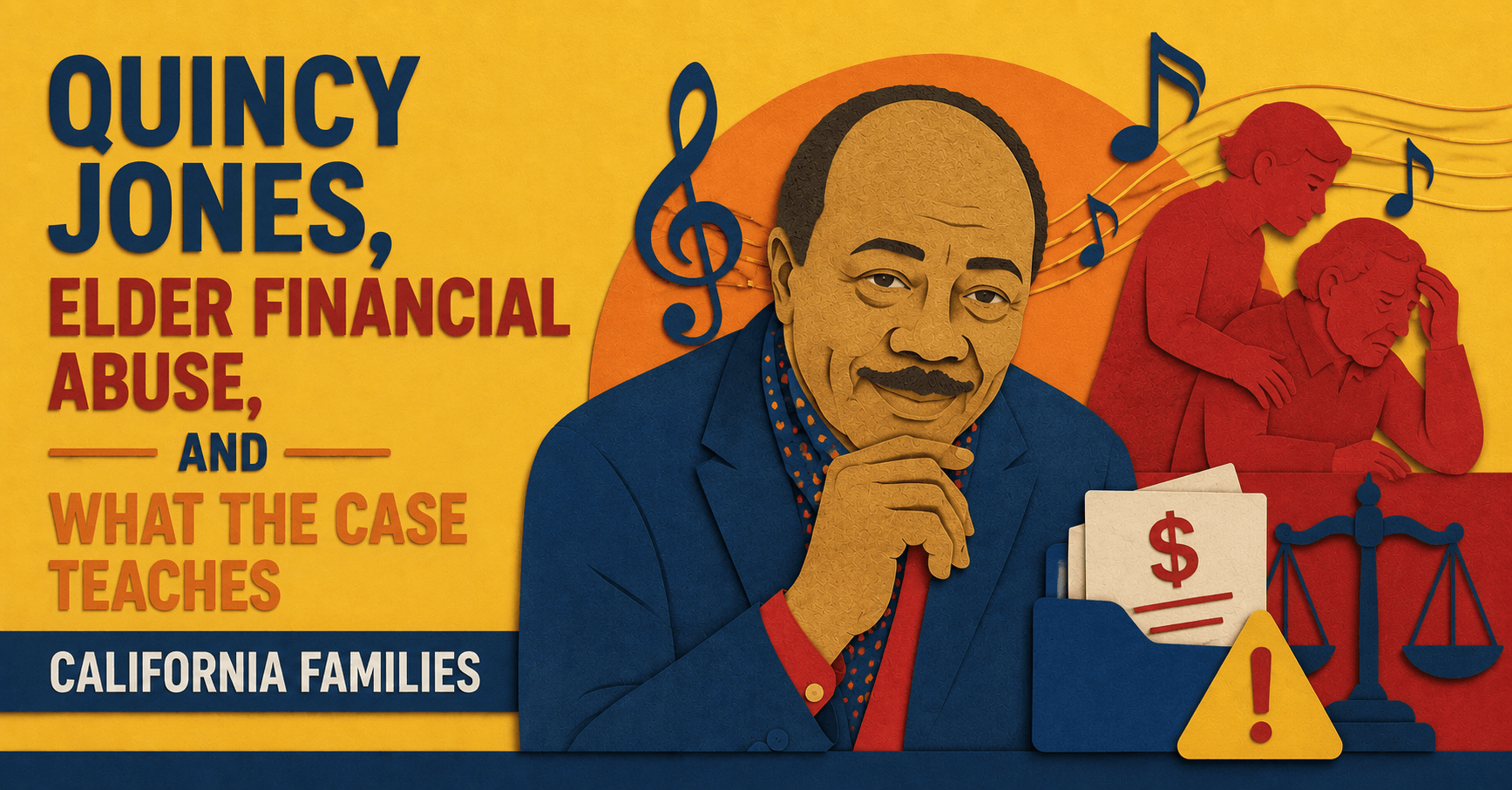
Quincy Jones, Elder Financial Abuse, and What the Case Teaches California Families

When Cognitive Decline Opens the Door to Financial Exploitation
I am Michael Hackard, founder of Hackard Law. Over five decades of practice, I have fought for heirs, beneficiaries, and elder abuse victims across California – from Sacramento and the San Francisco Bay Area to Los Angeles. I have written four books on inheritance protection and produced more than 1,000 educational videos that have reached over seven million viewers. In that time, I have watched elder financial abuse grow from a quiet concern into one of the most urgent legal issues facing California families.
California’s population of adults 65 and older now exceeds five million people – roughly 14 percent of the state’s residents. That is a large and vulnerable population. When cognitive abilities begin to decline, seniors’ financial decisions can become targets for manipulation, coercion, and outright theft. The consequences are rarely small. I have seen cases where the amounts at issue run into the millions of dollars, and cases where a senior nearly lost a home worth hundreds of thousands for a price of two thousand dollars.
Hackard Law provides contingency fee representation – no upfront costs for qualified elder financial abuse cases. If you believe a loved one has been exploited, call us at (916) 313-3030.
Quick Summary
Elder financial abuse in California often hinges on a senior’s diminished financial capacity – their ability to understand, manage, and protect their own assets. Courts and clinicians rely on established frameworks to evaluate that capacity.
- California seniors over 65 represent more than 5 million people, many at risk of financial exploitation
- Financial capacity is assessed through knowledge, skills, and judgment – all of which can erode with cognitive decline
- Signs of diminished capacity include selling assets far below value, vulnerability to fraud, and inability to resist coercion
- Early legal intervention is often the difference between recovering assets and losing them permanently
- Hackard Law litigates elder financial abuse cases in Sacramento, the Bay Area, and Los Angeles
The ABA-APA Framework for Financial Capacity
In 2005, the American Bar Association and the American Psychological Association published a handbook titled Assessment of Older Adults with Diminished Capacity: A Handbook for Lawyers. It remains widely used today. The handbook provides clinicians and attorneys with a structured way to evaluate whether a senior had the financial capacity to make a given decision.
The framework focuses on two intersecting dimensions: cognitive functioning and functional behavior. Cognitive functioning includes attention, memory, the ability to understand and express information, and the capacity to reason, organize, and plan. Functional behavior refers to whether the senior can actually perform the financial tasks in question – not just understand them in the abstract.
For a deeper look at how cognitive decline creates vulnerability to manipulation, the resource on why seniors with cognitive decline are prime targets for manipulation in California covers this territory in detail.
Knowledge, Skills, and Judgment: The Three Pillars
The handbook’s model of financial capacity rests on three pillars. The first is knowledge – the ability to describe facts, concepts, and events related to financial activities. This includes understanding currency, reading bank statements, and having a basic grasp of investments and personal financial data.
The second pillar is skills – the practical ability to carry out financial procedures. Writing a check, making change, managing routine transactions: these are the mechanics of financial life. A senior who can describe what a bank account is but can no longer manage one may still be at risk.
The third pillar is judgment – the ability to make sound financial decisions in ambiguous or novel situations. This is where exploitation most often takes hold. Judgment includes sensitivity to fraud, resistance to coercion, and the ability to make prudent investment decisions. When judgment erodes, even a senior with intact memory can be led into a devastating financial transaction.
Case Pattern: A senior with mild cognitive decline was persuaded by a neighbor to enter a real estate transaction at a price far below market value. The senior believed the deal was fair – even advantageous. Legal intervention stopped the transfer before it was completed, preserving the asset for the senior’s family.
What Diminished Capacity Looks Like in Real Cases
Sacramento County and the surrounding area are among the major urban counties in California where Hackard Law litigates trust, estate, and elder financial abuse cases. While factual patterns vary, some themes recur.
Some seniors sell assets for a small fraction of their actual value while genuinely believing they are making a smart deal. I have personally helped stop a transaction in which a senior was prepared to sell his home to a neighbor for $2,000 – the senior believed the home was worth only $1,000, when in reality it was worth several hundred times the proposed purchase price. The gap between perception and reality in that case was not a matter of dishonesty on the senior’s part. It was a window of vulnerability that someone else tried to exploit.
Other cases involve millions of dollars in trust assets, investment accounts, or real property transferred through undue influence, forged documents, or manufactured estate plans. For families navigating these situations, early legal intervention in estate transfers can mean the difference between recovery and permanent loss.
Case Pattern: After a parent was diagnosed with early-stage dementia, an adult child with power of attorney started transferring the parent’s investment income into personal accounts. A forensic accounting review found years of unapproved transfers. Under California’s elder abuse laws, the family sought civil remedies, including double damages.
California’s Legal Remedies for Elder Financial Abuse
California law provides meaningful tools for families who act. Under the Elder Abuse and Dependent Adult Civil Protection Act, successful claimants may recover not only the assets taken but also attorney’s fees and, in egregious cases, double damages. These remedies exist precisely because the legislature recognized that elder financial abuse is not just a civil wrong – it is a betrayal of trust that deserves an elevated response.
The civil remedies available for elder financial abuse – including double damages and asset recovery – are among the most powerful tools in California elder law. Families who wait too long, however, may find that assets have been dissipated, transferred to third parties, or otherwise placed beyond reach.
The Sacramento elder financial abuse practice at Hackard Law is built around these statutory remedies and the litigation strategies needed to enforce them. Cases often require forensic accounting, medical record review, and witness examination to establish both the exploitation and the diminished capacity that made it possible.
Key Definitions
- Financial capacity: The legal and cognitive ability to understand, manage, and make decisions about one’s own financial affairs.
- Cognitive functioning: Mental processes including attention, memory, reasoning, and the ability to understand and communicate information.
- Functional behavior: The practical ability to perform specific financial tasks, such as writing checks, managing accounts, or evaluating transactions.
- Knowledge (financial capacity): The ability to describe facts and concepts related to financial activities, including currency, bank statements, and investments.
- Skills (financial capacity): The ability to carry out practical financial procedures and routines in daily life.
- Judgment (financial capacity): The ability to make sound decisions in ambiguous or novel financial situations, including resistance to fraud and coercion.
- Undue influence: Pressure or manipulation that overcomes a person’s free will, often used to exploit seniors with diminished capacity.
- Elder Abuse and Dependent Adult Civil Protection Act: California statute providing civil remedies – including double damages and attorney’s fees – for financial abuse of seniors.
- Diminished capacity: A reduced ability to understand, reason, or make decisions, often associated with aging, dementia, or other cognitive conditions.
- Contingency fee representation: A fee arrangement in which the attorney is paid only if the case is successfully resolved, with no upfront cost to the client.
What to Do Next
- Look for warning signs: unusual financial transactions, large gifts, changes to estate documents, or a senior who seems confused about the value of their assets.
- Get copies of any recent trust amendments, deeds, or account changes as early as possible – documents can disappear.
- Look into whether a power of attorney has been used to make transfers the senior would not have authorized with full capacity.
- Try to avoid confronting the suspected exploiter directly before speaking with an attorney – early missteps can complicate litigation.
- Reach out to the senior’s physician or care team if cognitive decline is a concern; medical records are often central to these cases.
- Review the resources on guarding against elder financial abuse in California trust litigation and the broader elder financial exploitation guide to understand your options.
- Look into whether the case involves probate court proceedings – Sacramento County probate litigation may be the right venue for certain claims.
- Try to act before assets are further dissipated; time is often the most critical factor in recovery.
- Call Hackard Law at (916) 313-3030 to discuss your situation with an attorney who handles these cases across California.
- Visit our contact page to reach us online and schedule a consultation.
CALL THE SAGE | When Experience Matters, Families Listen
🏛️ We practice California trust & estate & elder financial abuse litigation
⚖️ We represent heirs, beneficiaries, and elder abuse victims
🎥 1,000+ educational videos | 7 million+ views | 4 published books
🎯 “After thousands of cases, I see the pattern others miss.”
CONTINGENCY REPRESENTATION – No Win, No Fee
Throughout California: Sacramento | Los Angeles | Bay Area
📞 CALL THE SAGE: (916) 313-3030
Subscribe for weekly insights on:
- Elder financial abuse warning signs and prevention
- Trust and estate litigation strategies
- Inheritance protection for California families
- Family protection strategies
When your inheritance is under attack, Call The Sage.
Hackard Law | 10640 Mather Blvd, Mather CA 95655
Attorney Advertisement | Michael Hackard, State Bar #71067
RELATED VIDEOS
The Case of Stan Lee | Elder Financial Abuse?
Examines whether the legendary comic creator was financially exploited in his final years.
Changes in California Estate Litigation: Elder Financial Abuse & Undue Influence
Breaks down how California law has evolved to address financial exploitation of older adults.
The Cost of Elder Financial Abuse | California Estate & Trust Litigation
Explores the real financial and personal toll elder financial abuse takes on victims and families.
How Does a Lawyer Enforce Elder Financial Abuse Law? | CA Trust Litigation
Explains the legal tools California attorneys use to pursue elder financial abuse claims in court.
Common Signs of Elder Financial Abuse | Estate & Trust Lawsuits
Walks through the warning signs that money or assets are being taken from an older adult.
How to Protect Families from Elder Financial Abuse | CA Trust Litigation
Offers practical steps California families can take to guard against financial exploitation of elders.
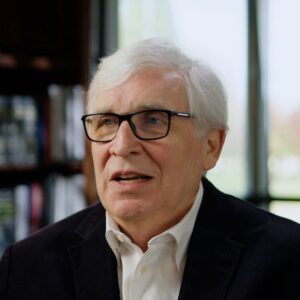 Michael Hackard is the founder of Hackard Law, a California trust and estate litigation firm with more than five decades of experience protecting the inheritance rights of families across Sacramento, the San Francisco Bay Area, and Los Angeles. He is the author of six published books on inheritance protection and has produced more than 1,000 educational videos with over seven million views.