


 (916) 313-3030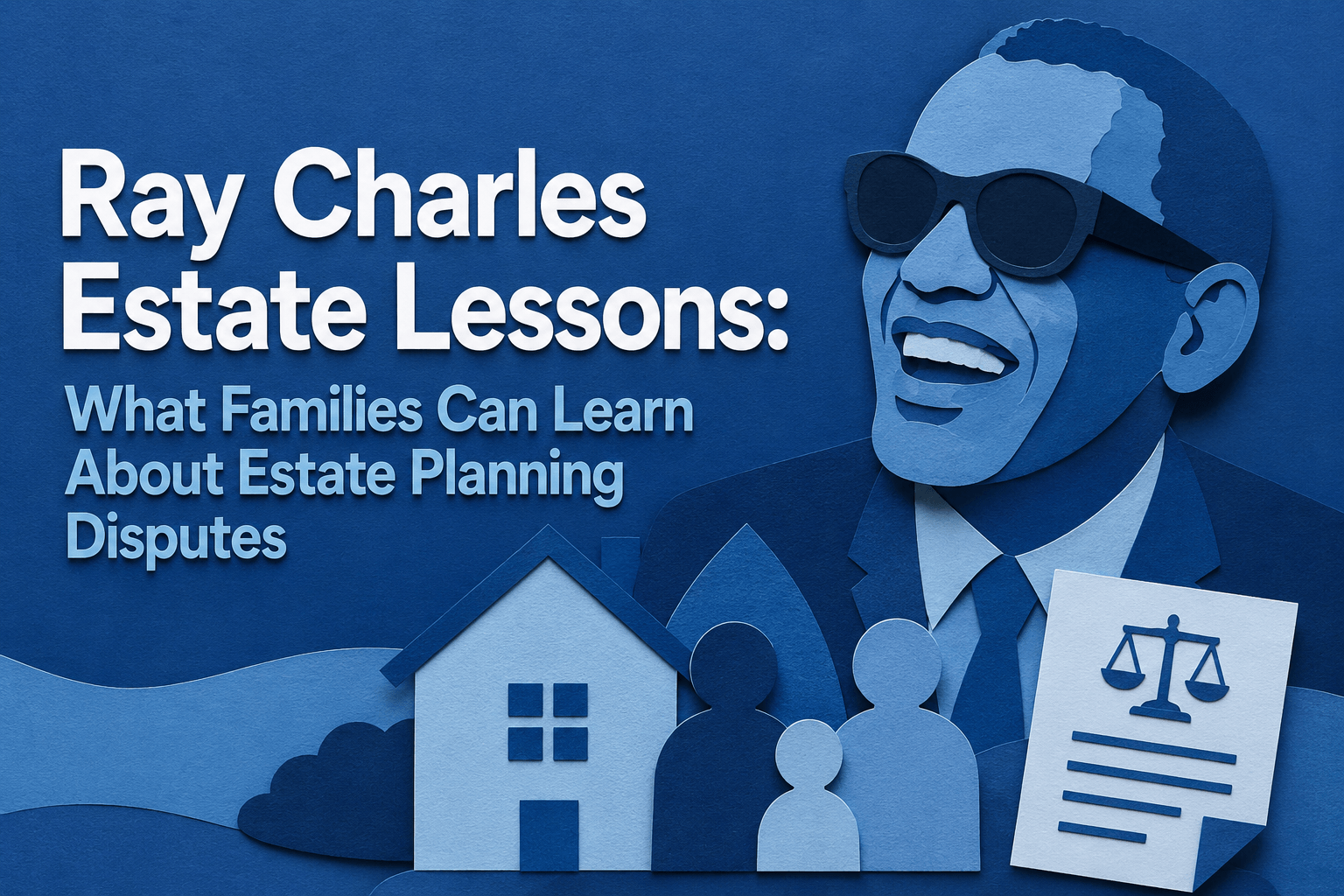
Ray Charles Estate Lessons: What Families Can Learn About Estate Planning Disputes

Introduction: A Legend’s Estate and the Battles That Followed
I am Michael Hackard, founder of Hackard Law. Over five decades of practice, I have fought for heirs, beneficiaries, and elder abuse victims across California – from Sacramento and the San Francisco Bay Area to Los Angeles. I have written four published books on inheritance protection and produced more than 1,000 educational videos that have reached over seven million viewers. I share these stories not to entertain, but because the patterns in high-profile estate disputes mirror what ordinary California families face every day.
The Ray Charles estate is one of the most instructive examples I have encountered. Charles was a towering figure in American music, and by his death in 2004 at age 73, he had built an estate worth roughly $100 million. He made visible efforts to plan ahead. He gathered his twelve children – fathered with ten different women – and told them what he intended. And yet, decades of litigation followed. The lessons here are not about fame or fortune. They are about documentation, fiduciary accountability, and the gap between what a person intends and what the law can enforce.
Hackard Law takes qualified estate and trust litigation cases on a contingency fee basis – no upfront costs to you. To discuss your situation, call us at (916) 313-3030.
Quick Summary
Ray Charles attempted to communicate his estate plan before he died, but gaps in documentation and trustee conflicts fueled litigation that lasted more than fifteen years.
- Charles announced plans to leave most assets to his charitable foundation, with each child receiving $500,000 in trust
- Children disagreed on what was promised at the 2002 family meeting, which was never documented
- A minor child’s mother sued for greater child support from the estate; the probate court ruled against her
- Multiple children sued the foundation over promised roles and royalty proceeds
- Trustee and foundation director Joe Adams faced escalating legal challenges until his death in 2018
What Ray Charles Tried to Do Right
In 2002, as his health was declining, Charles gathered his children and laid out his plan. Most of his assets would go to a charitable foundation he had established to support the deaf, the poor, and youth. Each child would receive $500,000 placed in trust, paid out over five years. By most standards, this was a thoughtful gesture – a man trying to prevent conflict before it started.
The meeting was not recorded, which was the issue. Some kids departed thinking they would get $1 million apiece. Beyond the trust distributions, others anticipated more inheritances. Courts are left to resolve conflicting memories when people hear different things in the same room, and nothing is recorded. For all the family members involved, that sorting process is costly, time-consuming, and painful.
Proper estate planning communication – including written summaries of family meetings and clear legal documentation – is not a formality. It is the difference between a plan that holds and one that collapses under the weight of competing claims.
The Child Support Dispute and Probate Court
One of the first legal challenges to the Charles estate came from the mother of his youngest son, then seventeen years old. She argued that the child had been receiving only $3,000 per month in support – a figure she called disproportionate given an estate valued at $100 million. She sought $60,000 per month.
After a year of litigation, a probate judge ruled against her. The outcome may have been legally sound, but the case illustrates how an estate’s value creates its own gravitational pull. When the numbers are large, the perceived unfairness of any distribution grows proportionally. Families and former partners who might have accepted modest arrangements during a person’s lifetime often reassess once the full picture of the estate comes into view.
For California families navigating probate litigation, this dynamic is common. The estate’s value changes the calculus for everyone involved.
Case Pattern: A probate claim is filed by a family member who received informal financial support during the parent’s lifetime, claiming the support was insufficient given the size of the estate. The court finds no legal justification for overriding the recorded estate plan after protracted litigation, but the process takes years and substantial estate resources.
Trustee Conflicts and the Royalty Problem
The deeper and more lasting dispute in the Charles estate involved Joe Adams, who served simultaneously as director of the Ray Charles Foundation and trustee of the Children’s Trust. That dual role created an inherent tension. The foundation’s interests and the children’s interests were not always aligned – and the person responsible for managing both wore two hats.
The financial stakes increased six years after Charles’s passing because recordings continued to bring in sizable royalties. Youngsters who had been promised a significant part in the foundation’s future were left out of decisions that had an impact on their inheritance. New legal issues emerged, the litigation intensified, and the disputes reportedly persisted even after Adams passed away in 2018.
This is a pattern Hackard Law litigates in California courts. When a trustee holds conflicting roles – or when a trustee’s loyalty to one party compromises duties owed to beneficiaries – the law provides remedies. California beneficiaries have rights when a trustee delays, withholds, or mismanages distributions, and understanding what beneficiaries can do when a trustee delays is the first step toward protecting an inheritance.
Case Pattern: A trustee who also manages a related entity makes decisions that benefit the entity at the expense of trust beneficiaries. Beneficiaries eventually bring a breach of fiduciary duty claim. The court finds that the dual role created an impermissible conflict of interest, and the trustee is required to account for years of distributions.
Poor Drafting and Undocumented Promises
Michael Hackard identifies two structural failures in the Charles estate that are entirely preventable. First, the family meeting in 2002 produced no written record. A simple memorandum summarizing what was communicated – signed by the attorney present, if not by the children – would have dramatically narrowed the scope of later disputes. Second, the trust and foundation documents apparently did not anticipate the scale of ongoing royalty income or define clearly how those revenues would be managed for the benefit of beneficiaries.
Poor drafting by an estate planning attorney is one of the leading causes of courtroom battles in California. Ambiguous language, undefined roles, and failure to account for future assets – like royalties or digital income – leave families exposed. The cost of fixing a poorly drafted trust in litigation is almost always far greater than the cost of drafting it correctly in the first place.
For estates with ongoing income streams, whether from music royalties, business interests, or digital assets, the planning documents must address how those assets are managed long after the original owner is gone.
The Eight Stages That Followed
The Ray Charles estate litigation did not resolve in a single proceeding. It moved through multiple courts, produced rulings that sent issues back for further litigation, and stretched across more than fifteen years. This is not unusual in complex estate disputes. Understanding the eight stages of trust and estate litigation helps families recognize where they are in a dispute and what lies ahead.
For decades, I have stood with families who entered litigation not knowing what to expect and found themselves years into a process that consumed time, money, and relationships. The financial toll grows with every year of unresolved conflict. The fracture among the Charles children – some suing the foundation, others navigating competing claims – often runs too deep for any judgment to mend. Discovery, forensic analysis, and the pursuit of accountability are not just legal strategies, but safeguards for families threatened by mismanagement and broken promises. A steadfast commitment to truth restores what dishonesty tried to steal.
Key Definitions
- Charitable foundation: A legal entity established to manage assets for philanthropic purposes; a settlor may direct that estate assets flow to a foundation rather than directly to heirs.
- Trustee: A person or institution with a legal duty to manage trust assets for the benefit of named beneficiaries.
- Dual role conflict: A situation in which one person serves as trustee for beneficiaries and also controls a related entity, creating competing loyalties.
- Probate court: The court with jurisdiction over estate administration, will contests, and disputes involving decedents’ assets.
- Royalty income: Ongoing payments generated by intellectual property such as music recordings; royalties may continue generating revenue long after a creator’s death and must be addressed in estate documents.
- Undocumented promise: A verbal representation about an inheritance that was never reduced to writing and therefore cannot be enforced as a legal obligation.
- Breach of fiduciary duty: A trustee’s failure to act in the best interests of beneficiaries, including self-dealing or prioritizing personal interests over those of the trust.
- Contingency fee representation: A fee arrangement in which the attorney is paid from any recovery, with no upfront cost to the client; see how contingency fees bridge the representation gap.
- Child support claim in probate: A legal action brought against a decedent’s estate seeking support payments for a minor child, adjudicated by a probate court.
- Estate plan documentation: The written legal instruments – including trusts, wills, and memoranda – that define how assets are distributed and who holds authority over them.
What to Do Next
- Look for any verbal promises about your inheritance and try to get them documented in writing as soon as possible.
- Get copies of all trust and estate documents you are entitled to receive as a beneficiary.
- Look for signs of dual-role conflicts – a trustee who also manages a foundation or business connected to the estate.
- Try to avoid delay in raising concerns about trustee conduct; California law has deadlines that affect beneficiary claims.
- Look for documentation of any family meetings where estate plans were discussed; notes, emails, or attorney summaries can be critical evidence.
- Get copies of any trust accounting you are owed as a beneficiary; unexplained gaps in royalty or income reporting are a warning sign.
- Try to avoid assuming that a verbal promise from a parent or settlor will be enforceable – put everything in writing.
- Look into whether your situation qualifies for contingency fee representation through Hackard Law’s practice areas.
- Call Hackard Law at (916) 313-3030 to discuss your estate or trust dispute with an attorney who has fought these battles for five decades.
You can also reach us through our contact page to schedule a confidential consultation.
CALL THE SAGE | When Experience Matters, Families Listen
🏛️ We practice California trust & estate & elder financial abuse litigation
⚖️ We represent heirs, beneficiaries, and elder abuse victims
🎥 1,000+ educational videos | 7 million+ views | 4 published books
🎯 “After thousands of cases, I see the pattern others miss.”
CONTINGENCY REPRESENTATION – No Win, No Fee
Throughout California: Sacramento | Los Angeles | Bay Area
📞 CALL THE SAGE: (916) 313-3030
Subscribe for weekly insights on:
• Elder financial abuse warning signs and prevention
• Trust and estate litigation strategies
• Inheritance protection for California families
• Family protection strategies
When your inheritance is under attack, Call The Sage.
Hackard Law | 10640 Mather Blvd, Mather CA 95655
Attorney Advertisement | Michael Hackard, State Bar #71067
RELATED VIDEOS
Trustee Duties and Accountability in Multi-Generational Trust Planning | Hackard Law
Explains what trustees owe beneficiaries across generations of family trust planning.
Successor Trustee Disputes: When Siblings Battle for Control of the Family Trust
Covers how sibling conflicts over trust control escalate into costly legal battles.
Problem Trustee Removal | Damages and Forcing Inheritance Distribution
Walks through how beneficiaries can remove a trustee and recover inheritance distributions.
Trustee Accountability | When Requests for an Accounting Fail
Examines what happens when a trustee refuses to provide a proper accounting.
Family Home Estate Disputes | Fortune and Misfortune
Looks at how estate disputes over family assets can divide heirs for years.
Business Succession Myths That Could Destroy Your Family Legacy
Debunks common misconceptions that leave family legacies vulnerable after an owner dies.
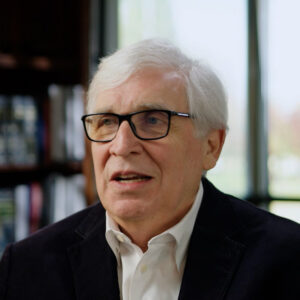 Michael Hackard is the founder of Hackard Law, a California trust and estate litigation firm with more than five decades of experience protecting the inheritance rights of families across Sacramento, the San Francisco Bay Area, and Los Angeles. He is the author of four published books on inheritance protection and has produced more than 1,000 educational videos with over seven million views.