


 (916) 313-3030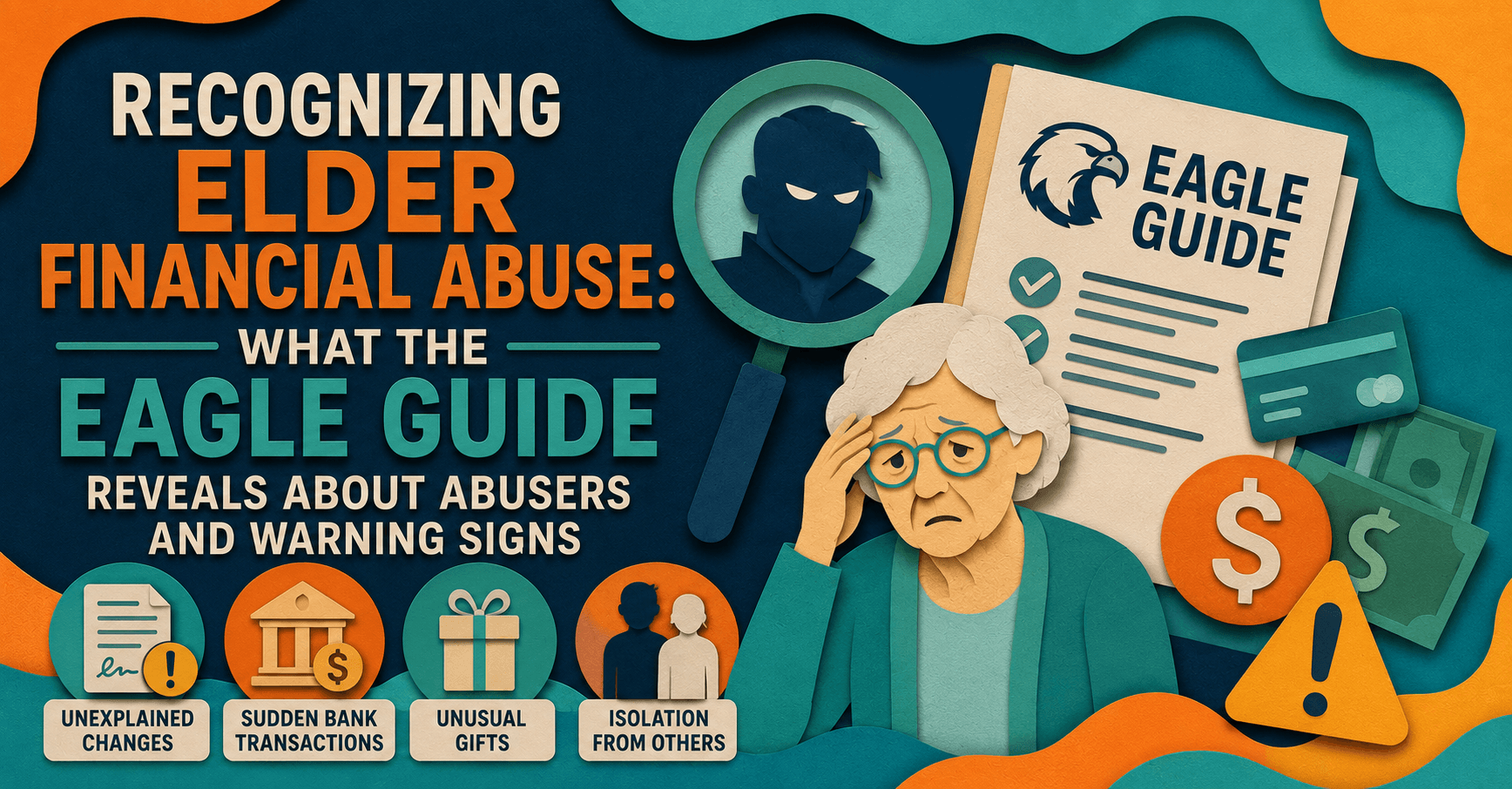
Recognizing Elder Financial Abuse: What the EAGLE Guide Reveals About Abusers and Warning Signs

Introduction: A National Guide That Civil Attorneys Use Too
I am Michael Hackard, founder of Hackard Law. Over five decades of practice, I have fought for heirs, beneficiaries, and elder abuse victims across California – from Los Angeles and the San Francisco Bay Area to Sacramento. I have authored four books on inheritance protection and produced more than 1,000 educational videos that have reached over seven million viewers. Elder financial abuse is one of the most urgent legal battles I witness, and it is one that too many families do not recognize until it is too late.
The Elder Abuse Guide for Law Enforcement – known as EAGLE – is a national web module funded by the United States Department of Justice and directed by the University of Southern California’s Keck School of Medicine, which also hosts the National Center on Elder Abuse. Although EAGLE was designed for law enforcement, its insights into identifying abusers and recognizing warning signs are equally valuable to civil attorneys and the families we serve.
Hackard Law provides contingency fee representation for qualified elder financial abuse cases – no upfront costs to you. To speak with us about your situation, call (916) 313-3030.
Quick Summary
The EAGLE guide defines elder financial abuse, identifies who commits it, and lists concrete warning signs that families and attorneys can use to take action before it is too late.
- According to EAGLE, financial abuse of elders involves using the resources of an elder contrary to their wishes, needs, or best interests.
- Most abuse is committed by family members, caregivers, or professionals in positions of trust.
- Warning signs include abrupt changes in wills, unauthorized withdrawals, and sudden asset transfers.
- Undue influence through powers of attorney, trusts, and marriage is a primary legal mechanism of abuse.
- Civil remedies in California can include double damages and attorney’s fee recovery.
What EAGLE Says About Elder Financial Abuse
According to EAGLE, financial elder abuse involves the use of an elderly individual’s money or property, like his/her retirement fund, house, or social security checks, against his/her wishes and needs or to benefit the abuser. This definition can be considered a precise description of the civil cases that Hackard Law handles in the California courts.
EAGLE also speaks to undue influence, which is when an individual of confidence abuses and uses his or her leverage over a vulnerable elderly person in order to obtain control over his or her finances, properties, or life, whether direct manipulation or through the use of power of attorney, trusts, marriages, adoptions, or inheritance. It is important to know this definition because undue influence is the legal principle around which many cases revolve.
For families in Los Angeles dealing with suspected abuse, the LA estate litigation attorneys at Hackard Law are familiar with how these patterns unfold in Southern California courts.
Who Are the Abusers? What EAGLE Identifies
EAGLE’s section on recognizing abusers is divided into four parts: who abusers are, possible abusers, general traits, and additional traits. Read together, they paint a clear picture.
Most elder abuse is perpetrated by a family member, caregiver, or anyone providing care – including professionals. Abusers typically hold a position of trust and have the opportunity to know the victim’s physical or mental vulnerabilities. EAGLE lists possible abusers as a spouse, child, other family member, nurse, nursing assistant, physician, neighbor, friend, attorney, or bank employee.
The general traits are telling: many perpetrators have no independent means of support aside from the elder’s housing, pension, or Social Security income. They may have mental illness or disabilities themselves. They often appear controlling and resist allowing the elder to be interviewed alone. These behavioral patterns are ones that families frequently describe when they call our office.
Case Pattern: Financial isolation before death. A family contacts Hackard Law after their elderly mother passes away. In her final years, a live-in caregiver had gradually taken over her finances, redirected her Social Security deposits, and was named in a last-minute trust amendment. The pattern – dependency, isolation, and a sudden estate change – is consistent with what EAGLE describes as hallmarks of financial elder abuse.
Additional Traits: What the Research Shows
A 2008 National Institute of Justice-funded study cited in EAGLE found striking data about perpetrators: approximately 50% had been using drugs or alcohol when the abuse occurred. Nearly one-third had a history of mental illness. Over one-third were unemployed. Almost half were socially isolated.
These are not abstract statistics. They describe a profile that recurs in the cases Hackard Law handles across California. When a financially dependent, socially isolated individual gains access to an elder’s assets – especially through legal instruments like powers of attorney or trust amendments – the risk of exploitation rises sharply.
For families in the Glendale area, our Glendale estate litigation practice addresses these exact patterns. California law provides strong civil remedies, including the possibility of double damages and attorney fee recovery when financial elder abuse is proven.
Case Pattern: Unemployed relative and a changed will. An adult child who had been living rent-free with an aging parent for several years is named the sole beneficiary in a will signed just weeks before the parent’s death. Siblings were cut out entirely. The parent had dementia. The circumstances – dependency, isolation, and a late-stage estate change – form a pattern that California courts examine closely in will and trust contests.
Warning Signs Families Should Know
EAGLE lists specific signs of financial abuse that families and civil attorneys rely on when building a case. These include victim self-reports, unauthorized withdrawals, abrupt changes in wills, disappearance of funds or possessions, unpaid bills despite adequate funds, forged signatures for transactions, new names on bank signature cards, sudden transfer of assets, large purchases for the abuser’s benefit, and appearance of a previously uninvolved relative.
Hackard Law responds to calls and emails every month from family members who suspect financial abuse against a parent or grandparent. Oftentimes, the evidence does not surface until after the elder has passed away. By then, assets have moved, accounts have been drained, and estate documents have been altered. Early legal intervention is critical – acting before the estate closes can preserve remedies that would otherwise be lost.
Real estate is a frequent target. Unauthorized property transfers, quitclaim deeds signed under duress, and trust amendments affecting the family home are all patterns that surface in real estate battles within trust litigation. Fraudulent transfers of real property are also subject to challenge under California law – our fraudulent transfer resource explains how those claims work.
How Civil Law Responds to Elder Financial Abuse
While EAGLE is a law enforcement tool, its framework is directly applicable to civil litigation. Hackard Law pursues civil claims on behalf of heirs, beneficiaries, and elder abuse victims when wrongful actions include changes in wills and trusts, unauthorized bank or real property transfers, and abuses of powers of attorney.
California’s Elder Abuse and Dependent Adult Civil Protection Act provides a powerful legal framework. When financial abuse is proven, courts can award enhanced remedies that go beyond ordinary damages. The elder financial exploitation resources on our website walk through the legal standards in detail.
For decades, I have stood with families who discovered – often too late – that someone they trusted had been systematically dismantling an elder’s estate. Discovery, forensic analysis, and the pursuit of justice are not just legal strategies – they are safeguards for families threatened by manipulation and greed. The financial toll grows with every month that passes without action. The fracture in a family caused by betrayal often runs too deep for any judgment to mend, but a steadfast commitment to truth can restore what dishonesty tried to steal.
Key Definitions
- Elder financial abuse: Using an older adult’s money, assets, or property contrary to their wishes, needs, or best interests, or for the abuser’s personal gain.
- Undue influence: Manipulation by a person of trust that overrides an elder’s free will to gain control of money, property, or legal arrangements such as trusts or powers of attorney.
- Power of attorney: A legal document granting one person authority to act on another’s behalf – a common vehicle for financial exploitation when misused.
- Abrupt estate change: A sudden alteration to a will, trust, or beneficiary designation that benefits a new or previously uninvolved person, often near the time of the elder’s death or incapacity.
- Fraudulent transfer: The movement of assets out of an estate in a way designed to defeat creditors or rightful heirs – recoverable under California law.
- Caregiver exploitation: Financial abuse committed by someone providing personal care, including live-in assistants, nurses, or family members acting in a caregiving role.
- Isolation tactic: A behavioral pattern in which an abuser limits the elder’s contact with family, friends, or advisors to prevent detection of the abuse.
- Civil elder abuse claim: A lawsuit brought under California’s Elder Abuse Act seeking damages, enhanced remedies, and attorney fees from a person who financially exploited an elder.
What to Do Next
- Look for the warning signs EAGLE identifies – unexplained withdrawals, new names on accounts, sudden changes to estate documents.
- Get copies of any trust amendments, will changes, or powers of attorney signed in the elder’s final years.
- Try to avoid confronting a suspected abuser directly before speaking with an attorney – doing so can destroy evidence.
- Document your observations with dates, names, and descriptions of what you witnessed or were told.
- Look for financial records showing unusual transactions, large cash withdrawals, or transfers to unfamiliar parties.
- Try to gather medical records that reflect the elder’s cognitive condition at the time estate documents were changed.
- Reach out to other family members who may have noticed the same warning signs.
- Contact a civil elder abuse attorney as early as possible – early intervention preserves options that disappear after an estate closes.
- Learn more about guarding against elder financial abuse in California trust litigation.
- Call Hackard Law at (916) 313-3030 to discuss your case with our team.
- You can also reach us through our contact page to schedule a confidential consultation.
CALL THE SAGE | When Experience Matters, Families Listen
🏛️ We practice California trust & estate & elder financial abuse litigation
⚖️ We represent heirs, beneficiaries, and elder abuse victims
🎥 1,000+ educational videos | 7 million+ views | 4 published books
🎯 “After thousands of cases, I see the pattern others miss.”
CONTINGENCY REPRESENTATION – No Win, No Fee
Throughout California: Sacramento | Los Angeles | Bay Area
📞 CALL THE SAGE: (916) 313-3030
Subscribe for weekly insights on:
- Elder financial abuse warning signs and prevention
- Trust and estate litigation strategies
- Inheritance protection for California families
- Family protection strategies
When your inheritance is under attack, Call The Sage.
Hackard Law | 10640 Mather Blvd, Mather CA 95655
Attorney Advertisement | Michael Hackard, State Bar #71067
RELATED VIDEOS
Elder Financial Abuse | Warning Signs | CA Trust Litigation
Explains warning signs of elder financial abuse and how California trust litigation works.
Common Signs of Elder Financial Abuse | Estate & Trust Lawsuits
Walks through the most common red flags families see before an elder abuse lawsuit.
Establishing Undue Influence & Elder Financial Abuse | CA Trust Litigation
Covers how attorneys prove undue influence in California elder financial abuse cases.
Shattered Trust: Challenging Power of Attorney Abuse
Examines how power of attorney documents are misused to exploit vulnerable elders.
The Wolf at the Door: Ep. 4 | Signs of Elder Financial Abuse
Identifies specific warning signs that a trusted person may be exploiting an elder.
How Families Stop Elder Financial Abuse | Communication & Trust
Discusses practical steps families can take to recognize and prevent financial elder abuse.
 Michael Hackard is the founder of Hackard Law, a California trust and estate litigation firm with more than five decades of experience protecting the inheritance rights of families across Sacramento, the San Francisco Bay Area, and Los Angeles. He is the author of six published books on inheritance protection and has produced more than 1,000 educational videos with over seven million views.