


 (916) 775-8542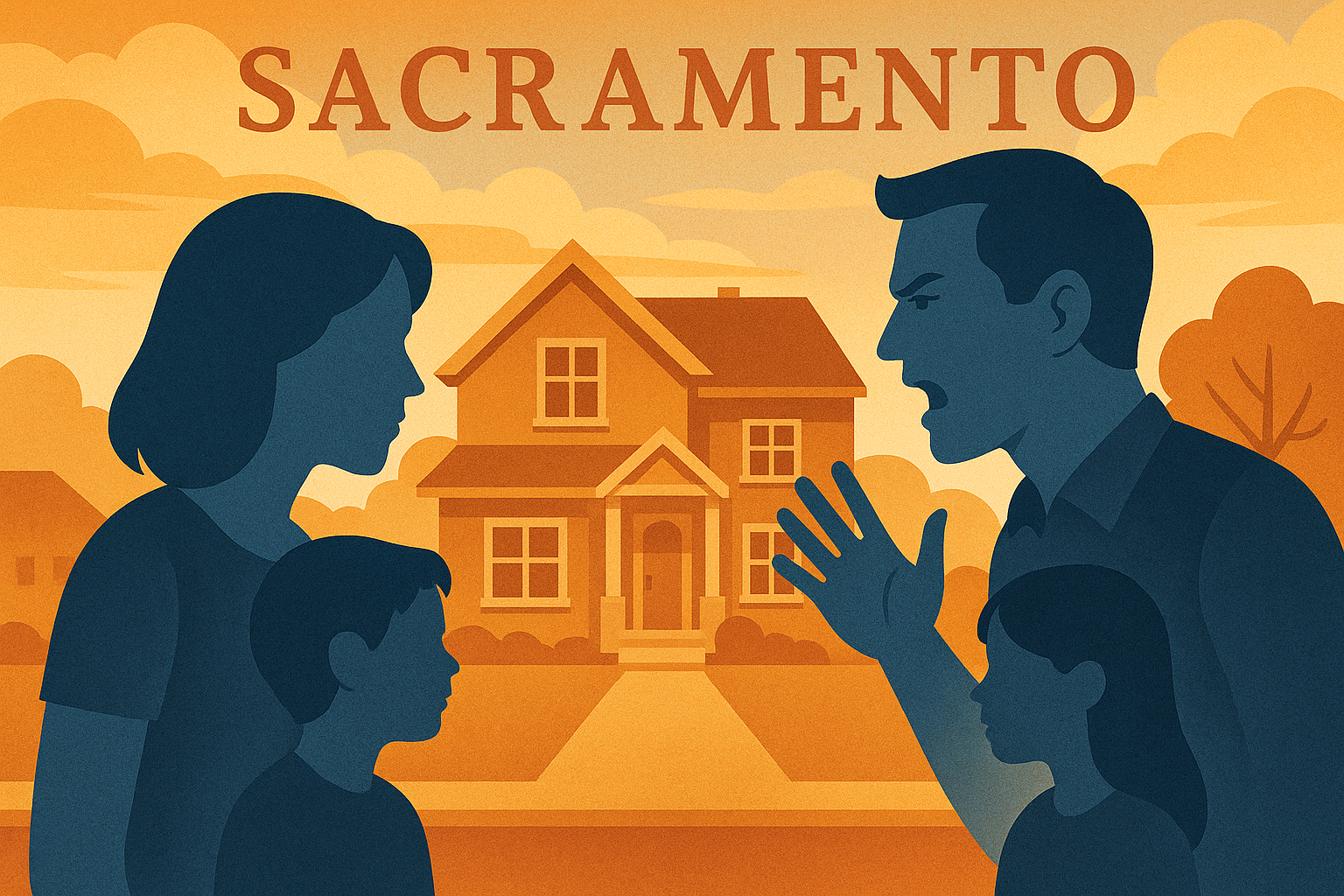
Sacramento Families and Their Homes: How Property Influences Inheritance Conflicts

Sacramento Homes: More Than Brick and Mortar
Walk through Curtis Park’s tree-lined streets or past the stately homes of East Sacramento, and you’ll see that here, houses are more than structures. Every porch swing and picket fence carries echoes of laughter, hope, and heartbreak. These neighborhoods—rich with history from craftsman bungalows that survived the flood of ’86 to ranch houses built in the postwar boom—are woven into the city’s identity.
In Sacramento, a house is never just a house. It holds stories of generations, symbolizing belonging and legacy. Yet that same legacy can become a source of tension—especially in Property Inheritance Disputes Sacramento families face—when questions of inheritance and family emotion collide.
When Memories Become the Center of Conflict
Step inside one of Sacramento’s cherished homes, and you’ll find more than walls and windows. The scent of gardenias drifts in from the backyard, the staircase creaks softly under generations of footsteps, and faded pencil marks on a kitchen wall trace the growth of children now grown. These familiar details carry the weight of family history.
For many, the home is not just shelter—it’s the heart of their legacy. Yet that same heart can fracture when loss and disagreement enter the picture. I’ve seen families torn apart over whether to sell, keep, or pass down a house after a parent’s death.
One family I met sat in their childhood kitchen, heavy with silence. The oldest daughter gazed out the window at the oak tree her father planted and asked, “How can we sell the house where Dad taught us to ride our bikes?” Her brother, living out of state, reminded her of property taxes and upkeep. Their younger sister feared moving her own children away from the only home they’d known.
In that moment, the house was no longer property—it was memory, identity, and conflict intertwined. In Sacramento, where roots run deep and property values climb higher, a single misunderstanding can turn a home from a sanctuary into a battlefield.
A Family Split by a House: A Common Property Inheritance Disputes Sacramento Story
Childhood Memories and Adult Dilemmas
A family in Sacramento once met with me to ask what they assumed was an easy question: “Can our brother sell the house without asking us?
The siblings—let’s say Mark, Lisa, and Janine—grew up in a sun-dappled East Sacramento house, its porch always filled with neighbors and the scent of their mother’s legendary Sunday roast wafting out the front door. When their parents died, the house remained a quiet observer to decades of shared past—a place where games of childhood had transitioned into adult discussion about the future.
Their parents had died, leaving them a beloved house in East Sacramento worth close to $900,000—a staggering figure compared to what they’d invested in the 1970s. Mark, being the oldest, was appointed trustee. From his perspective, the law was straightforward and the arithmetic simple: sell the house, divide the proceeds, and allow each of the siblings to go their separate ways. Selling, however, was not an option Lisa and Janine could contemplate. To them, this house was the center of their childhood, a place where each family milestone and holiday celebration had been welcomed. They pictured future Thanksgivings at the same dinner table, their own kids’ laughter in the backyard where they spent hours as children. The sisters fought passionately to preserve the home as the family’s anchor—a site for reunions, comfort, and continuity.
The Meaning of “Equal Benefit”
The trust, written years ago, included a sentence intended to ensure fairness: the property would “benefit all children equally.” But those five words, which seemed clear, would create months of disagreement, mediation, and heartache. Like so many Property Inheritance Disputes Sacramento families experience, the core question became: What did “equal” actually mean? Was it only about dollars, or was it about memories and significance? The siblings experienced numerous arguments and sleepless nights, with the house at once feeling like a prize and a burden.
From Conversation to Courtroom
By the time the family arrived at the courtroom, the judge heard tales as much as he heard legal reasoning. We showed that the trustee’s unilateral action to sell the house—without agreement—lacked a fair benefit. The law had to balance not only the words of the trust, but the emotional balance each sibling carried with them. Ultimately, the house was sold, but only after a lot of anguish and a bitter, hard-won compromise: part of the money would be used to donate to a local community project in the name of their parents, retaining something of their memory far outside the walls of the family.
Resolution and Lingering Emotions
The courtroom drama was over, and the file in the case was shelved. But the hurt to the family persisted long after the law had its say. Each of the siblings was affected by the experience, with some feeling relief and others feeling remorse. In Sacramento, property has an extraordinary emotional value. It represents roots, belonging, and identity. When these values are pitted against economic conditions, the effects can be horrendous, tearing not only families but also the sense of home asunder.
Why Property Inheritance Disputes Sacramento Families Face Are So Deep
More Than Dollars and Cents
Property disputes are unique because they are not only about money—they are about memories. Unlike stocks or bonds, a home is inextricably linked to the life lived within it. You can divide a portfolio with a signature, but dividing a home involves going through years of tradition, laughter, and sometimes tears. For many, the worst part isn’t the paperwork. It’s embracing the passing of an era and confronting the ambiguity of what’s to follow. More on paper, but a house contains something that can’t be replaced. No balance sheet can measure the muted comfort of a known living room, or the pleasure of congregating in a sun-dappled backyard with ancient trees. When inheritors view the same walls and perceive disparate meanings—one remembering childhood stories, another recalling fiscal hardship—disagreement is all but unavoidable. In my practice, it’s not unusual to sit at the table with siblings who are witnessing two different stories in the same room. One witnesses possibility, the other witnesses duty, and the third sees nothing but loss. Inheritance thus becomes not only an issue of equity, but of harmonizing these disparate truths.
The Pragmatic Perspective
Some relatives view the house as a financial drain, with an aging roof, increasing property taxes, and the expense of delaying fixes. These heirs may live elsewhere or have demanding careers, so shared ownership appears too daunting. In their minds, selling appears to be the only logical option.
The Fairness Lens
Another sibling may prioritize fairness, insisting that things be split down the middle, even if it means selling the house. This perspective tends to arise where there are still past resentments or feelings of bias. Equality becomes the aim, judged by quantity and not emotion.
The Challenge of Sentiment Versus Reality
In Sacramento’s rapidly evolving market, emotions and high costs usually collide. What would otherwise be a blessing, such as inheriting a family house, can easily become a curse. With increasing property values, disputes escalate, and siblings who once gathered around Sunday dinner tables now fight over appraisals, timing, and choice. It is proof that when inheritance comes into play, money and emotion tend to collide.
How Sacramento’s Real Estate Market Shapes Inheritance Disputes
The Impact of Rising Home Values
Sacramento’s property landscape adds unique pressure to inheritance issues. Over the past two decades, neighborhoods like Curtis Park, Midtown, and Arden have seen home prices multiply several times over.
Local Heirs Versus Out-of-State Heirs
A home purchased in the 1980s for $100,000 would now be valued at over $800,000. That shift alters inheritance choices. Heirs might not see eye-to-eye on selling, refinancing, or keeping a property, particularly when the liquidity of the estate hinges on the sale of the house.
Sell, Rent, or Keep?
For instance:
* Increased Value = Increased Stakes. Higher property value = more incentive to fight over it.
* Out-of-State Heirs. Children who live elsewhere tend to want to sell in a hurry. Local heirs are likely to oppose.
* Rental vs. Sale Disputes. An heir might want to rent the house, while other heirs insist on liquidation now.
Market Trends and Family Legacy
Disputes like these contain as much heartache as money worries. Sacramento’s probate courts hear hundreds of families wrestle with what to do with a home each year.
Typical Sacramento Property Inheritance Legal Issues
- Vague Wording in Trusts and Wills
Many Property Inheritance Disputes Sacramento residents experience arise when the paper states “divide equally” but does not specify the mechanism, so conflicts ensue.
- Inequality in Caregiving and Contributions
The child who provides care for aging parents often feels entitled to a larger share, even if the documents don’t support it.
- Joint Title Misunderstanding
Some parents put a child’s name on the deed for ease, unaware that it alters inheritance rights.
- Failure to Transfer Title
When a house is not properly transferred into a trust, it must go through probate, resulting in delayed settlement and potential conflict.
- Outdated Estate Documents
Ancient wills may refer to properties that have already been sold, refinanced, or remodeled, which creates confusion. All of these troubles can be avoided with foresight. Yet most families only see the pitfalls after loss, when clarity is most elusive and hearts are most raw, making it hardest to achieve.
How Courts Resolve Property Disputes
Sacramento’s Probate Court seeks fairness, but legal fairness does not necessarily generate comfort. The court is based on papers and proof, not on emotions left behind.
When heirs conflict, the court can order:
Partition Sale: Selling property and distributing proceeds in equal portions.
Buyout Option: Granting one heir permission to buy out shares of other heirs.
Accounting Review: Ascertaining the trustee or executor has handled funds properly.
Judges balance intent and pragmatism. They pray for peace. Judges balance intent and pragmatism. They pray for peaceful resolutions, but if families can’t reconcile, the law must select closure over feeling. This is the reason why families that access help at an early stage, using mediation or legal consultation, usually safeguard both their relationships and their assets.
One couple in Carmichael had a house they had been living in for forty years. They had three kids, each in a different economic situation. Rather than giving vague directions, they sat down with their attorney to devise a definite trust strategy.
They agreed that the eldest son could retain the house by purchasing out the others at a set price. The trust also contained a deadline, appraisal process, and alternative sale clause.
When the parents had passed on, the plan unfolded as intended. The eldest purchased the house at the agreed-upon price, the others received their share, and the family experienced no conflict, only the peaceful silence of closure.
Their meticulous planning transformed a potential conflict into concord. It’s not riches but thorough planning that ensures a legacy endures.
Practical Steps to Avoid Property Inheritance Disputes Sacramento Families Face
Sacramento families can take practical steps today to avoid tomorrow’s inheritance wars:
- Be Specific About Intentions
Make a clear statement of whether the house should be sold, leased, or passed on to a designated heir.
- Address Equity Fairly
If a surviving heir occupies the house or has helped pay for its maintenance, reasonably factor that in the plan.
- Utilize Professional Appraisals
Prevent value disputes by establishing the conditions under which the value of the home will be determined.
- Record Maintenance Expenses
Track property taxes, repairs, and utility bills to make sure reasonable reimbursement is made.
- Add Contingency Plans
Plan for contingencies such as changes in the market, slow sales, or heirs refusing ownership.
- Review Regularly
Sacramento’s market shifts rapidly. Looking at your estate plan every few years guarantees accuracy and fairness.
Selling a family home is never just a matter of money. It is an emotional reckoning. Some inheritors do so out of guilt, fearing they are removing their parents from memory. Others out of responsibility, dreading being the caregivers. Legacy is not about real estate, however. It resides in stories, values, and relationships. The house contains memories, but it is not the memory.
Families that discuss openly these feelings prior to loss are the ones who ride change with dignity. Early truth told is the greatest protection against bitterness.
Sacramento’s Changing Families and Generational Homes
Sacramento’s population has grown to be more diverse, with an increasing number of multigenerational households. Families today increasingly share property with parents, children, and even grandchildren.
This trend provides new dimensions to estate planning:
- Who inherits when multiple generations reside under the same roof?
- How do cultural expectations shape fairness?
- How is the property split up if several families financially contributed?
These are not only questions that require legal advice, but also compassion and attentive listening. There is no single document that can fully capture the complexity of family life.
Community and Legacy
Sacramento’s neighborhoods are more than streets and houses; they are reflections of the values families have built together. Each story adds to the character of the community.
When disputes over property arise, the harm does not remain at the front door. The waves engulf neighbors, friends, and the precarious feeling of continuity that holds a community together.
When families settle these problems with justice, they consolidate not only themselves but also the communities they helped create. Legacy is not about hanging on to all pieces of land, but respecting the dignity and attention that created it in the first place.
A Closing Reflection
Property is a promise and also a risk. It can unite generations or drive them apart unless it is managed with care. Sacramento’s houses are more than family history; they remind us that communication, honest discussion, and compassion are as valuable as papers.
Families who plan ahead don’t just safeguard their estates; they safeguard their peace of mind. If you want to avoid Property Inheritance Disputes Sacramento courts see every year, start the conversation now. The house you leave behind should be a recollection of love, not a memory of loss.
If your family has a home in Sacramento, make today the day you rethink your plan. The most powerful legacies are not measured in square footage, but in comprehension. This is what makes a home a home, not a battleground.
For guidance on protecting your family’s legacy or if you are facing Property Inheritance Disputes Sacramento residents commonly experience, reach out to Hackard Law for clarity and compassionate resolution.