


 (916) 313-3030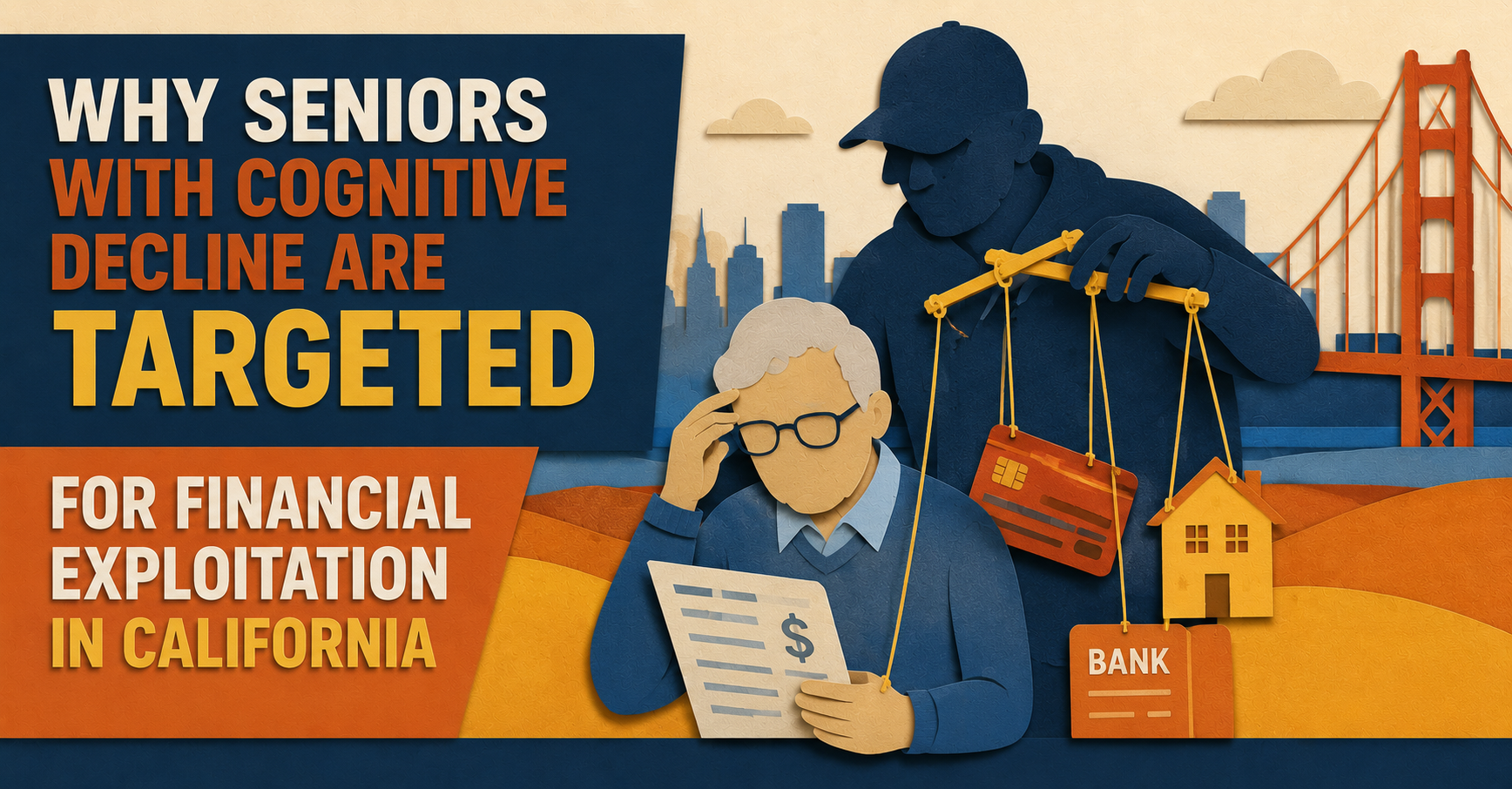
Why Seniors with Cognitive Decline Are Targeted for Financial Exploitation in California

Who Is Behind This Fight
I’m Michael Hackard, founder of Hackard Law, and for over five decades I have represented heirs, beneficiaries, and elder abuse victims across California – from the San Francisco Bay Area to Sacramento and Los Angeles. I have written four published books on inheritance protection and produced more than 1,000 educational videos that have reached over seven million viewers. In that time, I have watched one pattern repeat itself with painful consistency: as a senior’s cognitive abilities decline, the likelihood that someone will exploit them rises sharply. By the time families in Oakland, San Jose, or Santa Clara recognize what is happening, the financial and legal damage is already deep.
Hackard Law handles these cases on a contingency fee basis – no upfront costs for qualified cases. If you believe a loved one is being exploited, call us today at (916) 313-3030.
Quick Summary
California seniors with Alzheimer’s disease and other forms of dementia are disproportionately targeted for financial exploitation. The same brain changes that cause memory loss also impair the ability to detect deception, creating an opening that predators deliberately seek out.
- Cognitive decline impairs financial judgment long before obvious memory loss appears
- Exploitation follows a four-stage pattern: identification, relationship building, isolation, and extraction
- Warning signs include unexplained withdrawals, new names on accounts, and sudden changes to estate documents
- California law provides strong remedies, including recovery of stolen assets and punitive damages
- Elder financial abuse and inheritance theft are almost always connected – not separate problems
What the Science Tells Us
Recent research confirms what estate litigators have observed for years. The areas of the brain responsible for decision-making, memory, and risk evaluation begin thinning in the early stages of Alzheimer’s disease – often long before a family notices obvious cognitive changes. The ability to detect deception may already be compromised at a point when the senior still appears largely functional to casual observers.
This matters because abnormal financial choices or an unexpected susceptibility to fraud can signal cognitive decline rather than just bad judgment. Predators are aware of this. They search for elderly people who are starting to depend more on others, who hesitate, and who forget details. Once they detect it, exploitation follows a pattern that is almost always intentional.
The Four Stages of Exploitation
Over decades of handling these cases, I have seen exploitation of cognitively vulnerable seniors unfold in four consistent stages.
The first is identification. A vulnerable senior is noticed – by a caregiver, a distant relative, a new romantic interest, or even a professional who should be trustworthy. The second stage is relationship building. The exploiter becomes indispensable. They handle finances, manage appointments, and frame themselves as the only person who truly understands the senior’s needs.
Isolation and control constitute the third stage. Visits from family members are discouraged. Calls are screened. Only one person is involved in the flow of information. Extraction is the fourth step. Access is granted to bank accounts. They use credit cards. Property is moved. Trusts and wills are modified. There are new powers of attorney. Assets move silently but purposefully.
Case Pattern: Caregiver Becomes Sole Beneficiary
An East Bay family observed that their aging mother was becoming more and more reliant on a caregiver they had hired two years prior. Scheduling visits became challenging, and the mother’s justifications for missing money sounded scripted. The family learned after the mother’s death that the caregiver had received the majority of her estate due to a trust amendment that had been signed six months prior to her passing. Her recorded cognitive state at the time of signing and the caregiver’s isolationist behavior were the main points of contention in the lawsuit. The amendment was contested on the grounds of undue influence and incapacity.
Warning Signs Families Should Recognize
Elder financial exploitation warning signs frequently exist long before families take appropriate action. Common early warning signs include unexplained withdrawals, new names added to accounts, missing mail, and unpaid bills despite sufficient income. A senior’s growing mistrust of long-term family members, increased secrecy, or a sudden new person heavily involved in financial or medical decisions are all major red flags.
Document changes are particularly alarming. New estate documents that no one knew about, property transfers, beneficiary changes, and documents signed during periods of obvious confusion all suggest that exploitation may already be underway. For Bay Area families dealing with high-value real estate and complex trust structures, the financial stakes are especially significant. You can read more about common probate and trust battles that arise in these situations.
Case Pattern: Trust Amendment During Hospitalization
After his father passed away, a son in Alameda County learned that a trust amendment had been made while his father was in the hospital suffering from a stroke. The amendment transferred ownership of a property in the San Francisco Bay Area to a relative who had moved in just prior to the hospital stay. The attending physician’s testimony, nursing notes, and medical records were crucial in proving the father’s incapacity to sign a legitimate estate document at that time.
Why California Seniors Are Particularly Vulnerable
Elder financial exploitation is particularly lucrative for predators in California. The Bay Area has some of the highest property values in the country; even a modest house can be a significant source of wealth. With beneficiary designations, trust amendments, and covertly manipulable powers of attorney, estate plans are frequently complicated. A large number of seniors have substantial retirement accounts. Additionally, although California’s cultural and linguistic diversity is a strength in many ways, it also gives exploiters the opportunity to create false trust by using similar backgrounds or languages.
Hackard Law litigates these cases across the state, including in Alameda County, Santa Clara, and Oakland. The legal tools available under California law are powerful, but they require timely action.
What California Law Provides
California’s Elder Abuse and Dependent Adult Civil Protection Act is one of the strongest elder abuse statutes in the country. It allows recovery of stolen assets, damages for pain and suffering, attorney’s fees, and punitive damages in severe cases. Probate Code Section 259 allows courts to disqualify abusers from inheriting anything from the person they exploited. Documents signed without legal capacity can be challenged. Transactions caused by undue influence can be undone.
These remedies are meaningful, but they depend on timing. Statutes of limitations apply. Evidence deteriorates. That is why acting early – before or immediately after exploitation is discovered – produces far better outcomes than waiting. The eight stages of trust and estate litigation illustrate how these cases build from investigation through resolution.
Elder Abuse and Inheritance Theft Are the Same Problem
For decades, I have stood with families who discovered too late that the exploitation of their loved one did not stop at stolen bank funds. The same manipulation that drains accounts almost always rewrites estate plans. When the senior passes away, rightful heirs find they have been cut out entirely, or that little of the estate remains. These are not separate problems – they are connected acts in a single scheme.
Hackard Law approaches these cases by uncovering the full pattern. We investigate relationships, document cognitive status at the time key documents were signed, trace assets, and pursue elder abuse claims and estate litigation together. The Santa Clara will and trust contest process and similar proceedings in other Bay Area counties are among the tools we use to restore what dishonesty tried to steal. Discovery, forensic analysis, and the pursuit of justice are not just legal strategies – they are safeguards for families whose loved ones could not protect themselves.
The financial toll grows the longer action is delayed. The fracture that exploitation leaves in families often runs too deep for any judgment to fully mend. But a steadfast commitment to truth can restore what manipulation tried to take.
Key Definitions
- Cognitive decline: A progressive reduction in memory, judgment, and decision-making ability, often associated with Alzheimer’s disease or other forms of dementia.
- Undue influence: Pressure or manipulation that overrides a person’s free will, particularly when the victim is vulnerable due to age, illness, or dependence.
- Capacity: The legal standard for whether a person understood the nature and consequences of a legal document at the time they signed it.
- Elder Abuse and Dependent Adult Civil Protection Act: California’s primary statute protecting seniors from financial, physical, and emotional abuse, with enhanced civil remedies.
- Probate Code Section 259: A California law that can bar a person who financially abused a senior from receiving any inheritance from that person’s estate.
- Power of attorney: A legal document authorizing one person to act on another’s behalf, which can become a vehicle for exploitation when misused.
- Isolation: A tactic used by exploiters to cut a vulnerable senior off from family and friends who might detect or report the abuse.
- Trust amendment: A change to the terms of an existing trust, which can be challenged if executed without capacity or under undue influence.
- Extraction: The stage of exploitation in which assets are actively transferred, spent, or redirected away from the rightful beneficiaries.
- Contingency fee representation: A fee arrangement in which the attorney is paid only if assets are recovered, removing upfront cost barriers for qualifying clients.
What to Do Next
- Look for early warning signs: unexplained withdrawals, new names on accounts, missing mail, and unpaid bills.
- Get copies of recent bank statements and financial records if you have permission or legal authority to do so.
- Try to avoid confronting a suspected exploiter directly before speaking with an attorney – doing so can accelerate asset transfers.
- Document any observed changes in your loved one’s cognitive status, including dates, behaviors, and statements.
- Look for any recently signed estate documents, trust amendments, deeds, or powers of attorney that seem out of character.
- Try to maintain regular contact with your loved one, even if visits are being discouraged by someone in their circle.
- Report concerns to Adult Protective Services if you believe exploitation is actively occurring.
- Get guidance from an attorney who handles both elder abuse claims and estate litigation – these cases require both.
- Call Hackard Law at (916) 313-3030 to discuss what you are seeing and whether legal action is appropriate.
- Visit our contact page to reach us online and tell us about your situation.
CALL THE SAGE | When Experience Matters, Families Listen
🏛️ We practice California trust & estate & elder financial abuse litigation
⚖️ We represent heirs, beneficiaries, and elder abuse victims
🎥 1,000+ educational videos | 7 million+ views | 4 published books
🎯 “After thousands of cases, I see the pattern others miss.”
CONTINGENCY REPRESENTATION – No Win, No Fee
Throughout California: Sacramento | Los Angeles | Bay Area
📞 CALL THE SAGE: (916) 313-3030
Subscribe for weekly insights on:
- Elder financial abuse warning signs and prevention
- Trust and estate litigation strategies
- Inheritance protection for California families
- Family protection strategies
When your inheritance is under attack, Call The Sage.
Hackard Law | 10640 Mather Blvd, Mather CA 95655
Attorney Advertisement | Michael Hackard, State Bar #71067
RELATED VIDEOS
Trust Traps Part 2 | Financial Entanglement: How Estate Predators Tighten Their Grip
Explores how estate predators systematically entrench themselves in a victim’s finances.
Non-English Speakers | Targets of Estate & Trust Scams
Examines how vulnerable populations are deliberately targeted by estate and trust scammers.
CA Trust Mills | Send in the Clowns
Exposes predatory trust mill operations that exploit unsuspecting seniors in California.
Is Your Estate Bulletproof? | Interview with Comstock’s
Michael Hackard discusses how to protect your estate from exploitation and legal challenges.
Burden of Proof | Trust & Estate Litigation
Breaks down what must be proven to win a trust or estate litigation case in court.
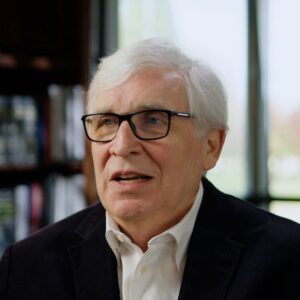 Michael Hackard is the founder of Hackard Law, a California trust and estate litigation firm with more than five decades of experience protecting the inheritance rights of families across Sacramento, the San Francisco Bay Area, and Los Angeles. He is the author of six published books on inheritance protection and has produced more than 1,000 educational videos with over seven million views.