


 (916) 313-3030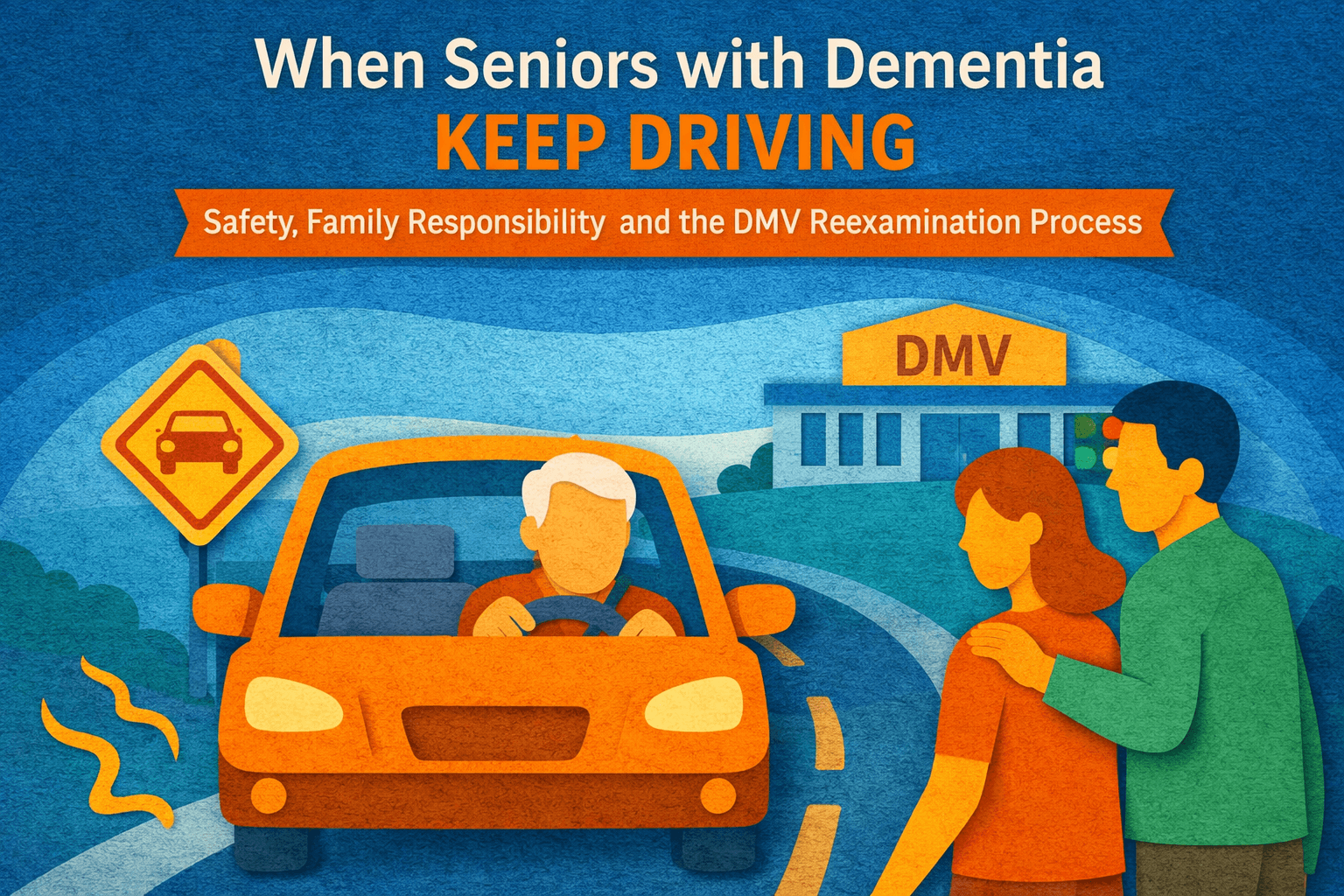
When Seniors with Dementia Keep Driving: Safety, Family Responsibility, and the DMV Reexamination Process

Protecting Our Parents on the Road and Beyond
I’m Michael Hackard, founder of Hackard Law, and over my five decades of legal practice, I have seen how cognitive decline reshapes every part of a senior’s life — including something as basic as driving a car. My four published books on inheritance protection address many dimensions of elder vulnerability, and my more than 1,000 educational videos — with over seven million views — tackle issues that families across Sacramento, the San Francisco Bay Area, and Los Angeles confront daily.
Driving is one of the earliest and most visible danger signs that a parent’s cognitive abilities are slipping. The same confusion and disorientation that make a senior unsafe behind the wheel also make that senior a prime target for financial manipulation, undue influence, and inheritance theft. When I talk to families about trust disputes, contested estates, and elder financial abuse, the conversation often begins with a moment of alarm: a fender-bender that made no sense, a parent who got lost on a familiar route, or unexplained damage on the family car. These episodes matter — not only for road safety, but because they signal deeper vulnerabilities that can affect a family’s entire legacy.
Hackard Law provides contingency fee representation for qualified cases, meaning families pay no upfront costs when they need to protect an elder parent or recover stolen assets.
If your family is dealing with a parent whose cognitive decline is putting them — or your family’s estate — at risk, call Hackard Law at (916) 313-3030 for a consultation.
Quick Summary
Senior drivers with dementia pose real dangers on the road and signal broader vulnerabilities that families must address. California’s DMV offers a formal reexamination process, and families should treat driving problems as an early warning of potential financial exploitation.
- Confusion and disorientation behind the wheel often appear early in dementia.
- The DMV’s Request for Driver Reexamination (Form DS 699) lets anyone report an unsafe driver confidentially.
- Cognitive decline that impairs driving also makes seniors vulnerable to financial abuse and estate manipulation.
- Adult children must balance a parent’s independence with safety — on the road and in financial matters.
- Early intervention protects both the parent and the family’s inheritance.
Real-Life Warning Signs of Dangerous Senior Driving
As we age, reaction times slow. This decline is easy to spot — the elderly woman driving two miles an hour through a parking lot, or the elderly gentleman traveling 40 mph on a freeway posted at 70. These behaviors are concerning enough on their own. When dementia enters the picture, they become genuinely dangerous.
Confusion and disorientation may appear early in the disease. The signs show up in everyday driving situations that families recognize all too well. A Sacramento grandmother forgot how to drive home from the grocery store and ended up in San Francisco before she stopped to ask for help. An elderly farmer — his license long suspended — took a secret joyride that ended in a crash with his neighbor’s car. A retired attorney, confused about his destination, stopped in the middle of a busy intersection to check his directions, terrifying his family so thoroughly that none of them would ride with him again.
Then there are the subtle incidents: an elderly businessman who came home with unexplained dents and paint marks along the side of his car, or the common parking lot collision followed by a senior’s puzzled explanation of “I don’t know what happened.” Seniors are overrepresented in certain types of car crashes, and these patterns tell a story that families cannot afford to ignore.
Case Pattern: The Grandmother Who Drove to San Francisco. A Sacramento family noticed their mother occasionally missed turns on familiar routes. They dismissed it as normal aging. When she drove more than 80 miles out of her way before realizing she was lost, the family recognized that her confusion extended well beyond driving. They later discovered that a caregiver had persuaded her to sign over a significant financial gift during a period of disorientation. Early attention to driving behavior could have prompted earlier protective action.
The DMV Reexamination Process: A Tool Families Should Know
California’s Department of Motor Vehicles states that it wants seniors to maintain their driving independence as long as they can safely drive. The emphasis is on safety. When safety is in question, the DMV provides a formal process called the Request for Driver Reexamination.
Anyone who knows a person who may no longer drive safely can submit DMV Form DS 699. This form asks the submitter to identify the driver’s condition and describe observed driving behavior using a helpful checklist. Each request must be signed, but the submitter may request that their name not be disclosed. The DMV honors that confidentiality.
Once the DMV receives the form, it follows up directly with the senior, typically requesting that the individual come in for follow-up testing. Michael Hackard has personal familiarity with this process and confirms that it can be an effective tool for removing unsafe drivers from the road. The DMV acts independently from there, which means the family does not have to be the one delivering the bad news directly.
Families dealing with broader concerns about a parent’s cognitive decline — including vulnerability to elder financial exploitation — should view the reexamination process as one piece of a larger protective strategy.
Why Driving Problems Signal Deeper Vulnerabilities
The same cognitive impairments that make a senior dangerous on the road also make that senior vulnerable to financial predators. Confusion, poor judgment, disorientation, and memory loss do not stay confined to the driver’s seat. These deficits follow the senior into every interaction — with caregivers, family members, financial advisors, and anyone who might seek to exploit diminished capacity.
California courts recognize that seniors with cognitive decline are prime targets for manipulation. When a parent can no longer navigate a familiar route, families should ask a harder question: can this parent still understand and protect their own financial and legal interests? The answer is often no.
Driving incidents frequently appear in the factual timelines of trust and estate disputes. A family may discover that during the same period a parent was having unexplained car accidents, someone persuaded that parent to change a trust, sign a new power of attorney, or transfer property. These events are connected. Cognitive decline does not affect one domain in isolation.
Case Pattern: The Retired Professional and the Sudden Trust Change. A retired professional’s family grew alarmed when he began stopping in traffic, confused about where he was going. At about the same time, he was persuaded to change his trust and reroute a significant amount of his estate by a new acquaintance. The family later challenged the amendment, and the driving incidents formed part of the evidence establishing his diminished capacity. The timeline of unsafe driving aligned directly with the timeline of suspicious estate changes.
The Emotional Toll: Balancing Independence and Safety
A parent’s loss of driving privileges — whether voluntary or involuntary — can be deeply emotional for the parent and for the adult children involved. Driving represents freedom and independence. Taking the keys away feels like taking away a piece of the parents’ identity.
Adult children try creative approaches. They hide the keys. They tell the parent the car is in the shop. They attempt gentle distractions. These strategies do not always work. Some parents strongly resent and resist any effort to take away their driving privileges. The conflict can fracture family relationships at exactly the moment when the family needs to come together to protect the parent.
This emotional dynamic is familiar to Sacramento estate lawyers who handle trust and estate disputes. The same resistance a parent shows to giving up the car keys often appears when families try to address financial exploitation, questionable estate changes, or the need for a conservatorship. Understanding that resistance — and approaching it with patience — matters in both contexts.
As our parents once protected us when we could not protect ourselves, so too are we called upon to return the effort. Protecting a parent from the dangers of unsafe driving is an act of love, even when it is not met with gratitude or understanding.
Taking Action Early: Driving Safety and Estate Protection
Families who notice dangerous driving behaviors should treat it as an urgent signal to review the parent’s broader situation. Is the parents’ estate plan current and intact? Has anyone newly gained influence over the parents’ financial decisions? Are trust documents, powers of attorney, and beneficiary designations still consistent with the parent’s longstanding wishes?
Early action on driving safety can open the door to early action on estate protection. A family that files a DMV reexamination request and simultaneously consults with an attorney about the parent’s estate is far better positioned than one that waits until assets have already been transferred or trust documents have already been changed.
Families in Sacramento County facing probate or trust disputes should understand that cognitive decline — as documented by driving incidents, medical records, and family observations — is critical evidence in litigation. The earlier families begin documenting, the stronger their position if a legal challenge becomes necessary.
Key Definitions
- Cognitive Decline: A progressive reduction in mental abilities — including memory, judgment, and orientation — that can impair driving, financial decision-making, and legal capacity.
- DMV Form DS 699: The California Department of Motor Vehicles form used to request a reexamination of a driver believed to be unsafe, with an option for confidential submission.
- Undue Influence: Excessive pressure or manipulation applied to a person with diminished capacity, resulting in estate documents or financial transactions that do not reflect the person’s true intent.
- Diminished Capacity: A legal and medical concept describing a person’s reduced ability to understand and make informed decisions, often central to trust and estate disputes.
- Conservatorship: A court-supervised arrangement in which a responsible person is appointed to manage the personal care or finances of someone who can no longer do so independently.
- Power of Attorney: A legal document granting another person authority to act on someone’s behalf in financial or legal matters, which can be exploited when a senior’s capacity declines.
- Trust Amendment: A change to the terms of a living trust, which may be challenged if made during a period of cognitive impairment or under undue influence.
- Elder Financial Abuse: The illegal or improper use of an elder’s funds, property, or assets — a growing concern in California and a focus of Hackard Law’s practice.
What to Do Next
- Document specific driving incidents with dates, locations, and descriptions of what you observed.
- File DMV Form DS-699 to request a formal reexamination of the unsafe driver — your identity can remain confidential.
- Review your parents’ estate plan to confirm that trust documents, powers of attorney, and beneficiary designations remain consistent with longstanding wishes.
- Watch for new individuals who have gained access to your parents’ finances or legal documents.
- Consult with a Sacramento traumatic brain injury lawyer if a driving accident has resulted in injury to your parent or someone else.
- Gather medical records that document cognitive decline — these records serve as critical evidence in any future legal proceeding.
- Talk to siblings and other family members to build a unified approach to your parents’ safety and estate protection.
- Explore Michael Hackard’s published books on inheritance protection for guidance on recognizing and responding to elder vulnerability.
- Contact an attorney promptly if you suspect that someone has exploited your parent’s diminished capacity to change estate documents or transfer assets.
If your family needs help protecting a vulnerable parent or challenging suspicious estate changes tied to cognitive decline, call Hackard Law at (916) 313-3030 to discuss your situation.
CALL THE SAGE | When Experience Matters, Families Listen
THE EXPERTISE:
📚 50 years California trust, estate & elder financial abuse litigation
⚖️ We represent heirs, beneficiaries, and elder abuse victims
🎥 1,000+ educational videos | 7 million+ views | 4 published books
🎯 “After thousands of cases, I see the pattern others miss.”
CONTINGENCY REPRESENTATION — No Win, No Fee
Throughout California: Sacramento | Los Angeles | Bay Area
📞 CALL THE SAGE: (916) 313-3030
Subscribe for weekly insights on:
• Elder financial abuse warning signs and prevention
• Trust and estate litigation strategies
• Inheritance protection for California families
• Family protection strategies
When your inheritance is under attack, Call The Sage.
Hackard Law | 10640 Mather Blvd, Mather CA 95655
Attorney Advertisement | Michael Hackard, State Bar #71067
RELATED VIDEOS
Trust Disputes | Elderly Parents and the Power of Benevolence
Highest keyword hits (4) and directly mirrors the blog’s core themes of elderly parents, cognitive decline, trust disputes, and the family responsibility to protect vulnerable seniors from exploitation.
Placer County Senior Exploitation | Homes and Estates & Trusts
Directly addresses senior exploitation, the central financial-abuse theme of the blog connecting dementia-related driving incidents to vulnerability in estate and financial matters.
The 3 Biggest Risks to Family Wealth | CA Estate & Trust Litigation
Directly relevant to the blog’s message that cognitive decline endangers not just road safety but the family’s entire financial legacy and inheritance.
Estate Planning Myths That Could Cost Your Family Everything
Complements the blog’s call to action for families to review estate plans and act early when a parent’s cognitive decline is detected, before myths and inaction allow assets to be lost.
How an Estate Lawyer Keeps Peace in the Family After Loss
Aligns with the blog’s discussion of the emotional toll on families when balancing a parent’s independence against safety, and the potential for conflict when addressing cognitive decline.
Our Job is to Protect Your Family | Estate & Trust Litigation Attorneys
Reinforces the blog’s core call to action — that Hackard Law stands ready to protect families whose vulnerable elders face financial exploitation tied to cognitive decline.
 Michael Hackard is the founder of Hackard Law, a California trust and estate litigation firm with more than five decades of experience protecting the inheritance rights of families across Sacramento, the San Francisco Bay Area, and Los Angeles. He is the author of four published books on inheritance protection and has produced more than 1,000 educational videos with over seven million views.