


 (916) 313-3030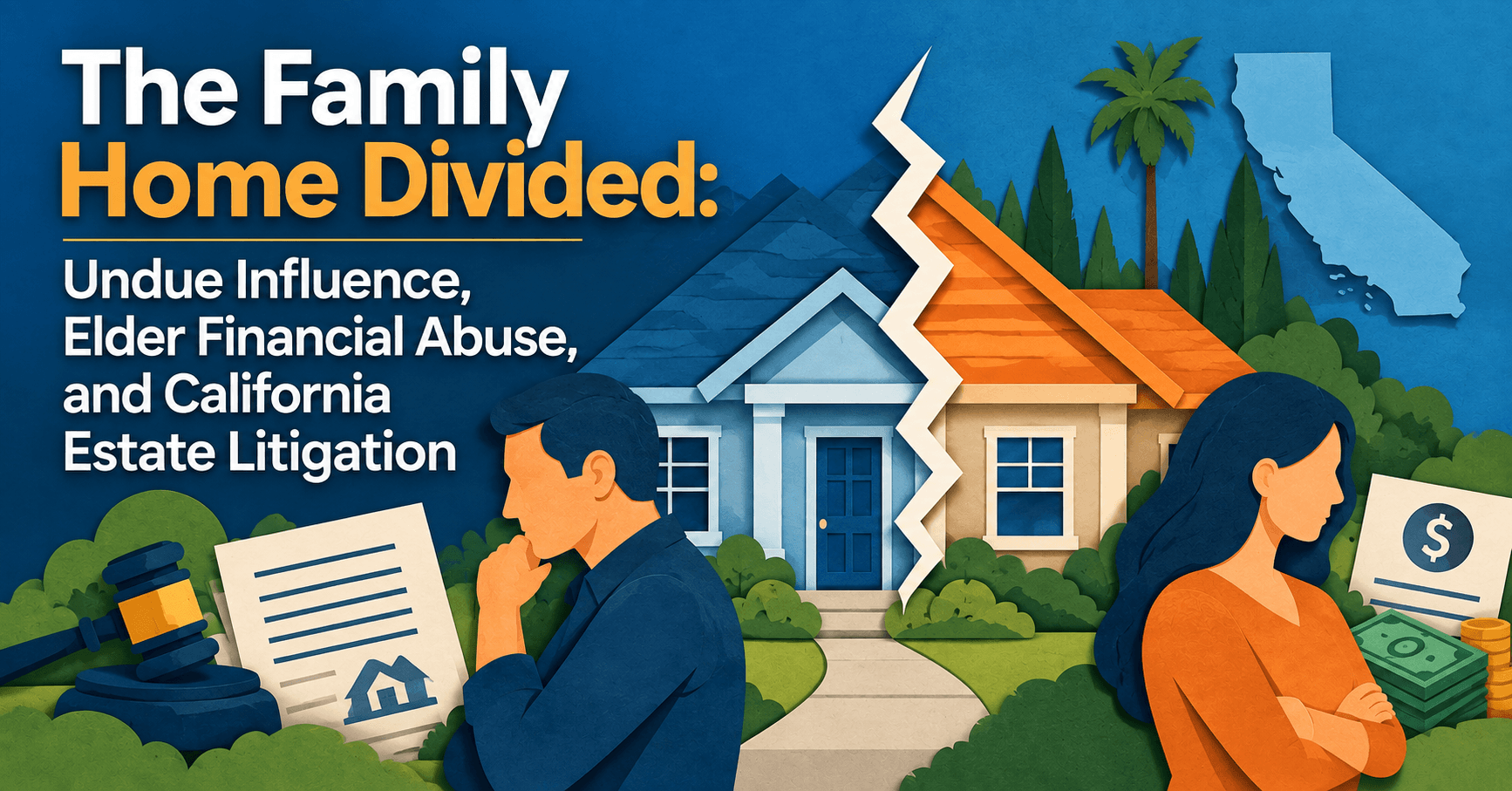
The Family Home Divided: Undue Influence, Elder Financial Abuse, and California Estate Litigation

A House Divided Cannot Stand
I am Michael Hackard, founder of Hackard Law. Over five decades of practice, I have fought for heirs, beneficiaries, and elder abuse victims whose inheritances were taken by manipulation, fraud, and undue influence. I have written four books on inheritance protection and produced more than 1,000 educational videos that have reached over seven million viewers. Hackard Law serves families throughout California – from Sacramento and the San Francisco Bay Area to Los Angeles – in estate, trust, and elder financial abuse litigation.
Abraham Lincoln borrowed a phrase from scripture when he warned in 1858 that a house divided against itself cannot stand. He was speaking about slavery and a nation fracturing under the weight of a moral crisis it refused to confront. That same image – a house divided – captures something I have witnessed repeatedly in California probate and civil courts: the family home at the center of a bitter inheritance dispute, torn apart not by political ideology, but by greed, manipulation, and undue influence.
Hackard Law provides contingency fee representation for qualified estate and elder financial abuse cases – no upfront costs to you. If your family is facing this kind of dispute, call us today at (916) 313-3030.
Quick Summary
A family home may be given to one child, excluding all other heirs, due to undue influence over an elderly parent. Tools to contest these transfers and reclaim what was wrongfully taken are provided by California law.
- Elders aging in place are vulnerable to financial manipulation by dependent family members or outsiders
- A single child may use isolation and pressure to receive the entire estate, excluding siblings
- California courts can void transfers made under undue influence and restore assets to the estate
- The person who misused their influence may ultimately be excluded from any inheritance
- Early legal intervention improves the chances of recovering the family home and other assets
Why the Family Home Is So Often the Battleground
For most California families, the home is the largest asset in the estate. It carries financial weight, but it also carries memory – the place where children grew up, where holidays were spent, where a parent chose to spend their final years. That emotional and financial significance makes it a prime target for those who seek to exploit a vulnerable elder.
Elders who age in place are often isolated by circumstance or by design. A child who moves in to “help” may gradually become the gatekeeper – controlling who visits, what documents are signed, and what the elder believes about other family members. Over time, that control can translate into a deed transfer, a revised trust, or a new will that funnels everything to the caregiver child and nothing to anyone else.
This pattern plays out in probate courts across California. It is not rare. It is one of the most common forms of elder financial exploitation that Hackard Law confronts in litigation.
How Undue Influence Works in Practice
California law defines undue influence as excessive persuasion that overcomes a person’s free will and causes them to act against their own interests. Courts look at several factors: the vulnerability of the elder, the influencer’s apparent authority, the tactics used, and the fairness of the resulting transaction.
The dependent child scenario is a textbook example. A son or daughter, often financially struggling, moves into the family home under the guise of caregiving. The elder, grateful for the company and reliant on the help, begins to trust that child above all others. Siblings are slowly edged out – phone calls go unanswered, visits become difficult, and the elder is fed a steady narrative that the other children don’t care. By the time an estate planning attorney is brought in – sometimes one chosen by the influencing child – the elder’s wishes have been quietly rewritten.
Case Pattern: Caregiver Child Takes All
The family home was transferred to a live-in child by an elderly parent just months before their death in one pattern that Hackard Law has litigated. The transfer was only discovered by the other children after the parent’s passing, as they had been gradually isolated. The court voided the transfer after the litigation revealed a pattern of isolation and financial dependency that supported a finding of undue influence.
What Happens After the Elder Dies
The discovery of a wrongful transfer often comes too late to protect the elder – but not too late to protect the estate. When a parent dies and surviving children learn that the family home was transferred to a sibling through undue influence, California law gives them the tools to fight back.
A trust contest or will contest can challenge amendments made under undue influence. A civil action for financial elder abuse can seek the return of transferred property. Under California’s elder abuse statutes, courts can award double damages and attorney fees where financial abuse of an elder is proven – a powerful incentive for the person who acted wrongfully to settle and a meaningful remedy for families who have been harmed.
The real estate dimensions of trust litigation add complexity. Title issues, recorded deeds, and property valuations all become part of the evidentiary record. Hackard Law works with forensic accountants and real estate professionals to build the factual foundation that courts require.
Case Pattern: The Boomerang Effect
In another instance, a child who employed undue influence to acquire the entire estate discovered that litigation not only rendered the transfer null and void, but also resulted in a court ruling that barred the child from receiving any portion of the estate. Nothing was obtained as a result of the efforts to acquire everything.
Early Intervention Makes a Difference
Not every undue influence case begins after a death. If a family member suspects that an elder is being manipulated right now – that a deed is about to be signed, that a trust is being amended under pressure – early legal intervention can sometimes prevent the harm before it occurs.
California courts have the authority to freeze assets, appoint conservators, and issue restraining orders in appropriate cases. Acting quickly, before a transfer is recorded or a document is signed, can preserve options that disappear once the transaction is complete. Families who wait until after a death often face a harder road.
For those already past that point, guarding against elder financial abuse in trust litigation requires a litigation strategy built on evidence – financial records, communication logs, medical records, and witness testimony that reconstructs the timeline of influence.
The Human Cost of a Divided House
For decades, I have stood with families whose grief over losing a parent was compounded by the discovery that someone had stolen what that parent worked a lifetime to build. The financial toll grows with every month of litigation. The fracture between siblings often runs too deep for any judgment to mend.
Discovery, forensic analysis, and the pursuit of justice – these are not just legal strategies, but safeguards for families threatened by undue influence and fraud. A steadfast commitment to truth restores what dishonesty tried to steal. That is why Hackard Law takes these cases seriously, and why I have devoted my career to this work.
If your family is facing a divided house – a family home transferred away from rightful heirs through manipulation or elder financial abuse – you deserve to know your options. Learn more about how Hackard Law approaches these cases and what California law can do for you.
Key Definitions
- Undue influence: Excessive persuasion that overcomes a person’s free will, causing them to act against their own interests, as defined under California law.
- Elder financial abuse: The wrongful taking, concealment, or appropriation of an elder’s property or funds through fraud, duress, or undue influence.
- Trust contest: A legal proceeding challenging the validity of a trust or trust amendment on grounds such as undue influence, lack of capacity, or fraud.
- Will contest: A challenge to the validity of a will, often filed in probate court by an heir who was disinherited or whose share was reduced.
- Deed transfer: The legal conveyance of real property from one person to another, which can be challenged if made under undue influence or without capacity.
- Conservatorship: A court-supervised arrangement in which a person is appointed to manage the finances or personal affairs of a vulnerable adult.
- Double damages: A statutory remedy under California elder abuse law allowing courts to award twice the amount of financial harm proven in qualifying cases.
- Probate court: The California Superior Court division that oversees the administration of estates, trusts, and guardianships.
- Caregiver exploitation: A pattern in which a person providing care to an elder uses that position to gain financial control over the elder’s assets.
- Isolation tactic: A method used by those seeking to exert undue influence, in which the elder is cut off from family, friends, or advisors who might intervene.
What to Do Next
- Look for signs that an elder family member is being isolated from other relatives or advisors.
- Get copies of any recent deed transfers, trust amendments, or new wills as soon as possible after a death.
- Try to avoid confronting the suspected influencer directly before speaking with an attorney, as this can complicate litigation.
- Look for financial records showing unusual transfers, large gifts, or changes in account ownership.
- Try to gather medical records that document the elder’s cognitive condition during the period when documents were signed.
- Look into California’s elder abuse statutes, which provide remedies beyond ordinary civil claims, including double damages and fee recovery.
- Get a clear picture of the timeline – when the elder’s health declined, when the influencer moved in, and when documents were changed.
- Try to avoid delay; some claims have strict deadlines under California law.
- Call Hackard Law at (916) 313-3030 to discuss your situation with an attorney who handles these cases on a contingency fee basis.
- Visit our contact page to reach us online and tell us your story.
CALL THE SAGE | When Experience Matters, Families Listen
🏛️ We practice California trust & estate & elder financial abuse litigation
⚖️ We represent heirs, beneficiaries, and elder abuse victims
🎥 1,000+ educational videos | 7 million+ views | 6 published books
🎯 “After thousands of cases, I see the pattern others miss.”
CONTINGENCY REPRESENTATION – No Win, No Fee
Throughout California: Sacramento | Los Angeles | Bay Area
📞 CALL THE SAGE: (916) 313-3030
Subscribe for weekly insights on:
- Elder financial abuse warning signs and prevention
- Trust and estate litigation strategies
- Inheritance protection for California families
- Family protection strategies
When your inheritance is under attack, Call The Sage.
Hackard Law | 10640 Mather Blvd, Mather CA 95655
Attorney Advertisement | Michael Hackard, State Bar #71067
RELATED VIDEOS
Establishing Undue Influence & Elder Financial Abuse | CA Trust Litigation
Explains how California courts determine whether undue influence occurred in trust disputes.
The Wolf at the Door: Undue Influence and Elder Financial Abuse | KUSI San Diego
A television interview exploring how predators manipulate vulnerable elders to steal assets.
LA House Battles | Elder Financial Abuse Lawsuits
Covers disputes where family members fight over a parent’s home after suspected financial abuse.
Disinherited House Beneficiaries | Los Angeles Trust Litigation
Addresses legal options for heirs wrongfully cut out of a family home inheritance.
Stopping Undue Influence & Estate Theft | CA Probate and Trust Litigation Attorneys
Outlines strategies attorneys use to challenge manipulated estate transfers in California courts.
Common Signs of Elder Financial Abuse | Estate & Trust Lawsuits
Walks through the warning signs that an elder may be a victim of financial exploitation.
 Michael Hackard is the founder of Hackard Law, a California trust and estate litigation firm with more than five decades of experience protecting the inheritance rights of families across Sacramento, the San Francisco Bay Area, and Los Angeles. He is the author of six published books and has produced more than 1,000 educational videos with over seven million views.