Thou Shalt Not Steal was not written with an exception for decedent’s estates. Those words from Exodus are direct and unmistakable, yet they bear repeating for anyone involved in the gathering of a deceased person’s assets. I am Michael Hackard, founder of Hackard Law, and across more than five decades of trust and estate litigation practice, I have watched estate theft play out in countless forms — from open brazenness to quiet secrecy. My four published books on inheritance protection address these patterns directly, and my more than 1,000 educational videos — with over seven million views — continue to reach families who face exactly these situations.
Hackard Law serves families throughout Sacramento, the San Francisco Bay Area, and Los Angeles. Whether the estate in question involves a modest home or a multimillion-dollar portfolio, theft from an estate is theft. The items taken range from cash and coin collections to jewelry, guns, furniture, cars, family photographs, and even the decedent’s pets. The people who take these items include family members, neighbors, caregivers, and other interlopers who treat a decedent’s home as though a sign on the door reads: “This property belongs to an estate, and it is yours for the taking.”
Hackard Law provides contingency fee representation for qualified cases, meaning heirs, beneficiaries, and elder abuse victims pay no upfront costs to pursue recovery of what was wrongfully taken.
If you believe assets have been stolen from a loved one’s estate, call Hackard Law at (916) 313-3030 for a consultation.
Quick Summary: Estate Theft in California
Most families are unaware of how common estate theft is. Before a formal inventory is taken after a person passes away, valuable personal belongings and financial assets frequently vanish. For heirs, beneficiaries, and victims of elder abuse who take immediate action, California law offers significant remedies.
Personal property theft from estates includes cash, jewelry, coin collections, vehicles, firearms, tools, and sentimental items.
Takers often justify theft by claiming the items had no value — a defense that carries little credibility in court.
Supervised personal property division can resolve some disputes quickly and cost-effectively.
California probate courts have the authority to compel the return of stolen estate assets and impose penalties.
Acting early and documenting missing items strengthens a family’s legal position.
Why Estate Theft Happens So Frequently
The period immediately following a death creates a window of vulnerability. The decedent’s home may sit unoccupied. Keys may be in the hands of multiple people. No formal inventory exists yet. Family members, neighbors, and others with physical access may feel entitled to take items or may act on impulse, reasoning that no one will notice a missing piece of jewelry or a set of tools.
Some takers act out of genuine confusion about what belongs to whom. Others act with deliberate intent to steal. The distinction matters legally, but the result is the same: estate assets vanish, and the rightful heirs and beneficiaries lose what was meant for them. Michael Hackard identifies this pattern repeatedly — the fog of grief and logistical chaos creates opportunity for those inclined to take advantage.
The justification takers offer is remarkably consistent. They claim the items were worthless, that the decedent promised the items to them, or that they were simply “holding” things for safekeeping. As Michael Hackard points out, a burglar’s defense that stolen property is valueless carries no weight. The same principle applies to estate fraud and theft in probate proceedings.
Case Pattern: The Disappearing Coin Collection
A family discovered after their father’s death that his extensive coin collection — valued at tens of thousands of dollars — had vanished from his home. A neighbor who had a key claimed the father had “given” the collection to him years earlier. No written documentation supported this claim. The pattern of post-death asset disappearance combined with an unverifiable oral gift claim is one Hackard Law encounters with regularity.
Estate Theft Is No Different Than Shoplifting
Michael Hackard draws a direct comparison: stealing from an estate is no different in principle than shoplifting. The property belongs to someone — in this case, the estate and its beneficiaries. The fact that the original owner has died does not transform taking into something lawful or acceptable. California law treats unauthorized taking of estate assets seriously, and courts have broad authority to order the return of property, impose surcharges, and award damages.
Families should understand that inheritance theft in California is not a gray area. The law draws clear lines between legitimate disputes over asset distribution and outright theft. When one family member secretly removes valuable items from a decedent’s home before the executor or trustee can take inventory, that conduct crosses the line.
The emotional toll adds to the financial harm. Families already grieving a loss must now confront the reality that someone they may have trusted has stolen from them. This combination of grief, betrayal, and financial loss makes estate theft cases deeply personal.
How Families Can Respond to Estate Theft
The first step is documentation. Families should inventory what they know existed and identify what is missing. Photographs, insurance records, prior appraisals, and even the decedent’s own written lists can establish what assets should be part of the estate. Testimony from family members and friends who visited the home can fill gaps.
Hackard Law litigates estate theft cases across California. The firm’s approach begins with identifying the missing assets, determining who had access and opportunity, and building the factual record needed to pursue recovery. In many cases, the evidence trail leads quickly to the responsible party because the taking was not particularly sophisticated.
California law provides several recovery options. Property belonging to an estate may be returned by probate courts. The value of stolen goods and, in certain situations, additional damages may be recovered through civil actions for theft and conversion. California’s safeguards for families against estate fraud offer enhanced remedies. For example potential double damages and attorney fee recovery, when elder financial abuse occurs.
Case Pattern: The Family Member With a Moving Truck
Within days of a mother’s death, one sibling arrived at the family home with a moving truck and removed furniture, artwork, and personal items before the other heirs knew what had happened. The sibling later claimed the mother had verbally given everything to her. The remaining heirs pursued recovery through the probate court. This pattern — rapid removal of assets combined with an unwritten promise defense — is among the most common probate and estate battles California families face.
Supervised Personal Property Division: A Practical Solution
Not every estate theft dispute requires full-scale litigation. Michael Hackard notes that many personal property disputes can be resolved through a supervised personal property division. This process involves a neutral party overseeing the distribution of tangible personal property among the rightful heirs.
The supervised division approach works well when the dispute involves sentimental items, household goods, and personal effects, where the monetary value may not justify the cost of litigation, but the emotional significance is enormous. A structured process reduces conflict and ensures each heir receives a fair share.
When the theft involves items of significant financial value — cash, jewelry collections, vehicles, investment accounts — litigation may be necessary. Hackard Law evaluates each case to determine the most effective and cost-efficient path to recovery. The firm’s contingency fee representation modelensures that families are not priced out of pursuing justice simply because litigation costs seem daunting.
The Taker’s Defense: “It Wasn’t Worth Anything”
One of the most frustrating aspects of estate theft cases is the taker’s go-to defense: the stolen items were not worth anything. This argument fails for multiple reasons. First, value is determined by the market, not by the person who stole the property. Second, if the items truly had no value, why take them? Third, California courts assess value based on fair market value at the time of taking, not on the self-serving assessment of the taker.
Michael Hackard points out that this defense is the equivalent of a burglar claiming that the goods he stole from a home were worthless. No court accepts that reasoning. The same skepticism applies when someone removes assets from a decedent’s estate and then attempts to minimize what they took. Families who pursue recovery of assets stolen through estate fraud find that courts take a dim view of the “it wasn’t worth anything” excuse.
Additionally, sentimental value — while not always recoverable as monetary damages — weighs heavily in a court’s assessment of the taker’s intent and credibility. A person who takes family photographs and heirlooms is clearly not motivated by the items’ market value. The taking itself reveals the intent to deprive rightful heirs of their inheritance.
Key Definitions
Estate Theft: The unauthorized taking of property belonging to a decedent’s estate by someone who has no legal right to the property.
Conversion: A civil cause of action for the wrongful exercise of control over another person’s property, commonly used in estate theft cases.
Supervised Personal Property Division: A structured process in which a neutral party oversees the fair distribution of tangible personal property among heirs.
Fair Market Value: The price that property would sell for on the open market, used by courts to assess damages in theft and conversion cases.
Executor/Administrator: The person appointed by the court to manage and distribute a decedent’s estate assets according to the will or California intestacy law.
Probate Inventory: A formal listing of all assets belonging to a decedent’s estate, required to be filed with the probate court.
Surcharge: A court-imposed financial penalty against a person who has mismanaged or stolen estate assets.
Elder Financial Abuse: The wrongful taking or appropriation of money or property belonging to an elder, which may apply when the decedent was elderly at the time assets were diverted.
What to Do Next If You Suspect Estate Theft
Document every item you believe is missing from the estate, including descriptions, photographs, and estimated values.
Secure the decedent’s home immediately — change locks if necessary and limit key access to authorized persons only.
Notify the executor, trustee, or administrator of the estate about the suspected theft.
Gather any supporting evidence: insurance policies, appraisals, receipts, and photographs of the home before the death.
Contact law enforcement if you believe criminal theft has occurred.
Start by documenting everything you believe is missing. Gather any evidence that proves the items existed — photographs, insurance records, prior communications. Notify the executor or trustee immediately and consult with a trust and estate litigation attorney who handles asset recovery cases in California.
Yes. Theft from an estate is a crime, and you have every right to report it to law enforcement. A police report also creates a formal record that can support a subsequent civil action for recovery of the stolen assets.
Oral gift claims are common in estate theft cases, and California courts scrutinize them carefully. A valid gift requires intent, delivery, and acceptance. The burden of proof falls on the person claiming the gift. Without written documentation or credible corroboration, courts often reject these claims, particularly when the alleged gift conveniently occurred without witnesses.
It depends on the circumstances. Some personal property disputes can be resolved through a supervised division process at relatively low cost. For items of significant value, litigation may be necessary and financially justified. Hackard Law evaluates each situation to recommend the approach that makes the most sense for the family.
Hackard Law offers contingency fee representation for qualified estate theft and inheritance recovery cases. This means families can pursue the return of stolen assets without paying attorney fees upfront. The firm evaluates each case to determine whether contingency fee representation is appropriate based on the assets involved and the strength of the evidence.
About the Author
Michael Hackard is the founder of Hackard Law, a California trust and estate litigation firm with more than five decades of experience protecting the inheritance rights of families across Sacramento, the San Francisco Bay Area, and Los Angeles. He is the author of four published books on inheritance protection and has produced more than 1,000 educational videos with over seven million views.


 (916) 313-3030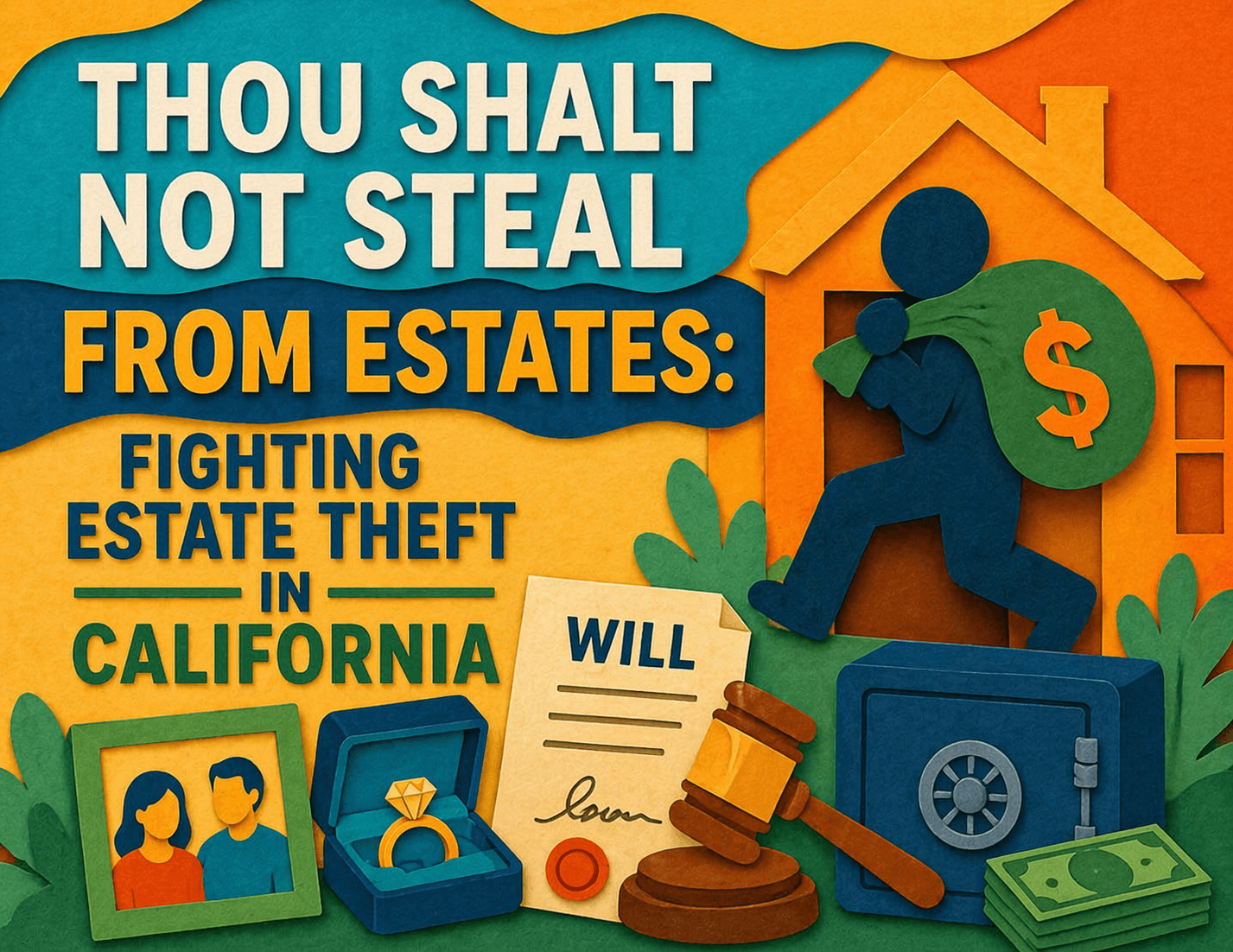

 Michael Hackard is the founder of Hackard Law, a California trust and estate litigation firm with more than five decades of experience protecting the inheritance rights of families across Sacramento, the San Francisco Bay Area, and Los Angeles. He is the author of four published books on inheritance protection and has produced more than 1,000 educational videos with over seven million views.