


 (916) 313-3030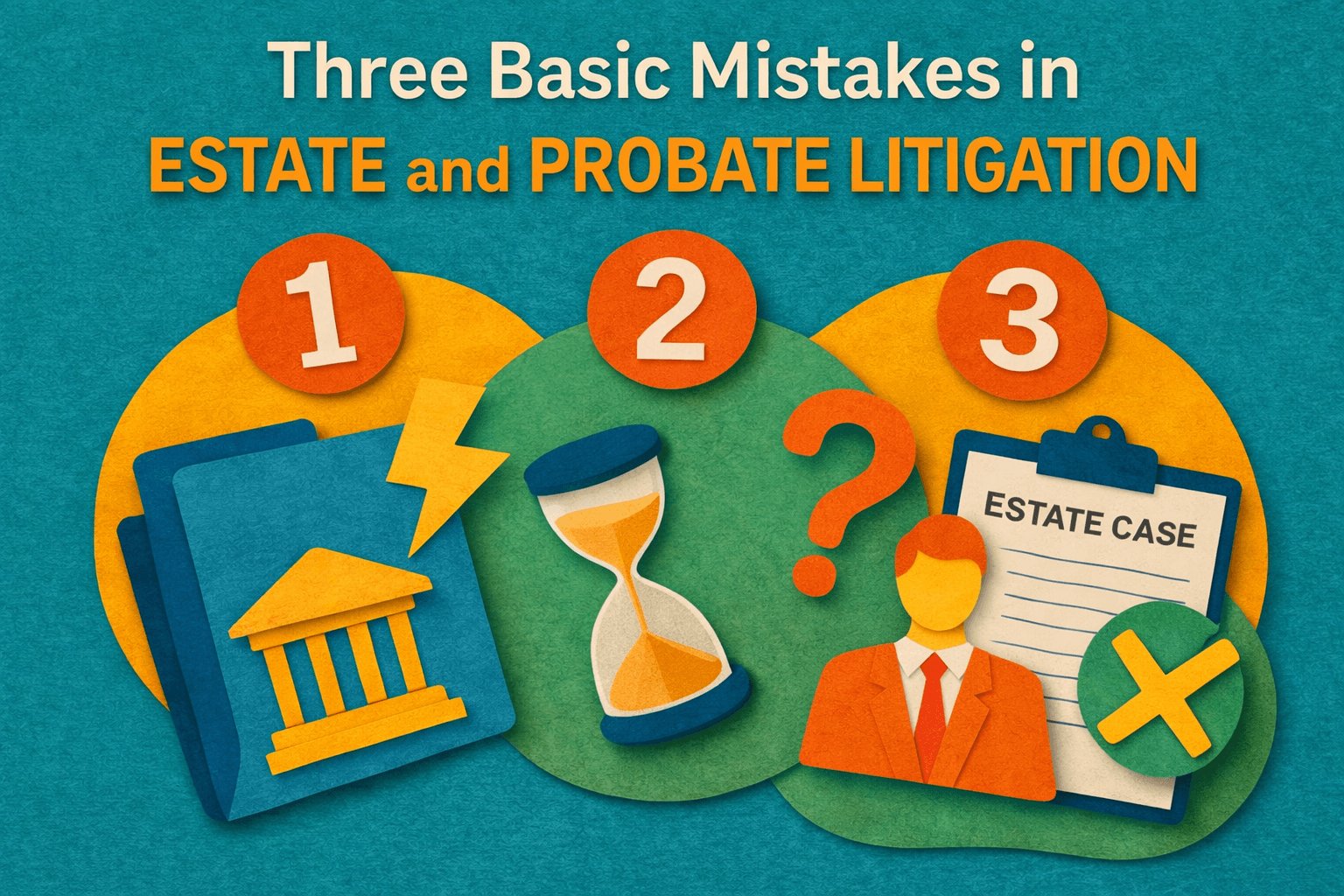
Three Basic Mistakes in Estate and Probate Litigation

When Grief Meets Chaos: The Cost of Common Mistakes
I’m Michael Hackard, founder of Hackard Law. Over more than five decades of practicing trust and estate litigation across Sacramento, the San Francisco Bay Area, and Los Angeles, I have watched families lose what should have been rightfully theirs — not because the law failed them, but because basic mistakes derailed their case before it even started. I have written four published books on inheritance protection, and I have produced more than 1,000 educational videos with over seven million views, all with one purpose: helping heirs, beneficiaries, and elder abuse victims understand how to protect themselves when an estate or trust dispute erupts.
The death of a loved one brings grief, and in too many cases, it also brings chaos. Questions pile up fast. Who has the will? Who has the trust? Who is taking care of the family business? Is someone hiding assets? These are not hypothetical concerns. They are the real-world crises that Sacramento and Northern California families bring to my office every week. The good news is that most of the damage caused by these mistakes can be avoided — if you recognize them early.
Hackard Law provides contingency fee representation, meaning there are no upfront costs for qualified cases.
If you or someone in your family faces a contested estate or trust, call Hackard Law at (916) 313-3030 to discuss your situation.
Quick Summary: The Three Mistakes That Sink Estate Cases
Estate and probate litigation demands preparation, speed, and the right advocate. Three recurring mistakes cause families to lose ground that they can never recover.
- No Plan: Failing to prepare for the legal aftermath of a loved one’s death leaves families vulnerable to asset loss and manipulation.
- Delay: Postponing decisions after a death can allow assets to disappear, documents to be hidden, and bad actors to consolidate control.
- Wrong Person for the Job: Hiring a lawyer who handles estate planning or administration — but not litigation — puts contested cases at serious risk.
Mistake One: No Plan
The old saying holds true in estate litigation: if you fail to plan, you plan to fail. When a family member dies, grief takes center stage. But behind the scenes, critical questions demand immediate answers.
Who holds the trust documents? Who has authority over bank accounts? Is someone already transferring assets out of the estate? These questions do not wait for the family to finish mourning. Without a plan, families find themselves reacting to problems instead of preventing them.
A plan does not need to be elaborate. It starts with knowing where the estate planning documents are stored, understanding who the named trustees and executors are, and having a clear line of communication among family members. When none of that exists, the door opens to confusion — and to those who would take advantage of it.
Case Pattern: The Missing Trust Document. A Sacramento-area family discovered after their father’s death that no one knew where the original trust was stored. A sibling who had lived with the father claimed the trust had been “updated” shortly before his death, naming her as the sole beneficiary. Without the original document to compare, the remaining siblings faced an uphill battle to prove the change was illegitimate. Early planning and document access could have prevented the entire dispute.
Families who want to understand the most common probate, trust, and estate battles should educate themselves before a crisis hits.
Mistake Two: Delay
Grief naturally brings a desire to postpone decisions. In some cases, a short pause causes no harm. In many others, delay is devastating.
Assets disappear during periods of inaction. Real property gets transferred. Bank accounts get drained. Documents get destroyed or hidden. The unscrupulous do not wait for the family to recover emotionally before making their move. Every week of delay gives a bad actor more time to consolidate control and cover tracks.
Delay also creates legal problems. California imposes statutes of limitations on trust and estate claims. Missing a filing deadline can permanently bar a claim, no matter how strong the underlying facts. Beneficiaries who suspect something is wrong must act — not next month, not after the holidays, but now.
When a trustee stalls or refuses to distribute assets, beneficiaries have legal tools available to compel action. Understanding what California beneficiaries can do when a trustee delays distributions is an essential first step.
Indecision hurts. It hurts financially, it hurts legally, and it hurts emotionally. The longer a family waits to address a contested estate, the harder it becomes to recover what was lost.
Mistake Three: Hiring the Wrong Person for the Job
This is the mistake that surprises families the most. They assume that any attorney who handles trusts and estates can handle their dispute. That assumption is wrong.
Estate litigation is fundamentally different from estate administration, and both are different from estate planning. An estate planning attorney drafts wills and trusts. An estate administration attorney guides families through uncontested probate. Neither of those skill sets prepares a lawyer for the courtroom battles that contested estates demand.
Probate, estate, and trust litigation requires a different kind of advocacy. It requires the ability to take depositions, cross-examine witnesses, present evidence to a judge, and argue motions. It requires familiarity with California’s Probate Code, the rules of civil procedure, and the specific dynamics of inheritance disputes. Litigation has winners and losers, and winning often requires the experience and polished trial skills of a dedicated estate litigator.
Case Pattern: The Administrative Attorney in a Litigation Case. A Northern California family hired their late mother’s estate planning attorney to handle a contested trust case involving a sibling who had taken financial control during the mother’s final years. The attorney, though competent in drafting documents, had never handled a contested proceeding. Months passed with no meaningful progress. By the time the family sought litigation counsel, key evidence had been lost, and the statute of limitations on certain claims had nearly expired. The right attorney from the start would have changed the trajectory of the case.
Families facing contested matters in Sacramento should consider working with a firm that handles contested will and trust cases as a core part of its practice. Choosing the right lawyer is not a luxury — it is a necessity. Learning how to choose the right probate lawyer can make all the difference.
Why These Mistakes Compound Each Other
These three mistakes rarely appear in isolation. A family with no plan is more likely to delay. A family that delays is more likely to hire the first attorney they find, regardless of whether that attorney handles litigation.
The compounding effect is what turns a manageable dispute into a catastrophe. By the time the right litigator enters the picture, assets may have been transferred, documents may have been altered, and the opposing side may have entrenched itself in a position of power.
Michael Hackard identifies this pattern repeatedly in Sacramento County probate litigation. The families who fare best are those who recognize the warning signs early, act quickly, and engage a litigation attorney from the outset.
Treating mistakes and failure as a learning opportunity is sound advice in every area of life. In estate and probate litigation, the lesson is clear: prepare, act, and choose wisely.
Key Definitions
- Estate Litigation: Legal disputes over the distribution, management, or validity of a deceased person’s assets, including will contests and trust disputes.
- Probate: The court-supervised process of validating a will and distributing a deceased person’s estate.
- Trust Contest: A legal challenge to the validity of a trust, often based on claims of undue influence, lack of capacity, or fraud.
- Trustee: A person or party who is responsible for managing trust assets and dividing them according to the trust’s terms.
- Beneficiary: A person designated to receive assets from a trust, will, or estate.
- Statute of Limitations: It is the legal deadline by which a claim must be filed in court; missing this deadline can permanently bar recovery.
- Estate Administration: The process through which the distribution of a deceased person’s assets is managed, typically through probate, when there is no dispute.
- Estate Planning: It is the process of making legal documents like trusts, wills, and powers of attorney, to direct how assets will be managed and distributed.
- Contingency Fee Representation: A fee arrangement where the attorney’s payment depends on the outcome of the case, eliminating upfront costs for the client.
What to Do Next
- Locate all estate planning documents — wills, trusts, deeds, account statements — and secure them immediately.
- Identify the named trustees, executors, and beneficiaries in every document.
- Document any suspicious activity, including unusual transfers, missing assets, or changes to estate documents made near the end of life.
- Do not delay. California imposes strict deadlines on trust and estate claims.
- Consult a Sacramento estate lawyer who handles contested matters — not just estate planning or administration.
- Review your rights as a beneficiary by reading about the five things California trust beneficiaries must know.
- Gather contact information for financial institutions, insurance companies, and any professionals involved in the estate.
- Keep a written record of all communications with trustees, executors, and other family members.
- Contact Hackard Law at (916) 313-3030 to discuss your case and explore your legal options.
If you believe mistakes have already been made in your family’s estate or trust matter, call Hackard Law at (916) 313-3030 before the situation gets worse.
CALL THE SAGE | When Experience Matters, Families Listen
THE EXPERTISE:
📚 50 years California trust, estate & elder financial abuse litigation
⚖️ We represent heirs, beneficiaries, and elder abuse victims
🎥 1,000+ educational videos | 7 million+ views | 4 published books
🎯 “After thousands of cases, I see the pattern others miss.”
CONTINGENCY REPRESENTATION — No Win, No Fee
Throughout California: Sacramento | Los Angeles | Bay Area
📞 CALL THE SAGE: (916) 313-3030
Subscribe for weekly insights on:
• Elder financial abuse warning signs and prevention
• Trust and estate litigation strategies
• Inheritance protection for California families
• Family protection strategies
When your inheritance is under attack, Call The Sage.
Hackard Law | 10640 Mather Blvd, Mather CA 95655
Attorney Advertisement | Michael Hackard, State Bar #71067
RELATED VIDEOS
Three Major Estate & Probate Litigation Mistakes
Highest keyword match (13) and directly mirrors the blog’s core topic of three mistakes in estate and probate litigation — the most relevant companion video available.
Hackard Law: Estate, Trust & Probate Litigation for Sacramento and Northern CA
Second-highest keyword match (9) and provides essential context on Hackard Law’s Sacramento and Northern CA estate, trust, and probate litigation practice — directly relevant to this blog’s audience and focus.
How to Win an Estate Litigation Fight | Sacramento
Strong keyword match (7) and directly complements the blog’s theme of avoiding mistakes to succeed in estate litigation, with a Sacramento focus matching the blog’s geographic context.
Unintended Consequences | Preventing Probate, Trust & Estate Litigation
Strong keyword match (7) and aligns tightly with the blog’s prevention theme — specifically the ‘No Plan’ mistake and the idea that early action avoids costly unintended consequences in probate and trust disputes.
Top 10 Types of Estate Battles | CA Probate & Trust Litigation
Strong keyword match (7) and complements the blog’s references to common estate battles, helping readers understand the landscape of disputes that make avoiding these three mistakes so critical.
California Trust & Estate Litigation | Delay Is Not Your Friend
Directly echoes Mistake Two (Delay) from the blog, reinforcing the blog’s urgent message that postponing action in trust and estate disputes can be devastating — a strong topical fit for readers.
 Michael Hackard is the founder of Hackard Law, a California trust and estate litigation firm with more than five decades of experience protecting the inheritance rights of families across Sacramento, the San Francisco Bay Area, and Los Angeles. He is the author of four published books on inheritance protection and has produced more than 1,000 educational videos with over seven million views.