


 (916) 313-3030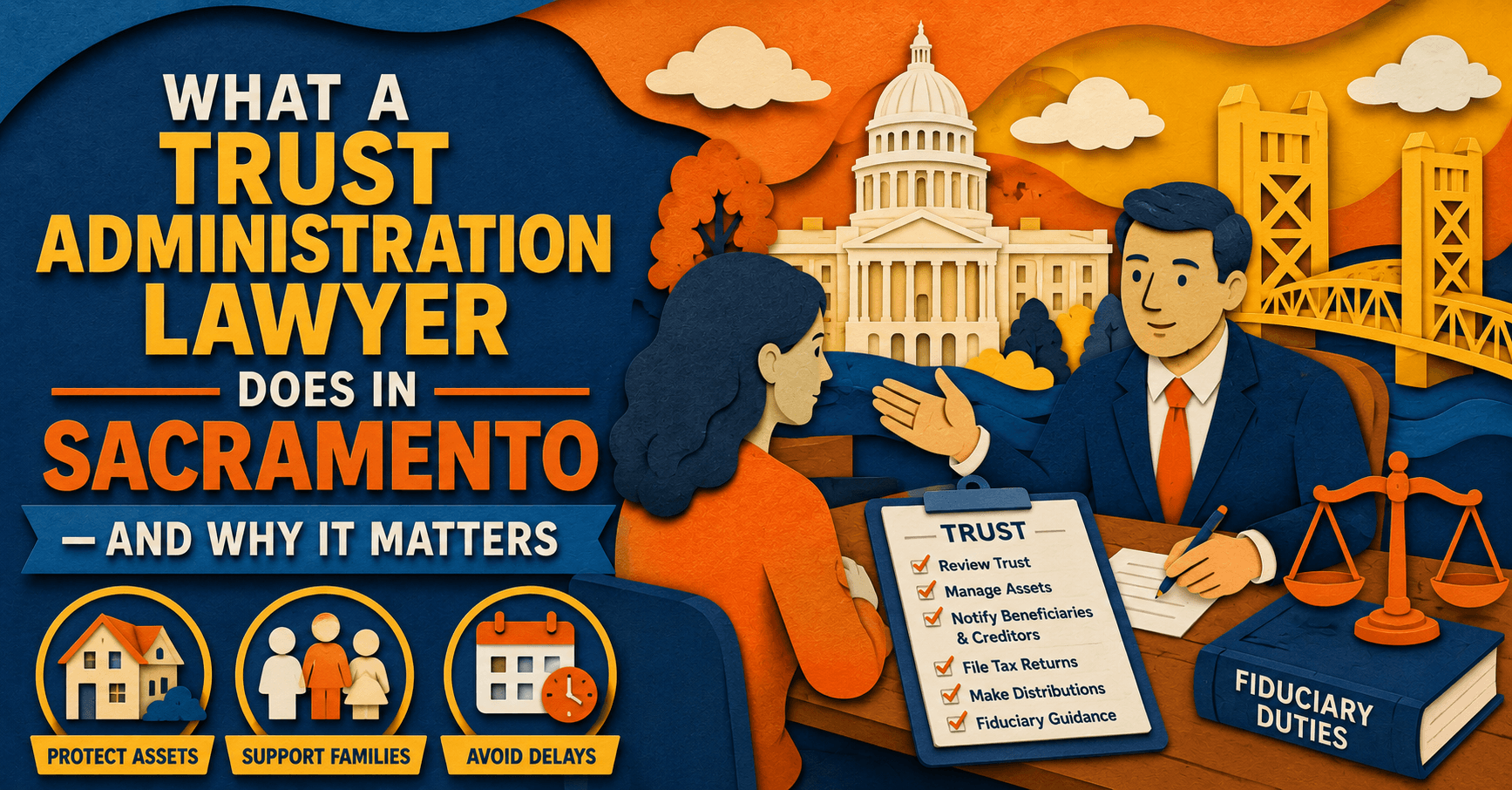
What a Trust Administration Lawyer Does in Sacramento — And Why It Matters

Why Trustees in Sacramento Need Legal Guidance
I’m Michael Hackard, founder of Hackard Law. Over five decades of practice, I have fought for heirs, beneficiaries, and elder abuse victims across California – from Sacramento and Northern California to the San Francisco Bay Area and Los Angeles. I have written four published books on inheritance protection and produced more than 1,000 educational videos that have reached over seven million viewers. Trust administration is one of the most misunderstood areas of California estate law, and I see families pay a real price for that misunderstanding every day.
Families frequently believe the difficult part is over when a loved one dies and leaves a trust. Since trusts are meant to prevent probate, shouldn’t everything go without a hitch? Not all the time. Trust administration involves detailed legal, financial, and emotional procedures. A trustee who proceeds without the right guidance risks incurring personal liability, family strife, and expensive delays. For this reason, the function of a trust administration attorney is crucial.
Hackard Law provides contingency fee representation for qualified trust and estate litigation cases – no upfront costs required. If you have questions about your situation, call us at (916) 313-3030.
Quick Summary
Although trust administration has significant legal responsibilities under California law, it is not probate. Even when acting in good faith, trustees who neglect their responsibilities may be held personally liable.
- Trustees must notify beneficiaries within 60 days and creditors within 120 days under California law.
- A trust administration lawyer reviews the trust, retitles assets, manages tax filings, and guides the trustee through fiduciary duties.
- Local knowledge of Sacramento’s filing procedures and court preferences helps administration proceed without unnecessary delays.
- Disputes over distributions, fairness, or trust interpretation can be prevented – or defended – with the right legal partner.
- Proper administration honors the grantor’s intent and protects family relationships.
Trust Administration Is Not Probate – But It Is Not Simple
Many people believe that because a trust avoids probate court, the administration process is automatic. It is not. Even without court involvement, trustees carry serious legal duties under California’s Probate Code. They must follow the exact terms of the trust document, identify and safeguard all trust assets, notify beneficiaries and creditors within strict deadlines, file appropriate tax returns, and make lawful, timely distributions.
California law holds trustees to a high standard – loyalty, impartiality, and prudence. An honest mistake, even one made with good intentions, can expose a trustee to personal liability. That is not a theoretical risk. Beneficiaries who feel overlooked or treated unfairly have legal remedies, and they use them.
For trustees navigating this process, understanding what California beneficiaries can do when a trustee delays distributions without cause is just as important as knowing your own obligations.
What a Trust Administration Lawyer Actually Does
A trust administration lawyer begins by reviewing the trust document itself – confirming its validity, identifying the assets it holds, and determining that administration can lawfully begin. From there, the work becomes highly practical.
The lawyer helps retitle property into the trust where necessary, ensures correct tax identification numbers are in place, and coordinates appraisals of real estate, business interests, and other holdings. They prepare the mandatory notices to beneficiaries and creditors that California law requires, and they guide the trustee through every fiduciary obligation – maintaining records, providing formal accountings, and keeping beneficiaries informed throughout the process.
If disputes begin to surface – over the fairness of distributions, the interpretation of trust language, or the trustee’s conduct – the lawyer steps in early. Prevention is far less costly than litigation. But when conflict does escalate, the lawyer defends the trustee and protects the trust’s integrity. Reviewing the top 10 most common probate, trust, and estate battles gives trustees a clearer picture of what can go wrong and why early legal guidance matters.
Case Pattern: A parent’s trust appoints a trustee who learns that the trust owns a minority stake in a small business in addition to a family home. She starts allocating liquid assets without seeking legal advice, but she puts off dealing with the real estate and business interest. Deadlines are missed, beneficiaries become irate, and a formal dispute ensues. When a trust administration attorney is involved from the beginning, the family completely avoids litigation and the appraisals, retitling, and distributions proceed a set schedule.
Why Sacramento Experience Matters
California’s trust administration deadlines are strict, and the consequences for missing them are real. Beneficiaries must be notified within 60 days of the trustee learning of the grantor’s death. Creditors must typically be notified within 120 days. These are not suggestions – they are legal requirements, and a trustee who fails to meet them can face penalties or personal liability.
Another level of value is added by local knowledge. Financial institutions, court preferences, and filing procedures all have their own rhythms in Sacramento. A lawyer who regularly practices in Sacramento County knows how to advance administration effectively and in accordance with local standards. Because of this familiarity, there are fewer delays and fewer process errors that could lead to beneficiary scrutiny.
The Sacramento estate lawyer team at Hackard Law has guided trustees through this process for decades, and that depth of local experience shows in outcomes.
Case Pattern: A trustee in Sacramento is appointed over a trust that includes a rental property and several financial accounts. She assumes she has months before any formal steps are required. In fact, the 60-day beneficiary notice deadline has already begun running. A trust administration lawyer identifies the oversight early, sends proper notice, and brings the administration back into compliance – before any beneficiary files a complaint.
Real Estate, Business Interests, and Complex Assets
Not every trust holds simple assets. Many Sacramento trusts include real estate, retirement accounts, business interests, or a combination of all three. Each category carries its own legal and tax considerations, and mishandling any one of them can create liability for the trustee.
Real estate held in trust must be properly inventoried and appraised. If it needs to be sold, the trustee must follow the trust’s terms and California law governing real estate in trust litigation. Retirement accounts call for careful attention to beneficiary designations and distribution rules. Business interests may require a formal valuation and coordination with business partners or co-owners.
A trust administration lawyer coordinates all of this – working with appraisers, accountants, and financial institutions to make sure that every asset is handled correctly and that the trustee’s decisions are documented and defensible.
Protecting the Trustee and the Family
For decades, I have stood with families at some of the most difficult moments of their lives. Trust administration, done well, is an act of care – for the grantor’s memory, for the beneficiaries who depended on that person, and for the relationships that survive them. Done poorly, it becomes a source of conflict that can fracture families in ways no judgment can fully repair.
The financial toll of a disputed trust administration grows quickly. Legal fees, delays in distribution, and the cost of litigation can consume assets that were meant to pass intact to the next generation. A resolute dedication to doing the process right – with proper legal guidance from the beginning – restores what carelessness or confusion might otherwise cost.
If you are a trustee who needs guidance, or a beneficiary who has concerns about how a trust is being administered, Hackard Law is ready to help. You can also review the 8 stages of trust and estate litigation to understand what the dispute process looks like if administration has already gone wrong.
Key Definitions
- Trustee: The individual or institution appointed by the trust document to manage and distribute trust assets according to the grantor’s instructions.
- Grantor: The person who created the trust and whose assets are held within it.
- Beneficiary: A person or entity entitled to receive assets or income from the trust.
- Fiduciary duty: The legal obligation of a trustee to act in the best interests of the beneficiaries with loyalty, prudence, and impartiality.
- Trust administration: The legal process of managing and distributing a trust’s assets after the grantor’s death, outside of probate court.
- Probate: The court-supervised process for distributing a deceased person’s estate when no trust (or an incomplete trust) is in place.
- Accounting: A formal report prepared by the trustee showing all income, expenses, and distributions made from the trust.
- Creditor notice: A required notification sent to known creditors of the deceased, giving them an opportunity to submit claims against the trust estate.
- Retitling: The process of changing the legal ownership of an asset (such as real estate or a bank account) to reflect the trust’s name.
- Personal liability: The risk that a trustee may be held personally responsible for losses caused by a breach of fiduciary duty.
What to Do Next
- Look for the trust document as soon as possible after the grantor’s death and confirm who is named as trustee.
- Get copies of all asset statements, deeds, and account records held in the trust before taking any distribution steps.
- Try to avoid making any distributions until a lawyer has reviewed the trust terms and confirmed the proper process.
- Look for a trust administration lawyer with specific experience in Sacramento County and California’s Probate Code.
- Notify a lawyer promptly if you are a beneficiary who has not received required notice within 60 days of the grantor’s death.
- Try to avoid signing any documents or releases without legal review, especially if you have concerns about how the trust is being managed.
- Review the 5 things California trust beneficiaries must know to understand your rights throughout the process.
- Get copies of any formal accountings provided by the trustee and review them carefully with legal counsel.
- Look into the contingency fee options available for qualified trust disputes if upfront legal costs are a concern.
- Call Hackard Law at (916) 313-3030 to discuss your situation, and visit our contact page to reach our Sacramento team directly.
CALL THE SAGE | When Experience Matters, Families Listen
🏛️ We practice California trust & estate & elder financial abuse litigation
⚖️ We represent heirs, beneficiaries, and elder abuse victims
🎥 1,000+ educational videos | 7 million+ views | 4 published books
🎯 “After thousands of cases, I see the pattern others miss.”
CONTINGENCY REPRESENTATION – No Win, No Fee
Throughout California: Sacramento | Los Angeles | Bay Area
📞 CALL THE SAGE: (916) 313-3030
Subscribe for weekly insights on:
- Elder financial abuse warning signs and prevention
- Trust and estate litigation strategies
- Inheritance protection for California families
- Family protection strategies
When your inheritance is under attack, Call The Sage.
Hackard Law | 10640 Mather Blvd, Mather CA 95655
Attorney Advertisement | Michael Hackard, State Bar #71067
RELATED VIDEOS
The Fiduciary’s Duty of Loyalty: How Trustees Get Sued in Sacramento
Explains how trustees breach their duty of loyalty and face lawsuits in Sacramento.
What Are the Five Most Common Sacramento Trust Lawsuits?
Walks through the five trust disputes that most often end up in Sacramento courts.
Probate in Sacramento County: Why Local Rules Matter
Covers how Sacramento County’s local probate rules affect estate administration outcomes.
Contempt of Court Against Former Trustees | Sacramento, California
Discusses what happens when former trustees fail to comply with court orders in California.
Hackard Law: Estate, Trust & Probate Litigation for Sacramento and Northern CA
Introduces Hackard Law’s estate, trust, and probate litigation services across Northern California.
When Mediation Fails: Preparing for Trust Litigation in California
Explains what beneficiaries and trustees should do when trust disputes cannot be settled through mediation.
 Michael Hackard is the founder of Hackard Law, a California trust and estate litigation firm with more than five decades of experience protecting the inheritance rights of families across Sacramento, the San Francisco Bay Area, and Los Angeles. He is the author of six published books on inheritance protection and has produced more than 1,000 educational videos with over seven million views.