


 (916) 313-3030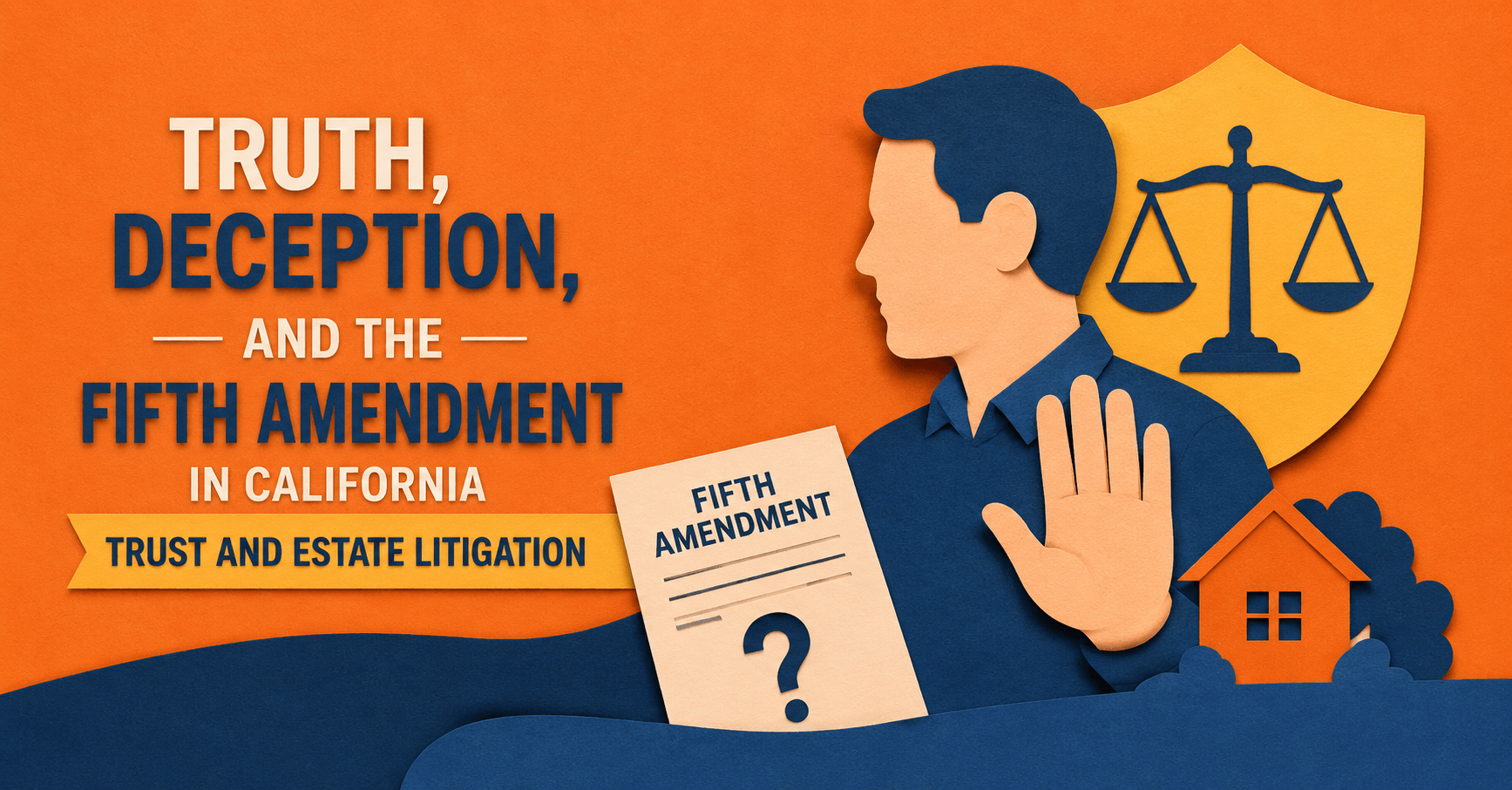
Truth, Deception, and the Fifth Amendment in California Trust and Estate Litigation

When Truth Becomes the Battleground
I’m Michael Hackard, founder of Hackard Law. Over five decades of practice, I have fought for heirs, beneficiaries, and elder abuse victims across California – from Sacramento and the San Francisco Bay Area to Los Angeles. I have written four books on inheritance protection and produced more than 1,000 educational videos that have reached over seven million viewers. In that time, I have seen nearly every form of deception that surfaces in trust, estate, and elder financial abuse disputes.
Some cases turn on ambiguous language – muddled words, competing interpretations, documents that could reasonably be read more than one way. Those disputes are difficult, but they are honest disagreements. Other cases are different. Truth, in those matters, feels like an orphan. The deceit may be intentional, rationalized, exaggerated, or fabricated outright. In those cases, the pursuit of truth becomes not just a legal strategy, but a moral obligation.
Hackard Law provides contingency fee representation for qualified cases – no upfront costs to you. To discuss your situation, call us at (916) 313-3030.
Quick Summary
Deception in trust and estate litigation takes many forms, and California courts have tools to expose it. The Fifth Amendment, often misunderstood, can work against a party who invokes it in a civil case.
- Ambiguous legal documents create honest disputes; deliberate falsehoods create something far more damaging.
- Discovery and depositions are primary tools for uncovering the truth in civil litigation.
- Pleading the Fifth in a civil case allows a court to draw adverse inferences against that party.
- Courts are not obligated to accept silence as neutral – logical conclusions may be drawn from a refusal to answer.
- Hackard Law litigates trust, estate, and elder financial abuse cases throughout California.
Two Types of Disputes: Ambiguity vs. Deception
Not every contested estate matter involves a villain. Some disputes arise because a trust or will was drafted with imprecise language – terms that carry alternate meanings, provisions that conflict, or instructions that simply did not anticipate the circumstances that followed. These cases require careful legal analysis, but they do not necessarily involve bad faith.
Then there are disputes where the problem is not the document – it is the people. Someone may have exerted pressure on a vulnerable elder to redirect assets. A trustee may have quietly diverted funds. A caregiver may have inserted themselves into an estate plan through manipulation. In these cases, the legal question and the human question are the same: what actually happened, and who is telling the truth?
For a deeper look at how manipulation reshapes estate plans, the undue influence in California estate law resource covers the legal standards courts apply when evaluating coercion and control.
Discovery: The Search for Truth in Civil Litigation
Discovery is the formal process through which parties in civil litigation exchange information, documents, and testimony before trial. It is imperfect – people can still mislead, omit, and shade the truth during depositions. But it remains the most powerful tool available for exposing what actually occurred.
Depositions, in particular, place a witness under oath and on the record. Inconsistencies surface. Prior statements are tested. Documents are introduced. A witness who has rehearsed a false narrative often finds that the details do not hold under sustained questioning. Michael Hackard approaches every deposition as a structured pursuit of the facts – not a performance, but a disciplined effort to find what the evidence actually shows.
Case Pattern: A family member serving as successor trustee claimed that an elderly parent had freely chosen to transfer the bulk of the estate to one child. During deposition, the trustee’s account of events contradicted prior communications, financial records, and witness statements. The pattern of isolation and financial control that emerged pointed toward a very different story – one the court ultimately found credible.
For families who suspect that assets were taken through fraud or manipulation, the California inheritance theft guide outlines how these cases are built and what evidence tends to matter most.
The Fifth Amendment in Civil Cases: What Silence Actually Costs
Most people associate the Fifth Amendment with criminal proceedings – the right not to incriminate yourself. What many do not realize is that the Fifth Amendment can also be invoked in civil litigation. And when it is, the consequences are often severe.
In a criminal case, a jury may not draw any negative inference from a defendant’s silence. Civil cases operate differently. When a party to a civil lawsuit refuses to answer questions by pleading the Fifth, a court is entitled to draw logical conclusions against that party. The silence does not protect them – it signals to the court that the truthful answer would be damaging.
In a recent case handled by Hackard Law, the opposing party invoked the Fifth Amendment in response to a number of questions during discovery. That choice was neither neutral nor harmless. Pleading the Fifth in a civil matter is rarely a winning strategy. It is typically very damaging, because it allows the court to treat the refusal to answer as evidence pointing toward the very conduct the party is trying to conceal.
Case Pattern: In a civil elder financial abuse matter, a defendant refused to answer questions about specific financial transactions, citing the Fifth Amendment. Rather than shielding the defendant, the invocation drew the court’s attention directly to those transactions. The adverse inference the court was permitted to draw became a significant factor in the outcome.
Understanding civil remedies for elder financial abuse – including double damages and attorney fee recovery – helps families understand what is at stake when these cases are litigated to conclusion.
Why Telling the Truth Is a Legal Strategy
There is an old saying: see the truth, tell the truth. In litigation, this is not just a moral principle – it is a practical one. Cases built on fabrication tend to collapse under scrutiny. Inconsistencies multiply. Witnesses contradict each other. Documents tell a different story than the one being offered in court.
Hackard Law’s approach is to step back, look carefully at what the evidence actually shows, and build a case around that reality. Discovery, forensic analysis, and the pursuit of justice are not just legal strategies – they are safeguards for families threatened by undue influence and fraud. A steadfast commitment to truth restores what dishonesty tried to steal.
For families navigating the early stages of a dispute, early legal intervention in elder financial abuse cases can make a significant difference in what is ultimately recoverable.
For decades, I have stood with families who came to me after someone they trusted had taken advantage of a parent, a spouse, or a sibling. The financial toll grows with every month that passes without action. The fracture often runs too deep for any judgment to mend the relationship entirely. But the record can be set straight. The truth can be told. And the law provides real tools for doing exactly that.
Key Definitions
- Discovery: The pre-trial process in civil litigation through which parties exchange documents, answer written questions, and give sworn testimony in depositions.
- Deposition: Sworn, out-of-court testimony given by a witness and recorded for use in litigation.
- Fifth Amendment: A constitutional protection against self-incrimination; in civil cases, invoking it allows a court to draw adverse inferences against the party who refuses to answer.
- Adverse inference: A conclusion a court or jury may draw when a party refuses to produce evidence or answer questions – typically that the withheld information would have been harmful to that party.
- Undue influence: Pressure or manipulation that overcomes a person’s free will, often used to redirect estate assets in California trust and elder abuse cases.
- Elder financial abuse: The illegal or improper use of an elder’s funds, property, or assets, which in California can result in double damages and attorney fee awards.
- Trust litigation: Court proceedings to resolve disputes over the validity, administration, or terms of a trust.
- Fabrication: A deliberately false statement or manufactured account of events introduced to mislead a court or opposing party.
- Contingency fee representation: A fee arrangement in which the attorney is paid only if the case is won or settled, with no upfront costs to the client.
What to Do Next
- Look for inconsistencies in financial records, account statements, or estate documents that do not match what you have been told.
- Get copies of trust documents, amendments, and any powers of attorney as early as possible.
- Write down a timeline of events – who said what, when changes were made, and who was present.
- Try to avoid confronting the opposing party directly before speaking with an attorney, as this can affect your legal position.
- Look for signs of isolation, sudden changes to beneficiary designations, or unexplained asset transfers.
- Reach out to other family members or witnesses who may have observed relevant events and document their recollections.
- Try to avoid waiting – California has statutes of limitations that can bar claims if too much time passes.
- Learn about your rights as a beneficiary or heir under California law before taking any formal action.
- Call Hackard Law at (916) 313-3030 to discuss your situation with an attorney who handles these cases throughout California.
- You can also reach us through our contact page to request a consultation.
CALL THE SAGE | When Experience Matters, Families Listen
🏛️ We practice California trust & estate & elder financial abuse litigation
⚖️ We represent heirs, beneficiaries, and elder abuse victims
🎥 1,000+ educational videos | 7 million+ views | 4 published books
🎯 “After thousands of cases, I see the pattern others miss.”
CONTINGENCY REPRESENTATION – No Win, No Fee
Throughout California: Sacramento | Los Angeles | Bay Area
📞 CALL THE SAGE: (916) 313-3030
Subscribe for weekly insights on:
- Elder financial abuse warning signs and prevention
- Trust and estate litigation strategies
- Inheritance protection for California families
- Family protection strategies
When your inheritance is under attack, Call The Sage.
Hackard Law | 10640 Mather Blvd, Mather CA 95655
Attorney Advertisement | Michael Hackard, State Bar #71067
RELATED VIDEOS
Stopping Estate Fraud | Los Angeles Trust Litigation Attorneys
Explores how attorneys identify and fight fraudulent conduct in estate disputes.
Changes in California Estate Litigation: Elder Financial Abuse & Undue Influence
Reviews how California law has evolved to address undue influence and financial abuse.
The Wolf at the Door: Ep. 19 | Basics of Estate Litigation Strategy
Breaks down the foundational strategies used in trust and estate litigation battles.
Jury Trial vs. Bench Trial | CA Trust Litigation & Elder Financial Abuse
Compares how judges and juries handle trust and elder financial abuse cases differently.
Trust & Estate Bandits | CA Estate Litigation
Examines how bad actors steal or redirect assets from trusts and estates.
The Wolf at the Door: Ep. 20 | Trust Litigation Battle Plan
Outlines a practical litigation battle plan for contested trust and estate cases.
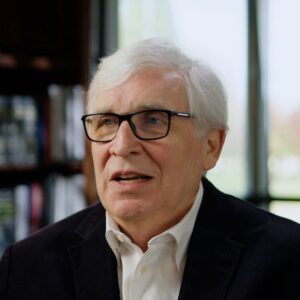 Michael Hackard is the founder of Hackard Law, a California trust and estate litigation firm with more than five decades of experience protecting the inheritance rights of families across Sacramento, the San Francisco Bay Area, and Los Angeles. He is the author of six published books on inheritance protection and has produced more than 1,000 educational videos with over seven million views.