


 (916) 313-3030
Victor Attitude in Estate and Trust Litigation: How Mindset Shapes Case Outcomes

Why Mindset Matters in Estate and Trust Cases
I am Michael Hackard, founder of Hackard Law, and over five decades of law practice, I have fought alongside families navigating some of the most painful legal battles imaginable – contested wills, trust disputes, and elder financial abuse. I have written four published books on inheritance protection and produced more than 1,000 educational videos that have reached over seven million viewers. That body of work reflects a single conviction: the families I serve deserve both skilled legal counsel and honest guidance about what it takes to prevail.
Hackard Law represents clients throughout Sacramento, the San Francisco Bay Area, and Los Angeles. Wherever a case arises, I have observed that the outcome is shaped not only by evidence and legal strategy, but by something less tangible – the attitude a client carries into the fight.
Hackard Law offers contingency fee representation for qualified estate, trust, and elder financial abuse cases, meaning no upfront costs to you. To discuss your situation, call us at (916) 313-3030.
Quick Summary
In estate and trust litigation, a victor mindset, which is based on personal accountability, realistic risk assessment, and a dedication to perseverance. This consistently yields better results than a victim mindset, which is based on resentment and blame.
- Settlement and trial proceedings are typically handled more skillfully by clients who take ownership of their choices.
- Every party involved in litigation faces actual risks, and a good legal strategy includes an awareness of those risks.
- A victor attitude does not mean false confidence – it means endurance, clarity, and honest self-assessment.
- Estate and trust disputes often involve grievous financial and emotional loss before any recovery begins.
- Hackard Law focuses on substantial cases where meaningful recovery is achievable.
The Storm We Are All In
The COVID-19 pandemic reminded many of us that while we share the same storm, we navigate it in very different boats. That observation holds true in litigation as well. Two clients can face nearly identical facts – cut out of a will, excluded from a trust, watching family assets transferred away – and respond to those facts in fundamentally different ways. One carries the weight of victimhood. The other carries the resolve of a victor.
Attitude matters. In my experience, it makes a big difference. Clients who are firmly rooted in personal accountability and who resist the allure of guilt and bitterness are better equipped to make the unbiased judgments that litigation necessitates. They honestly assess risk. They pay attention to advice. Instead of letting their feelings rule them, they make an informed decision about a settlement or trial.
For those grounded in faith traditions, there is often an added dimension – a belief that even in loss, something redemptive is at work. I have seen that belief sustain clients through years of difficult proceedings when nothing else could.
What a Victor Attitude Looks Like in Practice
A victor attitude is not false confidence. It does not ignore the possibility of losing. It does not pretend that litigation is anything other than what it is: a high-stakes process with uncertain outcomes. What it does is accept personal responsibility for the decisions that lie ahead.
In estate and trust disputes, those decisions are consequential. Should a client settle at mediation, accepting a recovery that is less than the full value of what was taken? Should the case go to trial, knowing that a loss is possible and that even a win can be appealed? These are not abstract questions. They are the real choices that clients face, and the quality of those choices depends heavily on the mindset the client brings to them.
Case Pattern: A client whose parent had been effectively removed from the family trust through a series of last-minute amendments came to Hackard Law after years of watching assets drain away. Rather than focusing on blame, this client focused on documentation, cooperated fully with the legal team, and approached mediation with realistic expectations. The recovery achieved at settlement – while not everything lost – was substantially more than doing nothing would have produced.
Clients who embrace victimhood tend to resist the hard truths that good counsel must deliver. They may reject a reasonable settlement out of anger rather than strategy. They may approach trial expecting vindication rather than a legal proceeding with its own rules and risks. The fracture that resentment creates often runs too deep for any judgment to mend.
For Sacramento families navigating contested estates, resources like a Sacramento estate lawyer or guidance on Sacramento estate and trust mediation can help frame realistic expectations early.
Risk, Reward, and the Reality of Litigation
Hackard Law takes on substantial cases – matters where we believe meaningful recovery is possible and where our involvement can make a real difference for heirs, beneficiaries, and elder abuse victims. That selectivity is itself a form of honest counsel. Not every grievance becomes a viable case. Not every viable case produces a full recovery.
The litigation process involves risk at every stage. Discovery may surface evidence that complicates the narrative. A trial court ruling can be appealed, extending the timeline and the uncertainty. Mediation may produce a number that falls short of what was taken. These are not reasons to avoid litigation when the facts support it – they are reasons to enter it with clear eyes.
I help clients understand both the potential rewards and the genuine risks before any major decision is made. That transparency is not pessimism. It is the foundation of a victor attitude: knowing the terrain before you cross it.
Case Pattern: A family in Northern California discovered that a sibling had used a power of attorney to redirect significant assets from an elderly parent’s estate in the years before death. The case involved complex financial records and competing claims. Rather than expecting a quick resolution, the family committed to the process, accepted the timeline, and ultimately recovered a substantial portion of the diverted assets through a negotiated settlement – more than they held before the case began.
For those weighing how to approach a contested matter, understanding how to choose the right probate lawyer is a practical first step. For contested wills and trusts in the Sacramento region, a Sacramento contested will and trust lawyer can assess the specific facts of a case.
The Human Purpose Behind Legal Strategy
For decades, I have stood with families at some of the lowest points of their lives. The financial toll grows in ways that are hard to measure – not just in dollars lost, but in relationships strained, futures disrupted, and legacies diminished. Discovery, forensic analysis, and the pursuit of accountability are not just legal strategies, but safeguards for families threatened by manipulation and fraud.
A steadfast commitment to truth restores what dishonesty tried to steal. That is why attitude matters so much. A client who approaches litigation as a victor – not a victim – is a client who can sustain that commitment through the months or years it may take to reach resolution. They do not give up when the process is hard. They do not make decisions out of exhaustion or anger. They persevere.
I have seen this pattern across five decades of practice. The clients who do best are those who take ownership of their role in the process, trust their legal team, and hold on to a realistic but determined belief that recovery is possible. That belief, more than any single legal maneuver, is what carries a case across the finish line.
For those considering their options, the contingency fee guide for California estate and trust litigation offers useful context on how representation works when upfront costs are a barrier.
Key Definitions
- Victor attitude: A mindset grounded in personal responsibility, realistic risk assessment, and commitment to persevere through difficult legal proceedings without surrendering to blame or resentment.
- Victim mentality: A pattern of rejecting personal responsibility, expecting failure, and feeding resentment – a combination that tends to undermine sound decision-making in litigation.
- Contingency fee representation: A fee arrangement in which the attorney is paid from any recovery obtained, with no upfront costs required from the client.
- Mediation: A structured negotiation process in which a neutral third party helps disputing parties reach a voluntary settlement outside of court.
- Settlement conference: A court-supervised meeting designed to explore whether a case can be resolved before trial.
- Trial: A formal legal proceeding in which evidence is presented to a judge or jury for a binding decision.
- Appeal: A request to a higher court to review and potentially reverse a trial court’s decision, which can extend litigation significantly.
- Elder financial abuse: The wrongful taking, concealment, or appropriation of an elder’s assets, often by someone in a position of trust.
- Undue influence: Pressure exerted on a person – often an elder with diminished capacity – that overcomes their free will in making estate planning decisions.
- Personal responsibility in litigation: The client’s active role in making informed decisions about settlement, trial, and risk – decisions that counsel can advise on but cannot make for the client.
What to Do Next
- Look for patterns of financial irregularity in the estate or trust – unexplained transfers, sudden changes to beneficiary designations, or assets that cannot be accounted for.
- Get copies of all relevant estate planning documents, including wills, trust amendments, powers of attorney, and account records.
- Try to avoid making major decisions – accepting or rejecting settlements – out of anger or exhaustion rather than strategy.
- Look for an attorney who handles estate and trust litigation on a contingency basis so that upfront costs do not prevent you from pursuing a valid claim.
- Try to avoid sharing case details broadly with family members who may have conflicting interests.
- Look for documentation of any communications that show undue pressure on the decedent or improper influence over estate planning decisions.
- Get a realistic assessment of the risks and potential recovery before committing to litigation or settlement.
- Try to approach mediation with an understanding that a negotiated recovery – even if partial – may represent a meaningful outcome.
- Look for legal counsel with deep experience in California estate, trust, and elder financial abuse litigation.
- Call Hackard Law at (916) 313-3030 to discuss your case with our team. You can also reach us through our contact page.
CALL THE SAGE | When Experience Matters, Families Listen
🏛️ We practice California trust & estate & elder financial abuse litigation
⚖️ We represent heirs, beneficiaries, and elder abuse victims
🎥 1,000+ educational videos | 7 million+ views | 4 published books
🎯 “After thousands of cases, I see the pattern others miss.”
CONTINGENCY REPRESENTATION – No Win, No Fee
Throughout California: Sacramento | Los Angeles | Bay Area
📞 CALL THE SAGE: (916) 313-3030
Subscribe for weekly insights on:
- Elder financial abuse warning signs and prevention
- Trust and estate litigation strategies
- Inheritance protection for California families
- Family protection strategies
When your inheritance is under attack, Call The Sage.
Hackard Law | 10640 Mather Blvd, Mather CA 95655
Attorney Advertisement | Michael Hackard, State Bar #71067
RELATED VIDEOS
How to Win an Estate Litigation Fight | Sacramento
Practical strategies for prevailing in contested estate and trust disputes.
Trust & Estate Litigation | Perseverance and Vision
Why endurance and clear-eyed vision are essential to surviving a trust dispute.
The Power of Presence | Sacramento, CA Estate & Trust Attorney
How showing up fully and attentively can shape the outcome of your case.
Sacramento Trust Litigation Attorney | Results Matter
An attorney focused on delivering meaningful results for trust litigation clients.
The 3 Biggest Risks to Family Wealth | CA Estate & Trust Litigation
Identifies the key threats that can erode or destroy a family’s inherited wealth.
Sacramento Estate and Trust Litigation Settlements | What’s Next?
Walks through what clients can expect after reaching a settlement in their case.
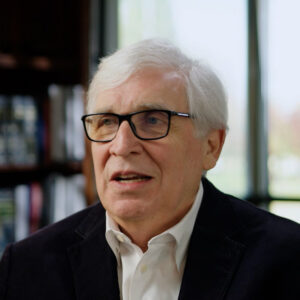 Michael Hackard is the founder of Hackard Law, a California trust and estate litigation firm with more than five decades of experience protecting the inheritance rights of families across Sacramento, the San Francisco Bay Area, and Los Angeles. He is the author of six published books on inheritance protection and has produced more than 1,000 educational videos with over seven million views.