


 (916) 313-3030
When California Elder Financial Abuse Law Can Help

I am Michael Hackard, founder of Hackard Law. With over five decades of California trust and estate litigation, I have represented heirs, beneficiaries, and elder abuse victims from Sacramento and the San Francisco Bay Area to Los Angeles. I have written four published books on inheritance protection, and I have produced more than 1,000 educational videos that have reached over seven million viewers. I say all of that not to impress you, but to explain why I feel a responsibility to be honest in a way that not every attorney is willing to be.
Not every case is worth bringing. Not every suspicious transfer can be unwound. Not every elder who was isolated and exploited will have their estate restored to what it should have been. The families who call me deserve a candid account of where the law can reach – and where it cannot. That candor is what this post is about.
Hackard Law provides contingency fee representation for qualified cases – no upfront costs to you. To find out whether your situation qualifies, call us at (916) 313-3030.
Quick Summary
California has some of the strongest elder financial protection statutes in the country, but those tools only work when the right facts and evidence are present. Timing matters enormously – families who act quickly recover far more often than those who wait.
- California law provides mandatory attorney’s fees, doubled damages, and burden-shifting presumptions in elder financial abuse cases
- The strongest cases share a clear pattern: a prior estate plan, a documented period of decline, a person with access and motive, and a record that can be assembled into a timeline
- Harder cases involve repeated plan changes, long delays before acting, decayed evidence, or transfers to unreachable parties
- The “justice gap” describes the distance between what was done and what can actually be recovered
- Families who move first – within weeks of discovery – recover far more often than those who wait
California’s Legal Tools Are Real
California provides some of the strongest elder financial protection statutes in the United States. Welfare and Institutions Code section 15657.7 mandates attorney’s fees on recovery. Probate Code section 859 authorizes doubled damages for bad faith transfers. Probate Code section 21380 creates statutory presumptions that shift the burden of proof to the person who benefited from a suspicious transfer.
These are not theoretical protections. They change the outcome of cases that would fail in other states. You can read more about how these remedies work in our guide to contingency fee representation for California estate and trust litigation.
But the tools require facts. The facts require evidence. And the evidence requires time – time that closes faster than most families realize.
What the Strongest Cases Look Like
There is a discernible pattern in the most obvious cases, which are also the ones I handle most easily. A previous estate plan aligns with what the family was informed to anticipate. A documented period of decline or isolation coincided with a change. Someone with access and a motivation benefited. Medical, financial, and communicative records can be put together to create a logical timeline. Additionally, a deadline has not yet passed.
When those elements are present, California law gives us real leverage. The statutory presumptions under Probate Code section 21380 force the benefiting party to explain themselves. The doubled damages provision under section 859 creates meaningful financial risk for the person who took what was not theirs. Mandatory attorney’s fees mean that a family with a strong case does not have to absorb the full cost of fighting.
Case Pattern: A family contacts Hackard Law within two months of a parent’s death. Medical records document a diagnosis of moderate cognitive decline eighteen months before the death. A new trust amendment, executed during that period, redirected the entire estate to a caregiver who had moved into the home six months earlier. Bank records show large transfers in the weeks following the amendment. With a clear timeline and preserved documentation, this pattern presents viable claims under California’s elder financial abuse statutes – and the burden shifts to the person who received the benefit.
For a broader look at how these disputes unfold, our overview of the most common probate, trust, and estate battles covers the terrain families most often face.
What the Harder Cases Look Like
Not every case fits that pattern, and I owe families an honest account of what makes a case harder to bring.
An elder who changed their estate plan repeatedly over years – in ways consistent with their changing relationships – is harder to challenge than one whose plan was stable for decades before a sudden shift. A change that happened before any documented cognitive decline is harder to connect to incapacity or undue influence. A family that waited years to act, whose witnesses have scattered and whose documents have been lost or destroyed, is working with evidence that has decayed past the point of usefulness.
Transfers to arm’s-length buyers who acted in good faith and cannot be reached present a different problem – the asset may be gone in a way the law cannot reverse. And a family that accepted an early distribution and signed a release they did not fully understand may have foreclosed legal options they did not know they had.
A lawyer is doing those families a disservice if they tell every family who calls that they have a good case. An honest evaluation of the available legal theories, applicable deadlines, the strength of the record, and whether the likelihood of recovery outweighs the time, money, and emotional costs of pursuing it should result from the first call.
Case Pattern: A family calls several years after a parent’s death. The parent had changed their trust four times over a decade, each time following a shift in a close relationship. No medical records document cognitive decline at the time of the final amendment. The family’s primary witness has passed away. The assets were distributed long ago, and the recipient has since moved out of state. This pattern presents significant obstacles – not because nothing wrong may have happened, but because the evidence needed to prove it in court has largely disappeared.
Our resource on guarding against elder financial abuse in California trust litigation explains the warning signs families should recognize early.
Understanding the Justice Gap
There is a phenomenon I call the justice gap, and I want to name it directly because families deserve to understand it before they invest in litigation.
The justice gap is the distance between what was done and what can actually be recovered. It is not a flaw in California law – it is a structural reality of civil litigation. The family whose parent lost three hundred thousand dollars to a romantic scammer operating overseas has almost no civil remedy. The money is gone. The person who took it is outside the reach of California courts. The recovery tools that work against California trustees and drafting attorneys do not reach a person in a foreign country who has already spent what they stole.
Contrast that with the family whose parent’s trust was administered by a bank that sat on distributions for eight years. The bank is here. It carries insurance. It has a record of its own conduct that can be subpoenaed and examined. That family has real leverage. You can learn more about how trustee accountability claims develop in our piece on what happens when requests for a trust accounting fail.
The family whose parent was exploited by a caregiver who has no assets worth pursuing faces a different calculation. The claim against the drafter of the amended trust – or against the financial advisor who processed the transfers without asking questions – may be worth more than the claim against the caregiver herself. Identifying the right defendant is part of what the first honest assessment has to accomplish.
I can narrow the justice gap. I cannot always close it. What I can always do is tell you where the gap is, which side of it your case sits on, and whether there is a path worth taking. Hackard Law serves families across California, including through our Sacramento County probate litigation practice, Los Angeles estate litigation team, and Alameda County estate litigation work.
Why the Families Who Recover Move First
For decades, I have stood with families in the hardest moments of their lives – after a parent’s death, after a sibling’s betrayal, after discovering that the estate they expected had been quietly redirected to someone who had no right to it. I have seen what separates the families who recover from those who do not.
It is rarely the size of the estate. It is rarely how sympathetic the story sounds on the first call. The families who recover are, more often than not, the families who moved first. Who called within weeks of discovering what happened. Who had preserved what arrived – documents, bank statements, letters, voicemails. Who had written down what they remembered before the details faded. Who brought the evidence the attorney could work with rather than the evidence the attorney had to reconstruct from nothing.
In addition to being legal tactics, discovery, forensic analysis, and the pursuit of accountability serve as protections for families under threat from those who were meant to defend them. With each month of delay, the financial cost increases. A family’s division is frequently too deep for any judgment to heal. What dishonesty attempted to steal is restored by an unwavering dedication to the truth, but only if the evidence is present.
Fifty years in this work has taught me to do one thing above all else: tell families the truth about where they stand.
Key Definitions
- Elder financial abuse: The taking, secreting, appropriating, or retaining of an elder’s property for a wrongful use or with intent to defraud, as defined under California Welfare and Institutions Code section 15610.30.
- Welfare and Institutions Code section 15657.7: California statute authorizing mandatory attorney’s fees to a prevailing plaintiff in an elder financial abuse case.
- Probate Code section 859: California statute authorizing the court to double the damages awarded when property is taken in bad faith or through undue influence.
- Probate Code section 21380: California statute creating a presumption of undue influence when a donative transfer is made to a person in a specified category of relationship with the transferor, shifting the burden of proof to the transferee.
- Undue influence: Excessive persuasion that overcomes a person’s free will and causes them to act in a way they would not otherwise have chosen, as defined under California Probate Code section 86.
- Statute of limitations: The legal deadline by which a claim must be filed; in elder financial abuse cases, this is typically four years from the date of discovery of the wrongful act.
- Justice gap: The practical distance between the harm that was done and the recovery that is legally and financially achievable given the facts of a particular case.
- Donative transfer: A transfer of property made as a gift, including changes to a will, trust, or beneficiary designation.
- Burden of proof: The obligation to produce sufficient evidence to establish a claim; in cases under Probate Code section 21380, this burden shifts to the person who received the transfer.
- Judgment-proof: A term describing a defendant who lacks sufficient assets to satisfy a civil judgment, making recovery difficult even when liability is established.
What to Do Next
- Write down everything you remember about the circumstances of the transfer or estate change, including dates, conversations, and who was present.
- Get copies of any estate planning documents – wills, trusts, amendments, powers of attorney – that you can access.
- Look for medical records from the period when the change occurred, particularly any records documenting cognitive decline or hospitalization.
- Gather financial records – bank statements, wire transfer records, account change notices – that reflect what happened and when.
- Try to avoid signing any releases, settlement agreements, or distributions before speaking with an attorney about what rights you may be waiving.
- Look for any communications – emails, texts, letters – that document the relationship between the elder and the person who benefited.
- Act quickly: California’s statutes of limitations in elder financial abuse cases can close faster than families expect, and delay compounds the problem.
- Call Hackard Law at (916) 313-3030 for a candid assessment of your situation, with no upfront cost for qualified cases.
- You can also reach us through our contact page to schedule a consultation and learn more about our service areas across California.
CALL THE SAGE | When Experience Matters, Families Listen
🏛️ We practice California trust & estate & elder financial abuse litigation
⚖️ We represent heirs, beneficiaries, and elder abuse victims
🎥 1,000+ educational videos | 7 million+ views | 4 published books
🎯 “After thousands of cases, I see the pattern others miss.”
CONTINGENCY REPRESENTATION – No Win, No Fee
Throughout California: Sacramento | Los Angeles | Bay Area
📞 CALL THE SAGE: (916) 313-3030
Subscribe for weekly insights on:
- Elder financial abuse warning signs and prevention
- Trust and estate litigation strategies
- Inheritance protection for California families
- Family protection strategies
When your inheritance is under attack, Call The Sage.
Hackard Law | 10640 Mather Blvd, Mather CA 95655
Attorney Advertisement | Michael Hackard, State Bar #71067
RELATED VIDEOS5
Trust Traps Part 2 | Financial Entanglement: How Estate Predators Tighten Their Grip
Explores how predators isolate and financially exploit vulnerable elders over time.
Thou Shalt Not Steal | From Decedents’ Estates
Examines wrongful takings from estates and the legal remedies available to families.
Do I Have a Real Case? | Probate, Estates & Trusts Litigation
Helps families honestly assess whether their estate dispute is worth pursuing in court.
Challenging a Trust: How Capacity Evaluations Help—and When They Don’t
Discusses what capacity evaluations can prove in trust disputes and their real limitations.
Don’t Be Late in Probate | J. Ronald Getty
Explains why acting quickly in probate matters can make or break your case.
Heroic Underdogs | Abused Trust Beneficiaries and Heirs
Tells the story of beneficiaries fighting back against those who exploited their loved ones.
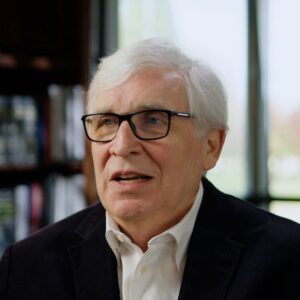 Michael Hackard is the founder of Hackard Law, a California trust and estate litigation firm with more than five decades of experience protecting the inheritance rights of families across Sacramento, the San Francisco Bay Area, and Los Angeles. He is the author of six published books on inheritance protection and has produced more than 1,000 educational videos with over seven million views.