


 (916) 313-3030
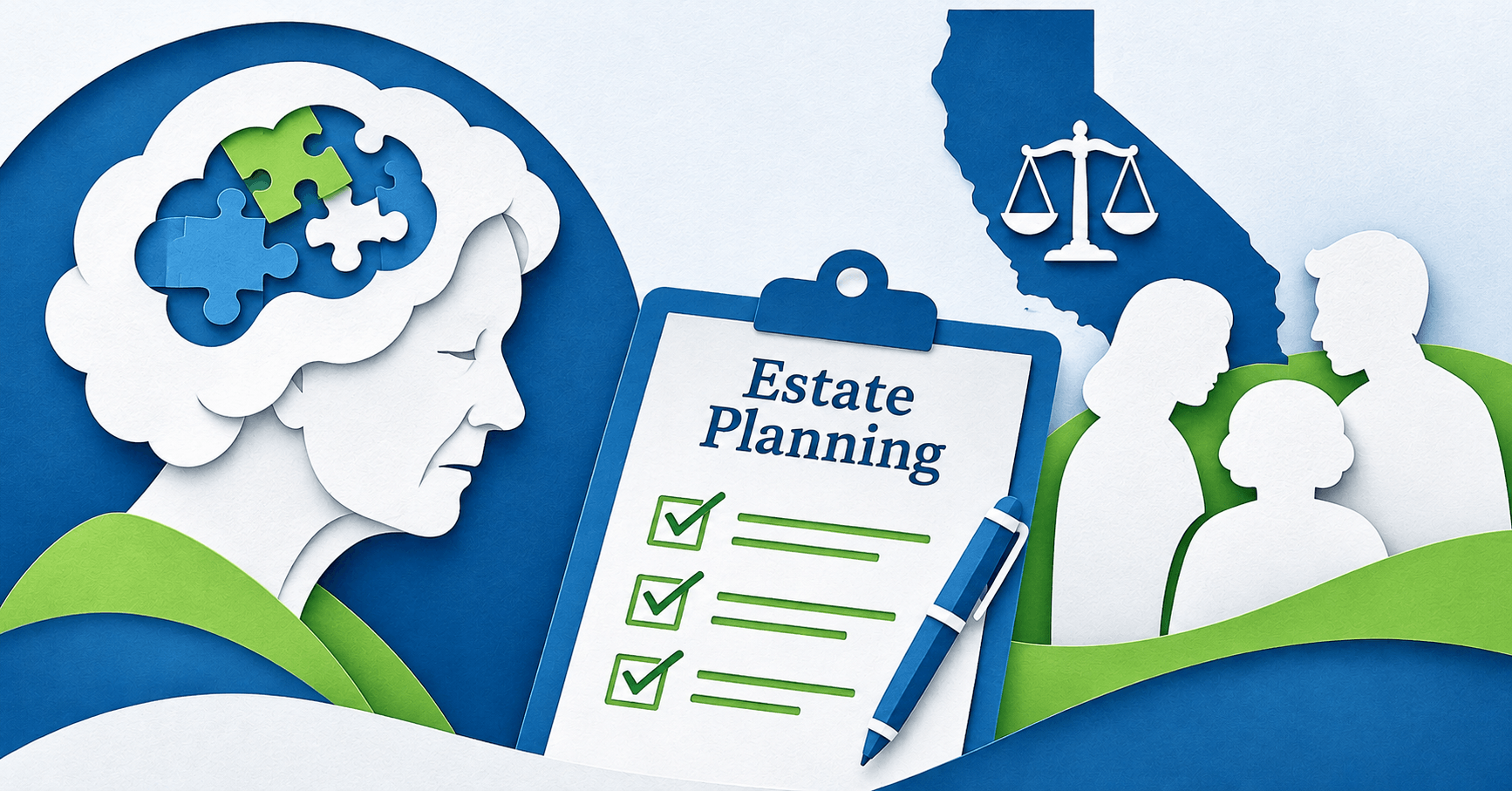
Estate Planning With Alzheimer’s: What California Families Must Do Before It’s Too Late

Why Timing Is Everything
I’m Michael Hackard, founder of Hackard Law. Over five decades of practice, I have fought for heirs, beneficiaries, and elder abuse victims across California – from Sacramento to the San Francisco Bay Area to Los Angeles. I have written four books on inheritance protection and produced more than 1,000 educational videos that have reached over seven million viewers. In that time, one question comes up more than almost any other: how do we handle estate planning when Alzheimer’s is already in the picture?
The honest truth is that timing is the name of the game. Alzheimer’s and other kinds of cognitive decline do more than affect daily routines – they create important legal problems about whether documents signed during decline will stand up in court. Families who wait too long face disagreements, invalid wills and litigation fights that drain estates and damage relationships. These are the steps I encourage families to take before the window closes.
Hackard Law provides contingency fee representation for qualified trust and estate litigation cases – no upfront costs required. If your family is facing a dispute, call us at (916) 313-3030.
Quick Summary
Alzheimer’s creates serious legal risks in estate planning, but early action can protect a loved one’s wishes and reduce the chance of costly litigation.
- Cognitive decline can invalidate wills and trusts signed after capacity is lost
- Durable powers of attorney must be established while the person still has legal capacity
- Estate planning documents need regular review as family circumstances and laws change
- Honest family conversations early reduce room for later conflict
- Working with an attorney experienced in elder law adds critical safeguards to documents
The Legal Meaning of Capacity
Capacity is the foundation of any valid estate plan. In California law, capacity means the ability to understand the nature of the act being taken, the property involved, and the people who would naturally receive it. A person signing a will or trust amendment must meet that standard at the time of signing – not just generally, but on that specific day.
Alzheimer’s complicates this because capacity can fluctuate. Someone may have a clear morning and a confused afternoon. That variability is exactly what makes these documents vulnerable to challenge. If a family member or interested party later claims the document was signed during a period of impairment, litigation follows. Hackard Law has seen this pattern lead to some of the most common probate and trust battles families face.
The solution is not to wait and hope. It is to act while capacity is clear and to build a record that documents that clarity.
Start the Conversation Early
Talking about money, wills, and end-of-life wishes is uncomfortable for most families. When Alzheimer’s enters the picture, the discomfort intensifies – but so does the urgency. Delaying these conversations does not spare anyone pain. It only guarantees more of it later.
Sit down with your loved one while they can still clearly express what they want. Open-ended questions work well: What would you want to happen with the house? How do you want to provide for the grandchildren? Who do you trust to make decisions if you cannot? The answers to these questions form the backbone of a sound estate plan.
Thoughtful estate planning communication – the kind that happens before a crisis – gives families a shared understanding that is harder to dispute later. It also gives attorneys the context they need to draft documents that reflect genuine intent.
Case Pattern: Northern California family waited until their father’s Alzheimer’s was well advanced before hiring an attorney. By then his ability was questionable and a trust modification he had signed months earlier was contested by a sister who said he had not understood what he was writing. The ensuing litigation consumed a large part of the inheritance and took years to conclude. If action had been taken earlier, the disagreement probably could have been avoided altogether.
Work With the Right Attorney
Estate planning when cognitive decline is present is not a situation for generic online forms or templates. The stakes are too high and the legal requirements too precise. An attorney with experience in elder law will do more than draft documents – they will build in safeguards that protect those documents from future challenge.
Those safeguards might include a formal capacity evaluation conducted by a physician at or near the time of signing, detailed witness statements, video recordings of the signing ceremony, or a letter from the treating physician confirming the client’s cognitive status. These steps may seem like extra work at the time. In litigation, they become the difference between a document that holds and one that falls apart.
Poor drafting – or drafting without these protections in place – is one of the most common reasons estate plans end up in court. The page on how poor drafting leads to courtroom battles explains how gaps in documents invite challenges that could have been avoided.
Secure Powers of Attorney Before It Is Too Late
One of the most urgent steps a family can take is establishing durable powers of attorney for both finances and health care. A durable power of attorney remains effective even if the person who granted it later loses capacity – but it must be signed while that person still has capacity. Once that window closes, the only path forward is a court-supervised conservatorship.
Conservatorships are costly, time-consuming, and emotionally draining. They take decision-making out of the family’s hands and place it under court oversight. A properly drafted durable power of attorney keeps that authority where it belongs – with someone the loved one actually chose and trusted.
Families should also understand that powers of attorney carry risk. A trusted agent can misuse that authority, and California courts take that seriously. If you suspect a power of attorney is being used to harm rather than help an elder, the page on when a power of attorney becomes a weapon outlines the legal options available.
Case Pattern: In one pattern Hackard Law has encountered, an adult child obtained a durable power of attorney from an aging parent in the early stages of Alzheimer’s and then used that authority to redirect assets away from other family members. When the parent passed, the remaining heirs challenged the transfers. The litigation centered on whether the parent had truly understood what was being signed – and whether the agent had acted in good faith. These cases are difficult and painful, but they are winnable with the right legal strategy.
Keep Documents Current
Estate planning is not a one-time event. Families grow, relationships change, laws are amended, and financial circumstances shift. A plan that was sound ten years ago may be dangerously out of date today – especially if Alzheimer’s has made it harder for the loved one to confirm what they currently want.
Outdated documents are among the most common triggers for trust and estate litigation. When a will or trust reflects circumstances that no longer exist, family members fill the gaps with competing interpretations. Those competing interpretations become disputes, and disputes become lawsuits.
Reviewing documents every two to three years – and after any major life event – is a reasonable standard. When cognitive decline is present, reviews should happen more frequently, and any updates should be made with the same care and documentation as the original plan.
What Families Stand to Lose – and Protect
I have stood with families through some of the hardest moments they will ever face. When Alzheimer’s is in the picture and the estate plan is not in order, the financial toll grows quickly – court costs, attorney fees, experienced attorney evaluations, and the time lost to litigation that can stretch for years. The fracture often runs too deep for any judgment to mend.
But I’ve also seen what occurs when families act early, and act wisely. An obvious plan, well documented, with the right attorney leading the way – that combination is what safeguards what the loved one really desired. It saves the family from going to court. It keeps relationships. Discovery, forensic analysis and the quest for justice are not simply legal maneuvers but protections for families under siege from improper influence and the slow death that cognitive deterioration can bring.
A steadfast commitment to truth restores what dishonesty tried to steal. That is why early action matters so deeply.
Key Definitions
- Testamentary capacity: The legal standard a person must meet to validly sign a will – understanding the nature of the document, the property involved, and the natural recipients of that property.
- Durable power of attorney: A legal document authorizing a named agent to act on behalf of the principal, remaining effective even if the principal later loses mental capacity.
- Conservatorship: A court-supervised arrangement in which a judge appoints a person to manage the affairs of someone who can no longer do so independently.
- Undue influence: Pressure or manipulation that overcomes a person’s free will, causing them to make estate planning decisions they would not otherwise have made.
- Capacity evaluation: A formal assessment, typically by a physician or neuropsychologist, documenting a person’s cognitive ability at or near the time of signing legal documents.
- Trust amendment: A modification to an existing trust, which carries the same capacity requirements as the original trust document.
- Elder financial abuse: The wrongful taking, concealment, or misuse of an elder’s assets, often by someone in a position of trust.
- Intestate succession: The legal process that distributes assets when someone dies without a valid will or trust, following California’s default rules rather than the person’s expressed wishes.
What to Do Next
- Look for signs of cognitive decline early and consult an attorney before capacity becomes an issue.
- Get copies of any existing wills, trusts, and powers of attorney so you know what is already in place.
- Try to avoid delaying difficult conversations about money and end-of-life wishes – the earlier, the better.
- Look for an attorney with experience in elder law and estate planning, not just general practice.
- Get copies of relevant medical records that document your loved one’s current cognitive status.
- Try to avoid using generic online forms when Alzheimer’s or other cognitive decline is present.
- Look for a trusted family member or professional fiduciary who can serve as agent under a durable power of attorney.
- Get copies of all trust and estate documents reviewed on a regular schedule, and after any major life event.
- Try to avoid waiting for a crisis to prompt action – by then, options are often limited.
- Call Hackard Law at (916) 313-3030 to discuss your family’s situation. You can also reach us through our contact page.
CALL THE SAGE | When Experience Matters, Families Listen
🏛️ We practice California trust & estate & elder financial abuse litigation
⚖️ We represent heirs, beneficiaries, and elder abuse victims
🎥 1,000+ educational videos | 7 million+ views | 6 published books
🎯 “After thousands of cases, I see the pattern others miss.”
CONTINGENCY REPRESENTATION – No Win, No Fee
Throughout California: Sacramento | Los Angeles | Bay Area
📞 CALL THE SAGE: (916) 313-3030
Subscribe for weekly insights on:
- Elder financial abuse warning signs and prevention
- Trust and estate litigation strategies
- Inheritance protection for California families
- Family protection strategies
When your inheritance is under attack, Call The Sage.
Hackard Law | 10640 Mather Blvd, Mather CA 95655
Attorney Advertisement | Michael Hackard, State Bar #71067
RELATED VIDEOS
7 Signs You Need an Estate Planning Lawyer — Before It’s Too Late
Walks through warning signs that signal it’s time to get an estate planning attorney involved.
POA Vultures | Power of Attorney Abuse
Exposes how bad actors exploit power of attorney to take advantage of vulnerable elders.
How to Choose the Right Power of Attorney Lawyer
Guides families through finding a qualified lawyer to handle power of attorney matters.
Trustee Duties and Accountability in Multi-Generational Trust Planning | Hackard Law
Explains what trustees owe beneficiaries across generations and how accountability works.
Trustee Abuse | Health, Education, Maintenance & Support
Covers how trustees can misuse or neglect their duty to provide for beneficiaries’ basic needs.
 Michael Hackard is the founder of Hackard Law, a California trust and estate litigation firm with more than five decades of experience protecting the inheritance rights of families across Sacramento, the San Francisco Bay Area, and Los Angeles. He is the author of six published books and has produced more than 1,000 educational videos with over seven million views.