


Reviewed by Michael A. Hackard, SBN 71067, State Bar of California · Last reviewed November 3, 2026
Hackard Law is a California estate, trust, and financial elder abuse litigation firm. It represents heirs and beneficiaries when a large estate, such as a family business, real estate holdings, or a substantial trust, has been moved through documents before or after a parent’s death. The firm is led by Michael A. Hackard, who has practiced trust and estate litigation in California for fifty years, and it takes these cases on contingency.
In a large estate, little is taken from a checking account. It moves through documents. A trust is restated. A deed is signed. A membership interest in the family company is assigned. The paperwork is in order, and that is the problem.
Usually one person sees it first. A son or daughter who noticed that a parent was signing things that parent would not have signed a year earlier, and who was told it was nothing. That instinct deserves a careful look.
California law gives heirs and beneficiaries ways to examine those documents, recover what was moved, and remove a trustee who has misused the role. This page explains what is different when the estate is large, and what to do first.
Not every transfer like this is wrongful. Most aren’t. The work is telling the difference, from the instruments themselves.
Hackard Law also represents families whose estates are far smaller. This page covers what changes when the estate is large.
Contingency is often the better choice in a large-estate dispute, even for a family that could pay by the hour. There are three reasons.
Large cases carry real costs: forensic accountants to trace assets through companies and accounts, business valuation, medical and capacity experts, depositions, and electronic records. Hackard Law advances those costs.
How the fee works. Contingency fee representation. Hackard Law advances the case costs, and those costs are repaid from the recovery before the fee is calculated. No recovery, no fee — and no costs owed unless the written fee agreement provides otherwise. Fees are negotiable and are not set by law.
Typical terms are 33⅓% of the recovery before arbitration, mediation, trial, or a settlement conference, and 40% after, calculated on the recovery after costs are repaid. Fees are negotiable and are not set by law. The written fee agreement controls.
Large estates are most often taken in five ways. Each is examined through the document that made it possible. For the full set of mechanisms, see Assets Moved Before Death.
When these happen before death, and leave a valid estate plan over an emptied estate, the pattern has a name: pre-death estate stripping.
Recovering property (Probate Code § 850). When property that belongs to a trust or estate is held by someone else, an interested person can petition the probate court for an order transferring it back. That includes real estate, accounts, and interests in companies.
Court supervision of the trust (Probate Code § 17200). A beneficiary can ask the court to compel an accounting, instruct the trustee, settle a dispute about the trust’s terms, or remove the trustee.
Removing or suspending a trustee (Probate Code § 15642). A trustee who has committed a breach of trust, or who is unfit to serve, can be removed. While a removal petition is pending, the court can suspend the trustee’s powers and appoint a temporary trustee to protect the assets.
Challenging a late-life change. A trust amendment or restatement can be set aside if the person who signed it lacked capacity, or if it was the product of undue influence. The more complex the transaction, the more understanding the law requires. Who carries the burden of proof depends on who benefited. Subject to statutory exceptions, a gift to the person who drafted the document is presumed to be the product of fraud or undue influence. A gift to a care custodian of a dependent adult can also trigger that presumption when the statutory timing and other requirements are met (Probate Code § 21380). The rule generally does not apply to most close relatives (Probate Code § 21382). When the person who benefited is a son, daughter, or other relative, the question is usually whether they had a confidential relationship with the parent, actively took part in procuring the change, and received an undue benefit. If all three are shown, the burden shifts to them to prove the change was not the product of undue influence.
Accountants, wealth advisors, and estate-planning lawyers often see a large-estate problem before the family does: a K-1 that changed, a company restructured late in a client’s life, a trustee who stopped returning calls. If you are looking at something like that, here is how to bring it to us.
What to send. With your client’s permission: the trust and every amendment you have; recent deeds; operating agreements, buy-sell agreements, and any assignment of interests; the last few years of returns or K-1s; account statements; any notification a trustee has served after a death; and a short note on what you noticed and when. Nothing has to be complete. A first review starts from what you have.
Referral rules. If you are a lawyer, California permits a division of fees between firms when there is a written agreement, the client consents in writing after full written disclosure of the division and its terms, and the client’s total fee is not increased because of the division (California Rules of Professional Conduct, rule 1.5.1). If you are an accountant, wealth advisor, or other professional who is not a lawyer, we cannot share a fee with you or pay you for a referral (rules 5.4(a) and 7.2(b)). Your client receives the same representation either way, and you remain their advisor.
Deadlines. If a trustee has served a notification after a death, the time to contest can be as short as 120 days. Send what you have early.
Trust contests and petitions in probate court are decided by a judge. A financial elder abuse claim brought as a civil action can be tried to a jury. In those matters, Hackard Law associates trial counsel, with the client’s written consent.
Trust proceedings are generally filed in the county where the trust is principally administered (Probate Code § 17005). Large trust and estate disputes in California are heard in the probate departments of the superior courts, including:
Civil financial elder abuse actions are heard in the civil departments of the same courts. Hackard Law represents families throughout California.
Michael Hackard has practiced trust and estate litigation in California for fifty years, principally for heirs and beneficiaries in cases of elder financial abuse, undue influence, and trustee misconduct.
He is the author of six books, four of them on how the vulnerable lose their estates, including Stolen Inheritance: How the Vulnerable Lose Their Estates — and What Families Can Do and The Wolf at the Door. He has produced more than 1,000 educational videos for families and testified before the U.S. House of Representatives, Committee on Ways and Means.
He is AV Preeminent rated by Martindale-Hubbell for more than 40 years and was selected to Northern California Super Lawyers, Estate & Trust Litigation (2014, 2015, 2021–2026), Thomson Reuters. He received a 2026 Silver Telly Award, Law & Crime, for Introducing the Sage.
Yes. In California, contingency representation is not limited to families who cannot pay. In a large trust dispute it is often a deliberate choice. The firm advances the costs of forensic accounting, experts, and depositions, and is paid from the recovery. That keeps your own funds out of a long case and puts the firm’s interest where yours is. The terms are set in a written fee agreement, as Business and Professions Code § 6147 requires, and the fee is negotiable.
Sometimes, at first. In California, a trustee may be reimbursed from the trust for expenses properly incurred in administering it (Probate Code § 15684). But a trustee who defends their own misconduct is not necessarily defending the trust. Courts can deny reimbursement, or order the trustee to repay it, when the defense served the trustee rather than the beneficiaries. Asking the court early to address who pays for the defense can matter as much as the case itself.
Usually 120 days from the date the trustee serves notice after a death, which is less time than many families expect. The trustee must serve that notification on beneficiaries and heirs (Probate Code § 16061.7). A contest must then be filed within 120 days of service, or 60 days from the date a copy of the trust terms is delivered during that 120-day period, whichever is later (Probate Code § 16061.8). Other claims have other deadlines. The safest course is to get advice before the notification arrives, not after.
Several, and they run separately. A breach-of-trust claim is generally barred three years after the beneficiary receives an account or report that adequately discloses it or, without such an account, three years after the beneficiary discovered or reasonably should have discovered it (Probate Code § 16460). A financial elder abuse action must generally be filed within four years after the facts are discovered or should have been discovered (Welfare and Institutions Code § 15657.7). A contest of a will after it is admitted to probate must be filed within 120 days (Probate Code § 8270). Which deadline controls depends on the claim, and several can run at once.
Yes. Under California Probate Code § 850, a court can order property returned to a trust or estate, and a membership interest or shares in a company are property. If an assignment of interests or an amended operating agreement was procured by undue influence or signed without capacity, it can be challenged like any other instrument. Tracing value through a company usually requires a forensic accountant and a business valuation.
Not necessarily. In California, a no-contest clause is enforced against a direct contest only if the contest was brought without probable cause (Probate Code § 21311). Probable cause means facts that would lead a reasonable person to believe there is a reasonable likelihood the requested relief will be granted after further investigation or discovery. A clause can also reach a challenge to whether property belonged to the person who transferred it, or a creditor’s claim, but only if the clause says so expressly. Have the clause reviewed before filing anything.
Yes, but the tools are different. While a parent who can revoke the trust is alive and competent, the beneficiaries’ rights generally belong to the parent, and the trustee’s duties generally run to the parent, subject to the trust’s terms and statutory exceptions (Probate Code § 15800). The options instead protect the parent: an elder abuse restraining order (Welfare and Institutions Code § 15657.03), a financial elder abuse action brought on the parent’s behalf, a report to Adult Protective Services, and, when less restrictive steps will not do, a conservatorship. Acting while the parent is alive can preserve evidence and assets that are harder to recover later.
Often, yes. In California, the attorney-client privilege generally does not protect communications relevant to a dispute between parties who all claim through the deceased client (Evidence Code § 957). The drafting lawyer’s notes, drafts, and correspondence can show who asked for a change and what the parent understood.
Possibly, so it is worth planning for. Probate court filings are generally public, and sealing a record requires specific findings by the court (California Rules of Court, rules 2.550–2.551). Mediation communications are confidential (Evidence Code § 1119), and many trust disputes are resolved in mediation.
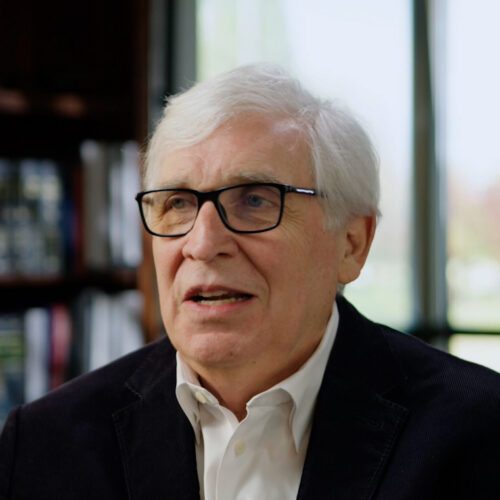
Michael Hackard — California Estate and Trust Litigation Attorney
Sacramento | San Francisco Bay Area | Los Angeles | San Diego | Orange County
Contact Hackard Law: 📞 916-313-3030 🌐 hackardlaw.com
“After thousands of cases, I know the pattern.”
Contingency fee representation. Hackard Law advances the case costs, and those costs are repaid from the recovery before the fee is calculated. No recovery, no fee — and no costs owed unless the written fee agreement provides otherwise. Fees are negotiable and are not set by law.
📞 CALL THE SAGE:(916) 313-3030
Hackard Law · Michael A. Hackard (SBN 71067) · 10640 Mather Boulevard, Suite 100, Mather, California 95655-4190 · 916-313-3030
This material is general information, not legal advice, and reflects California law.
 (916) 313-3030