


In brief: Hackard Law represents San Francisco families in trust, estate, probate and elder financial abuse disputes on a contingency fee. San Francisco trust and probate matters are handled at the Civic Center Courthouse at 400 McAllister Street. Probate appearance hearings are generally in Department 204; ex parte appearances are in Department 202. Deadlines can be short: a trust contest may need to be filed within 120 days after the trustee’s notice.
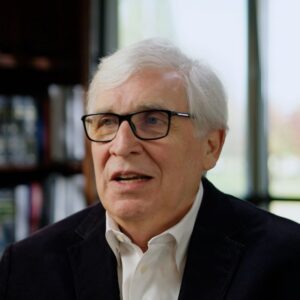
By Michael Hackard, California trust and estate litigation attorney. Last reviewed October 28, 2026.
San Francisco estates are built from flats, Victorians, tenancy-in-common shares, co-op apartments, art collections and private company stock. When a parent dies or loses capacity, the people closest to those assets are often the people who control them. That is where disputes begin.
Michael Hackard has spent fifty years representing families who believe a trustee, executor, agent or caregiver has taken what was meant for them. This page explains how San Francisco cases work and links to guides for 18 San Francisco neighborhoods and topics.
San Francisco is a consolidated city and county, so there is one probate court for every neighborhood. Its housing is unusual too. According to U.S. Census Bureau QuickFacts, only 38.2 percent of homes are owner-occupied, the median owner-occupied home value is $1,394,500, and 18.8 percent of residents are 65 or older. A single house can be the whole estate, and a single deed or amendment can decide it.
Michael Hackard’s family story runs through San Francisco. His great-grandparents John O’Connor, from Tralee in County Kerry, and Rose Dolan, from Belcoo in County Fermanagh, were married in San Francisco on February 10, 1885. They raised their children in the city, buried five who died young, and lived here for the rest of their lives.
His other great-grandparents, John Fuller of Drimoleague and Ellen Donovan of Rossmore, both in County Cork, married in 1892. Their children were born in San Francisco between 1893 and 1905. Both families were raising children in the city in the years around the 1906 earthquake and fire.
Their children, James Joseph O’Connor and Ellen “Nellie” Josephine Fuller, both born in San Francisco, were married at St. Peter’s Church in the Mission on September 3, 1919. Their daughter, Michael’s mother, Rose O’Connor, was born in San Francisco in 1923. Today, a new generation of the family is being born in San Francisco.
Michael grew up hearing how these families built their lives one flat and one parish at a time. He knows that a San Francisco home often carries more than its value. It carries a family’s history, and that is why disputes over it run so deep.
We also handle trust contests, will contests, trustee removal, accountings, elder financial abuse and wrongful transfers anywhere in San Francisco.
Other claims, including elder financial abuse, wrongful transfer and will contests, have their own limits. Get advice early.
Hackard Law handles qualifying trust, estate and elder financial abuse cases on a contingency fee. You pay no hourly fees. The fee is a percentage of what is recovered, set out in a written agreement before work begins.
The firm advances the costs of the case. Those costs are repaid from the recovery before the fee is calculated. If there is no recovery, you owe no fee and no costs, unless your written agreement provides otherwise.
When the client is a personal representative, guardian or conservator, San Francisco Local Rule 14.54 requires court approval of a contingency fee agreement on a noticed hearing.
Michael Hackard has practiced law for fifty years. He has held an AV Preeminent rating for more than 40 years and has been recognized by Super Lawyers. He is the author of six books, including Stolen Inheritance and Alzheimer’s, Widowed Stepmothers & Estate Crimes, and he has testified before the House Ways and Means Committee. He is a graduate of McGeorge School of Law and a member of the California State Bar (#71067).
“After thousands of cases, I see the patterns others miss.” — Michael Hackard
At the Civic Center Courthouse, 400 McAllister Street, San Francisco. Probate appearance hearings are generally in Department 204, while ex parte appearances are in Department 202. One probate court serves every San Francisco neighborhood.
Generally 120 days after the trustee serves the notification required by Probate Code section 16061.7, or 60 days after delivery of a copy of the trust terms if that delivery occurs during the initial 120-day period, whichever is later. Other deadlines can apply if no notice was served.
Many non-evidentiary probate hearings may proceed remotely under San Francisco Local Rule 14.1. Evidentiary hearings and trials are in person unless the court orders otherwise.
Usually, the parties arrange a private reporter. Fee-waiver recipients may request a court-provided verbatim record by submitting a written request at least two weeks before the proceeding. See the court’s current court-reporting policy.
Hackard Law handles qualifying trust, estate and elder financial abuse cases on a contingency fee. You pay no hourly fees. The fee is a percentage of what is recovered, set out in a written agreement before work begins. The firm advances the costs of the case. Those costs are repaid from the recovery before the fee is calculated. If there is no recovery, you owe no fee and no costs, unless your written agreement provides otherwise.
Yes. Under Local Rule 14.43, the court has a Pro Bono Mediation Program for estate and trust disputes where the assets are $3,000,000 or less.
A trustee who accepts a trust administered in California submits to the jurisdiction of California courts under Probate Code section 17003. The San Francisco court can order accountings and remove the trustee.
No. Hackard Law’s office is in Sacramento County. The firm represents families throughout California, and most San Francisco clients meet with us by phone or video.
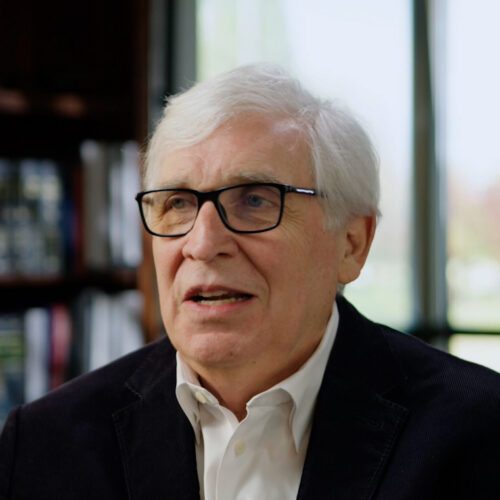
If you believe a trust, estate or elder’s money has been taken or mismanaged in San Francisco, call us. We will listen, ask a few questions and tell you whether we can help.
Call the Sage: (916) 313-3030
Hackard Law’s office is in Sacramento County. The firm represents families throughout California, and most San Francisco clients meet with us by phone or video.
Hackard Law represents families throughout California. hackardlaw.com
Please do not send documents until we ask for them.
 (916) 313-3030